
No compounds match this filter.
Tissue repair research peptides are reference compounds studied in preclinical models of wound healing, tendon and ligament repair, and gut mucosal protection — with BPC-157 and TB-500 as the two most investigated reagents in this space. This category groups the standalone peptides, co-formulated blends and encapsulated formats built around them so researchers can compare mechanism, format and documentation in one place. Every item is supplied strictly as Research Use Only (RUO) material with a batch Certificate of Analysis; nothing here is intended for human or veterinary use.
Mechanisms investigated
BPC-157 and TB-500 are structurally unrelated peptides studied through different pathways, which is the rationale for both the standalone reagents and the co-formulated blends:
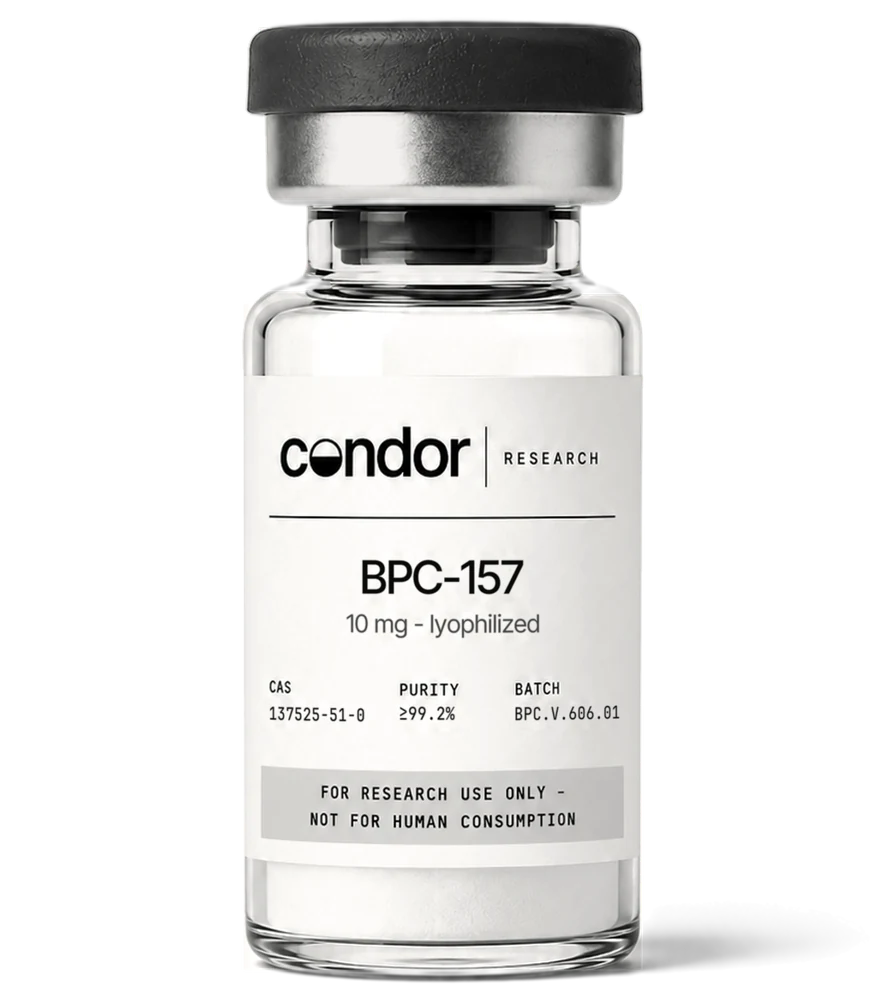
BPC-157 (gastric pentadecapeptide): a synthetic 15-amino-acid peptide derived from a protective protein in gastric juice, studied for cytoprotection, angiogenesis and epithelial healing in vitro and in animal models.
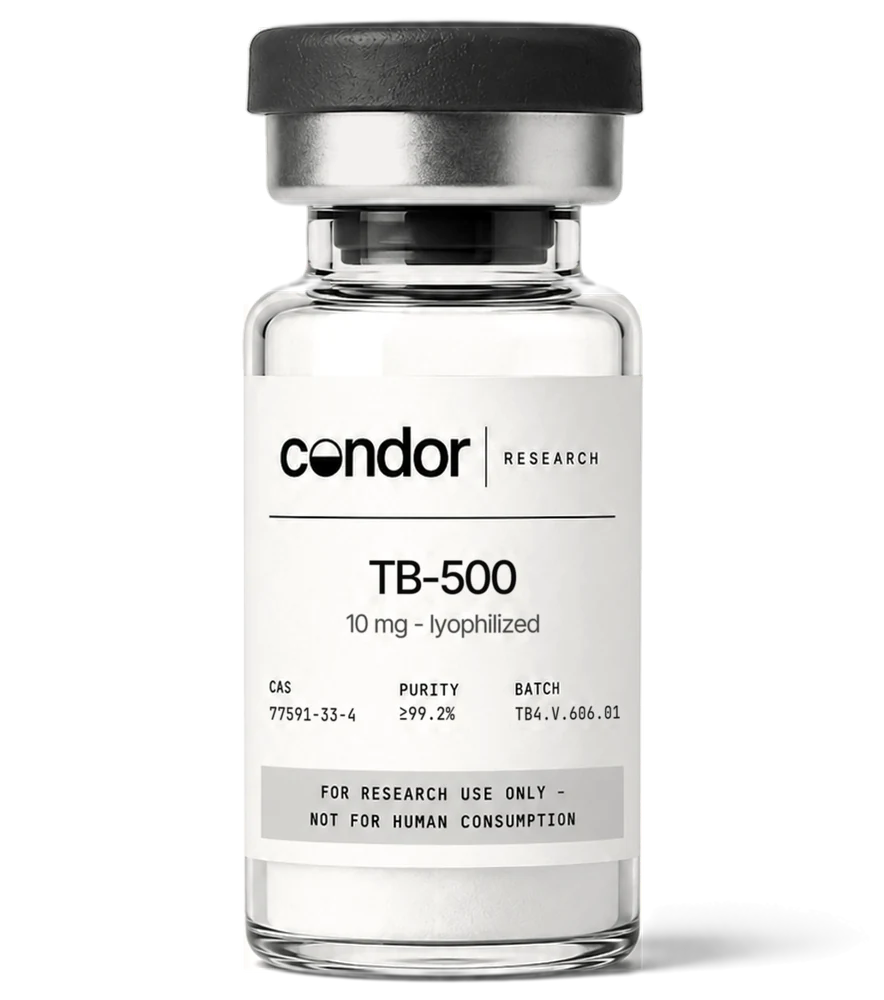
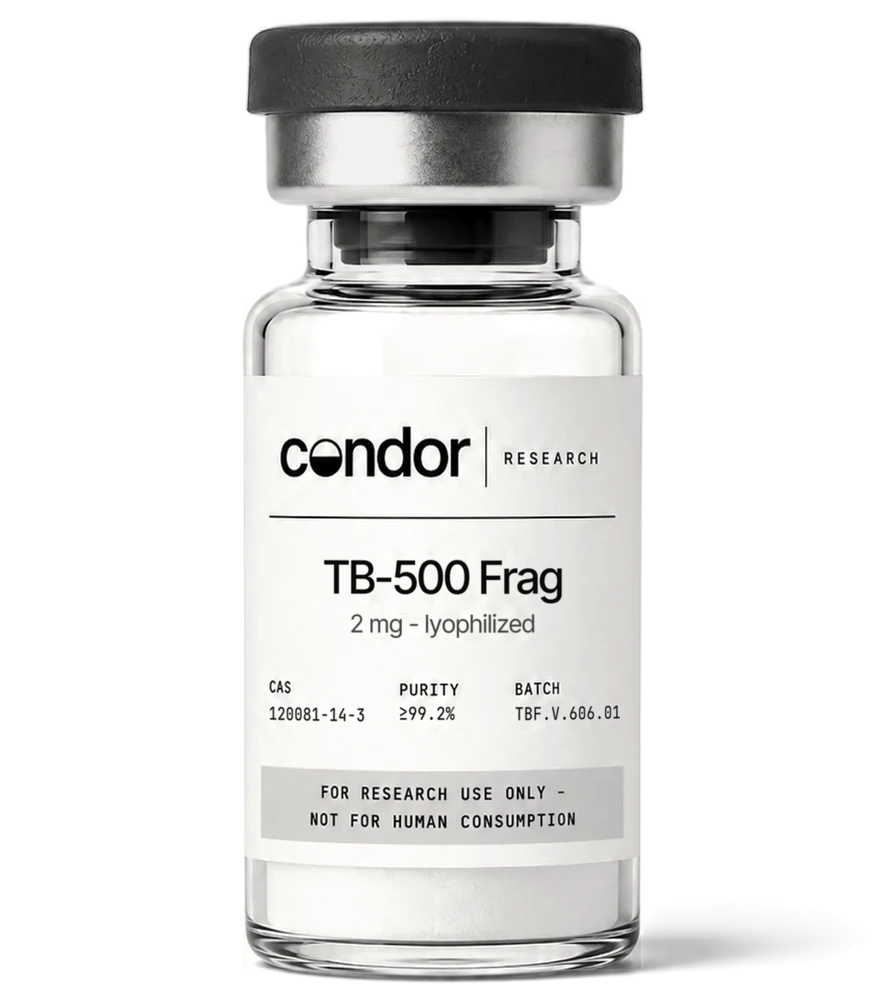
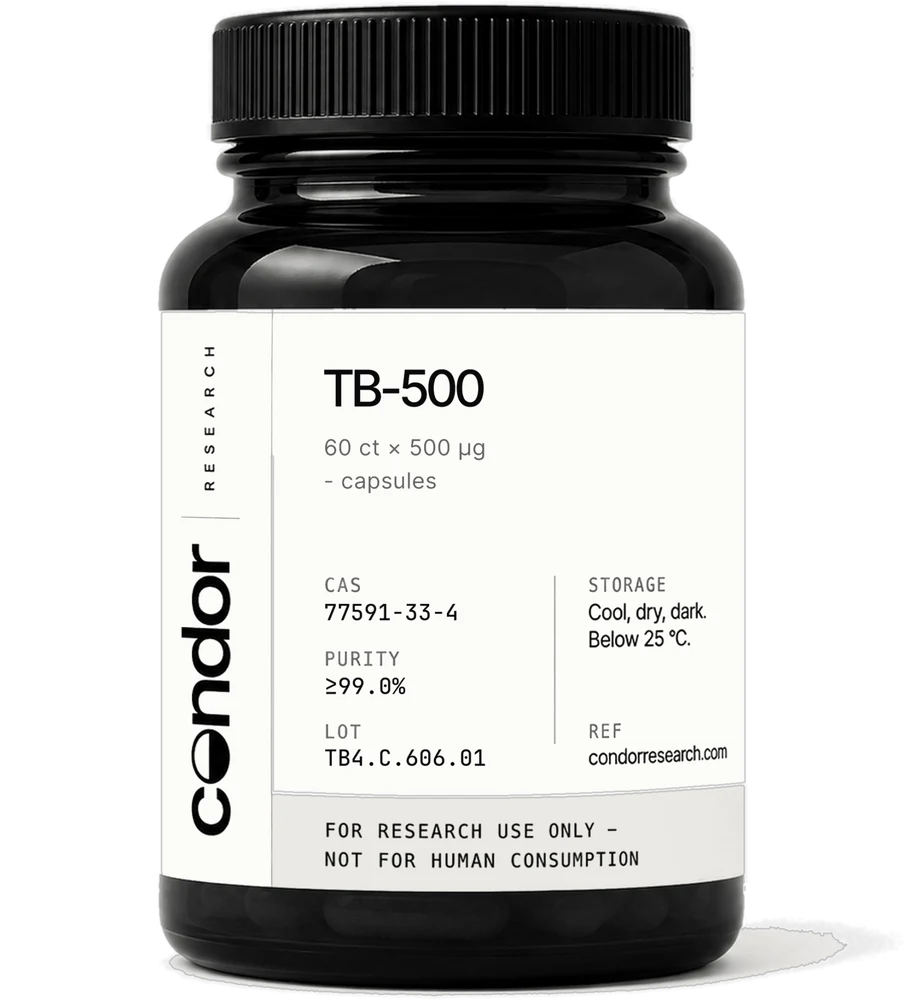
TB-500 / TB-500 (Frag) (thymosin beta-4 peptide): TB-500 corresponds to the actin-binding domain of thymosin beta-4; the fragment version isolates a shorter active region. Both are studied for cell migration and actin regulation in tissue-repair models.
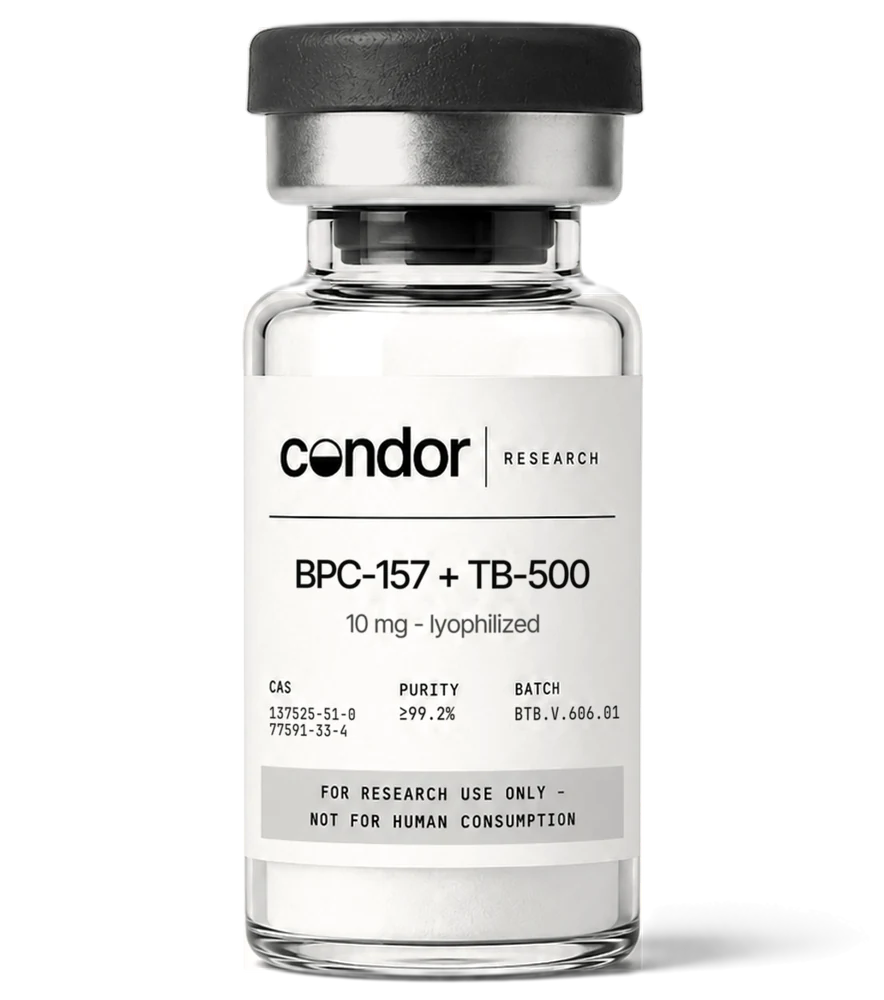
BPC-157 + TB-500 blend: co-formulates both peptides so their distinct mechanisms — cytoprotective signalling and actin-mediated migration — can be investigated together in the same research protocol.
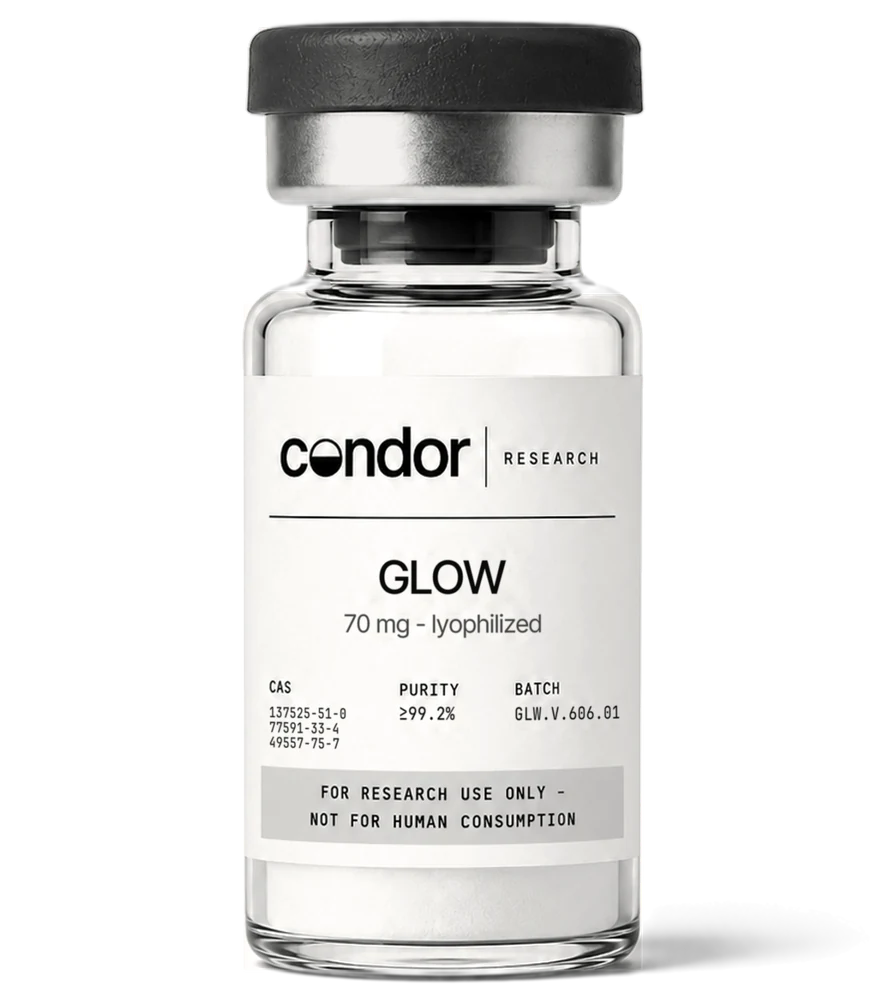
GLOW blend (GHK-Cu, BPC-157, TB-500): adds the copper peptide GHK-Cu to the BPC-157/TB-500 pairing, extending the research focus to dermal and connective-tissue models.
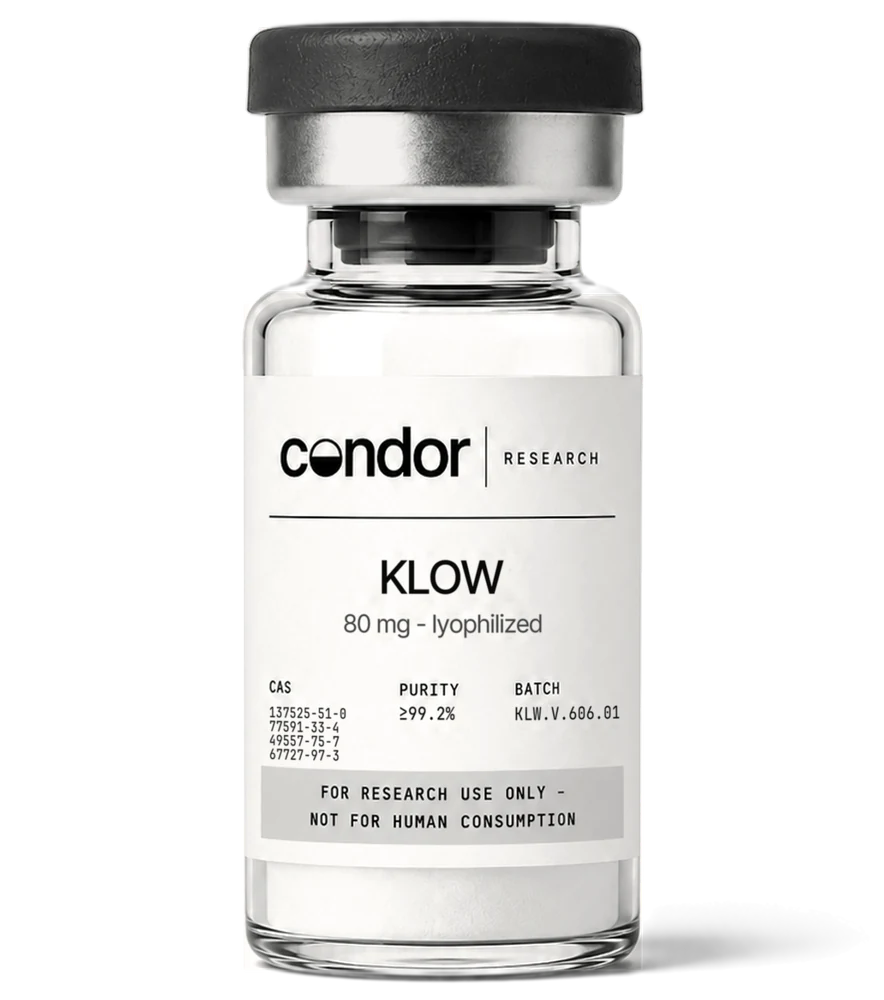
KLOW blend (KPV, GHK-Cu, BPC-157, TB-500): a four-peptide formulation that further adds KPV, studied for its anti-inflammatory profile, alongside the GLOW components.
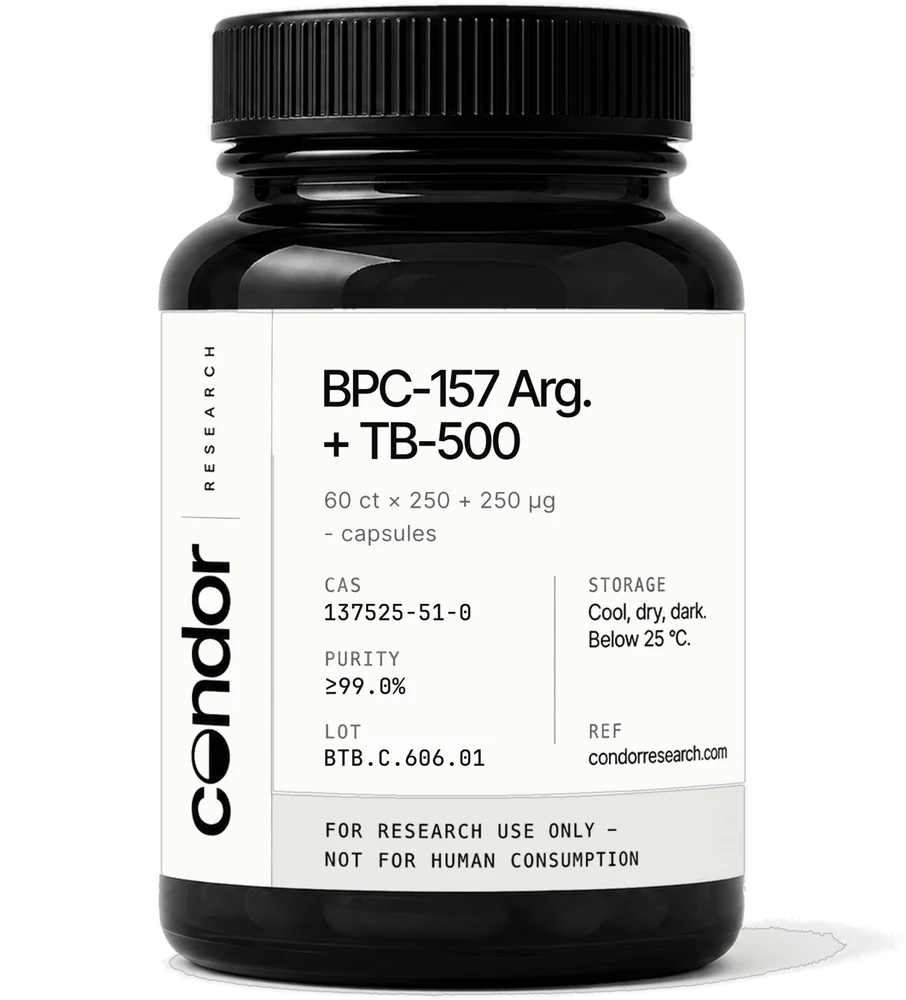
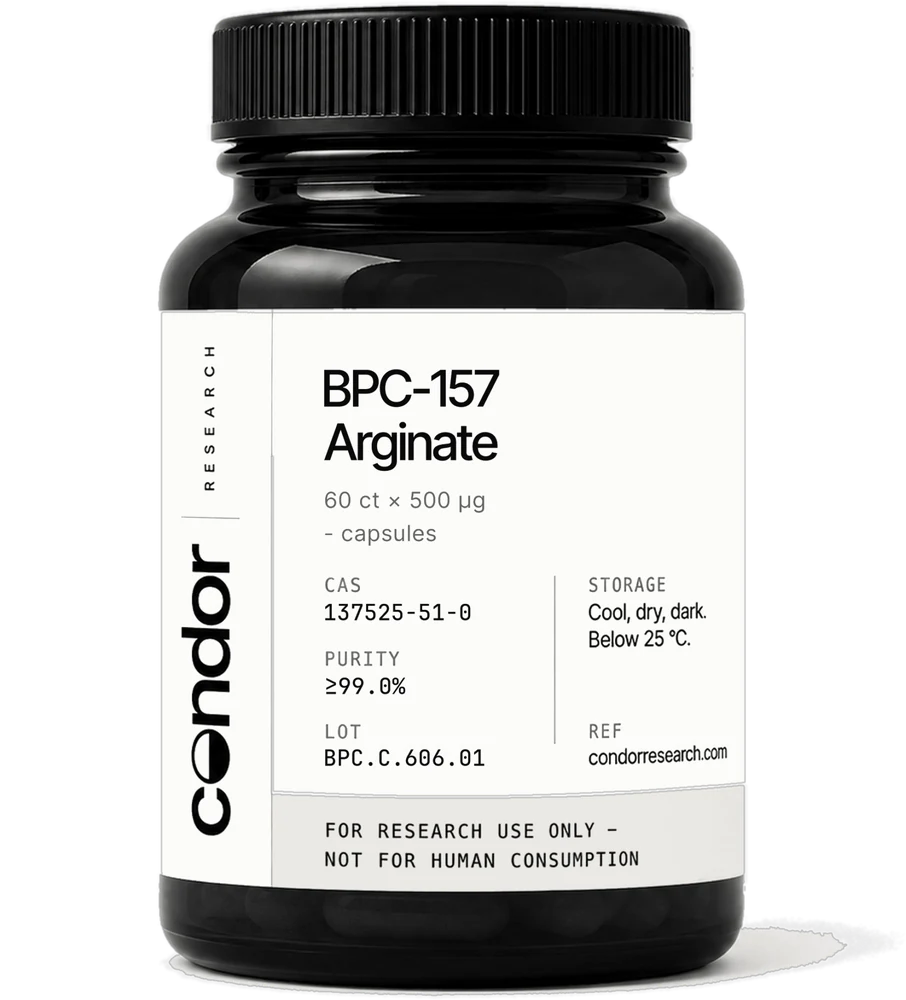
Capsule formats (BPC-157 Arginate, BPC-157 Arginate + TB-500, TB-500 Capsules): oral-route formulations for researchers studying gastrointestinal exposure; the arginate salt form is used in capsule formulation for stability.
Comparison
CompoundClassPathway / targetResearch focusFormat
BPC-157Gastric pentadecapeptideCytoprotection / angiogenesisGut & soft-tissue repairVial
TB-500Thymosin beta-4 peptideActin binding / cell migrationWound & tendon repairVial
TB-500 (Frag)Thymosin beta-4 fragmentActin-binding domainCell migration researchVial
BPC-157 + TB-500Peptide blendCytoprotection + actin signallingCombined repair researchVial
GLOWPeptide blendCopper-peptide + repair peptidesDermal & connective-tissue researchVial
KLOWPeptide blendRepair peptides + anti-inflammatoryCombined repair & inflammation researchVial
BPC-157 Arginate CapsulesGastric pentadecapeptide (salt form)Cytoprotection / angiogenesisOral-route repair researchCapsules
BPC-157 Arginate + TB-500 CapsulesPeptide blend (salt form)Cytoprotection + actin signallingOral-route combined researchCapsules
TB-500 CapsulesThymosin beta-4 peptideActin binding / cell migrationOral-route repair researchCapsules
| Compound | Class | Pathway / target | Research focus | Format |
|---|---|---|---|---|
| BPC-157 | Gastric pentadecapeptide | Cytoprotection / angiogenesis | Gut & soft-tissue repair | Vial |
| TB-500 | Thymosin beta-4 peptide | Actin binding / cell migration | Wound & tendon repair | Vial |
| TB-500 (Frag) | Thymosin beta-4 fragment | Actin-binding domain | Cell migration research | Vial |
| BPC-157 + TB-500 | Peptide blend | Cytoprotection + actin signalling | Combined repair research | Vial |
| GLOW | Peptide blend | Copper-peptide + repair peptides | Dermal & connective-tissue research | Vial |
| KLOW | Peptide blend | Repair peptides + anti-inflammatory | Combined repair & inflammation research | Vial |
| BPC-157 Arginate Capsules | Gastric pentadecapeptide (salt form) | Cytoprotection / angiogenesis | Oral-route repair research | Capsules |
| BPC-157 Arginate + TB-500 Capsules | Peptide blend (salt form) | Cytoprotection + actin signalling | Oral-route combined research | Capsules |
| TB-500 Capsules | Thymosin beta-4 peptide | Actin binding / cell migration | Oral-route repair research | Capsules |
Every compound in this category is supplied as Research Use Only material with:
Peer-reviewed literature underpinning this category. Full per-compound evidence lists, including PMIDs and DOIs, are maintained in the linked research articles below.
Cookies
We use strictly necessary cookies to run the store. With your consent we also use analytics (order attribution) and marketing (Omnisend) cookies. Read our Cookie Policy.