
Lyophilised · ≥99% (HPLC) ·
One restock alert. You also join the research list; unsubscribe anytime.
Supplied lyophilised. Reconstitution typically uses bacteriostatic water.
GHK-Cu + KPV Blend supplies GHK-Cu 50 mg and KPV 10 mg in a single vial, 60 mg total, pairing a copper-binding tripeptide with the C-terminal anti-inflammatory fragment of α-MSH. Each component is supplied lyophilised at ≥99% purity by HPLC. Also listed by some suppliers as KG60. For laboratory research use only.
A focused two-peptide research formulation, this blend brings together GHK-Cu (50 mg) and KPV (10 mg) in one lyophilized vial. It isolates the extracellular-matrix and inflammatory-signalling axes from the wider regenerative panel — the same two components found in KLOW, without BPC-157 and TB-500. It is a defined two-component mixture, not a single molecular entity.
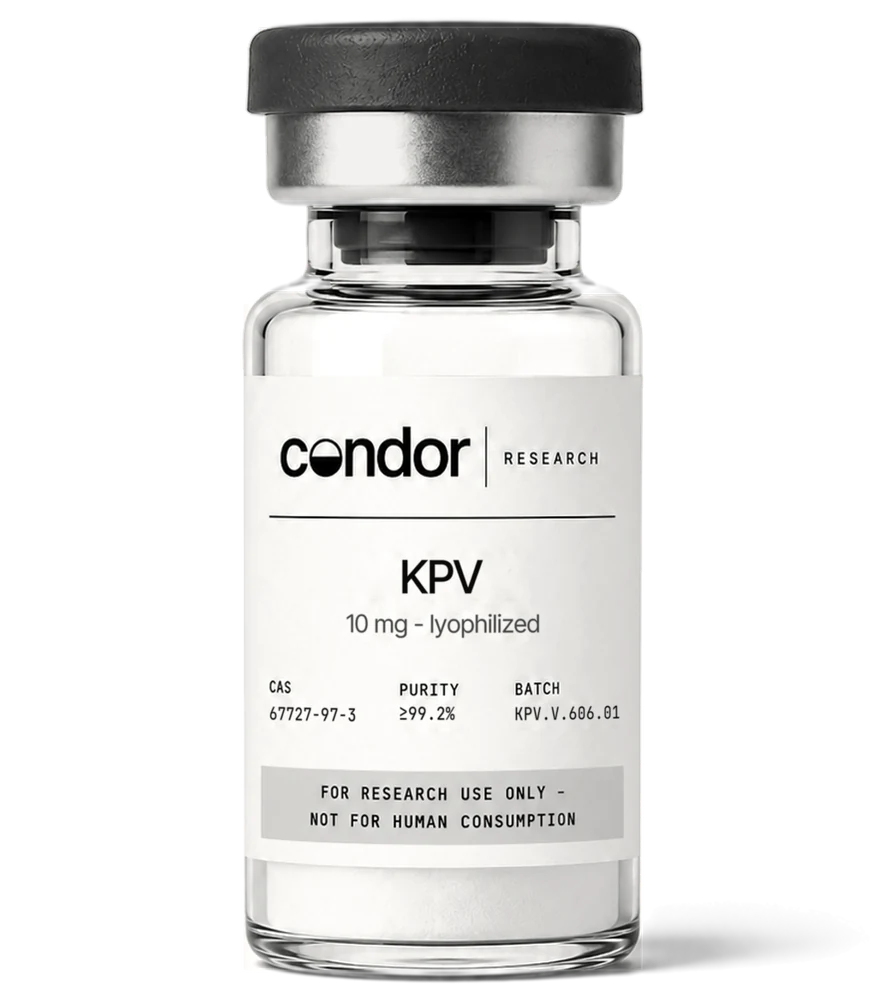
Two peptides, two distinct pathways. GHK-Cu is a copper-binding tripeptide (Gly-His-Lys·Cu²⁺) originally identified in human plasma and studied for its role in matrix remodelling and copper homeostasis. KPV (Lys-Pro-Val) is the C-terminal tripeptide of α-melanocyte-stimulating hormone, investigated for NF-κB and cytokine signalling. The pairing gives researchers one preparation covering both axes under a single set of handling conditions.
What the research explores. Each component has its own experimental record, confined to cellular and animal models:
On the combination itself. The literature above describes each peptide separately. There is no published work characterising the two together, and no evidence base for synergy between them. We state this plainly because other listings do not: this is a convenience preparation of two separately characterised materials. Full citations are listed under the Scientific References tab.
A note on composition. This blend is supplied elsewhere in two different ratios — 50 mg / 10 mg and 50 mg / 20 mg — both sold under the same name. This vial is the 50 mg / 10 mg configuration, 60 mg total. Check the ratio before comparing preparations across suppliers.
Composition. GHK-Cu 50 mg + KPV 10 mg per vial · 60 mg total · Appearance blue lyophilized powder · Soluble in water. As a multi-component blend, single-molecule CAS, molecular formula and molecular weight values do not apply; refer to the individual component entries for those data.
Specification & quality. Each individually sealed vial contains the combined 60 mg peptide blend at ≥99% purity by HPLC per component. Store at −20 °C, protected from light and moisture.
This product is intended for laboratory research use only (RUO). It is not a drug, food, cosmetic, or dietary supplement, and is not for human or veterinary use, ingestion, or diagnostic application. Handling is restricted to qualified research professionals operating in an appropriately equipped laboratory.
Research overview: GHK-Cu + KPV Blend: Naming, Formulations and What the COA Should Show
Supplied for in-vitro laboratory research use only (RUO). Not a drug, food or supplement; not for human or veterinary use.
Certificate of Analysis — lot-specific COA ships with every order and is available on request.
Each lot is tested by an independent third-party laboratory for identity (mass spectrometry) and purity (HPLC). The Certificate of Analysis for your specific batch ships with the order and is available on request — no house data, no exceptions.
References are illustrative of the research literature surrounding this compound. All claims relate to in-vitro and animal models only.
A two-peptide research preparation supplying GHK-Cu (50 mg) and KPV (10 mg) co-lyophilized in a single vial, 60 mg total. It pairs a copper-binding tripeptide with the C-terminal fragment of α-MSH. It is a defined mixture of two separately characterised compounds, not a single molecule. For laboratory research use only.
Yes. Some suppliers list this preparation as KG60, where the number refers to the 60 mg total peptide mass. Others list it as GHK-Cu/KPV Blend, GHK-Cu 50mg / KPV 10mg, or GHK/KPV Blend. The naming is not standardised across the market; the composition is what identifies the material.
Both configurations exist and are sold under the same names. This vial is the 50 mg GHK-Cu / 10 mg KPV configuration, 60 mg total. A 50/20 preparation contains double the KPV and 70 mg total. Because the ratio differs, price and purity comparisons across suppliers are only meaningful once the composition is confirmed.
GLOW supplies GHK-Cu, BPC-157 and TB-500. KLOW adds KPV to those three, for four components and 80 mg total. This blend supplies only GHK-Cu and KPV — the same two components, without the BPC-157 and TB-500 fraction.
No. GHK-Cu and KPV each have their own experimental literature, listed under Scientific References, derived from in-vitro and animal models. There is no published research characterising the two peptides together, and no evidence base for synergy between them.
For a co-lyophilized two-component vial, content and purity should be reported separately for GHK-Cu and for KPV rather than as a single aggregate figure, with identity confirmed by mass spectrometry and a batch identifier tying the document to the vial supplied. An aggregate purity number cannot reveal under-fill of the minor component.
No verified reviews yet.
Leave a review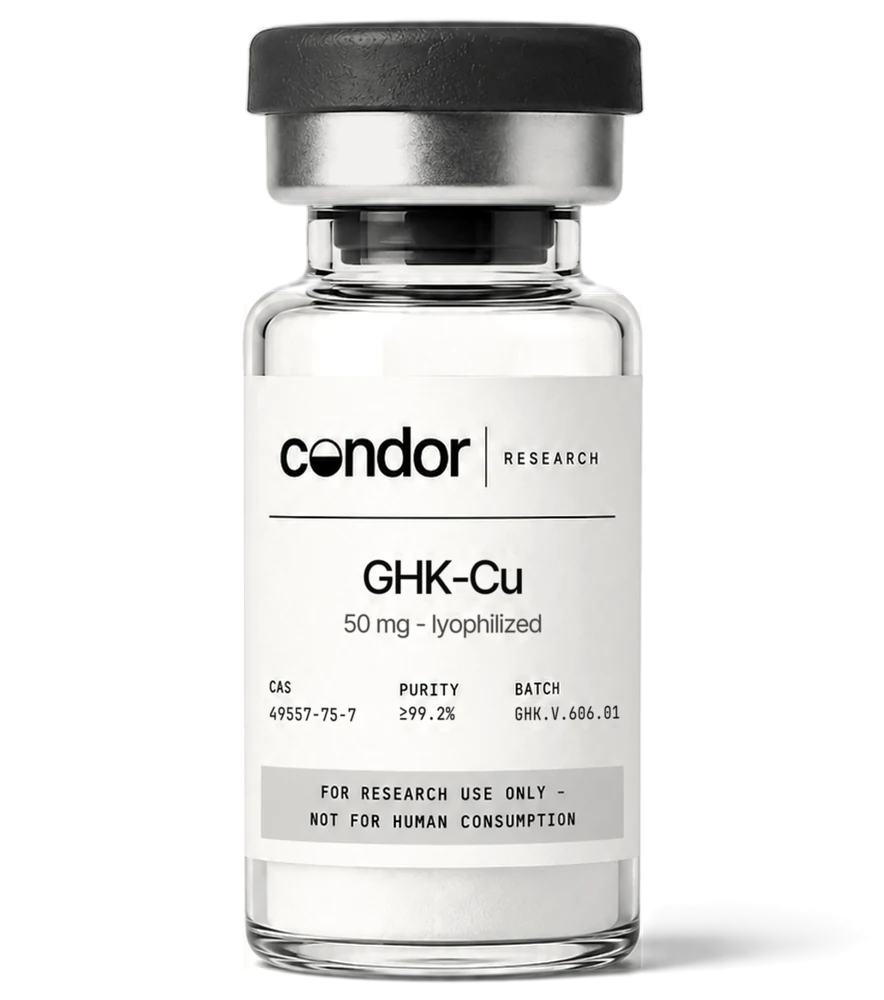
Cookies
We use strictly necessary cookies to run the store. With your consent we also use analytics (order attribution) and marketing (Omnisend) cookies. Read our Cookie Policy.