
TB-500 (Full-Length Thymosin β4) vs TB-500 Fragment: One Name, Two Different Molecules
The name 'TB-500' covers two unrelated research molecules: full-length thymosin β4 (43 aa) and short Tβ4-derived fragments. What each one actually is, what the literature reports, and how to tell them apart. Research use only.
'TB-500' is a trade name covering two different research molecules: full-length thymosin β4 (43 amino acids, CAS 77591-33-4) and short Tβ4-derived fragments. The fragment Condor lists is the N-terminal tetrapeptide Ac-SDKP (CAS 120081-14-3), not the 17–23 actin-binding fragment. Sequence and CAS — not the name — identify what is in the vial. Research use only.
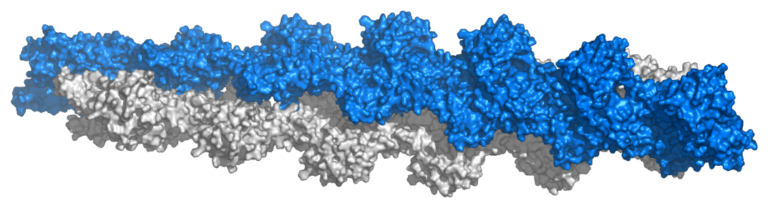
“TB-500” is one of the most overloaded names in peptide research. It is used for the full-length 43-amino-acid protein thymosin β4 (Tβ4), and — in much of the grey market — for short fragments derived from it. These are not two grades of the same compound; they are different molecules with different sizes, different sequences, and different bodies of literature. This piece sets out what each one is, what the published record actually reports for each, and how a researcher can read a label and know what is in the vial. Everything here is framed for laboratory research use only — no human use, dosing, or treatment is described or implied.
What does “TB-500” actually refer to?
Historically, “TB-500” was a development code associated with thymosin β4, the naturally occurring 43-amino-acid peptide that is the major actin-sequestering molecule in eukaryotic cells.1 Over time the name detached from any single molecule. Today it is applied to at least two distinct things in the research market: the full-length Tβ4 protein, and various short fragments excised from its sequence. Because the fragments are far cheaper to synthesise than the full 43-mer, a vial labelled “TB-500” can contain very different chemistry depending on the supplier. The only reliable way to know which molecule you have is the sequence and CAS number on the Certificate of Analysis (COA), not the trade name.
At Condor Research the distinction is made explicit at the catalogue level: TB-500 is supplied as full-length thymosin β4, while a separate fragment SKU is listed under its own name. The two are not interchangeable, and the rest of this article explains why.
What is full-length TB-500 (thymosin β4)?
Full-length Tβ4 is a 43-amino-acid, acetylated peptide (N-terminal acetyl group; sequence beginning Ac-Ser-Asp-Lys-Pro… and ending …Ala-Gly-Glu-Ser). Its defining biochemical role is to bind and sequester monomeric G-actin, buffering the pool of unpolymerised actin and thereby influencing cytoskeletal remodelling, cell migration and angiogenesis in preclinical models.12 Reviews of the animal literature characterise it as a multifunctional tissue-repair and regeneration peptide, studied across dermal, corneal, cardiac and other injury models.3 Thymosin β4 itself has also been examined in a small number of early human contexts, such as a study of venous leg ulcers,4 though this does not amount to robust clinical efficacy data and Tβ4 is not an approved drug in this form.
The Condor Research material is the full-length 43-aa peptide, supplied as a lyophilised 10 mg vial at ≥99% purity by HPLC, individually sealed and third-party tested with a COA.
43 vs ~4–7 amino acids — the simplest way to see that “full” and “fragment” TB-500 are different molecules, not two strengths of one.
What is a “TB-500 fragment”, and which fragment is it?
This is where the name causes the most confusion, because “TB-500 fragment” does not denote a single sequence. Two short Tβ4-derived peptides recur in the literature, and they are biologically distinct:
- The N-terminal tetrapeptide Ac-SDKP (N-acetyl-Ser-Asp-Lys-Pro) — the first four residues of Tβ4, released physiologically from the parent peptide. Its studied biology is essentially antifibrotic and haematopoietic-regulatory: in animal models, endogenous Ac-SDKP levels are inversely associated with organ fibrosis,5 and more recent work describes Ac-SDKP attenuating collagen production in cardiac fibroblasts via ER-stress and NF-κB-linked pathways.6 Notably, Ac-SDKP is degraded by angiotensin-converting enzyme (ACE), so in humans its circulating level is raised by ACE inhibitors — a clinical relationship documented in a systematic review and meta-analysis.7
- The actin-binding domain fragment around residues 17–23 (the LKKTETQ motif) — the central sequence that mediates Tβ4’s interaction with actin. Synthetic peptides containing this actin-binding domain have been shown to reproduce some of full-length Tβ4’s activity: a synthetic peptide carrying the actin-binding domain promoted dermal wound repair in diabetic and aged mice,8 and a systematic mapping of Tβ4’s activities onto short peptide sequences localised distinct functions to defined sub-regions of the molecule.9
So “fragment” can mean the antifibrotic N-terminus (Ac-SDKP) or the actin-binding core (LKKTETQ) — two different research stories. The Condor Research fragment SKU is the N-terminal Ac-SDKP tetrapeptide (CAS 120081-14-3), a 4-residue, ~487 Da peptide — chemically and functionally distinct from the full 43-aa, ~4963 Da parent. A label that simply says “TB-500 fragment” without a sequence tells you almost nothing about which of these you are buying.
The trade name “TB-500” is not a molecule — it is a family of them. The molecule is whatever the sequence and CAS on the COA say it is.
How do full-length and fragment TB-500 compare?
| Attribute | TB-500 — full-length Tβ4 | TB-500 (Frag) — Ac-SDKP N-terminus | Actin-binding fragment (LKKTETQ, informational) |
|---|---|---|---|
| Sequence | Ac-Ser-Asp-Lys-Pro…Ala-Gly-Glu-Ser (43 aa) | Ac-Ser-Asp-Lys-Pro (Ac-SDKP, 4 aa) | ~Leu-Lys-Lys-Thr-Glu-Thr-Gln (residues 17–23) |
| Length | 43 amino acids | 4 amino acids | ~7 amino acids |
| CAS | 77591-33-4 | 120081-14-3 | (varies by exact peptide) |
| Approx. molecular weight | ~4963 Da | ~487 Da | ~830 Da |
| Primary research axis | G-actin sequestration; cytoskeletal remodelling; cell migration; angiogenesis; broad tissue repair | Antifibrotic / haematopoietic regulation; ACE-degraded N-terminal peptide | Actin-binding and migration-/angiogenesis-related activity attributed to this motif |
| Evidence base | Largest of the three: extensive in vitro and rodent work, plus limited early human studies; not an approved drug | Distinct antifibrosis literature in animal models and ACE-inhibitor pharmacology in humans | Targeted preclinical wound-repair and structure–activity studies |
| Format (Condor Research) | 10 mg lyophilised vial, ≥99% HPLC, COA | Separate fragment SKU, lyophilised, ≥99% HPLC, COA | Not a current Condor Research product |
Three molecules that share a name lineage but differ in size, sequence and the literature each is studied within. CAS and sequence — not the words “TB-500” — identify what is in the vial.
Why does the full-vs-fragment distinction matter for a study?
Because the molecules are not substitutable. If a research model is built around actin dynamics, cell migration or angiogenesis, the full-length Tβ4 literature — and, within it, the actin-binding-domain work — is the relevant precedent.289 If a model concerns fibrosis or collagen deposition, the relevant precedent is the Ac-SDKP N-terminal-fragment literature, which is mechanistically and pharmacologically a different field altogether (including its dependence on ACE for clearance).567 Size also has practical consequences: a 43-mer and a tetrapeptide differ in synthesis, solubility behaviour, stability and the molar quantity contained in a nominal milligram mass. Treating “TB-500” as a single reagent across these contexts is a recipe for an unreproducible experiment — the same reagent-identity problem that undermines a large share of peptide research.
What does the evidence actually support — preclinical or clinical?
The honest summary differs by molecule. Full-length Tβ4 has the deepest base: a large body of in vitro and rodent tissue-repair work,13 a defined actin-binding mechanism,2 and a few early human studies such as venous-ulcer work4 — but no robust, confirmatory human efficacy data and no approved-drug status in this form. Ac-SDKP has a coherent antifibrotic mechanism in animal models56 and a documented human pharmacological relationship with ACE inhibitors,7 but is likewise not an approved therapeutic in its own right. The actin-binding-domain fragment is supported by targeted preclinical structure–activity studies89 and remains an experimental tool. For all three, extrapolation from these models to human outcomes is unsupported, and these materials are not for diagnostic or therapeutic use.
How can a researcher tell which “TB-500” they have?
Read the COA, not the name. Three fields settle it: the sequence (43 residues vs a 4- or 7-mer), the CAS number (77591-33-4 for full-length Tβ4; 120081-14-3 for Ac-SDKP), and the molecular weight (≈4963 Da vs ≈487 Da). A vial described only as “TB-500” with no sequence and no CAS is ambiguous by definition. Matching purity claims (e.g. ≥99% by HPLC) matter too, but purity is a statement about one molecule — it cannot tell you which molecule. For background on reading these documents, see our guide on how to read a Certificate of Analysis, and for the full-length peptide specifically, What Is TB-500? If your study pairs Tβ4 with other repair peptides, the BPC-157 vs TB-500 comparison covers that design question.
Research Use Only. All products and information referenced here are for in vitro and laboratory research use only. They are not medicines, are not for human or veterinary use, and nothing above constitutes medical advice, a therapeutic claim, or guidance on dosing or administration. Compounds are supplied to qualified researchers and intended exclusively for legitimate scientific investigation. — Condor Research · Scientific desk
- "TB-500" is not one molecule: it labels both full-length thymosin β4 (43 aa, CAS 77591-33-4) and short Tβ4-derived fragments.
- The Condor "TB-500" product is the full-length 43-aa Tβ4; the separate "TB-500 (Frag)" SKU is the N-terminal tetrapeptide Ac-SDKP (CAS 120081-14-3) — a different molecule, not the 17–23 actin-binding fragment.
- Full-length Tβ4 is studied for actin sequestration, cell migration and angiogenesis; Ac-SDKP is studied for antifibrotic and haematopoietic biology and is degraded by ACE.
- Sequence, CAS number and molecular weight on the COA — not the trade name — identify which molecule is in the vial.
- All evidence is overwhelmingly preclinical; neither is an approved drug, and both are supplied strictly for research use only.
Is the Condor Research TB-500 the full peptide or a fragment?
The product listed as TB-500 is full-length thymosin β4 — the 43-amino-acid peptide (CAS 77591-33-4), supplied as a lyophilised 10 mg vial at ≥99% purity by HPLC with a Certificate of Analysis. The short Ac-SDKP fragment is listed separately as its own SKU.
Is "TB-500 fragment" the same as the 17–23 actin-binding fragment?
Not necessarily. "Fragment" is ambiguous. In the literature, two short Tβ4-derived peptides are common: the N-terminal Ac-SDKP tetrapeptide (studied for antifibrotic biology) and the actin-binding-domain peptide around residues 17–23 (the LKKTETQ motif). They are different molecules with different research records. The Condor Research fragment SKU is the Ac-SDKP N-terminus (CAS 120081-14-3). Always confirm by sequence and CAS.
Why is the fragment so much smaller and lighter than full-length TB-500?
Because it is literally a short piece of the parent sequence. Full-length Tβ4 is 43 amino acids (~4963 Da); the Ac-SDKP fragment is just the first four residues (~487 Da). That roughly ten-fold difference in mass changes synthesis, handling and the molar amount in a given milligram, which is one reason the two are not interchangeable in a protocol.
Do the full peptide and the fragment do the same thing?
No. In preclinical models the full-length peptide is studied mainly around actin dynamics, cell migration and angiogenesis, whereas the Ac-SDKP fragment is studied mainly around fibrosis and collagen regulation. They overlap in name and origin, not in mechanism.
Is there human clinical evidence for either?
The evidence is overwhelmingly preclinical for both. Full-length Tβ4 has been examined in a few early human studies (e.g. venous ulcers) but lacks robust efficacy data; Ac-SDKP has a documented human pharmacological link to ACE inhibitors but is not an approved therapeutic. Neither is an approved drug, and both are supplied strictly for laboratory research use only.
Which one should I order for my study?
Let the research question decide. Actin-cytoskeleton, migration or angiogenesis endpoints align with full-length Tβ4; fibrosis or collagen endpoints align with the Ac-SDKP fragment. If you are unsure which molecule a third-party "TB-500" is, ask for the sequence and CAS before designing around it.