
Tissue-Repair Peptides, Explained: BPC-157, TB-500, GHK-Cu and KPV
A field guide to the four peptides the wellness world treats as shorthand for “healing” — organised by the mechanism each is actually studied for, and honest about where the evidence runs out.
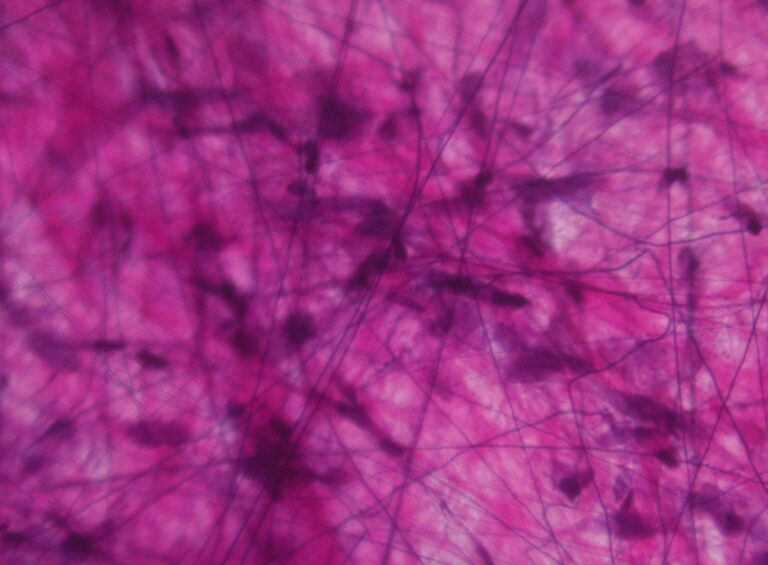
Tissue-repair peptides — BPC-157, TB-500, GHK-Cu and KPV — are research compounds studied preclinically for processes such as angiogenesis, cell migration, skin-matrix remodelling and barrier inflammation. The work is mostly in animal models and in vitro, with minimal human data. None is an approved repair medicine; all are supplied research-use-only with a Certificate of Analysis.
Somewhere between the clinic and the gym, a handful of peptides quietly became the wellness world’s shorthand for “healing.” Mention a stubborn tendon, a slow-knitting wound, or skin that has stopped behaving, and someone will name one of four molecules — BPC-157, TB-500, GHK-Cu, KPV — with the easy confidence of a mechanic naming a part. The confidence is the interesting thing. Behind these four names sits a genuinely rich and curious body of laboratory science, almost all of it conducted in rats, dishes and strips of skin, and almost none of it in the people now invoking it. This is a field guide to that science: what each peptide is actually studied for, organised by mechanism, and an honest map of where the evidence is generous and where it simply runs out.
One disclaimer up front, because it frames everything below. These are research reference materials, not medicines, and this is a literature analysis, not a manual. It contains no doses, no protocols and no instructions of any kind. The useful question is not “how do I use these?” but the narrower, more honest one: what do the published papers investigate, and what can and cannot be inferred from them?
What are tissue-repair peptides, and why these four?
“Tissue repair” is not one process but a choreography — clotting, inflammation, the sprouting of new blood vessels, the migration of cells into a wound, the laying down and remodelling of collagen, and finally the resolution of the inflammation that started it all. The reason these four peptides travel together is that each has been studied in a different movement of that choreography. They are not four versions of the same thing; they are four research stories about four mechanisms, which is precisely why they are so often bundled — and so often misunderstood.
Think of the wound-healing cascade as a building site. One crew lays the plumbing that brings blood to the site; another moves workers and materials into position; a third pours and shapes the concrete of the new matrix; a fourth keeps the whole operation from descending into a riot of inflammation. The four peptides below map, loosely, onto those four jobs. The mapping is a teaching device, not a claim that any of them builds anything in a human being.
Pillar one — angiogenesis and cytoprotection: what is BPC-157 studied for?
BPC-157 is an investigational pentadecapeptide — fifteen amino acids — and the most heavily studied of the four. A large preclinical literature, much of it led by Sikiric and colleagues, has examined it across an almost implausibly broad range of animal injury models, describing pleiotropic effects on healing and tissue protection3. The mechanistic thread most often pulled is angiogenesis — the formation of new blood vessels — alongside a general cytoprotective, “keep cells alive under stress” behaviour. Narrative reviews of its use in musculoskeletal healing have catalogued this promise while pointedly weighing it against the gaps; one is titled, tellingly, “Regeneration or Risk?”2
The honest headline is that BPC-157 is a compelling laboratory candidate and an unproven clinical one. A 2026 analysis of its development as a peptide therapeutic is explicit about the biopharmaceutical and translational barriers still in the way — formulation challenges, the leap from animal to human, and the absence of approval anywhere1. The molecule is genuinely interesting; the clinical case is genuinely unmade.
Pillar two — actin and migration: what is TB-500 / thymosin β4?
TB-500 is a synthetic fragment related to thymosin β4, a naturally occurring protein whose day job is regulating actin, the cytoskeletal scaffolding that lets cells crawl. If BPC-157’s story is about plumbing in blood supply, thymosin β4’s is about cell migration — moving the workers into the wound. Reviews trace its expression across human organs during development5, and emerging work positions it as a candidate in contexts as varied as kidney disease4. Its biology reaches into non-canonical signalling too, including roles in p53 and AKT pathways that situate it well beyond simple wound closure6.
Note the careful wording the literature itself uses. Thymosin β4 is the studied protein; TB-500 is a related synthetic fragment marketed as a research peptide. Conflating the two — assuming the fragment inherits every property of the parent protein — is one of the quieter errors in the space, and a reason to describe each accurately rather than interchangeably.
The number of large, controlled human efficacy trials behind these four peptides’ headline repair uses is, for practical purposes, near zero. The evidence base is overwhelmingly preclinical — animal injury models, cell culture and ex-vivo skin — which is fascinating science but not clinical proof.12
Pillar three — skin, collagen and matrix: what does GHK-Cu do?
GHK-Cu is a copper tripeptide — glycyl-histidyl-lysine bound to copper — and the repair story here is about the skin matrix: collagen, remodelling, and the broad reprogramming of skin-regeneration gene activity that Pickart and colleagues have mapped9. Crucially, its strongest evidence is topical and in vitro. Reviews of GHK as an anti-wrinkle peptide weigh its advantages alongside the practical problem of getting a charged tripeptide across the skin barrier at all7 — a problem real enough that researchers are still working out how to measure its skin permeation reliably8.
That topical, in-vitro character is the most important thing to know about GHK-Cu, and the thing most flattened in marketing. A peptide studied largely on the outside of skin, in dishes, is being discussed as if its injectable systemic behaviour were equally well-characterised. It is not. For a deeper comparison of the copper peptides, see our note on GHK versus AHK-Cu.
Pillar four — anti-inflammatory barrier support: what is KPV?
KPV is the smallest of the four — a tripeptide (lysine-proline-valine) derived from the C-terminus of α-MSH — and its research niche is anti-inflammatory barrier support, studied most in the gut. Work on KPV-loaded hydrogels has examined the restoration of the intestinal mucosal barrier in inflamed-colon models10 and the alleviation of chemically induced colitis in rats11. Separately, delivery studies have probed how to move the peptide across human skin in the lab12. Again the pattern holds: mechanistically interesting models, delivery questions still open, no approved human indication.
| Repair peptide | Mechanism studied | Evidence stage |
|---|---|---|
| BPC-157 (pentadecapeptide) | Angiogenesis & cytoprotection in injury models23 | Overwhelmingly preclinical; unapproved, minimal human data1 |
| TB-500 / thymosin β4 | Actin regulation & cell migration45 | Preclinical & expression studies; no approved repair use6 |
| GHK-Cu (copper tripeptide) | Skin-matrix / collagen & gene signalling9 | Largely topical / in vitro; permeation still being characterised78 |
| KPV (tripeptide) | Anti-inflammatory barrier support10 | Animal & ex-vivo models; no approved indication1112 |
The four repair pillars by mechanism studied and evidence stage. The right-hand column is the honest one: across all four, the strongest data are preclinical, and no headline repair use is clinically approved.
Why do the “repair blends” exist — and what do they have behind them?
Now the commercial logic. If each peptide owns a different movement of the healing cascade, the marketing inference writes itself: combine them and cover the whole score. That is the entire premise behind the blends — GLOW (GHK-Cu, BPC-157, TB-500), KLOW (those three plus KPV), and the BPC-157 + TB-500 pair. On paper the bundle looks like synergy. The mechanisms are complementary; the story is tidy.
Here is what must be said plainly. Each component has been studied individually, overwhelmingly in animals and in vitro123. The combinations themselves have essentially no human efficacy or safety data, and combining compounds does not average their uncertainties — it multiplies them. Each peptide carries its own pharmacokinetics, and those profiles do not politely coexist when molecules are mixed; they can interact, compete for clearance, and alter one another’s availability in ways no single-agent study was designed to predict. A useful analogy: knowing the braking distance of four cars individually tells you very little about what happens when they share one road in fog. This is exactly the territory our peptide-stacks analysis maps in detail, and the conclusion is the same here — the blends exist because the mechanistic story is sellable, not because the combination is proven.
How honest should we be about the evidence?
Completely, because the honesty is the differentiator. The fair summary of this entire field is a single sentence with two halves that must be held together: the preclinical science is rich, mechanistically interesting and worth taking seriously — and the human evidence is minimal, the delivery questions are often unsolved, and not one of these peptides is an approved medicine for the repair use that made it famous12. Both halves are true at once. Anyone who gives you only the first half is selling; anyone who gives you only the second is missing why researchers find these molecules worth studying at all.
The specific limits are worth naming. BPC-157’s breadth of animal data has not crossed into validated human use1. TB-500’s evidence is largely about the parent protein thymosin β4, not the marketed fragment, and lives in expression and mechanism studies rather than repair trials56. GHK-Cu’s best work is topical and in vitro, with systemic behaviour far less characterised78. KPV lives in gut- and skin-barrier models1011. None of that is a reason to dismiss the science. It is a reason to describe it precisely. For the wider repair-mechanism context, our tissue-repair hub and the individual primers go deeper on each.
What does “research-use-only” actually demand of a repair peptide?
If the science is preclinical, then the only claim a supplier can honestly stand behind is not about what the molecule does in a body — it is about what is in the vial. That is where the real, verifiable rigour lives. A research-grade repair peptide should arrive with an identity confirmed by mass spectrometry, a purity figure measured by HPLC, and a Certificate of Analysis that lets a researcher check both before any experiment begins. The marketing claims around healing are, for now, unsettled; the analytical claims about identity and purity are exactly the ones that can — and must — be substantiated. Our guide on how to read a COA walks through what to look for.
Condor supplies BPC-157, TB-500, GHK-Cu, KPV and the GLOW and KLOW blends strictly as research-use-only reference materials, each accompanied by a Certificate of Analysis. None is an approved medicine for tissue repair or any other use; none is for human or veterinary administration. The field is fascinating, the laboratory work is real, and the most useful thing a researcher can do is hold the mechanistic promise and the evidentiary modesty in the same hand — and verify the one number that is actually verifiable today: what is in the vial.
- Four peptides anchor the “repair” cluster, each studied for a different mechanism: BPC-157 (angiogenesis and cytoprotection), TB-500/thymosin β4 (actin regulation and cell migration), GHK-Cu (skin-matrix and collagen signalling), and KPV (anti-inflammatory barrier support).
- The evidence base is overwhelmingly preclinical — animal injury models, cell culture and ex-vivo skin — with little to no controlled human efficacy or safety data for any of them.
- The commercial blends (GLOW, KLOW, the BPC-157+TB-500 pair) bundle these single agents, but combining them has no human evidence and multiplies the pharmacokinetic and safety unknowns.
- GHK-Cu’s strongest data are topical and in vitro; KPV’s are gut- and skin-barrier models; TB-500 is a synthetic fragment of the actin-binding protein thymosin β4.
- None is an approved medicine for tissue repair; Condor supplies all four strictly as research-use-only reference materials, each with a Certificate of Analysis.
What are tissue-repair peptides?
They are a cluster of research peptides — most commonly BPC-157, TB-500, GHK-Cu and KPV — each studied for a different mechanism in the wound-healing cascade: angiogenesis and cytoprotection, actin-driven cell migration, skin-matrix and collagen signalling, and anti-inflammatory barrier support. They are research reference materials, not approved medicines.
Is there human evidence that these peptides repair tissue?
How is TB-500 different from thymosin β4?
Thymosin β4 is a naturally occurring actin-regulating protein studied across human organ development and various disease models.56 TB-500 is a related synthetic fragment marketed as a research peptide. Assuming the fragment inherits every property of the parent protein is a common error; the two should be described accurately, not interchangeably.
Do the blends like GLOW and KLOW work better than single peptides?
There is no human evidence to support that. Each component has been studied individually, overwhelmingly in animals and in vitro, but the combinations themselves have essentially no human efficacy or safety data, and combining compounds multiplies the pharmacokinetic and safety unknowns. See our peptide-stacks analysis for why.
What should a research-use-only repair peptide come with?
Identity confirmed by mass spectrometry, a purity figure by HPLC, and a Certificate of Analysis a researcher can check before any experiment. The healing claims are scientifically unsettled; the analytical claims about what is in the vial are the ones that can and must be substantiated.