
What Is Pinealon? The Three-Letter Peptide That Claims to Talk to the Ageing Brain
Pinealon is the tripeptide EDR (Glu-Asp-Arg), a “cytogen”-class short peptide from the Khavinson school proposed to act as an epigenetic regulator of the brain. A clear-eyed look at the chemistry, the preclinical evidence, and why the data demand caution.
Pinealon is a synthetic tripeptide, EDR (Glu-Asp-Arg), classed by the Khavinson school as a “cytogen” bioregulator linked to the brain and pineal axis. It is studied preclinically for neuroprotection and proposed epigenetic gene regulation. It is not an approved medicine anywhere and is supplied strictly as a research-use-only reference material with a Certificate of Analysis.
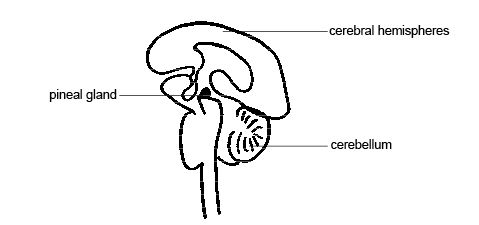
It is the kind of claim that should not work. Take a chain of three amino acids — shorter than the smallest functional fragment most molecular biologists would bother to name — feed it to an ageing animal, and watch the brain’s own genes appear to change their behaviour. No virus, no gene therapy, no editing machinery. Just Glu-Asp-Arg, three letters of the protein alphabet, allegedly whispering instructions to the genome. This is the promise of Pinealon, and it sits at the heart of one of the strangest, most prolific, and most contested research traditions in modern peptide science.
What exactly is Pinealon?
Pinealon is the trade name for the synthetic tripeptide EDR — glutamic acid, aspartic acid, arginine — a member of the “cytogen” class of short peptide bioregulators developed within the school of the Russian gerontologist Vladimir Khavinson1. The name points to its proposed home in the body: the brain and the pineal axis, the same neuroendocrine territory associated with the school’s most famous molecule, the tetrapeptide Epitalon1. Where larger peptide drugs are designed to dock onto a single receptor like a key in a lock, the cytogen hypothesis proposes something far more audacious: that these tiny sequences slip into cells, reach the DNA, and tune which genes are read1.
Pinealon is built from just three amino acids (EDR)1 — one of the shortest sequences ever proposed to act as a regulator of gene expression, which is precisely what makes the claim both fascinating and demanding of scrutiny.
To appreciate why that is a remarkable proposition, consider scale. A typical signalling protein is hundreds of residues long, folded into a precise three-dimensional shape. A tripeptide has almost no structure to speak of — it is closer to a short phrase than a sentence. The Khavinson thesis asks us to believe that this phrase carries enough information to find specific stretches of DNA and influence them1. That is the bet Pinealon represents.
How is Pinealon supposed to work?
The mechanistic story put forward by the school is that ultra-short peptides such as EDR penetrate the cell and the nucleus, bind selectively to particular DNA sequences or to histone proteins, and thereby act as epigenetic regulators — switches that change gene expression without altering the genetic code itself12. In this telling, the tripeptide does not merely protect cells from the outside; it reaches inward to the genome and nudges the programmes that govern survival, differentiation and neurogenesis2.
The preclinical literature offers several threads in support. EDR specifically has been proposed to bind in the promoter regions of genes implicated in neurodegeneration — among them caspase-3, SOD2 and APOE — and thereby to modulate the gene-expression pathways tied to Alzheimer-disease mechanisms3. In a transgenic (5xFAD) mouse model of Alzheimer disease, EDR and the related tripeptide KED have been reported to act as epigenetic regulators, preserving dendritic-spine architecture and the expression of genes linked to neuroplasticity4. Other work describes short peptides, EDR among them, protecting induced neurons — neurons reprogrammed directly from the fibroblasts of elderly donors, a model designed to capture the biology of ageing cells — against oxidative DNA damage5. And in classic gerontological experiments, Pinealon, alongside the brain extract Cortexin, has been reported to confer neuroprotection in 18-month-old rats subjected to hypoxia and hypothermia6.
Pinealon does not stand alone. It is one entry in a deliberately systematic catalogue, in which each short peptide is matched to a tissue — a one-organ, one-peptide logic that the school built out over decades1. Seen this way, EDR is the “brain” cytogen in a family that also addresses vessels, immunity and other systems1.
| Cytogen (sequence) | Associated tissue / axis | What is studied preclinically |
|---|---|---|
| Pinealon (EDR) | Brain / pineal axis | Neuroprotection, neurogenesis, proposed gene-expression regulation1 |
| Vesugen (KED) | Vascular wall / endothelium | Endothelial and vascular-ageing models1 |
| Cortagen (AED) | Brain cortex / nervous tissue | Cortical and neuro-regulatory models1 |
The cytogen tripeptides at a glance, each mapped by the Khavinson school to a target tissue. Explore the full set in our Khavinson bioregulators catalogue.
Is there a connection to ageing and telomeres?
Part of Pinealon’s appeal flows from the broader claims the school has made about cellular ageing — but it is worth being precise about whose claims they are. The telomere story belongs not to Pinealon but to its pineal cousin: the tetrapeptide Epitalon was reported, in cultured human somatic cells, to reactivate telomerase and lengthen telomeres — the protective caps on chromosomes that shorten as cells divide7. Pinealon is frequently discussed within the same longevity framework, as a brain-directed companion to that systemic, pineal-directed work, though no comparable telomere claim has been established for EDR itself1. The narrative is coherent and, for a certain kind of reader, compelling: small peptides, deep effects, the genome itself responding. Coherence, however, is not the same as proof.
How strong is the evidence really?
Here the essay must slow down and be honest, because the honesty is the point. The body of work surrounding the cytogens is large — a systematic review by the originating group catalogues a substantial literature on peptide regulation of gene expression — but it originates overwhelmingly from a single research school and the Russian and Eastern-European journals associated with it1. Independent replication by unaffiliated Western laboratories is sparse. When the same group designs the hypothesis, runs the experiments, publishes the results and interprets them, the structure is vulnerable to single-group publication bias: the natural tendency for confirming findings to accumulate and discordant ones to vanish.
The proposed mechanism magnifies the need for caution. The idea that a free tripeptide reliably crosses the cell and nuclear membranes, locates specific DNA sequences, and acts as a sequence-selective epigenetic regulator is biologically striking — and it has not been independently established to the standard that mainstream molecular biology would demand12. The induced-neuron and aged-rat results are genuine and interesting preclinical signals56, but preclinical signals are the beginning of a scientific story, not its conclusion. There are no large, independent, randomised human trials establishing the headline neuroprotective claims. Pinealon is not an approved medicine in the European Union, the United States, or anywhere else, and nothing here describes a use in people.
The intellectually honest position, then, is neither dismissal nor belief. The cytogen programme is one of the most ambitious attempts to find a unifying logic for peptide regulation of ageing1, and EDR is a clean, well-defined molecule worth studying. But the extraordinary mechanism rests on a narrow, largely self-contained evidence base, and until independent groups reproduce the core findings, Pinealon belongs firmly in the laboratory, on the bench, under investigation — not in any claim about human health. For the wider context of the man and the method, see our editorial on who Vladimir Khavinson was.
What does research-use-only actually mean here?
For a compound whose entire scientific identity rests on a contested mechanism, two things matter more than for almost any other class of reagent: identity and purity. If you are studying whether EDR does anything to a cell, you must first know with certainty that the vial contains EDR — the correct sequence, free of the truncated fragments, scrambled sequences and process residues that can dominate a sloppily made short peptide — and at a defined concentration. A mislabelled or impure tripeptide does not produce a cautious result; it produces a meaningless one.
This is why Condor supplies Pinealon strictly as a research-use-only reference material, characterised by a Certificate of Analysis that documents identity and HPLC purity. It is not a medicine, not a supplement, and not for human or veterinary use; it carries no dosing, protocol or therapeutic guidance, because none would be legitimate. What it offers the researcher is the one thing the contested literature cannot supply on its own: a defined, verified molecule to test the claims against. In a field this disputed, the honest answer to “what is Pinealon?” ends not with a promise, but with a Certificate of Analysis.
- Pinealon is the tripeptide EDR (Glu-Asp-Arg), a three-amino-acid “cytogen” bioregulator associated with the brain and pineal axis in the Khavinson tradition.
- The school’s central thesis is that such ultra-short peptides reach the genome and act as epigenetic regulators of gene expression and neurogenesis — an intriguing but not independently established mechanism.
- Preclinical signals include neuroprotection in aged rats under hypoxia, protection of fibroblast-derived induced neurons, and effects in Alzheimer-disease mouse models.
- The evidence base originates overwhelmingly from a single research school and the Russian/Eastern-European literature, with limited independent Western replication and strong single-group publication bias.
- Pinealon is not an approved medicine in the EU or US; Condor supplies it strictly as a research-use-only reference compound with a Certificate of Analysis verifying identity and purity.
What is Pinealon made of?
Pinealon is the synthetic tripeptide EDR, composed of three amino acids: glutamic acid (Glu/E), aspartic acid (Asp/D) and arginine (Arg/R). It belongs to the “cytogen” class of short peptide bioregulators from the Khavinson school and is associated with the brain and pineal axis. It is supplied as a research-use-only reference compound, not a medicine.
How is Pinealon thought to work?
The Khavinson school proposes that ultra-short peptides such as EDR enter the cell and nucleus and act as epigenetic regulators, changing which genes are expressed without altering the DNA sequence itself, with reported effects on neuroprotection and neurogenesis in preclinical models. This mechanism is intriguing but has not been independently established to mainstream molecular-biology standards.
Is the evidence for Pinealon reliable?
The literature is large but originates overwhelmingly from a single research school and the Russian/Eastern-European journals associated with it, with limited independent Western replication and a strong single-group publication bias. The preclinical signals (aged-rat hypoxia models, induced-neuron protection, Alzheimer-disease mouse models) are genuine but unconfirmed by large independent human trials.
Is Pinealon an approved medicine?
No. Pinealon is not an approved medicine in the European Union, the United States, or anywhere else. It is not a supplement and not for human or veterinary use. Condor supplies it strictly as a research-use-only reference material for laboratory investigation.
How is Pinealon related to Epitalon and other bioregulators?
Both come from the Khavinson school. Epitalon is the tetrapeptide most associated with the pineal gland and telomere-biology claims, while Pinealon (EDR) is the brain-directed cytogen tripeptide. Both sit within a systematic catalogue that maps short peptides to specific tissues — see our Khavinson bioregulators catalogue for the full set.