
Khavinson’s Peptide Bioregulators: A Field Guide to the “Cytogen” Catalogue (2026)
A Soviet-born research programme assigned a short peptide to nearly every organ in the body. Here is the map of the “cytogen” catalogue—and an honest reckoning with the state of the evidence in 2026.
Khavinson bioregulators are very short peptides (two to four amino acids), each proposed to regulate gene expression in a specific tissue. The literature is large but originates overwhelmingly from one Russian research tradition, with limited independent replication. None is an EMA- or FDA-approved medicine; Condor supplies all strictly as research-use-only reference materials with a Certificate of Analysis.
Imagine opening a card catalogue in which every drawer is labelled with an organ—pineal, vasculature, cortex, thymus, retina—and inside each one, instead of a tissue sample, you find a single tiny peptide just two to four amino acids long. That is, in essence, the system Vladimir Khavinson and the St. Petersburg school spent half a century assembling: a near-complete catalogue of “tissue peptides,” each one assigned, like a key to a lock, to the organ it is meant to regulate.10 It is one of the most ambitious—and one of the most contested—ideas in peptide biology. This is the map, and an honest account of where the evidence actually stands in 2026.
What are Khavinson peptide bioregulators?
The Khavinson bioregulators—often called “cytogens”—are ultra-short peptides, most of them tripeptides or tetrapeptides, drawn originally from extracts of animal tissues and later synthesised to a defined sequence.10 The founding observation, reported across decades of work from the St. Petersburg Institute of Bioregulation and Gerontology, was deceptively simple: feed an ageing tissue a short peptide that resembles that same tissue, and the tissue appears to behave younger.913 From that seed grew an entire taxonomy. There is a pineal peptide, a vascular peptide, a cortical peptide, a thymic peptide—a deliberate attempt to cover the body organ by organ.12
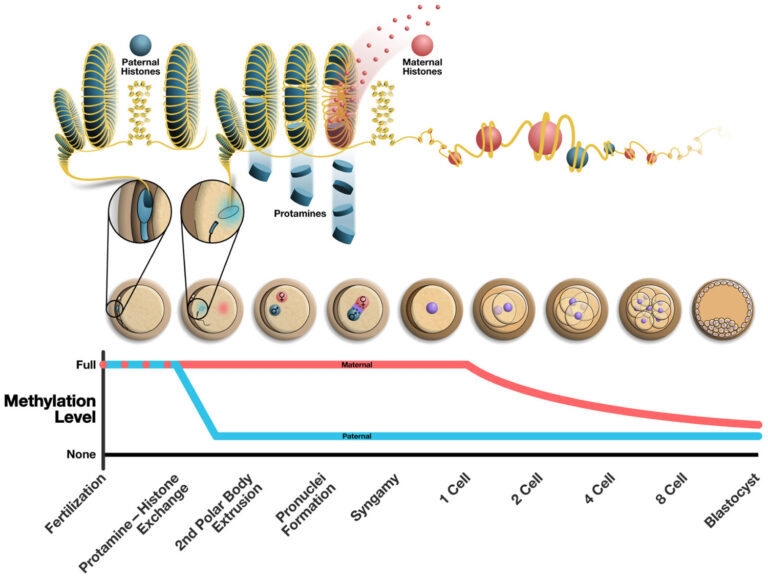
What makes the idea genuinely interesting—rather than merely tidy—is the proposed mechanism. The Khavinson school argues that these peptides are not signalling at the cell surface like a hormone, but slipping into the nucleus and binding directly to DNA, nudging which genes a cell switches on.67 In their telling, a short peptide is less a drug than a readout instruction—an epigenetic signal that tells a specific tissue to express its own proteins. Several of their papers report exactly this kind of finding: the pineal tetrapeptide AEDG (Epitalon) stimulating gene expression and protein synthesis during neurogenesis,14 the peptide KED implicated in the molecular genetics of neurogenesis,5 and short peptides reported to modify the structure of “aged” chromatin in cell models.67
Which Khavinson peptides does Condor stock?
The catalogue runs to dozens of named compounds, but a small core does most of the work—and it is this quartet that Condor stocks as reference materials. Each one pairs a tissue of origin with a short amino-acid sequence, the logic being homology: the peptide echoes a fragment of the proteins abundant in its target organ.24 Amino-acid sequence is doing real biochemical work here—the identity and charge of just three or four residues governs how a peptide folds, binds and behaves3—which is precisely why purity and exact sequence matter so much for any honest research.
| Peptide | Sequence & tissue | Condor primer |
|---|---|---|
| Epitalon | AEDG (Ala-Glu-Asp-Gly) — pineal | What is Epitalon? |
| Pinealon | EDR (Glu-Asp-Arg) — brain / neurons | What is Pinealon? |
| Vesugen | KED (Lys-Glu-Asp) — vascular wall | What is Vesugen? |
| Cortagen | AED / AEDP — cortex & peripheral nerve | What is Cortagen? |
The core “cytogen” quartet Condor supplies as research-use-only reference materials. Each links to a dedicated primer; for the wider context see the bioregulators explainer.
Epitalon is the headliner—the pineal peptide most associated with telomere and ageing research, and the one that has travelled furthest beyond its origin laboratory.814 Pinealon (EDR) is the neuronal entry, studied in preclinical models of neuroprotection and gene expression.2 Vesugen (KED) is catalogued as the vascular peptide, paired by homology with the vessel wall.4 Cortagen rounds out the set as the cortical and peripheral-nerve peptide. Together they form a coherent slice of a much larger system—and a sensible place to start if you want to understand the catalogue as a whole.
Who was Khavinson, and are these peptides approved?
The catalogue does not float free of its institutional roots. It is the life’s work of one programme: the St. Petersburg Institute of Bioregulation and Gerontology, under Vladimir Khavinson, whose indexed output across gerontology and peptide journals is enormous—including a 130-plus-page monograph-length review, Peptides and Ageing, published as a single supplement.10 Much of that record reports geroprotective effects: the pineal and thymic peptides slowing markers of ageing in animals, and clinical claims that the same peptides extended human survival in elderly cohorts.11913 By the school’s own framing, these are positioned as a “new class of geroprotectors.”12
Khavinson bioregulators approved as medicines by the EMA or FDA. Some are registered as pharmaceuticals within Russia, but none has cleared Western regulatory review—and in Europe and the US they exist only as research-use-only reference materials.
That regulatory gap is not a detail to skim past. A compound can carry decades of supportive publications and still have crossed no Western threshold of independent verification. The honest reading of the registration status is this: recognised in one jurisdiction, unapproved in the rest of the world.
How strong is the evidence, really?
Here is the part the marketing usually skips. The Khavinson bioregulator literature is large—genuinely large, spanning hundreds of papers and half a century—but it is also heavily single-tradition. An unusually high fraction of the studies share the same group of authors, the same handful of Russian and Eastern-European journals, and the same theoretical commitments.91112 Many of the most striking mechanistic results—peptides remodelling chromatin, switching genes on in aged cells—come from a small constellation of collaborating laboratories rather than from broad, adversarial replication across the field.675 When a body of evidence and its central hypothesis grow up under the same roof, the risk of publication bias and conflict of interest is structural, not incidental.
The proposed mechanism deserves the same candour. The notion that a tripeptide can enter the nucleus, bind DNA in a sequence-specific way and act as a dedicated epigenetic regulator is biochemically intriguing—and it is not independently established as the field’s settled explanation.614 It remains a hypothesis with supportive in-house data, awaiting the kind of external, multi-laboratory confirmation that turns a school’s claim into textbook biology. Among the catalogue, Epitalon is the exception that proves the pattern: it is the one peptide that has drawn meaningful independent attention—including review work from outside the founding school—while most of the others remain cited largely within it.8 Short peptides are, separately, an active and legitimate area of therapeutic interest;1 that broad enthusiasm should not be mistaken for validation of any specific cytogen’s headline claim. The right posture is neither dismissal nor belief, but suspended judgement—curiosity with the receipts demanded.
Why purity and a Certificate of Analysis matter most of all
When a class of compounds is defined by a sequence of three or four amino acids, the molecule is the data. Swap one residue, leave a synthesis impurity, mislabel a vial, and you are no longer studying EDR or KED or AEDG—you are studying noise, and attributing it to the peptide on the label.3 For a catalogue whose evidence base is already under scrutiny, the worst thing a researcher can add is uncertainty about what was actually in the tube. That is the entire argument for identity testing.
To be unambiguous: the Khavinson bioregulators in this catalogue are supplied by Condor strictly as research-use-only reference materials. They are not medicines, not approved by the EMA or FDA for any human use, and nothing here is a protocol, dose or recommendation for human or veterinary application. What we can stand behind is the material itself—verified identity, characterised purity, and a Certificate of Analysis for every lot—so that whatever a laboratory concludes about these peptides, it can be confident it was studying the peptide it intended to. For the human story behind the science, see our editorial on who Vladimir Khavinson was; for the conceptual deep-dive, the bioregulators explainer.
- The organising idea is striking: peptides of just two to four amino acids, each homologous to a tissue, proposed to act as epigenetic signals that switch on that tissue's own genes.
- Condor stocks the core “cytogen” quartet—Epitalon (AEDG, pineal), Pinealon (EDR, brain), Vesugen (KED, vascular) and Cortagen (AED/AEDP, cortical/nerve).
- The catalogue grew out of the St. Petersburg Institute of Bioregulation and Gerontology and a vast publication record led by Vladimir Khavinson.
- The defining caveat: the evidence is a large but heavily single-tradition body of work with limited independent Western replication, and the proposed mechanism is not independently established. Epitalon is the most independently cited; the others far less so.
- Some bioregulators are registered as medicines in Russia, but none is approved by the EMA or FDA. All are sold as research-use-only reference materials with a Certificate of Analysis.
What are Khavinson peptide bioregulators?
They are ultra-short peptides—typically two to four amino acids, the so-called “cytogens”—each one homologous to a specific tissue and proposed to regulate that tissue's gene expression as an epigenetic signal. The concept and most of the supporting research come from Vladimir Khavinson and the St. Petersburg Institute of Bioregulation and Gerontology. They are research-use-only reference materials, not approved medicines in the EU or US.
Which bioregulators are in the core catalogue?
The core “cytogen” quartet is Epitalon (AEDG, pineal), Pinealon (EDR, brain/neurons), Vesugen (KED, vascular wall) and Cortagen (AED/AEDP, cortex and peripheral nerve). The wider Khavinson system extends to many more named peptides, but these four are the most studied entry points.
Is the evidence behind these peptides reliable?
The literature is large but originates overwhelmingly from a single research tradition, with limited independent Western replication and structural risks of publication and conflict-of-interest bias. The proposed gene-regulation mechanism is intriguing but not independently established. Epitalon is the most independently cited; the others far less so. Treat the claims as preliminary and unverified outside their origin school.
Are Khavinson bioregulators approved medicines?
No. Some are registered as pharmaceuticals within Russia, but none is approved by the EMA or FDA. In Europe and the US they exist only as research-use-only reference materials, and nothing about them constitutes a therapeutic claim, dose or protocol for human or veterinary use.
Why does a Certificate of Analysis matter for these peptides?
Because a compound defined by just three or four amino acids is only as meaningful as its identity and purity. A single substituted residue or synthesis impurity means you are no longer studying the intended peptide. Condor supplies each lot with verified identity, characterised purity and a Certificate of Analysis so researchers know exactly what they are working with.