
The One Peptide the FDA Panel Rejected — and Why That Vote Is the Most Informative of All
At the FDA's July 2026 compounding panel, six peptides passed and one failed: emideltide (DSIP). Why that single rejection is the most revealing vote of all.
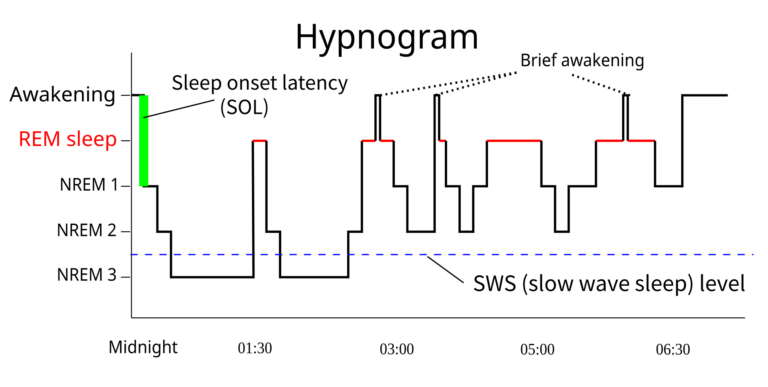
Emideltide, known in the literature as DSIP, was the only one of seven peptides the FDA's compounding advisory committee declined to recommend on 24 July 2026, failing 6–7 with one abstention. Reported reasons: clinical data existed only for the intravenous route while the nomination proposed subcutaneous injection, plus poor chemical characterisation and available approved therapies.
Six peptides went onto the recommendation list. One did not. At the FDA’s Pharmacy Compounding Advisory Committee meeting of 23–24 July 2026, emideltide — the compound the research literature has called DSIP, delta sleep-inducing peptide, since 1977 — was the single substance the panel declined to back, failing 6 yes to 7 no with one abstention.5 It is arguably the most informative vote of the two days, because it is the only place where the committee showed a floor. Nothing was approved, nothing changed in the EU or the UK, and nothing here alters the Research Use Only framework under which these compounds are supplied.
What exactly did the panel reject?
The Pharmacy Compounding Advisory Committee (PCAC) convened at FDA’s White Oak campus to consider seven peptides for the Section 503A Bulk Drug Substances List — the register of substances that United States pharmacies may lawfully use to compound prescription medicines for individual patients.2 Six were recommended. One was not. The full two-day picture, including the four Day 1 votes, is set out in our report on the July 2026 compounding vote; this piece is a deep-dive on the one substance that failed. Background on the compound itself sits in what DSIP is.
What makes the rejection worth studying is the backdrop. FDA’s own scientific reviewers in the Center for Drug Evaluation and Research recommended against listing all seven substances. Every briefing document reached the same proposed answer: do not add.1 The committee then overruled its own agency’s staff six times across two days.3 On the seventh, it declined.
Two procedural oddities framed the meeting. The underlying nominations for these substances had been withdrawn by the nominators, and FDA proceeded anyway, stating in the briefing documents that it was evaluating the substances “at its discretion” — a point that drew visible consternation from some members.1 And several panellists said openly that they were being asked to vote on bulk-substance suitability while the discussion kept collapsing into questions of dosing, efficacy and safety they had not been equipped to answer.3
209 subjects had ever received emideltide intravenously across the entire clinical literature FDA could identify. For the subcutaneous route actually proposed, the agency found no effectiveness data and no safety data at all.
Why did this one fail when thinner cases passed?
The decisive problem was a mismatch between the product proposed and the evidence available to support it. FDA evaluated emideltide-related substances for compounding into a subcutaneous injection, because that is what the nomination specified. Every human study the agency located used the intravenous route. Its conclusion is unusually flat: FDA “did not identify any data to support the effectiveness” of either emideltide form for the conditions evaluated via the nominated subcutaneous route, and there were “no safety data” by that route either.1 You cannot underwrite a subcutaneous product with intravenous data, and the committee said so.7
The three conditions in question — chronic insomnia, narcolepsy and opioid withdrawal — are what FDA evaluated because those are the uses the nominations proposed. They are not permitted uses, they were not endorsed, and the vote does not make them so. Even on the intravenous evidence, FDA judged the chronic insomnia work “inconclusive and at best preliminary”, noted that different authors reached different conclusions, and observed that the studies reporting positive responses were the ones with the weakest control groups. The narcolepsy file rested on a single-subject case report.1
Characterisation was the second pillar. FDA concluded that both the free base and the acetate are not well characterised, on two grounds: naming conventions that do not follow established chemical nomenclature standards such as USAN, INN and IUPAC, and the absence of critical data including specific tests for impurities, aggregates and endotoxins. The naming point is a patient-safety argument, not pedantry — when a common name can map to more than one sequence or salt, neither prescriber nor analyst can be sure what is in the vial.6 The agency added that a nine-amino-acid peptide delivered by injection carries immunogenicity potential through aggregation and peptide-related impurities, and that emideltide’s reportedly limited water solubility made the proposed injectable concentration questionable in the first place.1
Two further weights landed on the same side. Approved therapies with established efficacy already exist for all three conditions. And on the nonclinical side, FDA flagged that emideltide’s sleep and analgesic effects appear to run through calcium-dependent endorphin release rather than direct opioid-receptor binding — raising a theoretical addiction concern that no available study addressed.1 Committee members cited low-quality efficacy evidence, the existence of alternatives, and a significant lack of safety data; one member who had voted with the majority on earlier substances switched, citing “potentially dangerous downstream consequences”.34
The floor was not “almost no human data” — several substances cleared that. The floor was data pointing at a different product than the one on the table.
What DSIP actually is
DSIP was isolated in 1977 by Schoenenberger and Monnier from the cerebral venous blood of rabbits in which sleep had been induced by electrical stimulation of the thalamus; infused intraventricularly into recipient animals, the fraction enhanced slow-wave and spindle EEG activity, which is where the name comes from.8 A follow-up paper the next year established the nonapeptide sequence Trp-Ala-Gly-Gly-Asp-Ala-Ser-Gly-Glu and showed that only the pure alpha-aspartyl form was highly active.9
Then the literature became famously inconsistent. By 1986, a sympathetic review by Graf and Kastin surveying more than two decades of work concluded that DSIP’s physiological functions and a possible mechanism of action “remain to be established” — no defined receptor, no settled pathway.10 The human clinical corpus is thin and old: small intravenous crossover and open studies in chronic insomnia from the 1980s,12 an open, unblinded series of 107 patients in alcohol and opiate withdrawal,13 a 1998 detoxification trial published as a two-page letter,14 and one double-blind study in 16 chronic insomniacs that measured better sleep efficiency and shorter sleep latency than placebo and still concluded that short-term treatment “is not likely to be of major therapeutic benefit”.11 That last sentence is the honest summary of forty years of work.
| Substance | Day | Vote (yes–no–abstain) | Outcome |
|---|---|---|---|
| BPC-157 | 23 Jul | 8–6–1 | Recommended |
| KPV | 23 Jul | 8–6–1 | Recommended |
| TB-500 | 23 Jul | 8–6–1 | Recommended |
| MOTS-c | 23 Jul | 7–5–2 | Recommended |
| Epitalon | 24 Jul | 7–4–1 (7–5–1 in some reports) | Recommended |
| Semax | 24 Jul | 8–5–1 | Recommended |
| Emideltide (DSIP) | 24 Jul | 6–7–1 | Not recommended |
Tallies as reported by trade and legal press; free-base and acetate forms were considered as separate substances and voted separately, with identical tallies. Reported epitalon figures differ by one vote between outlets. These are advisory recommendations, not approvals, and they concern a United States prescription-compounding list only. Nothing in this table confers legal status in the EU or UK, and nothing in it applies to Research Use Only material, which is not for human or veterinary use.
What a recommendation is worth
Very little, immediately. PCAC votes are advisory and non-binding; FDA is not obliged to follow them. Before any substance appears on the 503A list, the agency must complete notice-and-comment rulemaking under 21 CFR 216.23, weighing the full record and issuing a proposed rule for public comment — a process legal analysts expect will not conclude before 2027 or 2028.7 Even at the end of it, a listing is permission for licensed United States pharmacies to compound against a prescription. It is not a marketing authorisation, not an approval, and not evidence that anything works.
An honest read of the evidence
It would be easy to write the DSIP rejection as an injustice — the one substance held to a standard the other six escaped. That reading does not survive contact with the file. DSIP’s literature is not merely sparse; it is discordant. Different groups asking the same question got different answers, the positive results clustered in the studies with the poorest controls, endogenous-DSIP measurements across laboratories were long known to disagree, and no receptor or mechanism was ever pinned down. FDA’s adverse-event database returned zero reports for emideltide, which is not reassurance but a measure of how few people have ever been formally exposed.
What the vote actually reveals is where the bar sat. This was a committee already inclined to say yes, and inclined to say yes over the objections of its own scientific staff. “Almost no human data” plainly did not disqualify a substance in that room. What did disqualify emideltide was a combination the panel could not talk itself past: evidence describing a different route than the product proposed, and an inability to state with confidence what the powder in the vial actually is. That is a narrow floor, but it is a real one, and knowing where it sits tells you more about the July 2026 meeting than any of the six affirmative votes.
For laboratories, none of this changes anything operationally. Compounds discussed here are supplied strictly for in-vitro and laboratory research use, are not medicines, are not for human or veterinary administration, and carry no dosing guidance of any kind. The regulatory conversation described above is a United States pharmacy matter; if anything, the characterisation problems FDA documented are an argument for insisting on identity and purity documentation for any research-grade material, whatever a compounding list eventually says. See what Research Use Only means.
Condor Research · Scientific desk
Atrio Sciences s.r.o., IČO 57 669 651, Nitra (SK) · info@condorresearch.com
- At the FDA Pharmacy Compounding Advisory Committee meeting of 23–24 July 2026, seven peptides were considered for the Section 503A Bulk Drug Substances List; six were recommended and one — emideltide, better known as DSIP — was not.
- Emideltide failed 6 yes, 7 no, 1 abstention on 24 July 2026, the only negative vote of the two days. Free base and acetate were voted separately with identical tallies.
- FDA's own scientific review team recommended against listing all seven substances; the committee overruled its own agency's reviewers six times and declined to do so a seventh.
- The decisive evidentiary problem was a route mismatch: the nomination proposed subcutaneous injection, while every human study FDA could identify used the intravenous route.
- FDA also concluded emideltide is not well characterised, citing naming conventions outside USAN/INN/IUPAC standards and absent impurity, aggregate and endotoxin data.
- The conditions named — chronic insomnia, narcolepsy and opioid withdrawal — are what FDA evaluated because the nominations proposed them. They are not permitted uses and the vote does not make them so.
- Nothing was approved. PCAC votes are advisory and non-binding, any listing requires separate notice-and-comment rulemaking under 21 CFR 216.23, and the process is US-only with no effect on EU or UK status or on Research Use Only supply.
What is emideltide and why is it called DSIP?
Emideltide is the assigned nonproprietary name for delta sleep-inducing peptide, a nonapeptide first isolated in 1977 from the cerebral venous blood of rabbits during electrically induced sleep. It was named for the increase in delta-frequency EEG activity observed after intraventricular infusion in recipient animals.
What was the exact vote?
Six in favour, seven against, one abstention, on 24 July 2026. Emideltide free base and emideltide acetate were treated as separate bulk drug substances and voted separately, with identical tallies. It was the only one of the seven substances the committee did not recommend.
Why did it fail when substances with almost no human data passed?
The reported deciding factors were the route-of-administration mismatch — subcutaneous proposed, intravenous data available — combined with FDA's conclusion that the substance is not well characterised and that its identity, purity and impurity profile could not be confirmed. Approved therapies already exist for the conditions FDA evaluated, which weighed against it.
Does the rejection mean DSIP is unsafe?
No. It means the evidence reviewed was insufficient to support the specific compounded product proposed. FDA's adverse-event reporting system returned zero reports for emideltide, which reflects very limited formal human exposure rather than a demonstrated safety record.
Does any of this change anything in the EU or UK?
No. Section 503A compounding is a United States pharmacy pathway. The vote creates no marketing authorisation anywhere, triggers no EMA or MHRA action, and has no bearing on the legal status or supply of these compounds in Europe, which remain Research Use Only.
Do the six recommended peptides now become approved medicines?
No. The recommendations are advisory and non-binding. FDA must still complete notice-and-comment rulemaking under 21 CFR 216.23 before any substance is added to the 503A list, and analysts do not expect that process to conclude before 2027–2028. A listing would permit compounding against a prescription in the United States; it would not constitute approval.