
Mimrylo (Rusfertide): The FDA Just Approved a Peptide That Mimics a Hormone Most People Have Never Heard Of
On 28 August 2026 FDA approved Mimrylo (rusfertide) for polycythemia vera — the first hepcidin-mimetic peptide medicine. The mechanism is iron restriction, and it is a case study in engineering an unusable hormone into a drug.
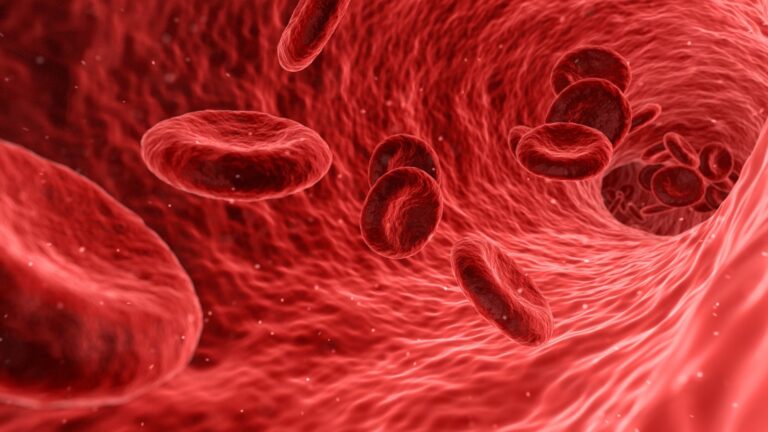
On 28 August 2026 the FDA approved Mimrylo (rusfertide) for adults with polycythemia vera, a rare blood cancer in which the bone marrow overproduces red blood cells. It is the first approved treatment for the condition that works by mimicking hepcidin, the hormone that controls how much iron the body makes available. The approval went to Takeda Pharmaceuticals America, following priority review, on the strength of the Phase 3 VERIFY trial in 293 patients: 76.9% of patients on Mimrylo required no phlebotomy between weeks 20 and 32, against 32.9% on placebo. It is also a clean example of something this field does well — taking a hormone that is useless as a drug and engineering a peptide that keeps its function.
Condor Research supplies reference materials for laboratory research use only. Mimrylo is a prescription medicine; doses cited here come from the FDA approval announcement and are reported as published facts. Nothing in this article is medical advice or a recommendation to use any compound.
The disease: too many red blood cells
Polycythemia vera is a myeloproliferative neoplasm, usually driven by a mutation in the JAK2 gene that leaves the signalling pathway controlling red cell production stuck in the on position. The marrow keeps making red cells whether or not the body needs them.
The consequence is mechanical before it is anything else. Blood is a suspension, and its viscosity rises steeply with the fraction of it made of red cells. Thicker blood flows worse, and the clinical risk is thrombosis: clots, stroke, heart attack.
Standard management therefore aims at a number. Keep haematocrit — the proportion of blood volume occupied by red cells — below 45%. The oldest and most direct way to do that is phlebotomy: remove blood. It works, and it is a burden. Patients can need it repeatedly and indefinitely, and some continue to need it frequently despite drug therapy. FDA’s Tanya Wroblewski, director of the Division of Nonmalignant Hematology at CDER, framed the approval in exactly those terms — a chronic disorder managed with frequent blood draws, and a new option with the potential to reduce that burden meaningfully.
The mechanism: starve the process of iron
Rusfertide does not act on the JAK2 pathway. It acts on the raw material.
Every red blood cell needs haemoglobin, and every haemoglobin molecule needs iron. Iron availability is controlled by hepcidin, a 25-amino-acid peptide hormone made by the liver, which is the master regulator of iron trafficking in the body.
Hepcidin’s mechanism is unusually elegant. It binds ferroportin, the only known protein that exports iron out of a cell, and causes it to be internalised and degraded. Ferroportin sits on the cells that release iron into circulation: intestinal enterocytes absorbing dietary iron, and macrophages recycling iron from old red cells. Remove ferroportin from those surfaces and iron stops entering the plasma. It is still in the body; it is simply not available.
In polycythemia vera, hepcidin levels are relatively low, which leaves iron freely available to a marrow that is already over-producing. Rusfertide raises that signal artificially. It binds ferroportin, produces what the literature calls functional iron restriction, and constrains erythropoiesis — the marrow cannot build red cells faster than iron arrives.
The design logic is worth stating plainly. Rather than trying to switch off a mutated signalling pathway, the drug limits a required input. That is a more oblique kind of pharmacology, and in this disease it appears to work.
Why a peptide mimetic rather than hepcidin itself
Hepcidin is a peptide, and its structure explains why nobody makes a drug out of it. Twenty-five amino acids, folded into a hairpin held by four disulfide bonds, cleared from circulation quickly. The disulfide-rich fold makes manufacturing and stability difficult; the short half-life makes dosing impractical.
Rusfertide is an engineered mimetic: a peptide designed to reproduce the ferroportin-binding function while behaving like a medicine — stable enough to formulate, long-lasting enough to give once a week by subcutaneous injection that the patient administers themselves. Per the FDA announcement, treatment starts at 19 mg once weekly and is titrated to keep haematocrit below 45%.
This is the same design problem solved for amylin thirty years ago and for GLP-1 twenty years ago, and the same one behind a GHRH fragment like sermorelin. The natural hormone shows what the target does; the engineered analogue makes it usable. The techniques differ — proline substitution, lipidation, cyclisation, backbone modification — but the shape of the problem is constant across the field.
What VERIFY showed
VERIFY was a multicentre, randomised, double-blind, placebo-controlled Phase 3 trial of 293 adults with polycythemia vera who still required frequent phlebotomy despite ongoing standard-of-care therapy. Patients were randomised 1:1 over 32 weeks. The endpoint was the proportion who did not meet criteria for phlebotomy between weeks 20 and 32.
76.9% on Mimrylo met that bar, against 32.9% on placebo. The most common adverse reactions were injection-site reactions and anaemia — the second of which is the mechanism showing up as a side effect, exactly as one would predict from a drug that restricts iron.
The Phase 3 result did not arrive alone. Rusfertide had earlier Phase 2 data, including the REVIVE trial published in the New England Journal of Medicine in 2024, plus a long-term extension programme; a 2026 review in Blood Reviews describes durable haematocrit control and marked reductions in phlebotomy requirements across the Phase 2 and Phase 3 studies.
The wider point: hepcidin is now a druggable axis in both directions
Rusfertide is not an isolated molecule. A 2026 review in Blood sets out the landscape: because hepcidin is low in polycythemia vera and high in myelofibrosis, the same axis is being targeted in opposite directions in two related diseases. Hepcidin agonists — rusfertide, divesiran, sapablursen — are in development for polycythemia vera. Strategies to lower hepcidin are in development for myelofibrosis, where elevated hepcidin contributes to the anaemia of chronic inflammation.
That symmetry is the same lesson as avexitide’s, arriving from a different direction. A pathway is not intrinsically something to stimulate or to block. Which direction is therapeutic depends on where the patient’s physiology sits, and a well-characterised axis can support drugs pointing both ways.
Why this belongs in a peptide briefing
Because it is a first-in-class approval that most peptide coverage will miss entirely, being neither an incretin nor a wellness compound.
Because the approval demonstrates what the regulatory bar actually is. A peptide got to market by way of a defined target, a mechanism understood down to the transporter it degrades, a pre-specified endpoint, a controlled trial of 293 patients, a predictable side effect that follows directly from the mechanism, and a manufacturer accountable for every batch. That is the standard the July 2026 advisory committee discussion was implicitly measured against, and the gap between the two is the entire story of this field in 2026.
And because it is a reminder of how much of peptide therapeutics is chemistry rather than biology. The biology of hepcidin has been understood for two decades. What took the time was building a molecule that keeps the function and loses the liabilities.
Related reading
- FDA approved Mimrylo (rusfertide) on 28 August 2026 for adults with polycythemia vera, the first approved treatment for the condition that mimics hepcidin.
- Hepcidin controls iron availability by binding ferroportin, the only known cellular iron exporter, and causing it to be internalised and degraded.
- In polycythemia vera hepcidin is relatively low; rusfertide raises that signal artificially, producing functional iron restriction that constrains red cell production.
- In the Phase 3 VERIFY trial of 293 patients, 76.9% needed no phlebotomy between weeks 20 and 32, against 32.9% on placebo.
- Hepcidin itself is impractical as a medicine — 25 residues held by four disulfide bonds, cleared quickly — so the drug is an engineered mimetic, the same design pattern as amylin and GLP-1 analogues.
What is Mimrylo?
The brand name for rusfertide, approved by FDA on 28 August 2026 for adults with polycythemia vera. The approval was granted to Takeda Pharmaceuticals America.
How does a hepcidin mimetic work?
It binds ferroportin, the protein that exports iron from cells, causing its degradation. Less iron reaches the bone marrow, so fewer red cells can be made.
Why not use hepcidin itself?
Hepcidin is a 25-amino-acid peptide with four disulfide bonds and a short half-life, which makes it difficult to manufacture and impractical to dose.
What did the VERIFY trial show?
Of 293 adults randomised 1:1 over 32 weeks, 76.9% on rusfertide required no phlebotomy between weeks 20 and 32 versus 32.9% on placebo. The most common adverse reactions were injection-site reactions and anaemia.