
Why Silicon Valley Is Obsessed With Peptides
In a few short years, peptides went from obscure lab reagents to the most-discussed molecules in longevity and biohacking culture. A look at why now — and why the hype has outrun the data.
Peptides became a cultural obsession through a convergence of the longevity boom, the GLP-1 weight-loss wave that normalised injecting a peptide, and podcast-driven attention. Much of the underlying science remains preclinical. These compounds are sold strictly for Research Use Only — not medicines, and not for human or veterinary use.
A decade ago, the word “peptide” lived in a glossary — a short chain of amino acids, a reagent in a freezer, a footnote in a biochemistry lecture. Today it is a lifestyle. It shows up in beauty columns and gym locker rooms, in the captions of fitness influencers and the monologues of the world’s biggest podcasters, in venture-capital decks and Reddit threads with names like “the protocol.” Somewhere between the laboratory and the algorithm, a class of molecules most people could not pronounce became the most talked-about substances in the longevity world. How a freezer reagent became a cultural object is a story less about chemistry than about timing — and it is worth telling honestly, because the conversation has galloped well ahead of the evidence.1
Why are peptides suddenly everywhere?
Trends rarely have a single cause, and this one has three, braided together so tightly they are hard to pull apart. The first is the longevity and biohacking boom — a cultural appetite, concentrated in Silicon Valley but no longer confined to it, for optimising the human body the way one optimises a codebase. In that worldview, ageing is not a fate but a bug, and a peptide is a patch: small, specific, programmable. The metaphor is seductive precisely because peptides genuinely are signalling molecules — the body’s own vocabulary of instructions — rather than blunt chemical hammers. The trouble is that “the body speaks in peptides” is biology, while “therefore this vial will fix you” is marketing, and the gap between them is where most of the confusion lives.
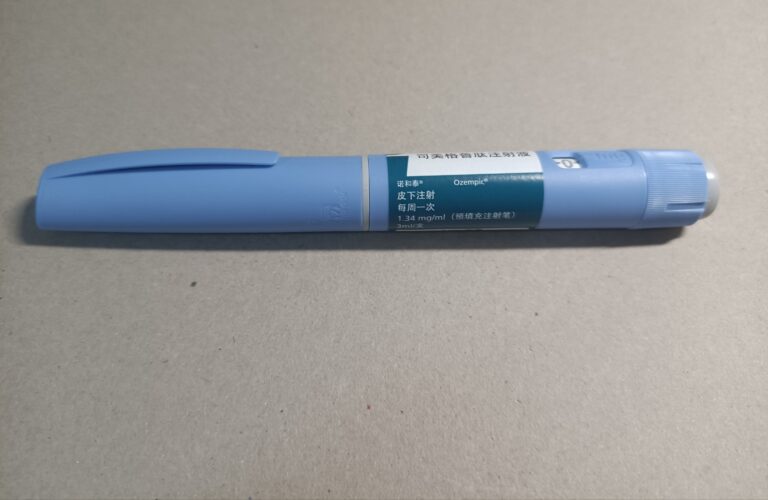
The second force is the one almost nobody saw coming: the GLP-1 weight-loss wave. Semaglutide and tirzepatide did something no wellness campaign could. They made injecting a peptide ordinary. Millions of people, under medical supervision, learned that a weekly subcutaneous shot of a peptide drug could reorder their metabolism — and in doing so they quietly dissolved the psychological barrier that had always surrounded the format. Once the needle felt normal for a regulated medicine, the cultural distance to the unregulated grey market shrank. The GLP-1 era did not just sell drugs; it normalised an entire category in the public imagination.2
The third force is the megaphone. The modern long-form podcast — Huberman Lab, The Diary of a CEO — can put a niche molecule in front of tens of millions of curious listeners in a single two-hour sitting. We have fact-checked the Huberman episode and the Diary of a CEO one at length, and the pattern is consistent: the biology is often broadly right, the framing is often sharper than the data, and the clip travels faster than either. Attention, once captured, compounds.
How do we know this is a real cultural moment, not just noise?
Because the mainstream press converged on it all at once. When Scientific American, TIME, NPR and The Conversation all publish peptide explainers inside the same window, that synchronicity is itself the signal — the sound of a subculture crossing into the mainstream.1234 The headlines are revealing in their hedging. NPR asks what the science actually says about influencer-promoted peptides.2 The Conversation frames injectable peptides as “the new anti-ageing trend” and then, pointedly, asks what evidence exists that they are safe for humans.3 TIME simply notes that anti-ageing peptide shots are “all over social media.”4 The press, in other words, is doing the thing the hype skips: asking for the data.
— from Scientific American, NPR, TIME and The Conversation — ran in 2026 as near-simultaneous press explainers on the “peptide craze” (a count of media coverage, not studies), and each independently arrived at the same caveat: the human evidence is thin.1234
Why did BPC-157 become the face of the trend?
Every movement needs a mascot, and the peptide world found one in BPC-157, a fragment derived from a protein found in gastric juice. The wellness industry adopted it as its star compound — the “repair” peptide, whispered about for tendons and gut and recovery — and its rise is a near-perfect case study in how a molecule goes mainstream.6 The animal data are genuinely interesting; rodent studies have pointed to effects on tissue healing that earned the compound its reputation. But a reputation built in rats is not the same as evidence in people, and that is precisely the distinction the marketing tends to blur. BPC-157 is famous less because the human science is strong than because the story is good: a simple name, a simple promise, a confident podcast clip.
| The claim, as it circulates | What the evidence actually supports | Status |
|---|---|---|
| “Peptides are the future of anti-ageing” | A plausible mechanism and active research; human longevity outcomes are not established | Largely preclinical3 |
| “BPC-157 heals injuries” | Encouraging tissue-repair signals in rodent models; limited controlled human data | Animal models6 |
| “Injecting a peptide is routine and safe” | True for approved GLP-1 medicines under supervision; unverified for grey-market compounds | Context-dependent23 |
| “The FDA is unfairly blocking these” | A 2023 restriction citing thin data; a genuine 2026 reclassification debate is under way | Open and contested5 |
The recurring gap between how peptide claims circulate online and what the published evidence actually supports. Compounds discussed here are research materials, not medicines.
What does the regulatory fight tell us?
The hype did not arrive in a vacuum; it arrived into a regulatory argument that is still live. In 2023 the U.S. FDA placed a set of peptides into its most-restricted compounding category, citing insufficient safety and efficacy data for human use — a decision the loudest voices in the space read as protectionism and the agency framed as caution. By 2026 that decision had become a debate, with reporting that the FDA is now weighing whether to loosen those restrictions on several unproven peptides.5 We have traced that fight in detail in our analysis of the July 2026 review. The point for a cultural history is simpler: a trend this large does not wait for regulators to finish deliberating. It runs ahead, and the rules try to catch up.
So is the science actually there yet?
Here is the honest answer, and it is the one the headlines keep circling back to: mostly, no — not yet, not in the way the enthusiasm implies. The most exciting peptide stories outside the approved GLP-1 medicines rest overwhelmingly on preclinical work — cell cultures and animal models — with human evidence that is limited, early, or absent.13 That does not make the science worthless; preclinical research is how every real therapy begins. It means the confidence has outpaced the data. A molecule can be genuinely promising in a rodent and still be a complete unknown in a person, and a culture that collapses that distinction is setting itself up for disappointment. The most striking thing about the 2026 coverage is not that journalists are sceptical — it is that they are sceptical in unison, each arriving independently at the same caution.24 When Scientific American and your gym’s group chat reach opposite conclusions from the same molecules, it is usually the magazine that has read the methods section.
What survives a hype cycle?
Hype cycles are not permanent; they resolve. Some compounds will graduate into rigorous human trials and earn their reputations. Others will quietly fade when the controlled data fail to match the testimonials. We cannot predict which is which, and any honest writer should refuse to. What we can say is what endures regardless of the outcome: in a market flooded with confident claims, the only durable differentiators are provenance and honesty — knowing exactly what is in the vial, and being candid about what the evidence does and does not show.
That is the entire reason a Certificate of Analysis matters. Identity, purity, the absence of contaminants — verified by third-party testing — are not marketing flourishes; they are the floor beneath any serious research. The compounds discussed here are sold strictly for Research Use Only. They are not medicines, they are not for human or veterinary use, and nothing in this essay is advice to consume them or a claim that they treat anything. Their value, in a laboratory, is as well-characterised reagents — and that value collapses entirely the moment you cannot trust what the label says. The trend will do what trends do. The chemistry, and the question of what is actually in the bottle, will outlast it.
- Three forces converged: the longevity/biohacking boom, the GLP-1 weight-loss wave, and the podcast economy — turning peptides into a mainstream conversation almost overnight.
- Mainstream outlets (Scientific American, TIME, NPR, The Conversation) all ran near-simultaneous explainers in 2026, a tell-tale sign of a cultural inflection point.
- BPC-157 became the wellness industry's emblematic peptide despite human evidence that remains thin and largely preclinical.
- The regulatory backdrop is unsettled: the FDA's 2023 compounding restriction is now the subject of a 2026 reclassification debate.
- In a hype cycle, the only durable differentiators are provenance and honesty — knowing exactly what is in the vial via a Certificate of Analysis. Research Use Only throughout.
Why are peptides so popular right now?
Three forces converged: the longevity and biohacking boom that treats ageing as a problem to optimise; the GLP-1 weight-loss wave, which normalised the idea of injecting a peptide; and the podcast economy, which can put a niche molecule in front of tens of millions of listeners at once. Mainstream outlets including Scientific American, NPR, TIME and The Conversation all ran explainers in 2026, marking the moment peptides crossed into the cultural mainstream.
Is the science behind the peptide craze solid?
Mostly not yet. Outside the approved GLP-1 medicines, the most-discussed peptides rest largely on preclinical research — cell cultures and animal models — with limited or absent human evidence. The 2026 press coverage repeatedly arrived at the same caution: the enthusiasm has outpaced the data. Preclinical promise is not proof in people.
Why is BPC-157 the most talked-about peptide?
BPC-157, a fragment derived from a protein found in gastric juice, became the wellness industry's emblematic compound largely because the story is simple and compelling — a short name and a 'repair' promise amplified by podcasts. The rodent data are interesting, but controlled human evidence remains limited. It is sold strictly for Research Use Only.
Did GLP-1 drugs cause the peptide trend?
They were a major catalyst. Semaglutide and tirzepatide are real, regulated medicines that, under supervision, made a weekly peptide injection feel ordinary to millions of people. That dissolved the psychological barrier around the format and helped normalise an entire category in the public imagination — even though grey-market research compounds are an entirely different and unverified matter.
What is the FDA doing about peptides?
In 2023 the FDA placed a set of peptides into its most-restricted compounding category, citing insufficient safety and efficacy data for human use. By 2026, reporting indicates the agency is weighing whether to loosen those restrictions, making it an open and contested regulatory debate rather than a settled question.