
The FDA’s July 2026 Peptide Review, Explained
A US advisory committee meets on 23–24 July 2026 to weigh whether a group of research peptides — including BPC-157 and TB-500 — should return to a category permitting regulated compounding. Here is what is actually being decided, and what it does not change.
On 23–24 July 2026, an FDA advisory committee will consider whether certain research peptides should return to a category that permits regulated US pharmacy compounding. The vote is advisory, is not FDA approval, and does not alter these compounds' Research Use Only status in Europe. Several remain investigational with limited human data.
It began, as so many regulatory stories now do, with a public remark rather than a memo. The US Health and Human Services Secretary, Robert F. Kennedy Jr., signalled that the government was reconsidering a quiet decision it had made earlier — a restriction on a class of molecules most people cannot pronounce, taken for reasons most people had never heard.3 The restriction, the argument went, had backfired: instead of protecting anyone, it had pushed demand into an unregulated gray market. Within weeks, that signal had hardened into a formal federal process, a docket number, and a date on the FDA’s calendar.2
The peptide world has been waiting on that date ever since. But the story is widely misunderstood — framed alternately as “the FDA is about to approve BPC-157” or “the FDA is about to ban it.” Neither is accurate. What is actually happening in July 2026 is narrower, stranger, and more bureaucratic than either headline suggests. It is worth understanding precisely, because precision is the whole point.
What did the FDA actually do to these peptides?
To compound a drug in the United States is to prepare a customised medication for an individual patient — a pharmacy practice older than the modern pharmaceutical industry. Under the relevant compounding statute, a substance can generally be prepared by a licensed pharmacist if it meets certain criteria, and the FDA maintains lists that sort which substances qualify. (Those list categories are often referred to informally; the labels below are explanatory shorthand, not a precise legal claim.) Being on the permissive side of that list does not mean a substance is an approved drug. It means a pharmacist may legally compound it under prescription.
At some point before the current review, the agency moved a group of peptides into the restrictive side of that framework — substances that, in effect, compounders were told to stop preparing. The list read like a roster of the entire research-peptide scene: BPC-157, TB-500, KPV, MOTS-c, Epitalon, Semax, DSIP and others. The stated reason was simple and, on its face, defensible: there was not enough data on safety and efficacy to support compounding them.3
The unintended consequence is the part Kennedy seized on. When a substance becomes hard to obtain through any regulated channel, demand does not evaporate. It migrates — to overseas vendors, unlabelled vials and the catch-all disclaimer that has become the scaffolding of an entire industry: research use only.3
What is actually being voted on in July 2026?
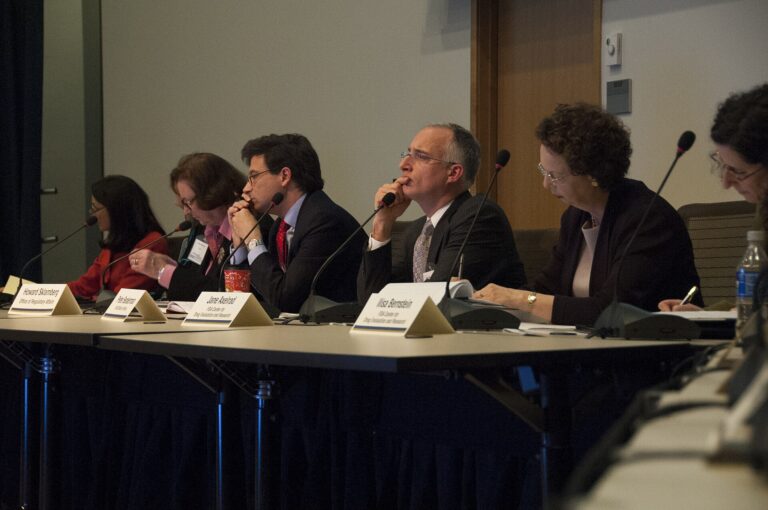
The mechanism is a Federal Register notice under Docket FDA-2025-N-6895, published in April 2026, which set the matter before the Pharmacy Compounding Advisory Committee — the PCAC.2 The committee will convene at the FDA over two days and offer its recommendation.1
The PCAC meets over two days, on 23–24 July 2026, to advise the FDA on peptide compounding — a recommendation, not a ruling.1
That last clause matters more than anything else in this article. The PCAC is an advisory committee. Its vote is a recommendation to the FDA, not a ruling. The agency can follow it, modify it, or set it aside. So when you read that “the FDA voted” on a given July afternoon, the more accurate sentence is that a committee offered the FDA its counsel, and the real decision will come later.
Here are the compounds most associated with this debate, and what researchers have actually studied them for.
| Peptide | Mainly studied for (preclinical) | Evidence status |
|---|---|---|
| BPC-157 | Tissue and tendon repair in animal models4 | Investigational |
| TB-500 (a thymosin β-4 fragment) | Cell migration, angiogenesis in vitro | Investigational |
| KPV | Anti-inflammatory signalling in models | Investigational |
| MOTS-c | Mitochondrial and metabolic pathways | Investigational |
| DSIP | Sleep-related neuropeptide signalling | Investigational |
| Epitalon | Telomere / ageing pathways in models5 | Investigational |
| Semax | Neuroprotective signalling in models5 | Investigational |
Peptides commonly cited in the compounding debate — every one classed investigational, with human evidence ranging from thin to preliminary.
Would reclassification mean these peptides are “FDA approved”?
No — and this is the single most common error in coverage of the review. A move back toward the permissive side of the compounding list is not approval. An approved drug has cleared clinical trials and carries a label. A compoundable substance has merely been judged eligible for a pharmacist to prepare under prescription, with the purity controls, oversight and accountability that a licensed setting imposes.
That inversion is the heart of Kennedy’s argument. The restriction did not eliminate the substances; it eliminated the regulated path to them, leaving only the unregulated one.3 Moving them back would, in theory, restore prescription, traceability and pharmacy oversight — the opposite of the anonymous-vial economy that grew up in the gap. Whether that is wise policy is exactly what the committee is convening to debate.
How strong is the human evidence, honestly?
Here is where the brand’s candour has to hold. The romance of peptides often outruns the data by a wide margin, and the July review will not change that. Take the best-known of the group. A 2025 narrative review of BPC-157 in Current Reviews in Musculoskeletal Medicine surveyed the literature and reached a conclusion that should be read slowly: BPC-157 “should be considered investigational.”4 Most of the striking results — the tendon healing, the gut protection — come from rodents and cell cultures, not from rigorous human trials.
The broader landscape is no firmer. A 2026 review in Frontiers in Aging examined therapeutic peptides studied in gerontology, including Epitalon and Semax, and the picture it paints is one of intriguing mechanisms and preliminary signals rather than settled clinical fact.5 “Investigational” is not a slur here; it is an accurate description of where the science sits. For several of these peptides, the honest summary is that we have promising biology and thin human evidence — and pretending otherwise serves no one.
What does the July 2026 review change for researchers in Europe?
For European laboratories, the short and important answer is: very little, directly. The PCAC process is a United States compounding question, governed by US statute and decided in a US setting.1 It does not touch the Research Use Only framework that governs how these compounds are supplied to and used by researchers in Europe. Whatever the committee recommends, a peptide sold for research in the EU remains a research material — not a medicine, not for human or veterinary use. (For the molecules themselves, our primers on BPC-157 and TB-500 cover the underlying science.)
What the review does illuminate is why provenance matters at all. The restriction was driven, in part, by the simple problem that no one could vouch for what was in an unlabelled vial.3 That is the real lesson for any research buyer, regardless of jurisdiction or committee vote. An investigational compound is only as trustworthy as the analysis behind it: identity confirmed by mass spectrometry, purity quantified by HPLC, and a certificate of analysis issued per batch rather than per brand. The regulatory debate will resolve in its own time. The case for verified purity — for knowing exactly what is in the vial before any research begins — was already settled, and the July review only sharpens it.
- The FDA previously moved a group of peptides — including BPC-157, TB-500, KPV, MOTS-c, Epitalon, Semax and DSIP — into a restricted compounding category, citing insufficient safety and efficacy data.
- On 23–24 July 2026, the FDA's Pharmacy Compounding Advisory Committee (PCAC) meets to consider whether peptides should move back toward a category permitting regulated compounding. The committee's role is advisory only.
- Reclassification would NOT mean FDA approval. It would permit prescription-based, purity-controlled compounding — the regulated alternative to today's unsupervised gray market.
- This is a United States compounding question. It does not change the Research Use Only status of these compounds in Europe.
- Honest evidence: peptides such as BPC-157, Epitalon and Semax remain investigational, with thin human data — which is precisely why verified purity and a per-batch certificate of analysis matter.
Is the FDA approving BPC-157 in July 2026?
No. The 23–24 July 2026 meeting is an advisory committee discussion on whether certain peptides may return to a category permitting regulated compounding. That is not the same as FDA drug approval, and the committee's role is advisory rather than binding.
Which peptides are associated with this review?
The compounds most commonly cited in the debate include BPC-157, TB-500 (a thymosin beta-4 fragment), KPV, MOTS-c, DSIP, Epitalon and Semax — peptides the FDA had moved into a tighter compounding category, citing insufficient safety and efficacy data.
Does this change anything for research peptides in Europe?
Not directly. The review concerns United States pharmacy compounding rules. It does not alter the Research Use Only status of these compounds in Europe, where they remain research materials — not medicines, and not for human or veterinary use.
What would a move back toward the permissive compounding category actually mean?
It would permit licensed pharmacists to compound the substance under prescription, with purity controls and oversight. It is the regulated alternative to today's unsupervised gray market — not an endorsement of efficacy and not market approval.
How strong is the human evidence for these peptides?
Limited. A 2025 review concluded BPC-157 should be considered investigational, and a 2026 gerontology review found Epitalon, Semax and related peptides backed mainly by preclinical and preliminary data. Most evidence comes from animal models and in vitro work.