
‘Research Use Only’: The Three Words Doing All the Work
RUO is a labelling category about intended use, not a quality grade or a safety claim. It is legitimate for genuine laboratory science — and routinely abused by the grey market as a fig leaf. Here is what the label actually does, and what it cannot.
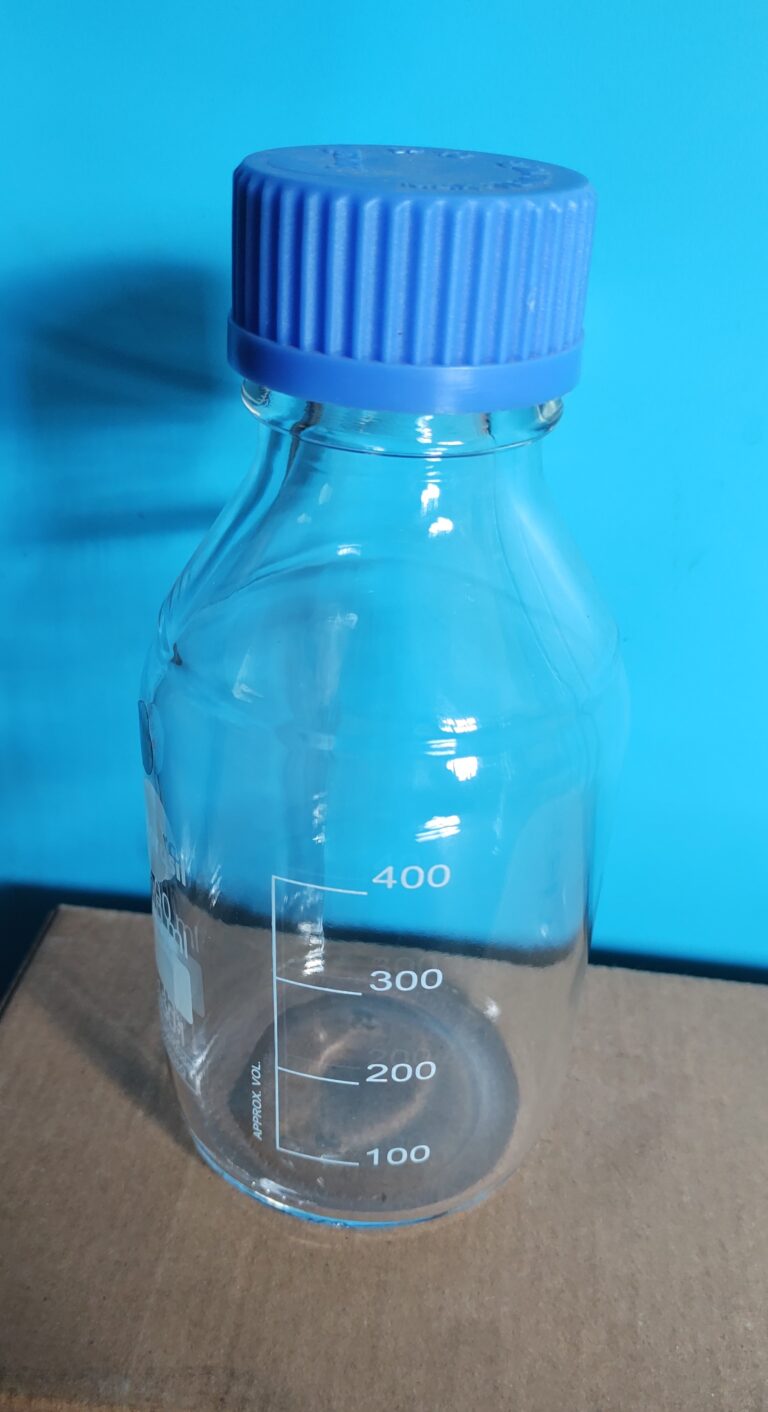
'Research Use Only' is a statement of intended use and a labelling category, not a quality grade or safety claim. It denotes a characterised material for laboratory research — explicitly not a medicine, supplement, food, cosmetic or diagnostic, and not for human or animal use. The label cannot make a compound approved, safe or legal to administer.
Three words, printed in small type, carry an extraordinary regulatory load: Research Use Only. They appear on vials of well-characterised peptides and on the questionable wares of the grey market alike — and the label means precisely the same thing in both places, which is rather less than buyers often assume. The label is not a verdict on what is inside the vial. It is a statement about what the vial is for.
What does ‘Research Use Only’ actually mean?
RUO is a statement of intended use and a labelling and regulatory category. It denotes a characterised material supplied for laboratory and in-vitro research.25 Critically, it denotes what the material is not: explicitly not a medicine, not a supplement, not a food, not a cosmetic, and not a diagnostic. It is, by the plain terms of the category, not for administration to humans or animals.15
Note what is absent from that definition. There is no claim about purity. No claim about potency. No claim about safety. RUO is frequently mistaken for a quality grade — a tier above “industrial” and below “pharmaceutical.” It is nothing of the sort. A compound can be exquisitely pure and still be RUO; it can be impure and still bear the same label.5 The three words describe the lane the material is meant to travel in, not the condition of the cargo.
| Category | What RUO is | What RUO is not |
|---|---|---|
| Nature of the claim | A statement of intended use; a labelling/regulatory category | A quality grade, a safety claim, or a purity tier |
| Intended setting | Laboratory / in-vitro research | Clinical, consumer, or veterinary use |
| Product class | A characterised reference material | A medicine, supplement, food, cosmetic, or diagnostic |
| Administration | None to a living subject | Human or animal use |
RUO defined by what it asserts and, just as importantly, by what it disclaims — built from the verified regulatory framing.
How does EU law decide whether something is a medicine?
Here the label’s limits become stark. In the European Union, whether something is a medicinal product is not settled by what its packaging says it is for. It is defined by Directive 2001/83/EC, which captures a product either by presentation — how it is held out — or by function, by what it does or is claimed to do.1 Either test, met alone, is sufficient.
The consequence is unforgiving for the grey market. Selling a compound for human use makes it a medicine, subject to authorisation, regardless of an “RUO” label.1 The label cannot immunise a transaction whose real purpose the law can read plainly. RUO does not lower a compound’s legal status; it shifts that status onto intended use — and if the genuine intended use is human consumption, the medicines framework follows the compound regardless of the small print.13
An ‘RUO’ label does not make a compound safe, approved, or legal to use in a person. It relocates the legal question to intended use — and the law is perfectly capable of reading that use.
Across the Atlantic, the same three letters do a narrower, more specific job. The US Food and Drug Administration uses RUO — and the related IUO, Investigational Use Only — labelling for in-vitro-diagnostic components.2 That is a particular regulatory context, not a general licence to sell anything to anyone so long as the word “research” appears.
2001/83/EC the EU directive whose presentation-or-function tests decide what counts as a medicinal product — irrespective of an RUO label.
So why does the grey market love the label?
Because it appears to outsource a problem. Properly used, RUO is legitimate and necessary: real research requires real reference materials, and the category exists to supply them without pretending they are medicines.5 Abused, the same label becomes a fig leaf — a way to gesture at compliance while functionally selling for consumption.34
The dishonesty is subtle, which is what makes it effective. The seller prints the truthful disclaimer; the buyer reads the implied permission.4 Nothing on the label is false, yet the overall impression — that the compound is somehow sanctioned, vetted, or fit for a person — is exactly what the law and the science refuse to grant.
What should an honest reading admit?
Several things, and they cut in both directions. First, the label is genuinely useful and genuinely lawful for the work it names: in-vitro and laboratory research.2 To treat every “RUO” vial as a euphemism would be as inaccurate as treating it as a clearance.
Second, the honest ambiguities should be preserved rather than papered over. RUO tells you about intended use, not about the molecule’s quality on any given day. The label does not certify what is in the vial — that is the job of analytical evidence, not three words of intent. And the line between legitimate supply and grey-market abuse is drawn not by the label but by the actual purpose of the sale, which a regulator may construe differently from the parties to it.
- RUO is about use, not grade. It says nothing, on its own, about purity or potency.
- The label does not change a compound’s legal nature in the EU, where presentation or function — not packaging text — defines a medicine.1
- Characterisation, not labelling, is the real signal. A certificate of analysis, HPLC, and MS data describe the material; the RUO statement describes only the lane.
What separates RUO done right from RUO as alibi is evidence. A genuine research material is a characterised material — its identity and purity documented by certificate of analysis, HPLC and mass-spectrometry data — supplied for genuine laboratory use.5 Genuine RUO materials are exactly that: characterised reference materials for research, not the regulated, approved medicinal products with which they should never be confused.5 They are not medicines, supplements, foods, cosmetics or diagnostics, and they are not for administration to humans or animals. The label is honest only when the science behind it is.
- RUO describes intended use and labelling status, not purity, potency or safety — it is a regulatory category, not a quality grade.
- An RUO material is, by definition, not a medicine, supplement, food, cosmetic or diagnostic, and not for administration to humans or animals.
- In the EU, whether something is a 'medicinal product' turns on Directive 2001/83/EC's tests of presentation or function — selling for human use makes a compound a medicine needing authorisation, label notwithstanding.
- The FDA's RUO/IUO labelling concerns in-vitro-diagnostic components, a distinct and specific regulatory use.
- Honest caveat: the label is legitimate for real research but is widely abused as a fig leaf — an 'RUO' tag does not make a compound safe, approved or legal to use in a person.
- RUO done properly means genuine characterisation — COA, HPLC, MS — and genuine laboratory use, not consumer repackaging.
Does 'Research Use Only' mean a compound is high quality or pure?
No. RUO is a statement of intended use and a labelling category, not a quality grade. It says nothing on its own about purity, potency or safety. A material's actual quality is shown by characterisation data such as a certificate of analysis, HPLC and mass spectrometry — not by the three words on the label.
Can an RUO label make it legal to use a compound in a person?
No. In the EU, whether something is a medicinal product is defined by Directive 2001/83/EC through tests of presentation or function. Selling a compound for human use makes it a medicine subject to authorisation regardless of an RUO label. The label cannot make a compound safe, approved or legal to administer.
Is the RUO label the same in the US and the EU?
They are related but distinct. In the EU, the medicines question is governed by Directive 2001/83/EC's presentation-or-function tests. In the US, the FDA uses RUO and the related IUO labelling specifically for in-vitro-diagnostic components — a particular regulatory context rather than a general permission to sell for any purpose.
Is 'Research Use Only' just a loophole?
Not inherently. RUO is legitimate and necessary for genuine laboratory and in-vitro research, which depends on properly characterised reference materials. The problem is abuse: the grey market can use the label as a fig leaf while functionally selling for consumption. The label is honest only when matched by real characterisation and real lab use.
What does RUO say a compound is not?
By definition, an RUO material is not a medicine, supplement, food, cosmetic or diagnostic, and it is not for administration to humans or animals. It is a characterised material supplied for laboratory and in-vitro research. That set of exclusions is central to what the category means.