
After Antibody-Drug Conjugates, Are Peptide-Drug Conjugates Next?
TwoStep Therapeutics cleared an IND for TS-104, a peptide-drug conjugate delivering MMAE through an integrin-binding peptide, alongside a $62.5m Series A. What PDCs change relative to antibody-drug conjugates, and what the public record does not yet say.
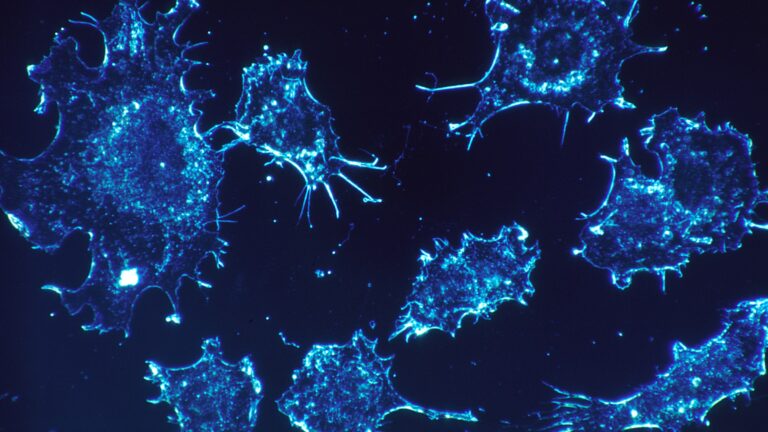
TS-104 is a peptide-drug conjugate that delivers the cytotoxic payload MMAE using a peptide binding several tumour-associated integrins. TwoStep Therapeutics announced FDA clearance of its IND on 9 September 2026 alongside a $62.5 million Series A, and the first-in-human Phase 1 is registered as NCT07814248 with 74 planned participants, toxicity co-primary endpoints and estimated primary completion in August 2028. No human efficacy data exist. Peptide-drug conjugates differ from antibody-drug conjugates mainly in carrier size, which brings higher tumour penetration and lower immunogenicity at the cost of rapid clearance.
TwoStep Therapeutics announced on 9 September 2026 that the FDA had cleared the investigational new drug application for TS-104, a peptide-drug conjugate, alongside an oversubscribed $62.5 million Series A.1 The Phase 1 trial is registered as NCT07814248 and had not started recruiting as of 13 September.2 No efficacy data exist in humans, and none will for some time. What makes the announcement worth reading is the modality: after two decades in which antibodies were the default way to deliver a cytotoxic payload to a tumour, peptides are being developed as the vehicle rather than only as the active ingredient. Condor Research supplies reference materials for laboratory research use only, and nothing here describes or implies human use.
What did TwoStep actually announce?
Two things on the same day: IND clearance for TS-104, permitting a first-in-human study, and a $62.5 million Series A led by Insight Partners and Medical Excellence Capital, with M Ventures and Pfizer Ventures joining as co-leads and existing investors NFX and 2048 Ventures participating.1 Total capital raised by the company reaches $71.2 million. TwoStep was founded in 2024 out of Stanford’s Innovative Medicines Accelerator, with Caitlyn Miller as chief executive and Jennifer Cochran, Carolyn Bertozzi and Ronald Levy among its founders.
The presence of two large pharmaceutical corporate venture arms as co-leads is the part investors will read. Corporate venture money in a first-in-human asset is a statement about the modality as much as about the molecule.
What is TS-104, as far as the public record goes?
A peptide-drug conjugate that delivers monomethyl auristatin E, a cytotoxic payload already validated in several approved antibody-drug conjugates, using a targeting peptide that binds integrins commonly found on solid tumours.2 The company describes the peptide as polyspecific, engaging five tumour-associated integrins and binding preferentially to their active conformation. The registry description is more spare and says essentially the same thing.
Targeting several integrins rather than one is the design argument. Tumours are heterogeneous, receptor expression varies between patients and between regions of the same tumour, and a single-target agent fails wherever its target is absent. A binder that engages a family of related receptors is a hedge against that heterogeneity. Whether it works is exactly what a Phase 1 cannot tell you.
What has not been disclosed?
More than is usual to notice, so it is worth being explicit. The five integrins are not named in the press release or in the registry entry. The linker chemistry is not described, and linker design is the variable that most often determines whether a conjugate is tolerable, since premature payload release in circulation is the classic failure mode.5 And no peer-reviewed preclinical publication is cited for TS-104 anywhere in the announcement.
0 peer-reviewed preclinical papers are cited for TS-104 in the company’s announcement or in the trial registry, as read on 13 September 2026.
None of this is improper. Companies routinely file before they publish, and the founding science comes from well-known laboratories. It does mean that an outside reader currently has no way to assess the preclinical package, and that any description of TS-104’s selectivity rests on the sponsor’s own characterisation.
What will the Phase 1 trial do?
NCT07814248 is an open-label, non-randomised, dose-escalation and dose-expansion monotherapy study with an estimated 74 participants, in advanced non-small-cell lung, head and neck, endometrial, ovarian, oesophageal and gastric cancers.2 The co-primary outcomes are adverse events and dose-limiting toxicities, assessed across two schedules, and estimated primary completion is August 2028. The record was first submitted on 31 August 2026 and posted on 10 September, with an estimated start of October 2026.
Those endpoints are the point. A first-in-human oncology study exists to find a tolerable dose and describe toxicity. Response data will be collected and will be interesting, but a Phase 1 in six tumour types with 74 participants is not designed to establish efficacy in any of them.
The news is not that a drug works. It is that a modality has moved from preclinical argument to clinical test.
How does a peptide-drug conjugate differ from an antibody-drug conjugate?
Mostly by size, and everything else follows from that. A monoclonal antibody is around 150 kilodaltons; a targeting peptide is typically one to two, roughly two orders of magnitude smaller. A review of the field summarises the consequences: peptide conjugates offer more accessible industrial synthesis, versatile functionalisation, high tissue penetration and rapid clearance with low immunotoxicity, while facing the opposite set of problems, namely poor pharmacokinetic properties and low bioactivity.4
That trade is the whole story. A small molecule penetrates further into a solid tumour, where an antibody tends to accumulate at the periphery of poorly vascularised tissue. A small molecule is also cleared by the kidney within hours, which limits exposure and cuts both ways: less time on target, but also less time causing damage elsewhere. Peptides can be synthesised chemically at scale rather than expressed in cell culture, which changes the manufacturing economics, a point we have written about in the context of peptide manufacturing capacity.
| Dimension | Antibody-drug conjugate | Peptide-drug conjugate |
|---|---|---|
| Carrier size | About 150 kDa | Typically 1 to 2 kDa |
| Manufacture | Biological expression | Chemical synthesis |
| Tumour penetration | Limited in poorly vascularised tissue | Reported as higher4 |
| Clearance | Days to weeks | Rapid, largely renal4 |
| Immunogenicity | Present; anti-drug antibodies are a known issue | Reported as lower4 |
| Main weakness | Penetration and cost | Pharmacokinetics and potency4 |
| Approved examples | Several, across haematology and solid tumours | Radioligand conjugates Lutathera and Pluvicto6 |
General properties reported in review literature, not measurements of TS-104, for which no clinical data exist. Individual conjugates vary widely and the generalisations above do not predict the behaviour of any specific molecule.
Are there approved peptide-drug conjugates already?
Yes, which is why “first-in-class” needs reading carefully. The clearest approved examples are radioligand therapies in which a peptide carries a radioisotope rather than a cytotoxic small molecule: Lutathera, approved in 2018, and Pluvicto, approved in 2022 and expanded in July 2026 to an earlier prostate cancer setting.6 Those establish that peptide-directed delivery can work clinically.
The cautionary case is Pepaxto, a peptide-drug conjugate of melphalan that received accelerated approval and was then withdrawn in the United States after its confirmatory trial, with the FDA’s final withdrawal decision published in April 2024.7 A modality reaching the clinic is not the same as a modality succeeding in it, and this field has already produced one approval that did not survive confirmation.
How large is the field becoming?
Larger than the approval count suggests, though the numbers here come from commercial pipeline analysis rather than a peer-reviewed source and should be treated accordingly. A Citeline analysis presented in 2026 counted 106 peptide and nanobody conjugates in active development, of which 82 were peptide-drug conjugates, with six in Phase 3.8 We have not independently verified that count against a second database, and pipeline tallies depend heavily on inclusion criteria. The peer-reviewed reviews of the field are more restrained, and are explicit that progress has come with persistent hurdles rather than a clear run.3
Why this matters beyond one company
Because it marks a change in what peptides are for. In most of the research literature a peptide is the active agent: it binds a receptor and produces an effect. In a conjugate, the peptide is infrastructure. Its job is to recognise something and arrive somewhere, and the pharmacology belongs to the payload. That reframing puts a premium on properties the field has been engineering hard, conformational selectivity, protease resistance and defined synthesis, and it is the same set of capabilities showing up in peptide cancer vaccines and in computationally designed peptides.
What is established, and what is not
Established: the IND is cleared, the financing closed, the Phase 1 is registered with 74 planned participants and toxicity endpoints, and the payload is MMAE delivered by an integrin-binding peptide. Established separately: peptide-directed delivery has produced approved therapies in the radioligand setting.
Not established: anything about TS-104’s activity, selectivity or tolerability in humans, since no participant has been dosed. Not disclosed: the integrin targets, the linker, and any peer-reviewed preclinical evidence. Unresolved for the modality as a whole: whether rapid renal clearance can be engineered around without giving up the penetration advantage that motivates the approach. What would change the assessment: dose-escalation data, expected no earlier than 2028 on the registry’s own timeline.
How this was checked. The trial record NCT07814248 was read directly from the ClinicalTrials.gov API on 13 September 2026 and is the source for the design, enrolment, endpoints and dates. Announcement details were taken from the company release of 9 September 2026. Comparative properties of the two modalities are attributed to peer-reviewed review literature with PMIDs, not to the sponsor. The pipeline count is flagged as a single commercial source. Version 1.0, first published 13 September 2026; this page will be updated when the trial opens or reports.
Condor Research supplies characterised reference materials for laboratory research use only: not for human or veterinary use, not for diagnostic or therapeutic application, and not for any food or cosmetic purpose. We do not supply any compound discussed in this article. This is commentary on clinical drug development and is not medical advice.
Condor Research · Scientific desk
Atrio Sciences s.r.o., IČO 57 669 651, Nitra (SK) · info@condorresearch.com
- TwoStep Therapeutics announced FDA IND clearance for TS-104 and a $62.5 million Series A on 9 September 2026, bringing total capital raised to $71.2 million.
- The round was led by Insight Partners and Medical Excellence Capital, with M Ventures and Pfizer Ventures as co-leads and NFX and 2048 Ventures participating.
- TS-104 conjugates monomethyl auristatin E to a peptide described as binding five tumour-associated integrins, preferentially in their active conformation.
- The company has not publicly named the five integrins, has not described the linker chemistry, and cites no peer-reviewed preclinical publication.
- The Phase 1 trial NCT07814248 is open-label and non-randomised, with an estimated 74 participants across six solid tumour types and co-primary endpoints of adverse events and dose-limiting toxicities.
- Estimated start is October 2026 and estimated primary completion is August 2028, so no efficacy readout is expected before then.
- A monoclonal antibody is around 150 kDa against roughly 1 to 2 kDa for a targeting peptide, and most of the modality differences follow from that size gap.
- Review literature attributes to peptide conjugates higher tissue penetration, chemical rather than biological manufacture and lower immunotoxicity, against poorer pharmacokinetics and lower bioactivity.
- Peptide-directed delivery already has approved examples in the radioligand setting, Lutathera in 2018 and Pluvicto in 2022, expanded in July 2026.
- Pepaxto, a peptide-drug conjugate of melphalan, received accelerated approval and was withdrawn in the United States, with the FDA's final decision published in April 2024.
What is a peptide-drug conjugate?
A construct with three parts: a peptide that recognises a target on a cell surface, a linker, and a payload that does the pharmacological work, usually a cytotoxic small molecule or a radioisotope. The peptide functions as a delivery vehicle rather than as the active agent, which is the opposite of how peptides are usually studied.
How is a PDC different from an antibody-drug conjugate?
Primarily in carrier size. An antibody is about 150 kDa and a targeting peptide is typically 1 to 2 kDa. Review literature reports that the smaller carrier gives higher tumour penetration, chemical synthesis instead of biological expression, and lower immunotoxicity, while suffering from rapid clearance and poorer pharmacokinetics. Individual molecules vary and these generalisations do not predict any specific candidate.
Does TS-104 work?
Unknown, and it will remain unknown for some time. The Phase 1 had not begun recruiting as of 13 September 2026, its estimated start is October 2026, and estimated primary completion is August 2028. Its co-primary endpoints are adverse events and dose-limiting toxicities, which is what a first-in-human oncology study is designed to establish rather than efficacy.
Are any peptide-drug conjugates already approved?
Yes. The clearest examples are radioligand therapies where a peptide carries a radioisotope: Lutathera, approved in 2018, and Pluvicto, approved in 2022 and expanded in July 2026. There is also a cautionary case: Pepaxto, a melphalan peptide conjugate, received accelerated approval and was subsequently withdrawn in the United States, with the final FDA decision published in April 2024.
Why would a company target several integrins instead of one?
Because tumours are heterogeneous. Receptor expression varies between patients and between regions of a single tumour, so an agent depending on one target fails wherever that target is absent. Engaging a family of related receptors is a hedge against that variability. Whether the hedge works in patients is precisely what a first-in-human study cannot answer.