
The Global Peptide Manufacturing Arms Race Has Begun
Samsung Biologics opened a CHF 1.46 billion tender for PolyPeptide on 15 September, with 55.65% of shares already committed. CordenPharma closed its AmbioPharm acquisition in August. The scarce asset is not synthesis, it is purification.
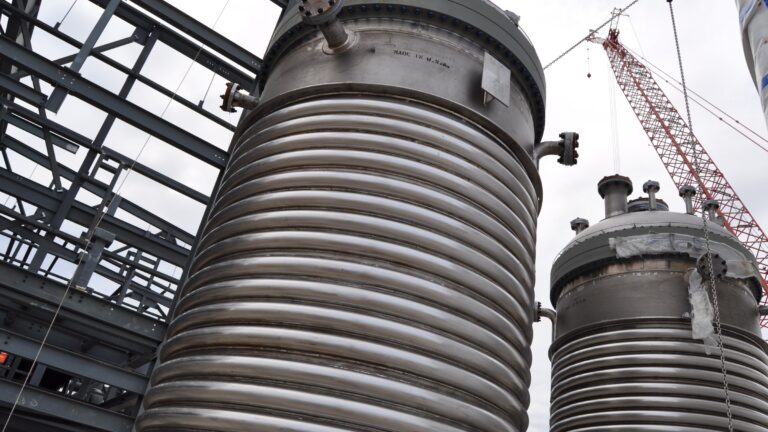
Samsung Biologics published a tender offer prospectus on 31 August 2026 to acquire PolyPeptide Group AG at CHF 44.31 per share, an implied equity value of about CHF 1.46 billion, with the main offer period running from 15 September to 12 October 2026 and a two-thirds acceptance threshold that is already 55.65% committed. Six weeks earlier CordenPharma closed its acquisition of AmbioPharm, adding synthesis, purification and lyophilisation capacity in South Carolina and Shanghai. The constraint driving this consolidation is purification capacity rather than synthesis capacity.
Samsung Biologics opens the main offer period for its CHF 1.46 billion tender for PolyPeptide on 15 September 2026, two days after this page was written, having published the prospectus on 31 August.1 Six weeks earlier CordenPharma closed its acquisition of AmbioPharm, adding peptide synthesis, purification and lyophilisation capacity in South Carolina and Shanghai.2 Read together, these are not two unrelated transactions. They are a contest for a scarce industrial asset: the ability to make large quantities of synthetic peptide to pharmaceutical standard. Condor Research supplies reference materials for laboratory research use only; this article is industry analysis and contains no therapeutic claims.
What exactly is on the table?
Samsung Biologics, acting through a Swiss subsidiary named Samsung Peptide AG, is offering CHF 44.31 net in cash for each publicly held registered share of PolyPeptide Group AG, an implied aggregate equity value of approximately CHF 1.46 billion.1 The price is a 40% premium to PolyPeptide’s unaffected share price on 10 April 2026, the last trading day before media speculation about a possible acquisition, and 11.6% above the volume-weighted average price over the sixty days preceding the pre-announcement of 20 July 2026. The main offer period runs from 15 September to 12 October 2026 at 4 p.m. Swiss time, subject to a minimum acceptance threshold of two thirds of the fully diluted share count and to regulatory approvals. We covered the original announcement in July in our piece on why the money is moving into peptide manufacturing capacity.
Why is the outcome close to settled before the offer opens?
Because of a single sentence in the prospectus announcement. PolyPeptide’s largest individual shareholder, holding 55.65% of shares outstanding excluding treasury stock, has undertaken to tender all of them into the offer.1 Against a threshold of 66⅔% on a fully diluted basis, that commitment covers most of the distance before a single minority shareholder decides anything. The independent directors of PolyPeptide unanimously recommend acceptance, supported by a fairness opinion.
55.65% of PolyPeptide’s outstanding shares are already committed to an offer that needs two thirds to succeed.
What is Samsung actually buying?
A different kind of factory. Samsung Biologics built its business on biologics manufacture, meaning proteins expressed in living cells in large bioreactors. Peptide active ingredients are made by chemical synthesis, usually solid-phase peptide synthesis, which is a fundamentally different plant with different skills, different regulatory history and different consumables. Its chief executive framed the transaction as modality expansion into peptides including GLP-1 products, alongside a broader geographic reach.1
That is the honest description of the strategic logic. An antibody CDMO cannot convert a bioreactor into a peptide synthesiser. If it wants the peptide business it must buy the capability, and the number of companies that possess it at commercial scale is small enough to count.
What else has consolidated this year?
CordenPharma completed its acquisition of AmbioPharm on 3 August 2026, with financial terms undisclosed.2 The acquired sites in North Augusta, South Carolina and in Shanghai became CordenPharma South Carolina and CordenPharma Shanghai, adding synthesis, purification and lyophilisation capacity across two jurisdictions and bringing the combined organisation to roughly 3,500 employees. The pairing of United States and Chinese capacity in a single transaction is itself informative at a moment when supply-chain geography is under political scrutiny.
Around these two deals sits continuing organic investment: Bachem has been expanding at multiple sites including a large new facility at Sisslerfeld, and Evonik announced roughly $100 million in July 2026 for active ingredient manufacturing at its Tippecanoe site in Indiana.3 Those figures come from company announcements reported in trade press rather than from filings we have read, and should be treated as such. The very large capital programmes announced by Eli Lilly and Novo Nordisk belong to a different category: they are mostly commitments made in 2024 and 2025 that are still under construction, and presenting them as news of 2026 would misdate the trend.
| Date | Event | What it adds |
|---|---|---|
| 20 July 2026 | Samsung Biologics pre-announces offer for PolyPeptide | Intent to enter peptide API manufacture |
| 3 August 2026 | CordenPharma closes AmbioPharm acquisition | Synthesis, purification and lyophilisation in the United States and China |
| 31 August 2026 | Samsung publishes tender offer prospectus | CHF 44.31 per share, CHF 1.46 billion implied equity value |
| 15 September to 12 October 2026 | Main offer period | Two-thirds acceptance threshold, 55.65% already committed |
Verified dates and terms from company announcements. Completion remains subject to the stated conditions including regulatory approvals, and an announced transaction is not a completed one.
Where is the real bottleneck?
Not in synthesis. Building a peptide chain on a resin is well-understood chemistry that scales reasonably predictably. The constraint sits one step later, in purification: separating the target sequence from the deletion sequences, truncations and modified variants that every synthesis produces, to a purity acceptable for a medicine. That is done by preparative chromatography, it consumes very large volumes of solvent, and it is slow. Capacity announcements that emphasise reactor volume without matching purification and lyophilisation capacity are describing half a plant.
Anyone can make crude peptide. The scarce asset is the ability to purify it, at scale, to a standard a regulator will accept.
The solvent consumption that purification demands is also where this industry meets environmental regulation, a collision we examined in the solvent problem. The analytical side of the same constraint, what purity actually means and how identity and impurities are demonstrated, runs through the generic peptide pathway and our guide to reading a certificate of analysis.
Why now?
Because incretin demand changed the arithmetic. The approved GLP-1 and dual-agonist market is measured in tens of billions of dollars of annual revenue, and every one of those doses is a synthetic peptide that must be made, purified, filled and finished. A generation of follow-on candidates is moving through late-stage development behind them, and generic entry will eventually add further volume at lower margin. Capacity contracted for a market of that size is worth more than capacity contracted for the peptide market of 2015, which is the simplest explanation for why strategic buyers are paying premiums now. We set out the scale and the competing market estimates in our piece on what the peptide market is actually worth.
What does this mean further down the chain?
Two things, in opposite directions. Consolidation among specialist manufacturers tends to raise the quality floor, because large acquirers import quality systems, documentation practice and regulatory experience, and that eventually reaches research-grade material made on the same equipment. It also concentrates capacity, and concentrated capacity prioritises its largest customers. When a plant is committed to commercial supply of an approved medicine, small research orders are not the business that gets scheduled first. Research buyers should expect the quality of documentation available from serious suppliers to improve and the number of serious suppliers to fall.
What is established, and what is not
Established: the offer terms, dates, premium and acceptance threshold above, all taken from the company’s own prospectus announcement; the 55.65% tender commitment; and the completion of the CordenPharma acquisition of AmbioPharm on 3 August 2026 with undisclosed terms.
Not established: whether the Samsung offer completes, since it remains subject to acceptance and regulatory approval. Not established, and worth stating because it is routinely asserted: there is no reliable public figure for global installed peptide synthesis capacity in tonnes per year. We looked and did not find one from an independent, methodologically transparent source, and the market-research numbers in circulation are commercial projections whose basis is not published. Unresolved: whether purification capacity is expanding in proportion to synthesis capacity, which is the question that determines whether any of this relieves the bottleneck. What would change the assessment: completion of the offer, and disclosed purification throughput rather than headline investment totals.
How this was checked. The Samsung Biologics announcement of 31 August 2026 was read in the original on 13 September 2026, and every figure in this article that concerns the offer, including the price per share, the implied equity value, both premium calculations, the acceptance threshold, the offer period and the 55.65% commitment, comes from that document. The CordenPharma closing is taken from its own announcement. Investment figures attributed to other manufacturers are flagged as reported in trade press rather than read in filings, and no aggregate capacity figure is quoted because none was found from a source whose methodology is public. Version 1.0, first published 13 September 2026; this page will be updated when the offer period closes.
Condor Research supplies characterised reference materials for laboratory research use only: not for human or veterinary use, not for diagnostic or therapeutic application, and not for any food or cosmetic purpose. This article is industry analysis. It is not investment advice and not a recommendation regarding any security.
Condor Research · Scientific desk
Atrio Sciences s.r.o., IČO 57 669 651, Nitra (SK) · info@condorresearch.com
- Samsung Biologics, through Swiss subsidiary Samsung Peptide AG, offers CHF 44.31 net per PolyPeptide share, implying aggregate equity value of about CHF 1.46 billion.
- The price is a 40% premium to the unaffected share price of 10 April 2026 and 11.6% above the sixty-day volume-weighted average before the 20 July 2026 pre-announcement.
- The main offer period runs 15 September to 12 October 2026 at 4 p.m. Swiss time, with a minimum acceptance threshold of two thirds on a fully diluted basis.
- PolyPeptide's largest individual shareholder, holding 55.65% of outstanding shares excluding treasury stock, has undertaken to tender all of them.
- Samsung's stated rationale is modality expansion into peptides including GLP-1, which requires buying chemical synthesis capability rather than converting biologics capacity.
- CordenPharma closed its acquisition of AmbioPharm on 3 August 2026 with undisclosed terms, creating CordenPharma South Carolina and CordenPharma Shanghai.
- The combined CordenPharma organisation reaches roughly 3,500 employees and adds synthesis, purification and lyophilisation across two jurisdictions.
- The industrial bottleneck is preparative chromatography rather than chain assembly: purification is slow, solvent-intensive and the step that determines usable output.
- Capacity announcements that quote reactor scale without matching purification and lyophilisation capacity describe only part of a working plant.
- No reliable public figure for global installed peptide synthesis capacity exists from an independent source with published methodology.
Is the Samsung acquisition of PolyPeptide a done deal?
Not formally, but the arithmetic is favourable. The offer requires two-thirds acceptance on a fully diluted basis, and the largest individual shareholder, with 55.65% of outstanding shares excluding treasury stock, has undertaken to tender everything it holds. The offer remains subject to that threshold, to regulatory approvals and to other customary conditions, and the main offer period closes on 12 October 2026.
Why would a biologics manufacturer buy a peptide company?
Because the two are different factories. Biologics are expressed in living cells in bioreactors; peptide active ingredients are assembled by chemical synthesis, typically solid-phase peptide synthesis, with different equipment, skills and regulatory history. A biologics CDMO cannot repurpose a bioreactor into a peptide plant, so entering the modality means acquiring the capability, and few companies have it at commercial scale.
What is the real bottleneck in peptide manufacturing?
Purification, not synthesis. Assembling a peptide chain on a resin scales reasonably predictably. Separating the target sequence from deletion sequences, truncations and modified variants to pharmaceutical purity is done by preparative chromatography, which is slow and consumes very large volumes of solvent. Lyophilisation capacity is the other frequently overlooked step.
What is driving the investment?
Incretin demand. The approved GLP-1 and dual-agonist market generates tens of billions of dollars of annual revenue, and every dose is a synthetic peptide that has to be made, purified and finished. A pipeline of follow-on candidates sits behind that, and eventual generic entry would add volume at lower margin. Capacity contracted against a market of that size is worth a premium.
How does this affect research-grade material?
In two opposing ways. Consolidation tends to raise the documentation and quality floor, because large acquirers bring quality systems and regulatory experience to the same equipment. It also concentrates capacity, and concentrated capacity schedules its largest commercial customers first. Expect better documentation from serious suppliers and fewer serious suppliers.