
Samsung Biologics’ $1.8 Billion Bid for PolyPeptide: Why the Money Is Moving Into Peptide Manufacturing Capacity
Samsung Biologics has bid CHF 1.46bn for Swiss peptide CDMO PolyPeptide. A sober look at what the deal says about manufacturing capacity, and what it doesn't.
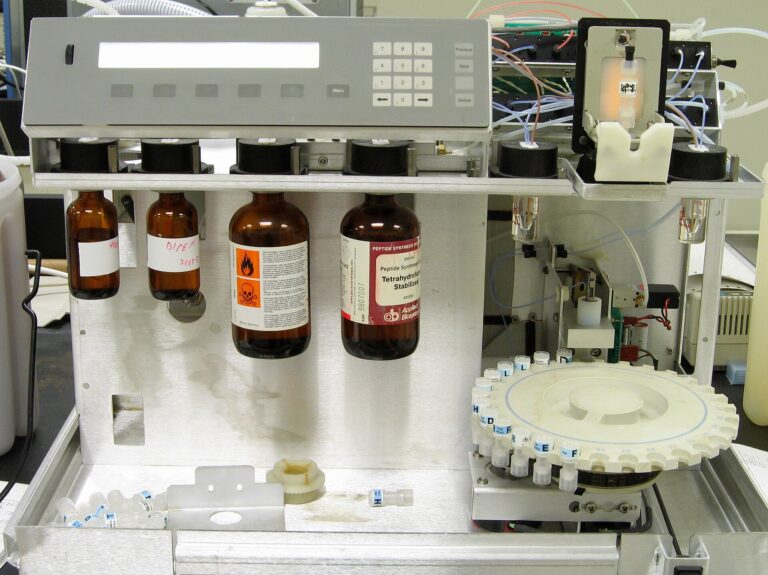
Samsung Biologics announced an all-cash tender offer on 20 July 2026 for Swiss peptide CDMO PolyPeptide Group at CHF 44.31 per share, about CHF 1.46 billion. The strategic point is manufacturing capacity: solid-phase peptide synthesis is the constraint in the GLP-1 era, and the buyer is acquiring plants, not molecules.
On 20 July 2026, Samsung Biologics announced an all-cash public tender offer for the entire share capital of PolyPeptide Group AG, a Swiss contract manufacturer of peptide active pharmaceutical ingredients. The price works out to roughly USD 1.8 billion. What makes the deal worth reading closely is not the number but the asset class: a company that has spent a decade building capacity for antibodies is buying chemical synthesis plants. This is industry reportage. Condor Research supplies research-use-only materials, and nothing below implies anything about the availability, legality or suitability of any product.
What exactly is being bought, and on what terms?
Samsung Biologics (KRX: 207940) launched an all-cash public tender offer for 100% of the fully diluted share capital of PolyPeptide Group AG (SIX: PPGN) at CHF 44.31 per share.1 That values PolyPeptide’s equity at approximately CHF 1.46 billion, about USD 1.8 billion at prevailing rates. The company describes it as the largest biopharmaceutical M&A transaction in South Korean history.35
The premium is the part most coverage led with. CHF 44.31 is 40% above CHF 31.65, PolyPeptide’s last close before acquisition rumours began circulating in April 2026, and roughly 11.6% above the 60-day volume-weighted average price.2 The gap between those two figures is instructive: much of the re-rating had already happened in the market before the announcement.
| Term | Detail |
|---|---|
| Structure | All-cash public tender offer, 100% of fully diluted share capital |
| Price | CHF 44.31 per share |
| Equity value | approx. CHF 1.46 billion (approx. USD 1.8 billion) |
| Premium | 40% to undisturbed close of CHF 31.65 (10 April 2026); approx. 11.6% to 60-day VWAP |
| Board position | Unanimous recommendation to accept, supported by an independent fairness opinion |
| Largest shareholder | approx. 55.65% undertaken to tender |
| Minimum acceptance | 66⅔% |
| Process | Prospectus expected by end of August 2026; 10 trading-day cooling-off, then open at least 20 trading days |
| Completion | Targeted towards end of 2026, subject to regulatory approvals |
Headline terms of the Samsung Biologics offer for PolyPeptide Group AG, as announced 20 July 2026. The transaction is not complete and remains conditional.
What Samsung Biologics gets, if the offer closes, is a manufacturing network rather than a pipeline: sites in California, France, Sweden, India and Belgium, the last of these a large new solid-phase peptide synthesis facility, plus an innovation centre in Strasbourg.1 PolyPeptide reported 2025 revenue of EUR 389.3 million, about USD 444 million, up 15.6% year on year, and guided to a further 20-25% growth in 2026 at constant currency.6 The growth has come overwhelmingly from metabolic therapeutics.
Why is manufacturing capacity the constraint?
Peptides are not fermented in cells the way antibodies are. Most are assembled chemically, one amino acid at a time, on a solid support. The resin-bound chain is deprotected, coupled to the next activated residue, washed, and the cycle repeats. Merrifield’s chemistry is more than sixty years old and conceptually simple. Scaling it to metric tonnes is not.
The first problem is arithmetic. Every coupling step is slightly incomplete, and the losses compound multiplicatively across the sequence. Marketed GLP-1 receptor analogues sit in the 30-to-40-residue range, which means thirty-odd chances to lose material.
75% theoretical yield retained across a 30-residue chain at 99% coupling efficiency per step. Drop that to 98% per step and it falls to roughly 56%.
The second problem is that the failures resemble the product. A deletion sequence missing a single residue differs from the target by a fraction of a percent in mass and often very little in chromatographic behaviour. Separating them is the job of preparative reverse-phase chromatography, and at commercial scale the purification train, not the synthesis, tends to dominate cost per kilogram. This is the same analytical reality that determines what a purity figure on a certificate actually means, a topic we cover in how HPLC and mass spectrometry establish purity and in how to read a certificate of analysis.
The third problem is solvent. Coupling and washing cycles consume large volumes of dipolar aprotic solvents. C&EN once put the small-scale version plainly: a 100 mg synthesis of a 20-residue peptide can take 24 hours and generate several litres of waste.8 Multiply that ratio toward industrial output and the plant becomes, functionally, a solvent handling and recovery operation with a chemistry step attached. Permits, recovery loops and effluent treatment are why a new site takes years rather than months.
The bottleneck in the GLP-1 era is not knowing how to make the molecule. It is owning enough qualified capacity to make it at tonne scale, under GMP, in a jurisdiction customers will accept.
Is this one deal or a pattern?
One transaction is an anecdote. In the same week, Bachem, another Swiss peptide CDMO, said it would invest more than CHF 500 million, over USD 615 million, in a new large-scale peptide and oligonucleotide production facility at Sisslerfeld in Switzerland, underpinned by a long-term customer supply agreement including pre-payments. Commercial production is slated for 2030.7
Two announcements inside seven days, both aimed squarely at large-volume synthesis capacity, both in Europe, is a pattern. Capital is flowing into the constrained middle of the supply chain rather than into new molecules. A buyer paying a 40% premium for existing plants and a competitor committing half a billion francs to greenfield construction are making the same wager from opposite directions: that qualified peptide capacity will be scarce and therefore valuable for the rest of the decade.
An honest read of what it signals
It signals that large industrial players expect sustained, high-volume demand for peptide APIs. That is worth knowing. It is also worth being precise about the source of that demand, because the precision is where most commentary goes wrong.
The demand is for approved, prescription-only metabolic medicines, manufactured under GMP, sold through regulated pharmaceutical channels to licensed customers. Samsung Biologics’ CEO John Rim framed the rationale as modality expansion into peptides including GLP-1, alongside geographic reach in the US, Europe and India.4 Nothing in that sentence concerns research-use materials, and nothing in a CDMO’s order book speaks to the scientific evidence behind any individual compound sold for laboratory use.
So the inference many readers will be tempted to draw, that heavy industrial investment somehow ratifies the research-peptide category, does not hold. It is the opposite of a validation. Capital allocation tracks contracted demand from pharmaceutical customers; it is not a verdict on preclinical evidence, on reproducibility, or on the quality of material circulating outside regulated supply chains. If anything, the widening gap between a GMP API plant and the informal market makes the distinction more important, not less. We have written separately about why peptide experiments fail to reproduce and about what the peptide gray market actually is; neither problem is solved by someone else building a factory.
There is also execution risk on both projects. Samsung’s offer is conditional: it requires 66⅔% acceptance, regulatory clearances, and a Swiss takeover process that has not formally begun. Bachem’s plant does not produce commercially until 2030. Capacity cycles in chemicals have a long history of arriving late and arriving together, and a market that looks supply-constrained in 2026 can look differently priced by the time steel is in the ground. Analysts arguing that committed volumes already absorb near-term expansion may be right about commercial-scale output and still wrong about clinical-scale capacity, where the pipeline of programmes has grown faster than the plants suited to small, complex batches.
Condor Research supplies compounds strictly for research use only, not for human or veterinary use, and not for any diagnostic or therapeutic purpose. This article is industry reportage about a public capital markets transaction. It is not an endorsement of any compound, does not imply that any material is available, lawful or suitable for any purpose, and should not be read as investment advice. Readers new to the terminology may find our primer on research peptides a more useful starting point than a deal announcement.
Condor Research · Scientific desk
Atrio Sciences s.r.o., IČO 57 669 651, Nitra (SK) · info@condorresearch.com
- On 20 July 2026 Samsung Biologics announced an all-cash public tender offer for 100% of PolyPeptide Group AG at CHF 44.31 per share, valuing the equity at about CHF 1.46 billion (roughly USD 1.8 billion).
- The price is a 40% premium to the undisturbed close of CHF 31.65 on 10 April 2026, and about 11.6% over the 60-day volume-weighted average price.
- PolyPeptide's board unanimously recommends acceptance; its largest shareholder, holding about 55.65%, has undertaken to tender. The minimum acceptance threshold is 66⅔%.
- PolyPeptide reported 2025 revenue of EUR 389.3 million (about USD 444 million), up 15.6%, and guided to 20-25% further growth in 2026, driven largely by metabolic therapeutics.
- Samsung Biologics describes the transaction as the largest biopharmaceutical M&A deal in South Korean history; completion is targeted for late 2026 and remains subject to conditions.
- In the same week, Swiss CDMO Bachem announced more than CHF 500 million (over USD 615 million) for a new large-scale peptide and oligonucleotide site at Sisslerfeld, with commercial production slated for 2030.
- The common thread is capacity, not chemistry: solid-phase peptide synthesis is hard to scale because stepwise coupling losses compound, solvent volumes are large, and purification carries most of the cost.
What did Samsung Biologics actually announce?
An all-cash public tender offer, announced 20 July 2026, for 100% of the fully diluted share capital of PolyPeptide Group AG at CHF 44.31 per share. It is an offer, not a completed purchase: the formal prospectus is expected by end of August 2026 and completion is targeted for late 2026, subject to regulatory approvals and a 66⅔% minimum acceptance threshold.
Why would a biologics manufacturer buy a peptide manufacturer?
Samsung Biologics built its business on monoclonal antibodies and antibody-drug conjugates, which are produced in living cells. Peptides are made by chemical synthesis, which means different plant, different skill set and different regulatory dossiers. Acquiring an established peptide CDMO is faster than building one, and it adds manufacturing sites across the US, Europe and India.
Is this deal about GLP-1 drugs?
In large part, yes. PolyPeptide's recent growth has been driven by metabolic therapeutics, and Samsung Biologics' CEO explicitly cited modality expansion into peptides including GLP-1. That demand comes from approved, prescription-only medicines manufactured under GMP for regulated markets. It is a pharmaceutical supply story rather than a research-materials story.
What makes peptide manufacturing hard to scale?
Solid-phase synthesis builds a chain one residue at a time on a resin, and each cycle is imperfect, so losses multiply. At 99% coupling efficiency, a 30-residue peptide retains roughly 75% of theoretical yield; at 98%, roughly 56%. The failed sequences are nearly identical to the target, so purification is costly, and every wash step consumes solvent.
Does this investment validate research peptides in any way?
No. Capital allocation reflects expected demand for approved medicines from pharmaceutical customers. It says nothing about the strength of evidence behind any individual research compound, nothing about the quality of any particular material, and nothing about the legality of supply in any given jurisdiction. Those questions are answered by data and documentation, not by deal size.
What is the main risk in these capacity announcements?
Overshoot. Capacity built for a hot market can arrive late and arrive together. Samsung's transaction is conditional and unfinished, and Bachem's Sisslerfeld facility is not scheduled for commercial production until 2030. Demand forecasts made in 2026 will be tested against a market that may look materially different by the time either project is fully operational.