
What Is ATX-304? The Small-Molecule AMPK Activator With a Mitochondrial Twist
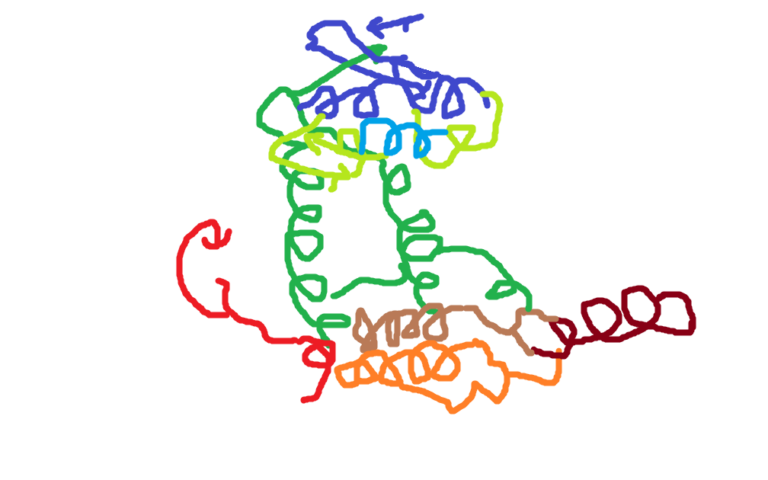
ATX-304, previously studied as O304, is a small molecule investigated in AMPK-related metabolic research. Published human evidence under the O304 name predates later ATX-304 reports; AMPK activation and mitochondrial uncoupling have both been examined experimentally, with interpretation depending on the study conditions.
ATX-304 goes by a chemistry-lab name, but it began as O304, a compound built to activate every isoform of AMP-activated protein kinase (AMPK) at once — the enzyme that senses when a cell is short on energy and tells it to start burning fuel. It is not a peptide; it is a small molecule, taken orally, developed originally for type 2 diabetes and now studied across liver, kidney, and vascular disease models. Preclinical data are extensive. Human data are thin. Everything below describes laboratory, animal, and early clinical research, not a product for human use.
From O304 to ATX-304 — a small molecule, not a peptide
Researchers at Umeå University and the Swedish biotech Betagenon first described O304 in 2018 as a “pan-AMPK activator” — meaning it turns on all known combinations of AMPK subunits rather than just one isoform, a property most existing AMPK-directed tools lack1. In diet-induced obese mice, the compound increased skeletal-muscle glucose uptake, improved microvascular perfusion, and reduced blood pressure; in a small proof-of-concept study in people with type 2 diabetes already on metformin, it lowered fasting glucose and insulin resistance scores1. The molecule was later renamed ATX-304 as it moved into the hands of Amplifier Therapeutics and its parent, Cambrian Bio, for further clinical development.
Worth stating plainly, because readers arrive here from peptide research and the mix-up is common: ATX-304 is a synthetic organic small molecule, not a peptide, and it has no structural relationship to peptide compounds sold for research such as BPC-157 or the growth-hormone secretagogues. It is closer, chemically and pharmacologically, to metabolic small molecules like metformin or the mitochondrial uncouplers discussed later in this piece.
What a pan-AMPK activator is supposed to do
AMPK is often described as the cell’s fuel gauge. When the ratio of AMP to ATP rises — during fasting, calorie restriction, or muscle contraction during exercise — AMPK switches on, shifting the cell toward burning fat and glucose and away from energy-expensive building processes2. Because exercise is one of the most reliable natural activators of AMPK in skeletal muscle, drug developers have spent two decades chasing molecules that flip the same switch pharmacologically, hoping to reproduce some of exercise’s metabolic benefits without the exercise. Reviews of the field are candid that this has been harder than it sounds: most direct AMPK activators either hit only one subunit combination, do not reach the right tissues, or fail to reproduce the coordinated, whole-body response that real muscle contraction generates3. ATX-304’s selling point is that it was designed to sidestep the first problem by activating the full AMPK family rather than a single isoform. Our companion piece on SLU-PP-332 covers a different attempt at the same goal, using an entirely different receptor system, which is a useful comparison for how crowded — and how early-stage — this “exercise mimetic” category still is.
The preclinical case: diabetes, fatty liver, kidney, and blood vessels
The published animal literature on O304/ATX-304 is unusually broad for a compound this early in development. In mice with diet-induced or genetic hyperglycemia, O304 improved glucose tolerance through two separate routes at once — pushing muscle to take up glucose independent of insulin, while also reducing stress on insulin-producing beta cells — an effect the authors describe as dual and largely non-redundant with existing diabetes drugs4. In aged mice, the same compound reversed some age-related insulin resistance, improved cardiac function, and increased exercise capacity, which is the closest preclinical data come to supporting the “exercise mimetic” framing directly5.
More recent work has moved beyond metabolic disease into organ injury. A 2025 study using ATX-304 in mice with metabolic dysfunction-associated steatotic liver disease (MASLD) reported reduced oxidative stress, less liver fat accumulation, and attenuated fibrosis progression, attributing the effect to a shift in how liver cells partition fuel6. A separate 2024 study found that ATX-304 protected mouse kidneys against cisplatin-induced acute injury, again invoking AMPK-driven metabolic reprogramming as the mechanism, this time in kidney tubule cells under chemotherapy-induced stress7. And a 2024 paper linked O304 to reduced abdominal aortic aneurysm formation in a mouse model, through AMPK’s downstream effects on mTOR signaling and matrix metalloproteinase activity in vascular smooth muscle8. Taken together, this is a genuinely wide preclinical footprint — diabetes, fatty liver, acute kidney injury, and vascular disease — all attributed to the same proposed mechanism.
The complication: mitochondrial uncoupler or AMPK activator?
AMPK activation and mitochondrial uncoupling are both part of the experimental record for O304/ATX-304. The 2018 paper reports protection of phosphorylated AMPK from dephosphorylation, without allosteric activation under the tested conditions. Steneberg et al., 2018. A 2025 study reports uncoupling in cell experiments and examines nematode lifespan and isolated rat arteries. Li et al., 2025. Another 2025 primary paper explicitly discusses both AMPK and mitochondrial effects. Holm et al., 2025. These observations should be compared by experimental conditions and endpoints rather than treated as mutually exclusive mechanisms.
This is not a new tension in the field. BAM15, a differently-structured but mechanistically similar mitochondrial uncoupler, has been studied for a decade as a tool for raising energy expenditure without the toxicity of older uncouplers like 2,4-dinitrophenol10, and more recent reviews frame BAM15 explicitly as a therapeutic candidate for obesity and metabolic disease through uncoupling alone, with no AMPK-first framing at all11. We cover that compound’s evidence base separately in our BAM15 article. The point of setting these two side by side is not to declare ATX-304 “really” a BAM15 clone — the compounds are chemically distinct, and no head-to-head potency comparison has been published — but to show that two legitimate, peer-reviewed mechanistic explanations currently exist for the same molecule’s effects, and a supplier who tells you it is settled would be overstating the literature.
AMPK activation and mitochondrial uncoupling have both been examined for O304/ATX-304. Their contribution must be interpreted within the conditions of each experiment.
Human evidence: published O304 research and later ATX-304 reports
Published human research predates the later ATX-304 announcements. The 2018 O304 paper describes TELLUS, an exploratory placebo-controlled study; its short duration and selected population limit generalisation. Steneberg et al., 2018; DOI: 10.1172/jci.insight.99114. Later sponsor reports require separate appraisal. In June 2026, Cambrian Bio presented data at the American Diabetes Association’s 86th Scientific Sessions from a phase 1b study of ATX-304 in adults with obesity and prediabetes: a randomized, double-blind, placebo-controlled design with an optional open-label extension, enrolling approximately 23 participants over an eight-week treatment period12.
8% increase in resting metabolic rate reported in that trial, alongside statistically significant reductions in liver fat (by MRI-PDFF), visceral adipose tissue, and circulating triglycerides, plus an increase in adiponectin — but the data come from a company press release tied to a conference presentation, not a peer-reviewed publication, and weight loss itself was minimal at the exposure level tested.
That distinction matters. A conference poster and an accompanying press release are not the same evidentiary weight as a paper that has gone through peer review, with a methods section and reviewer scrutiny available to the public. The reported numbers are specific and the direction is consistent with the proposed mechanism, which is a reasonable basis for continued development — the sponsor has stated plans for two further Phase 2 studies — but it is not yet independently verifiable data, and the sample size (roughly two dozen people, split between active drug and placebo) is too small to rule out chance findings on several of the secondary endpoints measured.
Honest read: what the evidence actually supports
Evidence snapshot
- Identity: ATX-304 was previously studied as O304. Developer programme; primary publication.
- Published human evidence: exploratory O304 research predates later ATX-304 disclosures. DOI: 10.1172/jci.insight.99114.
- Mechanistic evidence: both AMPK and mitochondrial effects have been examined; a mechanistic readout is not itself a clinical outcome. Holm et al., 2025.
Pull the threads together and three separate claims need to be evaluated on their own merits, not treated as one bundle. First, ATX-304 reliably changes metabolic parameters in mice across several disease models — that part of the record is broad and consistent across independent labs. Second, AMPK activation and mitochondrial uncoupling both appear in the experimental literature; their contribution depends on the conditions and endpoints assessed. Third, the human evidence includes published exploratory O304 research as well as later ATX-304 disclosures, which require separate appraisal. Published O304 study. None of that makes ATX-304 uninteresting as a research compound; if anything, an oral molecule with this breadth of preclinical activity and an open mechanistic question is exactly the kind of thing worth continued laboratory study. It does mean any framing of ATX-304 as a settled, mechanism-understood “exercise in a pill” is running well ahead of what has actually been published.
| Compound | Proposed primary mechanism | Furthest evidence to date | Molecule class |
|---|---|---|---|
| ATX-304 (O304) | AMPK activation and mitochondrial uncoupling examined experimentally | Published exploratory O304 human study; later ATX-304 reports require separate appraisal | Small molecule |
| BAM15 | Mitochondrial uncoupler | Rodent and cell studies only | Small molecule |
| SLU-PP-332 | ERRα/β/γ pan-agonist | Rodent and cell studies only | Small molecule |
Three compounds studied under the “exercise mimetic” label, none of them peptides. The O304 human study is peer-reviewed; publication status must be recorded separately for each later report. Steneberg et al., 2018.
All compounds named here are discussed as reference materials for laboratory research use only. They are not medicines, are not approved by the EMA, FDA or any other regulator for any indication, and are not intended for human or veterinary use. Nothing above is medical advice, a therapeutic claim or dosing guidance.
Condor Research · Scientific desk
Atrio Sciences s.r.o., IČO 57 669 651, Nitra (SK) · info@condorresearch.com
- ATX-304 (formerly O304) is a small molecule, not a peptide, developed as an oral pan-AMPK activator for metabolic disease.
- Preclinical studies report benefits in glucose handling in diabetic mice, fatty liver disease, cisplatin-induced kidney injury, and abdominal aortic aneurysm models.
- AMPK activation and mitochondrial uncoupling both appear in the O304/ATX-304 experimental literature; they should not be treated as mutually exclusive mechanisms.
- Mitochondrial uncoupling and AMPK activation are not strictly exclusive, since uncoupling itself can raise AMP relative to ATP and trigger AMPK signaling as a downstream effect.
- Human evidence includes a published exploratory O304 study from 2018; later ATX-304 disclosures require separate appraisal by study design and publication status.
- The later 2026 phase 1b disclosure reported reductions in liver fat and visceral adipose tissue and an approximate 8 percent increase in resting metabolic rate over an eight-week treatment period.
- ATX-304 is not part of the Condor Research catalogue; it is discussed here as a reference material for laboratory research use only, with no human dosing, administration or therapeutic use described.
Is ATX-304 the same thing as O304?
Yes. O304 is the original research name used by the Umeå University and Betagenon groups that first characterized the compound. ATX-304 is the name used by its later developers, Amplifier Therapeutics and Cambrian Bio, and the two names refer to the same molecule across the literature cited here.
Is ATX-304 a peptide?
No. ATX-304 is a synthetic small organic molecule, chemically unrelated to peptide compounds. It shares a research category — metabolic and mitochondrial pharmacology — with molecules like BAM15, not with peptides.
Does ATX-304 activate AMPK or uncouple mitochondria?
Both AMPK activation and mitochondrial uncoupling have been examined experimentally for O304/ATX-304. The 2018 paper reports protection from AMPK dephosphorylation without allosteric activation under its assay conditions; the 2025 literature discusses mitochondrial effects as well. Their contributions require interpretation within each experimental context. 2018 study; 2025 study.
What human data exist for ATX-304?
Human evidence includes a published exploratory O304 study from 2018. Later ATX-304 reports should be assessed separately by study design, population and publication status. Steneberg et al., 2018; DOI: 10.1172/jci.insight.99114.
Has ATX-304 been shown to produce weight loss?
Not meaningfully so far. The sponsor's own disclosure of the 2026 phase 1b trial describes weight loss at the tested exposure as minimal, even though metabolic rate, liver fat, and visceral fat measures moved favorably. Larger and longer studies, including the Phase 2 program the sponsor has announced, would be needed to assess weight change specifically.
Is ATX-304 an approved medicine?
No. It has no marketing approval anywhere and remains an investigational compound in early-stage clinical development. ATX-304 is not offered by Condor Research, and this article is educational reference only; nothing in it describes or endorses human administration.