
What Is SLU-PP-332? The “Exercise Mimetic” That Tells Muscle It Just Ran — in Mice
A synthetic pan-agonist of the estrogen-related receptors, studied as an “exercise mimetic” that switches on the oxidative-metabolism programme a workout normally triggers. Here is what the preclinical record actually shows — and what it does not.
SLU-PP-332 is a synthetic pan-agonist of the estrogen-related receptors (ERRα/β/γ) studied as an “exercise mimetic” that activates oxidative-metabolism and endurance genes in mice. The evidence is entirely preclinical — there is no human data on it at all — and ERR signalling is also implicated in cancer biology. It is not an approved medicine anywhere and is supplied research-use-only.
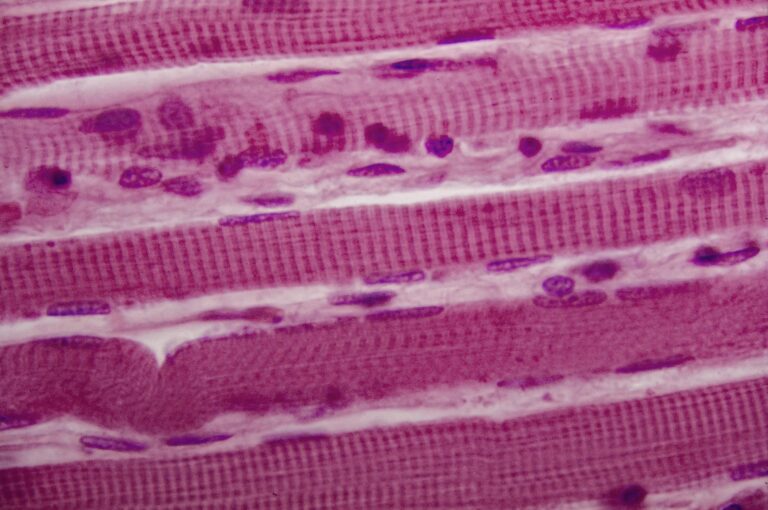
Exercise is the closest thing biology has to a wonder drug, and pharmacology has spent decades trying to bottle it. The problem is that a workout is not one signal but a cascade — muscles burn fuel, mitochondria multiply, and a sprawling network of genes lights up to rebuild the tissue stronger than before. So when a molecule appears that seems to flip part of that switch on its own — that tells a muscle cell it just went for a run when it did nothing of the kind — the field pays attention. SLU-PP-332 is that kind of molecule. It is a small synthetic compound built to wake up a family of receptors sitting at the control panel of cellular energy, and in mice it activates an acute aerobic-exercise gene programme in skeletal muscle and enhances exercise capacity.1 The catch — and it is a large one — is contained in those last two words: in mice.
What exactly is SLU-PP-332?
SLU-PP-332 is a synthetic pan-agonist of the estrogen-related receptors, a set of three nuclear receptors abbreviated ERRα, ERRβ and ERRγ.1 Despite the name, these are not classical estrogen receptors and they are not switched by estrogen; they are “orphan” receptors that act as master regulators of how a cell makes and spends energy, working alongside the PGC-1α coactivator to drive mitochondrial biogenesis.2 The compound came out of the laboratory of Thomas Burris, which has built an entire series of ERR agonists around this scaffold — including a newer, orally active analogue, SLU-PP-915, reported to enhance aerobic exercise capacity in mice.7 A 2026 chemical-optimisation study went further still, systematically reworking the SLU-PP-332 structure to sharpen ERR potency and read out the receptor’s signalling in finer detail.9
The label that has stuck to it — “exercise mimetic” — is doing a lot of work, and it is worth being precise about what it claims. It does not mean the compound replaces exercise. It means that, at the level of gene expression, the molecule engages some of the same regulatory machinery a workout recruits — in the original study, the aerobic-exercise response it triggered was ERRα-dependent.1 That distinction matters for anyone reading the preclinical literature honestly.
How does SLU-PP-332 work in the body?
The mechanism runs through the receptor family itself. ERRs are heavily concentrated in tissues that burn fuel for a living — skeletal muscle, heart, liver — where they orchestrate mitochondrial biogenesis and fatty-acid oxidation, the cellular machinery for building new power plants and feeding them fat as fuel.2 A 2025 study in the Proceedings of the National Academy of Sciences mapped how the three ERRs cooperate to control muscle mitochondrial energetics in mice, showing that ERRα acts as a broad regulator while ERRγ amplifies output in the most energy-hungry fibres.14 By chemically activating all three at once, SLU-PP-332 leans on that control panel from above.
There is a second strand the receptor touches: repair. ERRα has been reported to promote skeletal-muscle regeneration and to soften the course of muscular dystrophy in mdx mice, linking the family not only to endurance but to the rebuilding that follows damage.15 The broader physiology is consistent too: in the same muscle study, both ERRα and ERRγ proved essential for the adaptive mitochondrial biogenesis that exercise training itself produces14 — which is exactly the programme an ERR agonist is designed to engage.1
The number of human clinical trials of SLU-PP-332 to date. Every result behind the “exercise mimetic” story comes from cell and animal models; the compound has, as of 2026, generated no human efficacy or safety data at all.
What has SLU-PP-332 actually shown in research?
The headline preclinical findings are genuinely interesting. In rodent studies the ERR-agonist approach has been reported to improve running and aerobic capacity — the closest analogue, SLU-PP-915, was characterised specifically for enhancing exercise capacity when given orally to mice, a property the original injectable SLU-PP-332 lacked.7 The receptor’s reach extends well beyond the treadmill, too. In the liver, hepatocyte ERRα has been shown to modulate a gluconeogenic–epigenetic crosstalk that counteracts the progression of metabolic-dysfunction-associated steatotic liver disease (MASLD/MASH) in mouse models,11 and a separate line of work found that PPARα–ERRα crosstalk mitigates the same fatty-liver progression.13 In the kidney, an ESRRA-driven mitophagy pathway has been reported to ease diabetic kidney disease in models.8 The picture that emerges is of a receptor sitting at a metabolic crossroads — which is exactly why a molecule that turns it on draws interest.
But notice what every one of those sentences has in common: a model organism. None of this is a human result. The ERR programme is a compelling target on paper, and the chemistry to hit it is now real and well-characterised.9 Whether any of it translates to a person is, at this point, an entirely open question.
| Attribute | SLU-PP-332 | Why it matters |
|---|---|---|
| Molecular target | Pan-agonist of ERRα/β/γ (estrogen-related receptors) | Hits a master regulator of cellular energy metabolism, not estrogen receptors |
| Research framing | “Exercise mimetic” — activates oxidative-metabolism genes | Mimics part of exercise’s gene programme; does not replace exercise |
| Evidence level | Preclinical only — cell and animal models | Zero human efficacy or safety data exist |
| Known caveat | ERR is also implicated in cancer biology | The target’s biology cuts both ways; safety is unestablished |
| Regulatory status | Not approved anywhere | A research material, never a medicine |
SLU-PP-332 at a glance — a well-defined molecular target and a striking mouse story, set against a complete absence of human data.
What does the honest evidence say — and what are the risks?
Here the candour has to be total. SLU-PP-332 is purely preclinical. There are no human trials, no human pharmacokinetics, no human safety record — the “exercise mimetic” is, as of today, a hypothesis tested in rodents and cells, not a demonstrated effect in people. Treating it as anything more is reading past the data.
The target itself carries a real caveat. The estrogen-related receptors are not a clean “fitness” switch; ERRα is deeply implicated in cancer biology, where its control of metabolism is co-opted by tumours, and it has been pursued as a drug target precisely against cancers such as breast cancer.46 ERRγ has likewise emerged as a signature in cancer prognosis, described in one thyroid-cancer review in frankly alarming terms.3 A receptor family whose activation is being studied both as a metabolic benefit and as a feature of malignancy is one whose risk profile cannot be assumed from the upside alone. Chronically dialling up a master metabolic regulator is not self-evidently safe, and the literature gives no human answer either way.
One more signal is worth naming because of what it reveals. SLU-PP-332 has already entered the anti-doping detection literature: a laboratory has characterised its in vitro metabolites specifically for doping-control purposes,10 and parallel work has profiled both SLU-PP-332 and SLU-PP-915 as pan-ERR agonists “with doping potential”.12 That anti-doping scientists are building assays to catch these molecules tells you the gray-market interest is real — and that the compounds are being eyed for exactly the human self-experimentation the evidence does not support.
What does research-use-only mean for SLU-PP-332?
Because SLU-PP-332 has no approved human use and no human safety data, the only responsible frame is the laboratory bench. It belongs alongside the other molecules in the exercise-mimetic class — agents like the mitochondrial peptide MOTS-c and the NNMT inhibitor 5-Amino-1MQ — whose stories are scientifically rich and, for now, almost entirely preclinical. Condor Research supplies SLU-PP-332 strictly as a research-use-only reference material: not for human or veterinary use, not a supplement, not a therapy, and not an approved medicine in the EU, the US, or anywhere else.
In that context the questions that matter are not about effects but about identity and purity. For a research-grade ERR agonist, the experiment is only as trustworthy as the material in the vial: is it actually SLU-PP-332, at the stated purity, free of the synthesis by-products that would confound a result? That is what a Certificate of Analysis exists to answer. Every unit Condor ships is accompanied by a COA confirming the reference material at the bench is exactly what the label claims — the necessary first condition for any clean experiment, and the only honest footing for a compound this early in its scientific life.
References
- Billon C, Schoepke E, Avdagic A, et al. A Synthetic ERRα/β/γ Agonist Induces an ERRα-Dependent Acute Aerobic Exercise Response and Enhances Exercise Capacity. ACS Chem Biol. 2023. DOI: 10.1021/acschembio.2c00720.
- Schreiber SN, Emter R, Hock MB, et al. The estrogen-related receptor α (ERRα) functions in PPARγ coactivator 1α (PGC-1α)-induced mitochondrial biogenesis. Proc Natl Acad Sci USA. 2004;101(17):6472–6477. DOI: 10.1073/pnas.0308686101.
- Unfolding of Imminent Bio-Signatures in the Prognosis of Thyroid Cancer; The Emergence of Estrogen Related Receptor Gamma (ERRγ) as a Hurricane. Asian Pac J Cancer Prev. 2023. PMC10162641.
- Estrogen-related receptor α in breast cancer: From molecular insights to targeted therapy. Biochim Biophys Acta Rev Cancer. 2025. DOI: 10.1016/j.bbcan.2025.189400.
- Deblois G, Giguère V. Oestrogen-related receptors in breast cancer: control of cellular metabolism and beyond. Nat Rev Cancer. 2013;13(1):27–36. DOI: 10.1038/nrc3396.
- Chang CY, McDonnell DP. Molecular Pathways: The Metabolic Regulator Estrogen-Related Receptor α as a Therapeutic Target in Cancer. Clin Cancer Res. 2012;18(22):6089–6095. DOI: 10.1158/1078-0432.CCR-11-3221.
- Okda HE, Billon C, Zhao P, et al. An orally active estrogen-related receptor agonist, SLU-PP-915, enhances aerobic exercise capacity. J Pharmacol Exp Ther. 2025. DOI: 10.1016/j.jpet.2025.103600.
- ESRRA-ATG5-Mediated mitophagy enhances arginine metabolism to alleviate diabetic kidney disease. Autophagy. 2025. DOI: 10.1080/15548627.2025.2601874.
- Okda HE, Zhao P, Hayes M, et al. Chemical optimization of the exercise mimetic SLU-PP-332 enables insight into estrogen-related receptor signaling. Int J Biol Macromol. 2026;355:151450. PMID: 41850449. DOI: 10.1016/j.ijbiomac.2026.151450.
- Avliyakulov NK, Sobolevsky T, Ahrens E. Analysis and Identification of In Vitro Metabolites of Exercise Mimetic SLU-PP-332 ERRα/β/γ Agonist for Doping-Control Purposes. Drug Test Anal. 2026;18(3):439–450. PMID: 41688415. DOI: 10.1002/dta.70035.
- Hepatocyte estrogen-related receptor α modulates a gluconeogenic–epigenetic crosstalk counteracting MASLD/MASH progression. Exp Mol Med. 2026. DOI: 10.1038/s12276-026-01707-1.
- Möller I, Krug O, Thevis M. In Vitro Metabolism and Analytical Characterization of SLU-PP-332 and SLU-PP-915: Novel Pan-ERR Agonists With Doping Potential. Rapid Commun Mass Spectrom. 2026. DOI: 10.1002/rcm.70039.
- PPARα-ERRα crosstalk mitigates metabolic dysfunction-associated steatotic liver disease progression. bioRxiv. 2024. DOI: 10.1101/2024.10.14.618024.
- Estrogen-related receptors regulate innate and adaptive muscle mitochondrial energetics through cooperative and distinct actions. Proc Natl Acad Sci USA. 2025. DOI: 10.1073/pnas.2426179122.
- Nguyen, et al. Estrogen-Related Receptor Alpha Promotes Skeletal Muscle Regeneration and Mitigates Muscular Dystrophy. FASEB J. 2025. DOI: 10.1096/fj.202501764R.
- SLU-PP-332 is a synthetic <strong>pan-agonist of the estrogen-related receptors</strong> (ERRα/β/γ), developed in the Burris laboratory and studied as an “exercise mimetic”.
- Its target family governs <strong>mitochondrial energetics, fatty-acid oxidation and muscle regeneration</strong>, the same gene programme that endurance exercise switches on.
- In obese mice the compound and its newer analogues are reported to improve <strong>running and aerobic capacity</strong> and metabolic measures — but every one of these results is preclinical.
- Honest evidence: there is <strong>zero human data</strong> on SLU-PP-332, and ERR is also implicated in cancer biology — a caveat that belongs on the label, not in the footnotes.
- Not approved as a medicine anywhere; Condor supplies it strictly as a <strong>research-use-only reference material</strong> with a Certificate of Analysis confirming identity and purity.
What is SLU-PP-332 used for?
In research, SLU-PP-332 is studied in cell and animal models as an “exercise mimetic” — a pan-agonist of the estrogen-related receptors (ERRα/β/γ) that activates oxidative-metabolism, endurance and muscle-regeneration gene programmes.115 All of its reported effects are preclinical. It is not approved for any human use and is supplied strictly research-use-only.
Is SLU-PP-332 an exercise mimetic that replaces exercise?
No. “Exercise mimetic” means that, in animal models, the compound engages some of the same gene-regulatory machinery a workout recruits — in the founding study the aerobic-exercise response was ERRα-dependent.1 It does not replace exercise, and there is no human evidence it does anything of the sort. As of 2026 there are zero human trials of SLU-PP-332.
Is SLU-PP-332 safe?
Its safety is unestablished. There is no human safety data at all, and its target, the estrogen-related receptor family, is also implicated in cancer biology — ERRα has been pursued as a drug target against cancers such as breast cancer.46 Safety cannot be assumed from the metabolic upside, and it is handled strictly as a research-use-only reference material.
Is SLU-PP-332 approved or legal as a medicine?
No. SLU-PP-332 is not approved as a medicine anywhere in the world; it is an investigational research compound. It has even entered anti-doping detection literature, where laboratories have built assays to identify its metabolites.1012 Condor supplies it only as a research-use-only reference material, not for human or veterinary use.
What is the difference between SLU-PP-332 and SLU-PP-915?
Both come from the Burris laboratory’s series of estrogen-related-receptor agonists. SLU-PP-915 is a newer, orally active analogue characterised for enhancing aerobic exercise capacity in mice,7 while chemical-optimisation work has reworked the SLU-PP-332 scaffold to sharpen ERR potency.9 Both are preclinical pan-ERR agonists with no approved human use.