
What Is Retatrutide? The Triple-Agonist Peptide Rewriting Metabolic Pharmacology
Retatrutide (LY3437943) is a single engineered peptide built to pull three metabolic levers at once. Here is what the science actually shows — and why a research-grade compound is not the same thing as an approved medicine.
Retatrutide (LY3437943) is a synthetic single-chain peptide engineered as a triple agonist at the GIP, GLP-1 and glucagon receptors. It is studied in preclinical metabolic-disease models and late-stage human trials. The material sold here is strictly research-use-only and is not a medicine or for human use.
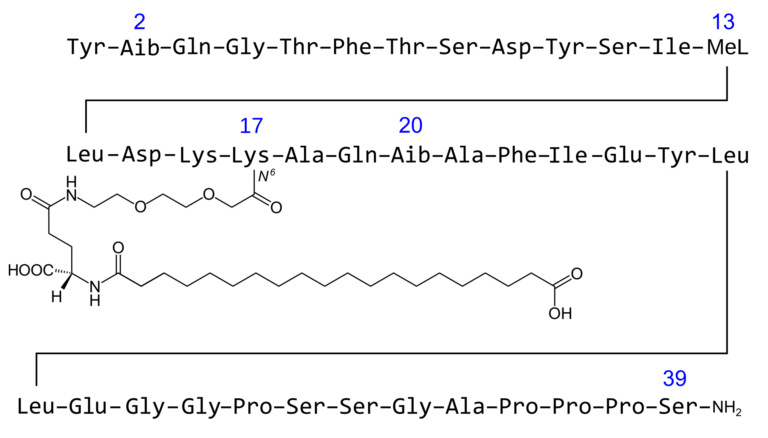
For most of pharmacology’s history, the dream was a magic bullet — one drug, one target, one clean effect. Metabolism never read that memo. The body regulates fuel through a committee of hormones that argue, overlap and compensate for one another, which is why blocking a single receptor so often produces a disappointing whimper. Retatrutide takes the opposite bet. Engineered as a single chain of amino acids, it is built to grab three metabolic levers at the same moment — the receptors for GIP, GLP-1 and glucagon — and pull them in concert.2 One molecule, three hands. It is the boldest entry yet in a lineage that has quietly become the most consequential story in metabolic science.
Where does retatrutide come from?
To understand retatrutide, you have to understand the family tree it sits at the end of. The story begins with the incretins — gut hormones released after eating that nudge the pancreas, the brain and adipose tissue toward a coordinated metabolic response. The first blockbuster, semaglutide, was a clean mono-agonist: it mimicked a single hormone, GLP-1.4 The next generation, tirzepatide, added a second target, becoming a dual agonist at both GIP and GLP-1 receptors.4 Each step compounded the effect.
Retatrutide (laboratory designation LY3437943) is the third step: a synthetic, single-chain triple agonist that engages GIP, GLP-1 and glucagon receptors simultaneously.25 The glucagon arm is the clever twist. Glucagon is usually cast as the villain that raises blood sugar, but at the right balance it also increases energy expenditure and mobilises fat in the liver — so harnessing it alongside the two incretin receptors is a genuinely different design philosophy.6 Reviewers have not been shy about the significance: one 2026 analysis frames the triple-agonist approach as a “paradigm shift in multi-hormonal pharmacotherapy.”2 Building such a molecule is itself a feat of chemistry — researchers have even reported dedicated hydrophobic-tag liquid-phase synthesis strategies just to make it efficiently.8
| Compound | Receptors targeted | Generation |
|---|---|---|
| Semaglutide | GLP-1 | Mono-agonist |
| Tirzepatide | GIP + GLP-1 | Dual agonist |
| Retatrutide (LY3437943) | GIP + GLP-1 + glucagon | Triple agonist |
The incretin lineage: each generation adds a receptor, and retatrutide is the first to engage all three at once — a progression reviewers frame as the “power of three.”25
What does the research actually show?
The preclinical work paints a coherent picture across very different model systems. In diet-induced obese mouse and hamster models of MASH (metabolic dysfunction–associated steatohepatitis, a fatty-liver disease), retatrutide produced broad metabolic benefits in the animals studied.10 A 2026 multi-omics study went looking for mechanism and reported that retatrutide alleviated adipose-tissue fibrosis — the stiffening and scarring of fat tissue that accompanies metabolic dysfunction.15 Other groups have profiled its effects on lipids and circulating metabolites in obesity with and without type 2 diabetes,12 and reviews have begun mapping its potential relevance to cardiovascular–kidney–metabolic syndrome, the tangled cluster where heart, kidney and metabolic disease feed one another.13 There is even curious work in rats suggesting these triple- and dual-agonists can blunt the interoceptive effects of alcohol — a hint that their reach extends into reward circuitry.14
Then there are the human trials, which is where retatrutide stopped being a curiosity and became headline news. In the phase 3 TRANSCEND-T2D-1 trial, reported in The Lancet, the triple agonist was studied in people with type 2 diabetes.79 But the figure that detonated across the field came from the obesity programme.
Average weight loss reported in the phase 3 TRIUMPH-1 obesity trial — a magnitude rarely seen with pharmacotherapy.1617
A trial design programme has grown up around these results, including TRANSCEND-CKD, which is studying retatrutide in chronic kidney disease,11 and broader overviews tracking its trajectory in both diabetes and obesity.1 A meta-analysis has even pooled early evidence in patients with co-existing kidney disease.3
Is research-grade retatrutide the same as the trial drug?
This is the distinction that matters most, and it is easy to blur, so let us draw the line sharply. Retatrutide is two things at once. It is an investigational pharmaceutical in late-stage clinical trials, moving toward a regulatory decision — a candidate medicine with a sponsor, a dossier and a development programme.1 And it is a research-grade chemical compound, the kind supplied here for laboratory use.
Those are not interchangeable. An approved or trial medicine is a manufactured product with regulated formulation, labelling, quality controls and an evidence base assessed by health authorities. A research-use-only compound is a reference material for the bench. The material we supply is the latter. It is not the approved drug, it is not a finished medicine, and it is not for human or veterinary use. The fact that retatrutide is making headlines as a near-market therapeutic does not change what a vial of research compound is for. If anything, the gap between the two is one of the most important things to understand about this molecule — mistaking one for the other is a category error, not a shortcut.
How strong is the human evidence, honestly?
Here is where candour earns its keep. The human data on retatrutide is, by the standards of the field, remarkably advanced — this is not a peptide propped up on a single rodent study. It has cleared phase 3 trials in both type 2 diabetes and obesity, with results published in The Lancet and covered in the BMJ.79 That puts it in rarer company than most compounds discussed in research circles.
But two honest caveats belong on the table. First, much of the mechanistic work that explains how it acts — the adipose-fibrosis multi-omics, the MASH-model metabolism, the lipid and metabolite profiling — is preclinical, conducted in animals or in vitro, and does not transfer cleanly to humans.101215 Second, as of this writing retatrutide is still investigational; the long-term safety, durability and real-world behaviour that only post-approval data can reveal simply do not exist yet. Comparative analyses against semaglutide and tirzepatide are still maturing.4 Impressive trial numbers are a beginning, not a verdict. None of this is dosing guidance and none of it speaks to human use of research material — it is context for why retatrutide is studied, and where the genuine knowledge gaps remain.
Why does verified purity matter for a peptide like this?
Retatrutide is a large, deliberately engineered peptide — the very feature that makes it interesting makes it demanding to produce. A long synthetic chain offers many places for synthesis to go subtly wrong: truncated sequences, deletion variants, residual reagents. For laboratory work, none of that is acceptable, because an ambiguous starting material poisons every downstream result. This is why identity and purity must be verified rather than assumed.
The material here is supplied strictly as research-use-only: 10 mg per vial, stored at −20°C, characterised at ≥99% HPLC purity with mass-spectrometric confirmation of identity and a per-batch certificate of analysis. It is not a medicine, not a supplement, and not for human or veterinary consumption. If you are placing retatrutide in the broader peptide landscape, our primers on BPC-157 and TB-500 sit alongside this one — and for the regulatory backdrop, see our notes on the EMA synthetic-peptide guideline. In a field where one molecule now reaches for three receptors at once, the least a researcher should expect is to know exactly what is in the vial.
- Retatrutide is a single engineered peptide that activates three receptors at once — GIP, GLP-1 and glucagon — making it the first triple agonist in the incretin lineage.
- It sits at the end of a clear design progression: semaglutide (GLP-1 mono) to tirzepatide (GIP/GLP-1 dual) to retatrutide (triple), which reviewers describe as a paradigm shift in multi-hormonal pharmacotherapy.
- Phase 3 human trials (TRANSCEND-T2D-1 in type 2 diabetes; TRIUMPH-1 in obesity) reported striking results, including up to ~30.3% average weight loss in TRIUMPH-1.
- Critical distinction: the investigational drug under regulatory review and the research-use-only compound sold here are different things — this material is not the approved medicine and not for human use.
- Because it is a large engineered peptide, verified identity and purity (≥99% HPLC, mass spec, per-batch certificate of analysis) are essential for reproducible laboratory work.
What is retatrutide and how does it work?
Retatrutide (LY3437943) is a synthetic single-chain peptide engineered as a triple agonist — it activates the GIP, GLP-1 and glucagon receptors simultaneously, rather than just one. Reviewers describe this multi-hormonal design as a paradigm shift. It is studied in preclinical models and late-stage human trials; the material sold here is research-use-only and not for human use.
How is retatrutide different from semaglutide and tirzepatide?
They sit on the same family tree but target different numbers of receptors. Semaglutide is a GLP-1 mono-agonist, tirzepatide is a GIP/GLP-1 dual agonist, and retatrutide adds a third target, glucagon, making it the first triple agonist in the incretin lineage.
What did the retatrutide phase 3 trials show?
Phase 3 human trials have been reported in both type 2 diabetes (TRANSCEND-T2D-1, published in The Lancet) and obesity (TRIUMPH-1). The obesity trial reported up to roughly 30.3% average weight loss. These are clinical findings about the investigational drug, not claims about the research-use-only compound.
Is the retatrutide sold here the same as the trial medicine?
No. Retatrutide is simultaneously an investigational pharmaceutical in late-stage trials and a research-grade chemical compound. The material supplied here is the research-use-only compound — it is not the approved or trial medicine, not a finished pharmaceutical product, and not for human or veterinary use.
Why does purity and a certificate of analysis matter for retatrutide?
Because retatrutide is a large engineered peptide, its long synthetic chain creates many opportunities for impurities such as truncated or deletion variants. Verified identity and purity — ≥99% HPLC, mass-spectrometry confirmation and a per-batch certificate of analysis — are essential for reproducible laboratory research.