
What Is ALY688? The Peptide Built to Get Around Adiponectin’s Manufacturing Problem
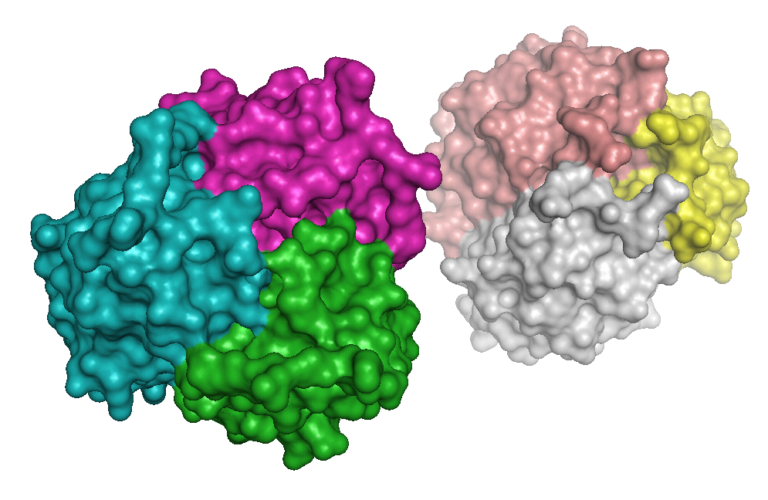
ALY688 is a synthetic ten-amino-acid peptide designed to activate AdipoR1 and AdipoR2, the receptors adiponectin normally binds. Full-length adiponectin is a large, heavily modified, multimeric protein that is difficult to manufacture and dose, and ALY688 was built as a short, chemically defined stand-in. Its systemic effects remain preclinical; only a topical eye-drop formulation has reached human trials.
Adiponectin is one of the more interesting hormones in metabolic research: a fat-derived signal whose levels fall exactly when the body needs more of it, in obesity and insulin resistance.1 For two decades, turning that biology into a drug has run into the same obstacle — the native hormone is a large, heavily modified, multimeric protein that is difficult to manufacture and dose. ALY688 is one attempt around that obstacle: a short synthetic peptide built to switch on the same receptors. This piece reviews what its research record actually shows, strictly for laboratory research use.
What ALY688 actually is
ALY688 is a synthetic peptide, ten amino acids long, designed to bind and activate AdipoR1 and AdipoR2 — the two receptors through which the hormone adiponectin signals.2 It is not a fragment cut from adiponectin’s own sequence, and it is not adiponectin replacement; it is a separately designed molecule engineered to reproduce the receptor engagement rather than the whole protein. The compound is developed by Allysta Pharmaceuticals, a Bellevue, Washington-based company, and appears in the literature under related names depending on formulation: the unmodified peptide (ALY688), a slow-release version intended for systemic subcutaneous dosing in animal studies (ALY688-SR, also called ALY688ER), and a topical ophthalmic solution.
The earliest published pharmacology traces to work in cultured rat skeletal muscle cells, where ALY688 increased phosphorylation of AMPK, ACC, and p38 MAPK — the same downstream effectors adiponectin itself engages — and improved insulin-stimulated glucose uptake and Akt signalling.3 A later blood-based bioassay study confirmed the same AMPK and p38-MAPK signature in mice and in human peripheral blood cells treated ex vivo, alongside a rapid rise in circulating TGF-β and reduced LPS-induced inflammatory cytokines.2 That is the mechanistic case for calling ALY688 an adiponectin mimetic: it reproduces adiponectin’s own signalling fingerprint rather than working through some unrelated pathway that happens to share a name.
Why adiponectin is a genuinely interesting drug target
Adiponectin is secreted almost exclusively by fat tissue, which makes its behaviour counterintuitive: instead of rising with adiposity, circulating levels fall in obesity, insulin resistance, and type 2 diabetes — a “paradoxical decrease,” as the 1999 study that first quantified it in human plasma put it.1 Lower adiponectin tracks with worse metabolic health, and restoring adiponectin signalling — rather than adiponectin itself — became an obvious pharmacological goal once its receptors were identified.
Those receptors were cloned in 2003: AdipoR1, expressed mainly in skeletal muscle and coupled predominantly to AMP-activated protein kinase (AMPK), and AdipoR2, expressed mainly in the liver and coupled predominantly to PPAR-alpha signalling, together driving fatty-acid oxidation and glucose uptake.4 That two-receptor, two-organ architecture is a large part of why adiponectin research spans such different tissues — muscle, liver, heart, adipose tissue itself — and why an agonist active at both receptors, like ALY688, gets studied across an unusually wide range of disease models rather than one narrow indication.
The manufacturing problem a peptide was built to dodge
Here is the part of the story that gets skipped in most write-ups: adiponectin itself is a genuinely difficult protein to turn into a drug, independent of whether the biology works. Full-length adiponectin does not circulate as one simple molecule. It assembles into a hierarchy of oligomeric complexes — low-molecular-weight trimers, medium-molecular-weight hexamers, and high-molecular-weight complexes built from multiple hexamers — and the collagenous domain that drives that assembly carries post-translational modifications: several conserved lysine residues are hydroxylated and then glycosylated, additions that shape which oligomeric species predominate and how active each one is.5 Manufacturing a recombinant biologic that reproduces that exact modification pattern at scale, with a consistent oligomeric distribution batch to batch, is a substantially harder and more expensive problem than manufacturing a small, chemically defined peptide of fixed sequence.
5 conserved lysine residues in adiponectin’s collagenous domain are hydroxylated and then glycosylated before the hormone assembles into its circulating complexes — one concrete reason a short synthetic peptide is easier to manufacture consistently than the native protein.5
That manufacturing gap is why two very different design strategies converged on the same receptor pair. One route, pursued by a University of Tokyo group, was to screen for orally active small molecules structurally unrelated to adiponectin’s own sequence; that effort produced AdipoRon, a synthetic small-molecule AdipoR1/AdipoR2 agonist that reproduced adiponectin’s effects on AMPK and PPAR-alpha signalling, improved glucose tolerance in high-fat-fed mice, and extended survival in genetically obese db/db mice.6 AdipoRon is a distinct compound from ALY688 — a different chemical class, from a different research group, with its own separate literature — and the two should not be conflated simply because they hit the same receptors. The other route, the one ALY688 represents, kept the peptide format but shrank it: instead of manufacturing the full multimeric hormone, design a short, chemically synthesised peptide that engages the same receptor surface directly. A 2019 review of AdipoR-targeted drug development frames both approaches — small molecules and designed peptide mimetics — as parallel responses to the same underlying problem: adiponectin’s biology is attractive, but the native protein is a poor starting material for a manufacturable drug.7
Three molecules, one receptor pair — and why they are not interchangeable
Because “adiponectin receptor agonist” describes a mechanism, not a single compound, at least three distinct molecules currently answer to some version of that description, from three different organisations, at three different stages of development. Treating them as one story is the single most common error in casual coverage of this space. The table below lays out what is actually documented for each.
| Compound | Modality | Developer | Furthest stage reached | Indications studied |
|---|---|---|---|---|
| ALY688 (incl. ALY688-SR/ALY688ER, ophthalmic solution) | Synthetic 10-amino-acid peptide | Allysta Pharmaceuticals | Human trials for a topical dry-eye formulation only; systemic formulations remain preclinical | Dry eye disease (clinical); cardioprotection, heart failure, MASH, insulin resistance (preclinical)3 |
| AdipoRon | Synthetic small molecule, orally active | University of Tokyo group | Preclinical (mice) | Type 2 diabetes, obesity, lifespan in db/db mice6 |
| (PEG)-BHD1028 | PEGylated synthetic peptide | EncuraGen Inc. | Human Phase 1 (insulin resistance) | Dry eye disease (preclinical); insulin resistance (Phase 1 human)89 |
Table 1. Three distinct adiponectin-receptor-directed compounds, based on the published record as of August 2026. Shared mechanism does not imply shared identity, potency, or stage of development.
The (PEG)-BHD1028 comparison is worth dwelling on, because it is the contrast most likely to get collapsed by mistake — including, confusingly, on the same indication ALY688 has entered clinically. (PEG)-BHD1028 is a different peptide from a different company (EncuraGen Inc., South Korea) with its own patent family, and its dry-eye work is entirely separate from ALY688’s: a 2022 study tested (PEG)-BHD1028 eye drops in mouse and rabbit models of induced dry eye disease, reporting improved tear volume, tear break-up time, and corneal staining scores relative to vehicle and, in rabbits, relative to topical cyclosporine.8 That is preclinical work on a different molecule. Separately, in 2026, a randomised, double-blind, placebo-controlled Phase 1 trial dosed (PEG)-BHD1028 subcutaneously in adults with insulin resistance across single- and multiple-ascending-dose cohorts; the compound was well tolerated, with mild gastrointestinal adverse events, and produced inconsistent, non-dose-ordered changes in insulin and C-peptide measures during a mixed-meal tolerance test — a result the authors read as supporting further development, not as a clean positive signal.9 None of that is ALY688 data. It belongs here because it is the closest available picture of what a completed human trial in this drug class actually looks like: modest and mixed, a long way from the effect sizes preclinical cardioprotection studies report in mice.
A shared receptor target is not a shared result. Three different molecules can each be called an “adiponectin receptor agonist” and still differ completely in potency, formulation, and how far each has actually been tested in a human being.
What the preclinical dossier on ALY688 actually shows
Set the other two compounds aside and look only at ALY688 itself, and the published record is genuinely broad — just not, so far, human. Cardiovascular studies dominate: in mouse models of myocardial ischemia-reperfusion injury and pressure-overload heart failure, daily ALY688 treatment attenuated infarct size, preserved ejection fraction, reduced cardiac fibrosis, and shifted circulating and myocardial cytokine profiles toward a less inflammatory state.10 More recent work has pushed the mechanism further, describing ALY688 acting through macrophage TGF-β signalling to shift regulatory T-cell and Th17 populations across both cardiac and intestinal tissue in a proposed gut-heart axis,11 reshaping the cargo of circulating extracellular vesicles in ways that reduced hypoxia-induced cardiomyocyte injury when those vesicles were transferred to other animals,12 and remodelling gut-derived metabolites such as trimethylamine N-oxide and glycodeoxycholic acid alongside cardiac protection in a pressure-overload model.13 Outside the heart, ALY688 has been reported to ameliorate hepatic steatosis, inflammation, and fibrosis in a diet-induced mouse model of metabolic dysfunction-associated steatohepatitis (MASH), acting through hepatic AMPK and p38 MAPK signalling without measurable cytotoxicity in cultured human iPSC-derived hepatocytes.14
That is a lot of biology across a lot of organ systems, and it is worth being direct about what ties it together and what limits it. Every one of these findings comes from mice, rats, or cultured cells. Effect sizes in animal cardioprotection studies — the “attenuated infarct size, preserved ejection fraction” language that recurs across this literature — do not translate to humans at a predictable rate, and heart-failure drug development in particular has a long history of encouraging rodent data that did not survive the trip into a clinical trial. None of these studies should be read as evidence that ALY688 treats or prevents any human disease; they establish a consistent, mechanistically coherent research signal in animal models, which is a real finding, but a considerably narrower one.
An honest read of the evidence
Two things are worth separating clearly here. The first is scientific: how strong is the preclinical case. The second is structural: who is generating that case, and does that shape what gets published. On the structural point, the disclosures are on the record and worth reading rather than skipping past. Allysta Pharmaceuticals — the company developing ALY688 — supplied the compound, funded the work, or employed named authors on essentially every ALY688 study cited here; several senior academic authors disclose ongoing paid consulting relationships with Allysta, and the company’s own chief executive appears as a named co-author on published pharmacology papers evaluating its own lead compound.14 None of that makes the results wrong. It does mean this is an industry-funded literature evaluating an industry-owned molecule, authored substantially by people with a financial stake in a positive result — a structural caveat that applies to a large share of preclinical pharmacology generally, and one worth holding in mind rather than discovering later.
On the first point — how far human testing has actually gone — the record is narrower than the preclinical breadth suggests. Allysta has reported a Phase 1/2a trial of an ALY688 ophthalmic solution in dry eye disease with positive exploratory results on corneal and conjunctival staining, and subsequently advanced to a Phase 2b/3 trial, registered as OASIS-1, that completed enrolment of 922 subjects with moderate-to-severe dry eye disease. Topline results were anticipated in 2023; as of this review, no peer-reviewed publication reporting that trial’s outcome could be located, and its result — positive, negative, or mixed — is not established in the indexed scientific literature. Public reporting also indicates Allysta is pursuing a systemic, slow-release formulation toward conditions such as Duchenne muscular dystrophy and other fibrotic disease, but that programme remains preclinical, with no registered human trial identified for this review. For every systemic indication studied — cardioprotection, heart failure, MASH, insulin resistance — the evidence specific to ALY688 is animal and cell data only. The honest label for ALY688 today is a research compound with a coherent, still-preclinical mechanistic story for systemic use, and a single localised clinical programme whose outcome has not been made public — not, yet, a validated candidate for any of the conditions its mouse studies describe.
All compounds named here are discussed as reference materials for laboratory research use only. They are not medicines, are not approved by the EMA, FDA or any other regulator for any indication, and are not intended for human or veterinary use. Nothing above is medical advice, a therapeutic claim or dosing guidance.
Condor Research · Scientific desk
Atrio Sciences s.r.o., IČO 57 669 651, Nitra (SK) · info@condorresearch.com
- ALY688 is a short synthetic peptide agonist of the adiponectin receptors AdipoR1 and AdipoR2 — it is not adiponectin itself, and not adiponectin replacement therapy.
- Adiponectin is a hormone secreted by fat tissue whose circulating levels paradoxically fall in obesity and insulin resistance, a relationship established in a 1999 human study.
- Full-length adiponectin assembles into trimers, hexamers, and higher-order complexes and carries hydroxylated, glycosylated lysine residues, properties that make it difficult to manufacture as a recombinant biologic — the practical problem short receptor-active peptides like ALY688 were designed to sidestep.
- As of August 2026, fourteen PubMed-indexed studies describe ALY688, reporting cardioprotective, metabolic, and hepatic effects almost entirely in mice, rats, and cultured cells.
- ALY688 is developed by Allysta Pharmaceuticals, whose employees and paid scientific consultants are named authors or disclosed funders on nearly every published ALY688 study, a conflict of interest worth weighing when reading this literature.
- The only ALY688 formulation known to have reached human testing is a topical ophthalmic solution for dry eye disease, including a Phase 2b/3 trial that enrolled 922 subjects; no peer-reviewed report of that trial's results has been published.
- A separate, unrelated peptide called (PEG)-BHD1028, from a different company, has its own preclinical dry-eye data and its own completed Phase 1 trial in insulin resistance, and should not be conflated with ALY688 despite acting on the same receptor family.
Is ALY688 the same thing as adiponectin?
No. Adiponectin is a large, naturally occurring hormone that assembles into multimeric complexes and is heavily post-translationally modified. ALY688 is a short, ten-amino-acid synthetic peptide designed to activate the same receptors, AdipoR1 and AdipoR2, without replicating adiponectin's structure. It is best understood as a receptor agonist inspired by adiponectin biology, not a copy or a replacement of the hormone itself.
Is ALY688 the same as AdipoRon?
No. AdipoRon is an unrelated synthetic small molecule, developed by a University of Tokyo research group, that also binds AdipoR1 and AdipoR2 but belongs to a different chemical class entirely and has its own separate published literature, largely in diabetic and obese mouse models. The two compounds share a receptor target and essentially nothing else — different developers, different chemistry, and no shared data should be assumed between them.
Is ALY688 the same as (PEG)-BHD1028?
No. (PEG)-BHD1028 is a separate PEGylated peptide developed by EncuraGen Inc., a different company, under its own patents. It has its own preclinical dry-eye studies in mice and rabbits and its own completed Phase 1 clinical trial in human insulin resistance. Because both compounds act on adiponectin receptors and both have been studied for dry eye, they are easy to conflate in casual summaries, but they are distinct molecules with independent evidence bases.
Has ALY688 been tested in humans?
Only one formulation has: a topical ophthalmic solution for dry eye disease, which reportedly progressed from a Phase 1/2a trial with positive exploratory results to a Phase 2b/3 trial (OASIS-1) that enrolled 922 subjects. No peer-reviewed report of that trial's results has been published as of this review. Every other indication associated with ALY688 in the literature — cardioprotection, heart failure, liver disease, insulin resistance — has been studied only in animals and cultured cells, not in humans.
What conditions has ALY688 been studied for?
Published preclinical studies report effects in mouse models of myocardial ischemia-reperfusion injury and pressure-overload heart failure, a proposed gut-heart inflammatory axis, circulating extracellular vesicle biology after cardiac injury, systemic metabolomic changes in heart failure, and metabolic dysfunction-associated steatohepatitis in the liver. Clinically, only the ophthalmic dry-eye formulation has entered human trials.
Is ALY688 an approved or clinically validated treatment?
No. ALY688 is a research compound. Its systemic effects are supported only by preclinical animal and cell-culture data, largely generated or funded by its developer. Its one clinical programme, for dry eye disease, has not published a peer-reviewed result. Nothing in the current record supports treating ALY688 as a validated therapy for any human condition, and any material sold under this name is intended strictly for laboratory research use, not human or animal administration.