
Peptide science, clearly referenced.
Independent, literature-backed explainers on research compounds — every claim cited to PubMed, every framing strictly research-use-only.
Cortagen is a four-amino-acid “cytogen” from Vladimir Khavinson's bioregulator programme, studied chiefly for one striking preclinical claim: that it helps injured peripheral nerves recover. We trace the science, and where its evidence runs thin.
A nine-amino-acid peptide pulled from the blood of sleeping rabbits in 1977, named for the brain waves it was meant to summon — and which science has spent nearly half a century failing to fully explain.
AHK-Cu is a blue copper-tripeptide complex studied mostly in the long shadow of GHK-Cu, with a particular fascination for the hair follicle. The chemistry is elegant; the human evidence is almost entirely absent.
IGF-1 LR3 is a re-engineered version of insulin-like growth factor 1, redesigned to slip past the binding proteins that normally rein it in. Here is what the chemistry actually does, what the preclinical literature shows, and why the honest reading carries a serious caveat.
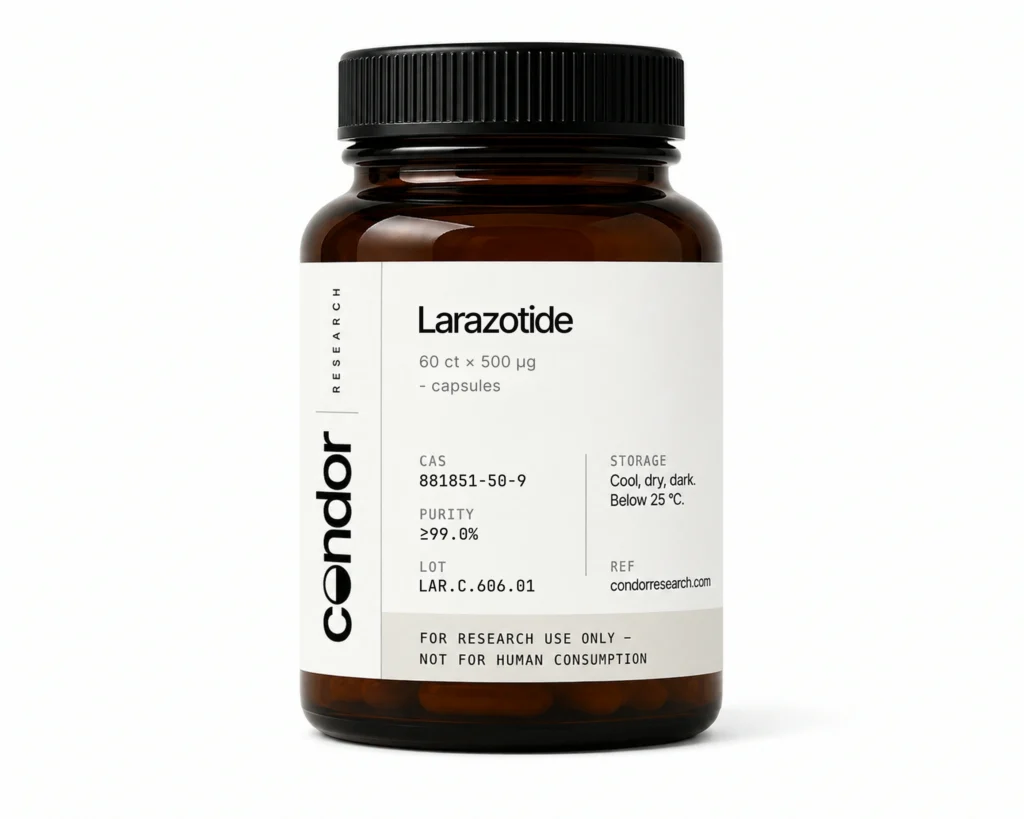
Larazotide (AT-1001) is an eight-amino-acid peptide designed to tighten the gut's molecular seams by antagonising the zonulin pathway. It is the only “leaky gut” molecule with a serious clinical dossier — and its largest trial is also the most honest thing about it.
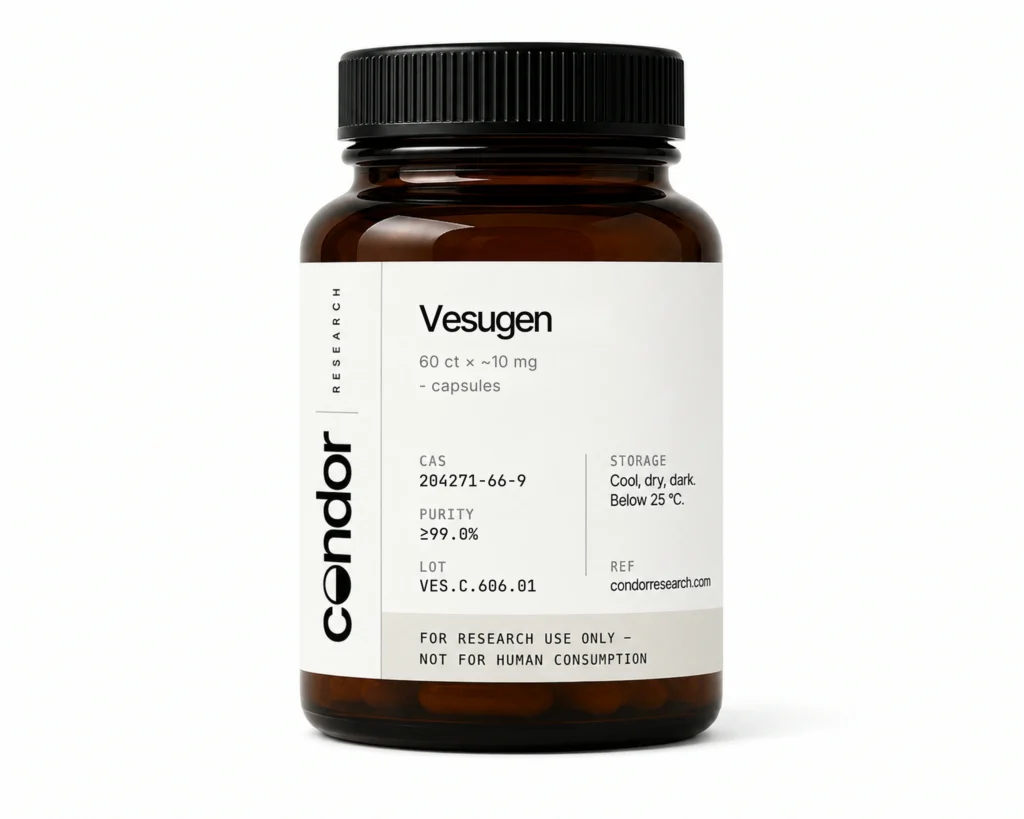
Vesugen is the tripeptide KED (Lys-Glu-Asp), the “vascular” member of the Khavinson cytogen family. It rests on a bold and still-unproven idea: that three amino acids can act as a tissue-selective regulator of the blood-vessel wall.
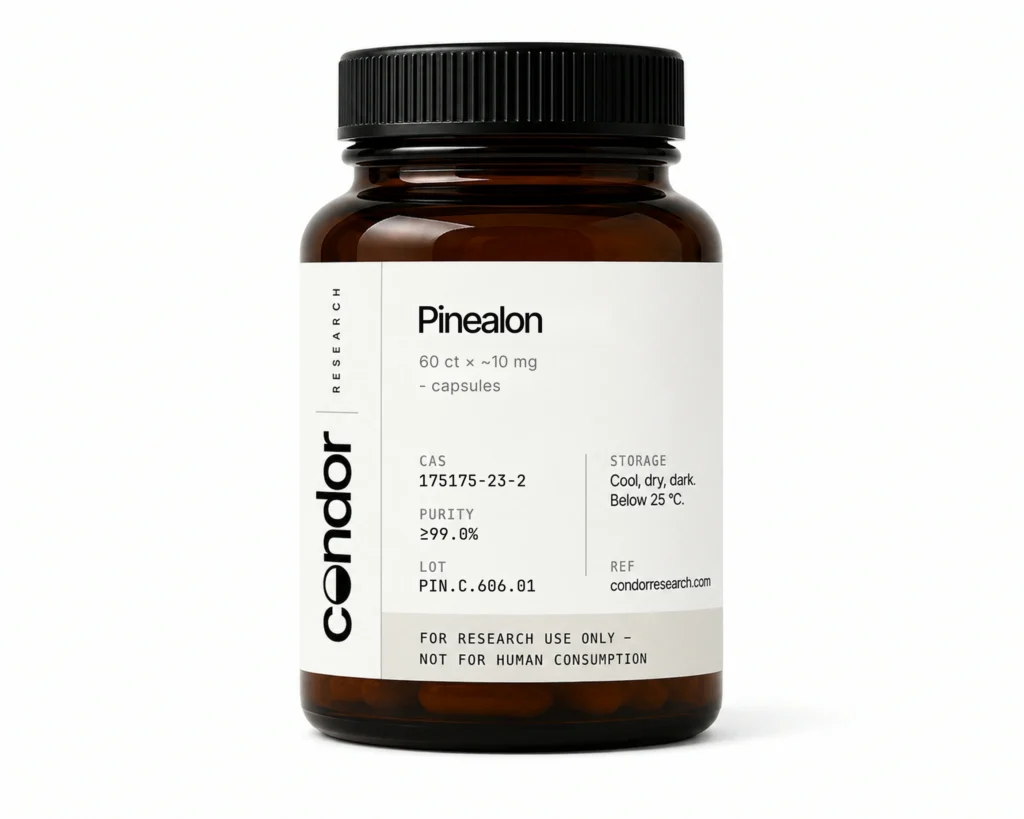
Pinealon is the tripeptide EDR (Glu-Asp-Arg), a “cytogen”-class short peptide from the Khavinson school proposed to act as an epigenetic regulator of the brain. A clear-eyed look at the chemistry, the preclinical evidence, and why the data demand caution.
The dream of a molecule that delivers a workout’s metabolic rewards without the workout is one of longevity’s most seductive ideas. Examined honestly, it lives almost entirely in mice — promising biology, marketing far ahead of the clinic.
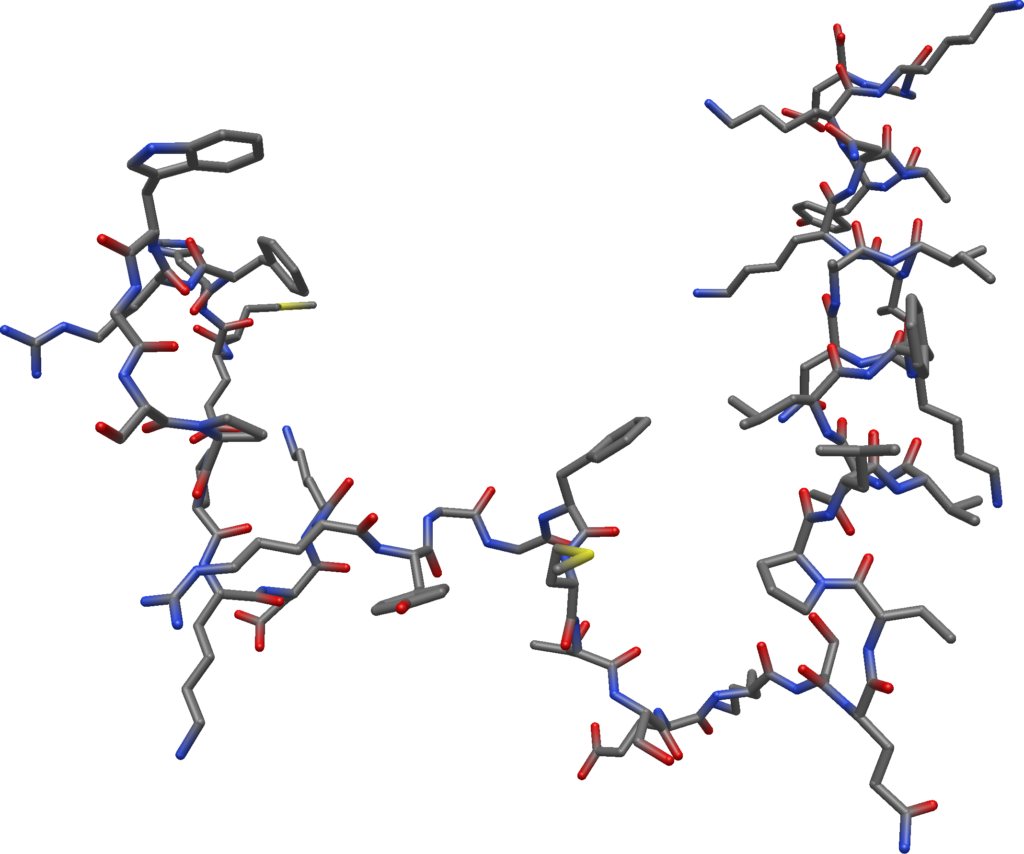
Retatrutide is a real phase III triple agonist that produced some of the largest weight-loss figures in trial history. The vial sold on a research-chemical site is not that drug — and here is the honest distinction.
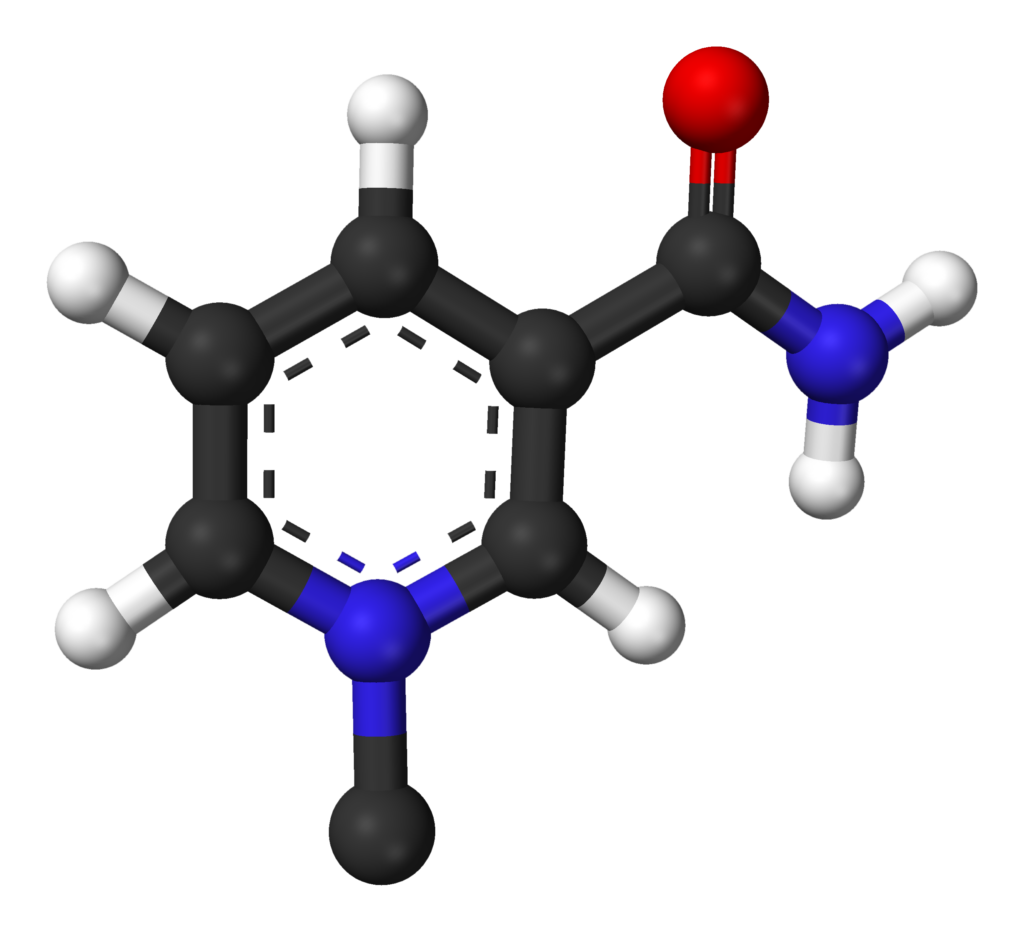
NAD+ falls with age and an entire industry promises to refill it. But “raises NAD+” and “slows ageing” are two different claims — and in humans, only the first is well supported.