
NAD+, NMN and NR: What the Human Evidence Really Says
NAD+ falls with age and an entire industry promises to refill it. But “raises NAD+” and “slows ageing” are two different claims — and in humans, only the first is well supported.
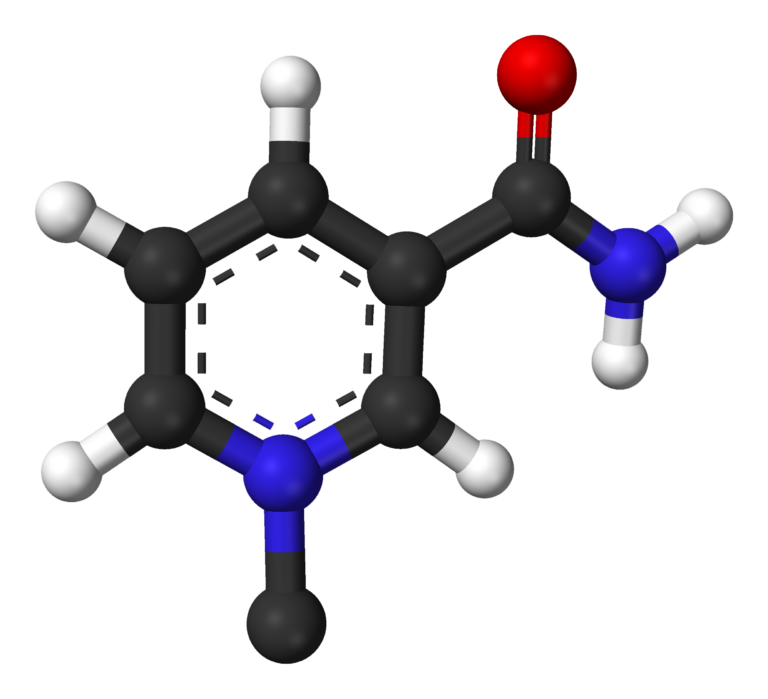
In humans, NAD+ precursors such as NMN and NR reliably raise blood NAD+ levels, but systematic reviews find downstream benefits for muscle mass and physical function are modest or mixed and not established. NAD+ and its precursors are research materials, not approved medicines for ageing or any condition; Condor supplies them research-use-only with a Certificate of Analysis.
Pour the same molecule into a young cell and an old one, and the old one is running on less of it. The molecule is NAD+ — nicotinamide adenine dinucleotide — and its quiet, decades-long decline is one of the most reproducible findings in the biology of ageing.1 From that single fact an entire industry has grown: powders, capsules and vials all promising to top the tank back up. The premise is seductive precisely because it is half true. NAD+ really does fall with age, and the right molecules really can raise it again. The question the marketing skips over is whether refilling the tank does anything you would actually feel — and that is a very different claim.
Why does NAD+ matter so much inside a cell?
NAD+ is not a niche vitamin curiosity; it sits at the centre of metabolism like a clearing-house. Every time a cell burns glucose or fat for energy, NAD+ shuttles electrons through the reactions that make ATP, flipping between its oxidised (NAD+) and reduced (NADH) forms thousands of times a second. But its second job is what ties it to ageing. NAD+ is the obligatory fuel for two families of enzymes that police the genome and tune metabolism: the sirtuins, which adjust how genes are switched on and off, and the PARPs, which spring into action to repair damaged DNA. Both consume NAD+ as they work, so the more damage a cell accumulates over a lifetime, the more its repair machinery draws down the very pool of NAD+ that its energy metabolism also depends on.1
There is a third drain that has reshaped how researchers think about the decline. The enzyme CD38, an immune-associated NADase that becomes more abundant with age and inflammation, is now understood to be a major consumer of NAD+ and its precursors — effectively a leak in the tank that widens as we get older.23 Work on CD38 helped explain why simply having more raw material around is not the whole story: you are pouring into a vessel that is also draining faster, because the same enzyme that degrades NAD+ also degrades the NMN and NR meant to replenish it.4 That biology is why NAD+ shows up across so many of the catalogued hallmarks of ageing, and why it became such an attractive target in the first place.1
What are the three ways to raise NAD+ — and do they reach the cell?
Cells rarely take up NAD+ wholesale; instead they build it from smaller precursors through a well-mapped salvage pathway. That gives the research market three headline routes, and they are not interchangeable. The first is NAD+ itself, supplied directly. The second is nicotinamide mononucleotide (NMN), one step upstream. The third is nicotinamide riboside (NR), a step further back still, which the cell phosphorylates into NMN before completing the chain to NAD+.
Here the story gets genuinely unsettled, and honest writers should say so. How NMN actually gets into cells has been a live scientific dispute: one influential line of work identified a dedicated transporter (Slc12a8) that imports NMN directly,5 while others have argued NMN is largely dephosphorylated to NR at the cell surface before entry — meaning the route you swallow and the molecule that crosses the membrane may differ.6 These transport and bioavailability questions are not academic hair-splitting; they determine how efficiently a given precursor lands where it is supposed to.6 For a research market awash in confident claims, the underlying pharmacokinetics remain a moving target.
Across randomised trials, NAD+ precursors reliably raise circulating NAD+ — yet meta-analyses find that the downstream clinical outcomes people actually care about, such as muscle mass and physical function, are modest, mixed, or not significantly different from placebo.78
What does the human evidence actually show?
This is the part that matters, and it is where the gap between mechanism and meaning opens widest. The biology above is real. The marketing leap is to treat “raises NAD+” as a synonym for “slows ageing” — and the human trial record simply does not license that swap.
Start with what the trials agree on. A 2025 systematic review and meta-analysis of randomised controlled trials of NMN and NR found an overall significant effect on elevating blood NAD+ levels — the precursors do what they say on the tin at the biomarker level.7 A PRISMA-guided systematic review reached the same first conclusion: oral NR, NMN and nicotinamide reliably raise NAD-related biomarkers in people.9 So far, so encouraging.
Now the second half, which the labels rarely print. In that same meta-analysis, most of the clinically relevant outcomes — skeletal muscle index, handgrip strength, gait speed — were not significantly different between precursor and placebo groups; the authors concluded that current evidence does not support NMN or NR supplementation for preserving muscle mass and function in older adults.7 The broader PRISMA review found human effects on metabolic, vascular and performance endpoints to be mixed rather than convincing, and judged the case for anti-ageing benefit inconclusive.9 A separate review of NMN and physical performance, pooling ten randomised trials in over four hundred participants, captured the same tension: a biomarker that moves, and harder endpoints that mostly do not.8
That sentence is the field’s honest one-line summary, and it is worth sitting with rather than racing past.
NAD+ vs NMN vs NR: how do they compare?
| Route | How it raises cellular NAD+ | Human-evidence stage |
|---|---|---|
| NAD+ (direct) | Supplied as the end-product; cells generally cannot import intact NAD+ efficiently and rely on breaking it down to precursors first.6 | Least characterised oral route; bioavailability and uptake remain open questions.6 |
| NMN | One step upstream; debated whether it enters via a dedicated transporter or is first converted to NR at the membrane.56 | Reliably raises blood NAD+ in RCTs; muscle and function outcomes mostly not significant vs placebo.78 |
| NR | Two steps upstream; phosphorylated to NMN, then converted to NAD+ via the salvage pathway.9 | Reliably raises NAD-related biomarkers; downstream clinical effects mixed.79 |
All three routes converge on the same salvage pathway and share the same evidentiary pattern: a biomarker that moves convincingly, and harder human endpoints that remain unproven.79
So what should an honest reader conclude?
Be candid about the seams in the evidence. The trials are typically short — weeks to a few months — while ageing is a process of decades, so a flat result on muscle does not rule out effects that only a far longer study could detect.8 Populations differ, study designs differ, and the field is young.9 None of that is a reason to oversell. The most defensible reading is the narrow one the data actually support: precursors raise NAD+; raising NAD+ has not yet been shown to make people measurably healthier or longer-lived.79 “Raises a biomarker” and “delivers a clinical benefit” are different sentences, and conflating them is the single most common error in this corner of the market. For the wider debate on these precursors, see our companion piece on what NAD+ is and the NMN primer.
Why does purity matter more than the hype?
There is a quieter problem underneath the headline one. NAD+ and its precursors are chemically fragile — sensitive to heat, moisture and time — and the gap between what a label claims and what a vial contains is exactly where a hyped, lightly regulated market goes wrong. When the science is genuinely unsettled, the responsible move is not to inflate the clinical story but to be unimpeachable about the one thing that can be measured: what is actually in the vial. That is why every reputable supply stands or falls on a Certificate of Analysis — identity confirmed, purity quantified, contaminants screened — rather than on a promise about ageing.
To be unambiguous: NAD+, NMN and NR are research materials, not approved medicines for ageing, longevity or any human condition, and nothing here is dosing or therapeutic guidance. Condor Research supplies these compounds strictly as research-use-only reference materials, characterised by a third-party Certificate of Analysis, for laboratory investigation only — not for human or veterinary use. In a field where “raises NAD+” is true and “slows ageing” is not yet earned, identity and purity are the only claims a serious supplier should be willing to stand behind.
- NAD+ is a central metabolic hub tied to several hallmarks of ageing, and cellular levels decline with age — partly because consumers like the enzyme CD38 ramp up.
- There are three commonly studied routes to raise cellular NAD+: direct NAD+, NMN, and nicotinamide riboside (NR) — and how each is absorbed and transported is still genuinely unsettled.
- Human meta-analyses agree on one thing: precursors reliably raise blood NAD+. They diverge on whether that translates into real-world gains in muscle or physical function, where effects are modest or mixed.
- The honest one-line summary: NAD+ goes up; whether you live better or longer is not established in humans.
- None of these is an approved anti-ageing medicine; when a molecule is fragile and the market is hyped, identity and purity on a Certificate of Analysis are the only claims a supplier can truly stand behind.
Do NMN and NR actually raise NAD+ levels in humans?
Yes. Randomised controlled trials and meta-analyses consistently find that NMN and NR raise circulating NAD+ levels in people — this is the most reproducible human finding for both precursors. The contested question is not whether they raise the biomarker, but whether that translates into measurable clinical benefit, where the evidence is mixed.
Does raising NAD+ slow ageing or extend lifespan in humans?
This is not established. While NAD+ declines with age and precursors reliably raise it, systematic reviews find that downstream outcomes such as muscle mass, physical function and metabolic markers are modest, mixed, or no different from placebo in human trials. “Raises NAD+” and “slows ageing” are different claims, and only the first is well supported.
What is the difference between NAD+, NMN and NR?
All three feed the same NAD+ salvage pathway but enter at different points. NAD+ is the end-product itself; NMN is one step upstream; and NR is a further step back, which the cell converts to NMN and then to NAD+. How efficiently each is absorbed and transported into cells is still genuinely debated in the literature.
Why is CD38 important in NAD+ decline?
CD38 is an NAD-consuming enzyme that becomes more abundant with age and inflammation. It acts as a growing “leak” in the cellular NAD+ pool, which helps explain why levels fall with age even when raw precursors are available — you are refilling a tank that is also draining faster.
Are NAD+, NMN and NR approved anti-ageing medicines?
No. NAD+ and its precursors are research materials, not approved medicines for ageing, longevity or any human condition. Condor Research supplies them strictly as research-use-only reference materials, characterised by a Certificate of Analysis, for laboratory investigation only — not for human or veterinary use.