
HBT1: Takeda’s AMPA Receptor Potentiator, One Paper and Everything Else That Is Known
HBT1 is a Takeda AMPA receptor potentiator known from one 2018 in vitro paper: identity, binding, the 5YBF structure, zero human trials, and what is missing.
HBT1 is a small-molecule potentiator of AMPA-type glutamate receptors, described by scientists at Takeda Pharmaceutical Company in a single 2018 paper after it came out of a chemical library screen. Its defining property in that paper is how little it does on its own: in cultured rat neurons it potentiated AMPA receptor responses only when an agonist was present, and the rise it produced in brain-derived neurotrophic factor held flat between 1 and 10 µM instead of peaking and falling as the comparators did. It is not an approved medicine, has no international nonproprietary name, has no human study registered on ClinicalTrials.gov, and the paper itself states that its ADME profile was too poor for animal work.
Last reviewed: 16 October 2026. Identifiers, counts and registry results were checked against the primary databases on that date, except where a row says otherwise; the queries are in the method note.
At a glance
- What it is: an AMPA receptor positive allosteric modulator, C16H17F3N4O2S, PubChem CID 1222102, PDB ligand 8SR.
- Who: five authors, all Takeda employees, Fujisawa, Japan; funded by Takeda.
- What was measured: calcium influx in CHO cells and primary rat neurons, patch-clamp, BDNF over 24 h, LDH release, radioligand binding to an isolated domain and to brain membranes, two X-ray structures.
- Headline numbers: EC50 1.3 µM in neurons with 5 µM AMPA, 4.6 µM in CHO GluA1i; Kd 543 nM and 416 nM.
- Not located in public sources: any in vivo result, pharmacokinetic value, human study, independent replication, analytical method or reference standard.
- Species and stage: all in vitro or ex vivo; neurons from Sprague-Dawley rats at gestational day 19.
- Status: a preclinical tool compound that its own authors call unsuitable for in vivo work; it lives on as a radioligand in later Takeda assays and as one deposited crystal structure.
- What it is not: not TAK-137 and not TAK-653, the Takeda molecules that did reach human studies.
What is HBT1?
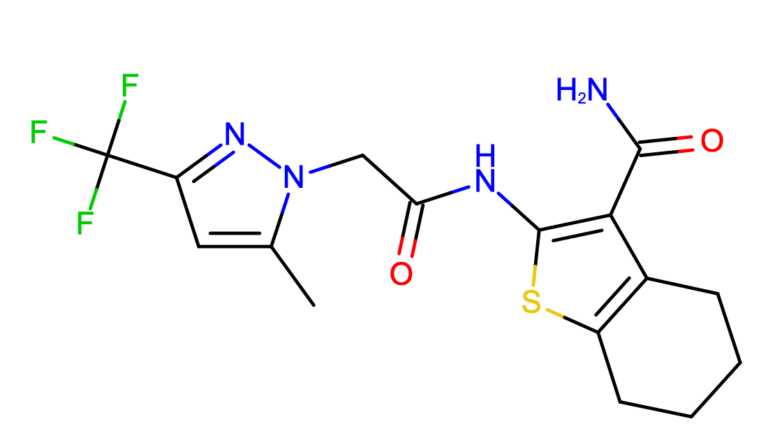
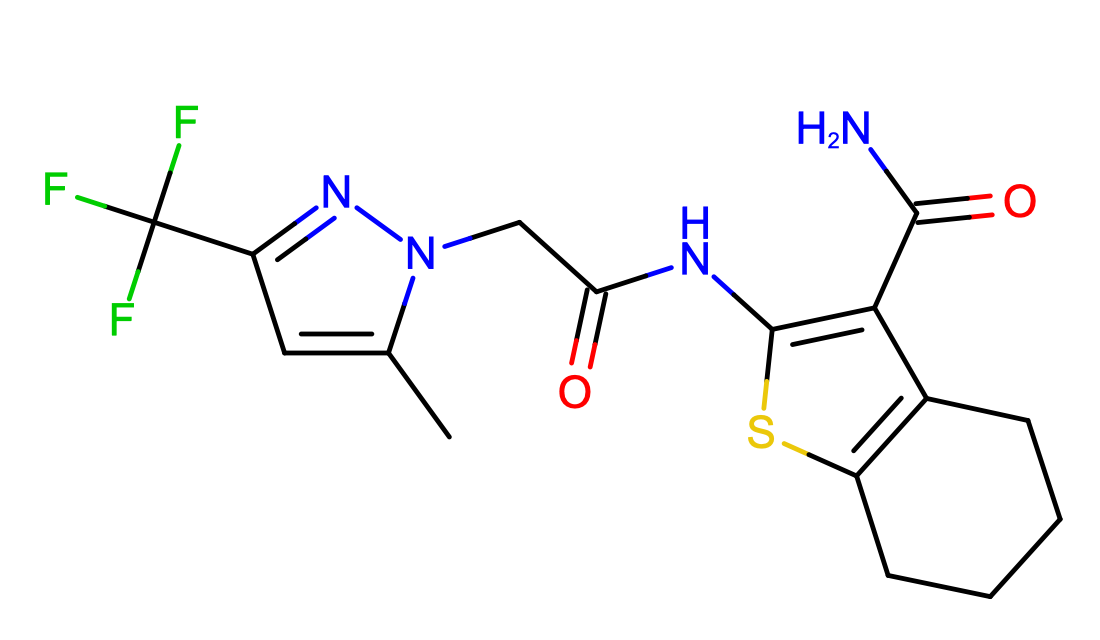
Chemically, HBT1 is an N-acylated 2-amino-tetrahydrobenzothiophene-3-carboxamide carrying a 5-methyl-3-(trifluoromethyl)pyrazole on the acyl chain. The IUPAC name in PubChem matches the systematic name printed in the 2018 paper.1 A PubChem name search for “HBT1” returns one compound record, CID 1222102, and the same structure is registered in the Protein Data Bank as ligand 8SR with a matching InChIKey.
| Field | Value | Source |
|---|---|---|
| IUPAC name | 2-[[2-[5-methyl-3-(trifluoromethyl)pyrazol-1-yl]acetyl]amino]-4,5,6,7-tetrahydro-1-benzothiophene-3-carboxamide | PubChem CID 1222102 |
| Molecular formula | C16H17F3N4O2S | PubChem; RCSB ligand 8SR |
| Molecular weight | 386.4 g/mol | PubChem |
| Monoisotopic (exact) mass | 386.10243 | PubChem |
| SMILES | CC1=CC(=NN1CC(=O)NC2=C(C3=C(S2)CCCC3)C(=O)N)C(F)(F)F | PubChem (reverse search returns the same CID) |
| InChIKey | PHLXSNIEQIKENK-UHFFFAOYSA-N | PubChem; RCSB chemical component 8SR |
| CAS number | 489408-02-8 | Listed in PubChem as a depositor synonym; not checked against a CAS registry |
| PubChem CID | 1222102 | PubChem |
| PDB ligand code | 8SR (entry 5YBF) | RCSB PDB |
| MeSH | Supplementary Concept C000712967, “AMPA receptor potentiator HBT1” | PubMed record of PMID 29298820 |
| Synonyms | HBT1; HBT-1; HBT 1 | PubChem synonyms |
| ChEMBL | No record (0 hits by InChIKey and by SMILES) | ChEMBL API |
| Approval / INN | None | No trials, no INN, no pharmacopoeial monograph found |
Identity of HBT1 as of 16 October 2026. The InChIKey is the identifier to use when matching records across databases; the name “HBT1” is not unique, as the next section shows.
One entry in PubChem’s synonym list does not belong to the compound. “YDL223C” is the systematic name of the HBT1 gene of baker’s yeast, carried into the chemical record by a depositor. Anyone building a synonym list for literature searches should drop it.
Why does searching “HBT1” return so much noise?
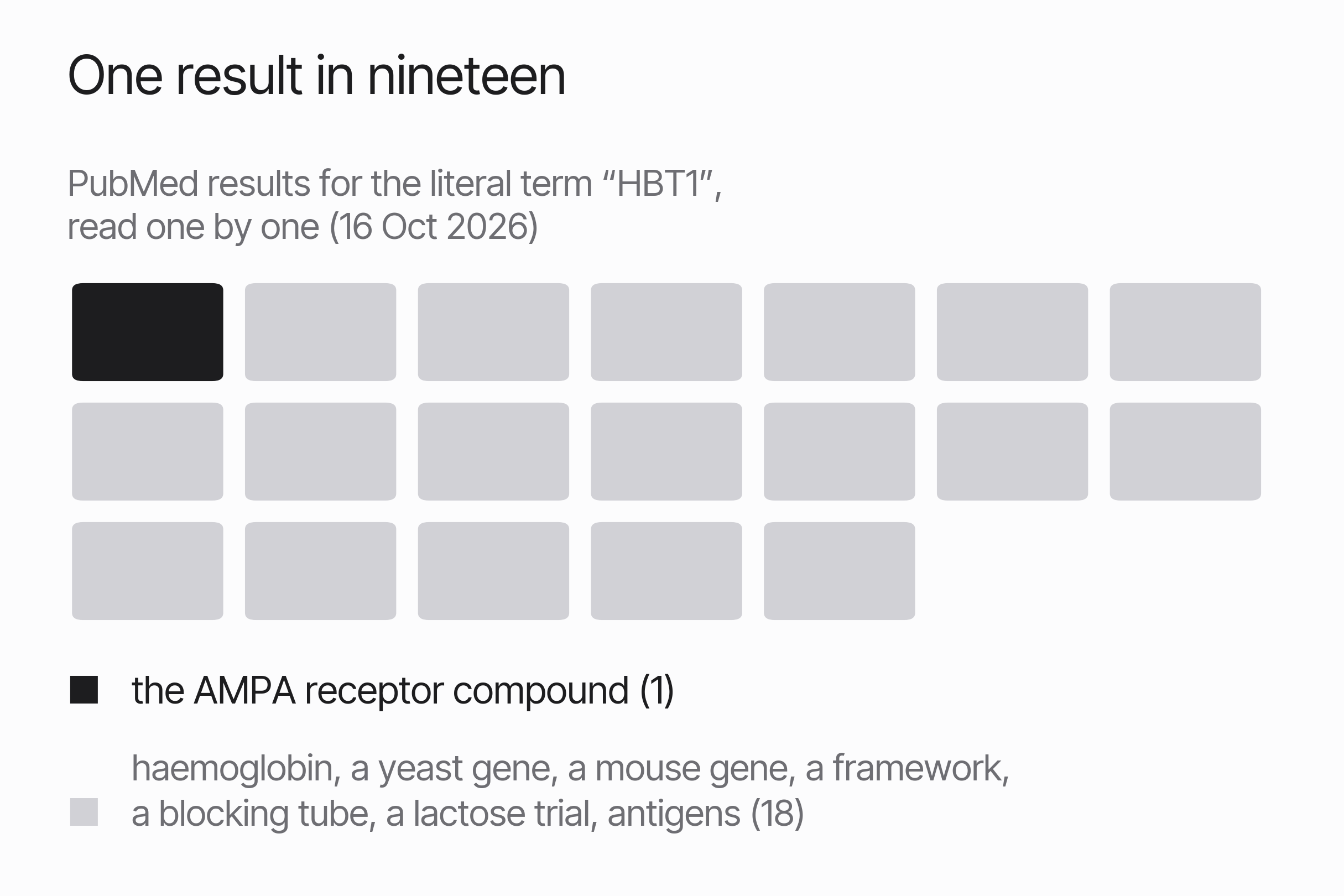
Because “HBT1” is a short string that several unrelated fields use. A PubMed search for HBT1 on 16 October 2026 returned 19 records. We read each one. Exactly one, PMID 29298820, is about the AMPA receptor compound.
1 of 19 PubMed results for “HBT1” concern the AMPA receptor potentiator. The other 18 use the same letters for something else.
| What “HBT1” means in the record | Field | PMIDs |
|---|---|---|
| AMPA receptor potentiator (this compound) | Neuropharmacology | 29298820 |
| “HbT1”: total haemoglobin in the papillary dermis (imaging), or a haemoglobin tertile | Clinical imaging, epidemiology | 41824643, 34218713, 32522482, 30292608, 16639418 |
| Haemoglobin and haemodialysis (string not in the abstract; field match, reason not confirmed) | Nephrology, machine learning | 41797993 |
| HBT1 gene: a transporter in Candida parapsilosis; a Hub1 substrate in S. cerevisiae (YDL223C) | Yeast genetics | 28827635, 11923536 |
| HBT-1: a mouse homeobox gene clone (Hox-1.4), 1986-87 | Developmental genetics | 2441396, 2878803, 2426103 |
| HBT1@MOFs: a luminescent ligand in chiral metal-organic frameworks | Materials chemistry | 39206734 |
| HBT-1: a heterophilic antibody blocking tube used in CA19-9 testing | Laboratory medicine | 36447406 |
| HBT1: one arm of a lactose ice-cream trial | Nutrition (hypolactasia) | 34681517 |
| Tn, sialosyl-Tn and T antigens (string not in the abstract; field match, reason not confirmed) | Histopathology | 11214861, 11193738, 9857245, 8982378 |
All 19 PubMed results for the literal query HBT1, 16 October 2026, classified by reading each record. Two matches could not be traced to a visible occurrence of the string and are marked as such.
The same collision appears in trial registries. Two reliable handles exist: the MeSH Supplementary Concept AMPA receptor potentiator HBT1, which returns PMID 29298820 alone, and a full-text search pairing “HBT1” with “AMPA”, which returns six papers in Europe PMC.
Where does HBT1 come from?
All five authors of the 2018 paper (Kunugi, Tajima, Kuno, Sogabe and Kimura) list Takeda Pharmaceutical Company Limited in Fujisawa, Kanagawa, Japan, as their affiliation; correspondence goes to Haruhide Kimura of the CNS Drug Discovery Unit. The paper states that Takeda funded the work and that all authors are Takeda employees. It appeared online on 3 January 2018 and in print in the Journal of Pharmacology and Experimental Therapeutics, volume 364, issue 3, pages 377-389.1
The screen ran in two stages, and the order matters. The primary screen measured calcium influx in CHO cells expressing human GluA1i with the auxiliary subunit TARP γ2. Hits from that recombinant assay were then characterised by calcium influx in primary neurons, specifically to see how much agonist-independent activity each had. Two potentiators came out: HBT1 and a chemically distinct compound the paper calls OXP1, the internal counterexample throughout.
HBT1, OXP1, LY451395 and LY451646 were synthesised at Takeda; the tritiated forms of HBT1 and OXP1 were made by Sekisui Medical. The authors describe the source only as a chemical library and do not say whether it was internal or commercial, nor who first made the structure. PubChem dates its record to 10 July 2005, a database date and not a date of synthesis; we have not established when, or by whom, the structure was first prepared.
A 2008 Organon application, WO 2008/003452, claims a family on the same scaffold: a 2-[2-(pyrazol-1-yl)acetylamino]-tetrahydrobenzo[b]thiophene-3-carboxamide with a trifluoromethyl group on the pyrazole. We did not find HBT1’s exact substitution pattern named in the text we read, we make no claim that HBT1 is covered by that or any patent, and we found no patent family specific to it.
What did the 2018 paper measure in cells?
The title states the finding and its limit in the same line, and the words in vitro are part of it. There is no animal experiment and no pharmacokinetic measurement anywhere in the paper.
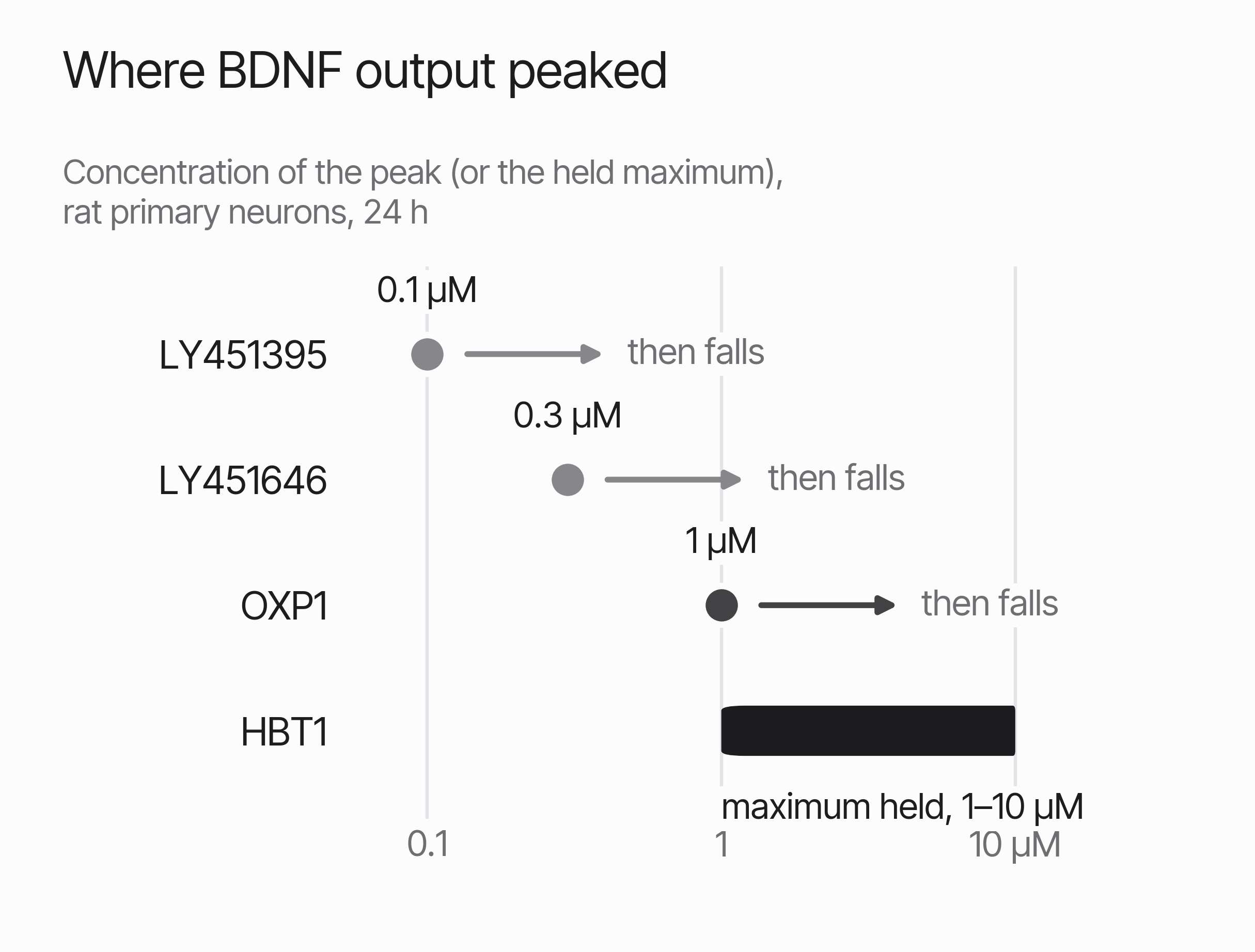
The problem the authors set out to address is a shape, not a potency. With the two Eli Lilly comparators, BDNF production in cultured neurons rose with concentration and then fell: LY451646 peaked at 0.3 µM, LY451395 (mibampator) at 0.1 µM. Both also raised BDNF with no AMPA added, LY451646 between 0.3 and 3 µM and LY451395 between 0.1 and 1 µM. In neurons, LY451395 drove calcium influx with an EC50 of 0.11 µM with AMPA and 0.88 µM without it; in CHO GluA1i cells its EC50 was 0.37 µM. The authors’ reading of that pattern is explicitly tentative: the agonistic effect may be associated with the bell-shaped response. They add that the mechanism behind LY451395’s bell shape is unknown, and that AMPA alone produces no bell shape.
Against that background, the numbers below are first-hand measurements in the paper, not values borrowed from a review.
| Measurement | System | HBT1 | OXP1 |
|---|---|---|---|
| Calcium influx, EC50 | Primary rat hippocampal neurons, AMPA 5 µM | 1.3 µM | 4.3 µM |
| Calcium influx, EC50 | CHO GluA1i + TARP γ2, glutamate | 4.6 µM | 2.5 µM |
| Calcium influx without AMPA | Primary neurons | None up to 30 µM | None up to 10 µM (its agonist-like behaviour shows in current and BDNF, below) |
| Whole-cell current, patch-clamp | Primary neurons, 11-20 days in culture | Current only with AMPA present | Current also without AMPA |
| BDNF after 24 h, AMPA 1 µM | Primary neurons | Concentration-dependent rise; maximum sustained from 1 to 10 µM | Peak at 1 µM, then decline |
| BDNF without AMPA | Primary neurons | No rise up to 3 µM | Rise at 1 µM and above |
| Cytotoxicity (LDH release) | Primary neurons | None, with or without AMPA | Weak but significant, 1-10 µM with AMPA and 0.1-10 µM without |
| Glutamate EC50 in the presence of the compound | CHO GluA1i | 2.5 µM | 0.25 µM |
| Kainate receptors GluK1, GluK2 | CHO | No activation up to 100 µM | No activation up to 100 µM |
Values as reported in the text and figure legends of PMID 29298820. NBQX suppressed the calcium influx produced by HBT1, which places the signal at the AMPA receptor. Most assays rest on n = 3, patch-clamp on n = 4-9.
Three rows carry most of the argument. HBT1 produced a patch-clamp current only with AMPA present, while OXP1 produced one on its own. HBT1’s BDNF maximum held across a tenfold range instead of peaking at one concentration. And the glutamate EC50 was 2.5 µM with HBT1 against 0.25 µM with OXP1, a tenfold difference the authors read as a sign that the two compounds engage the receptor differently.
The paper also notes that recombinant lines do not reveal the agonism at issue: in CHO GluA1i cells, LY451395 acted only with glutamate present, and the agonist-independent behaviour appeared in primary neurons. That is why the cascade was built in that order. The paper reports little subunit selectivity across GluA1 to GluA4 in flip and flop forms; the per-subunit values sit in supplementary tables we did not read, so we do not quote them.
Where on the receptor does HBT1 bind?
The binding work used tritiated HBT1 against a His-tagged GluA2o ligand-binding domain. Binding to the isolated domain was specific (a control protein gave none) and increased with the glutamate concentration; measured with 100 µM glutamate, the fit indicated a single site, Kd 543 nM. In rat hippocampal membranes binding rose with glutamate and was not seen without it, at Kd 416 nM. In competition, HBT1 displaced its own tritiated form with an IC50 of 0.64 µM on the isolated domain and 0.28 µM on membranes; LY451395 was far more potent, at 0.03 and 0.02 µM, about 21 and 14 times. HBT1 did not inhibit tritiated AMPA binding to hippocampal membranes, which indicates that it does not compete for the glutamate site.
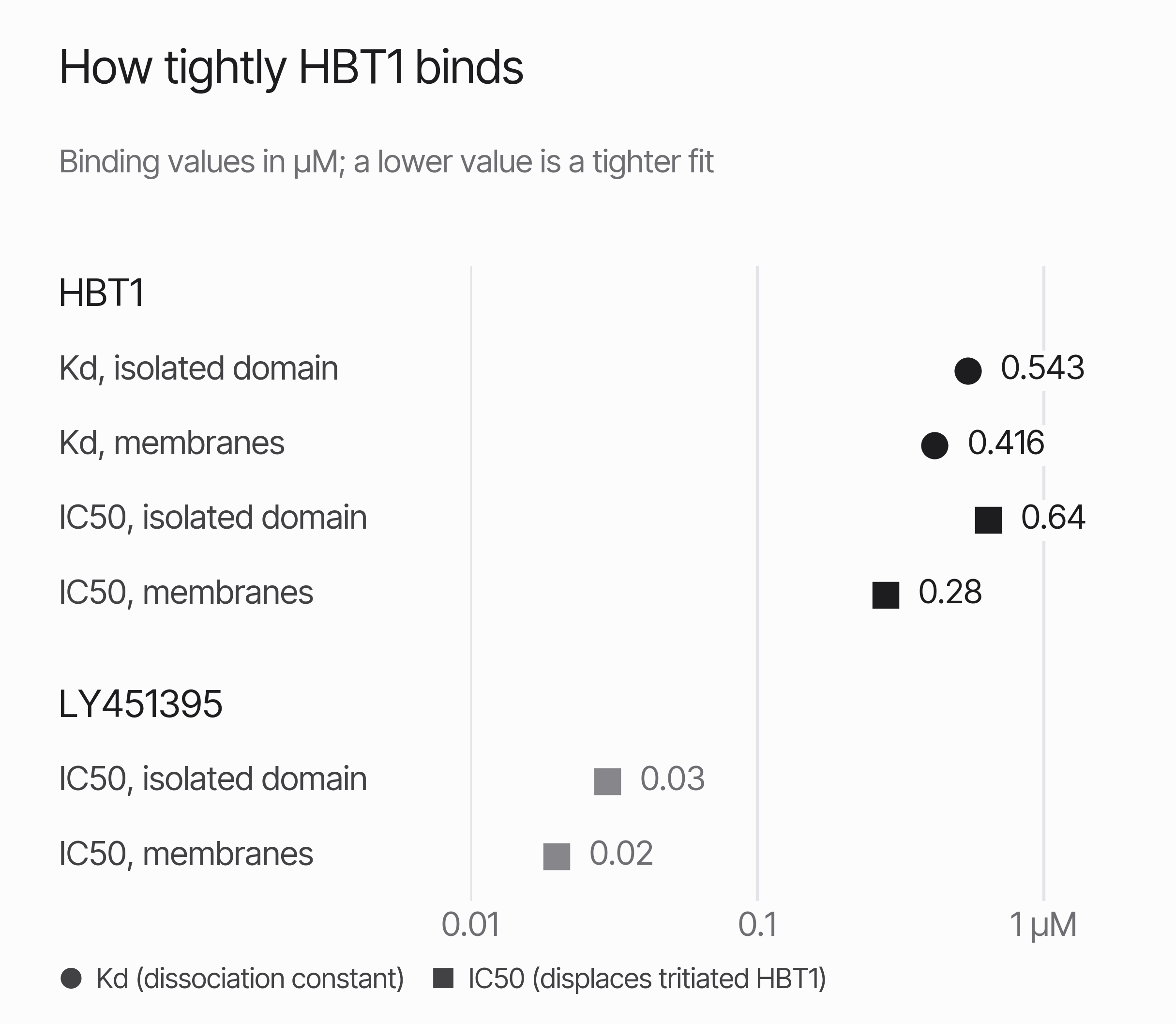
OXP1 behaves differently. Tritiated OXP1 did not bind the ligand-binding domain and OXP1 did not displace tritiated HBT1, so the two do not share a site; OXP1 bound the amino-terminal domain weakly, at a signal-to-noise ratio of about 2, and alanine scanning there found no selective OXP1 site. In neurons, 30 µM HBT1 co-applied with 3 or 10 µM OXP1 produced calcium influx with no AMPA, blocked by NBQX, while the same combination produced nothing in CHO GluA1i cells. OXP1 also increased tritiated HBT1 binding to membranes, with 30 µM glutamate and with none.
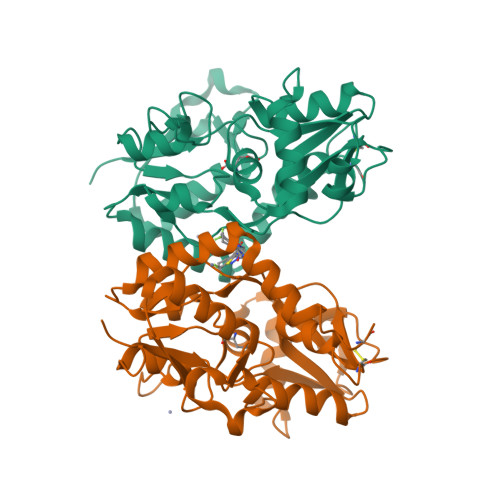
The structural result is the most durable part of the record, because it is deposited and can be inspected without the paper. The group solved the GluA2o ligand-binding domain with glutamate and HBT1, and the same domain with glutamate and LY451395, using compound at 1.5 mM, diffraction at beamline 5.0.3 of the Advanced Light Source at 100 K, molecular replacement from 1FTJ and refinement in REFMAC. Entry 5YBF holds the HBT1 complex at 1.5 Å, R-work 0.184 and R-free 0.208, released 17 January 2018; 5YBG holds the LY451395 complex at 1.52 Å.
The pose is a dimer-interface site. Two compound molecules sit at each interface, related by a non-crystallographic two-fold axis, at an occupancy of 0.5 each, a compound-to-protomer stoichiometry of 1:2. The trifluoromethylpyrazole and the tetrahydrobenzothiophene each occupy a hydrophobic pocket: one lined by K514, P515, V771 and L772 of one protomer, the other by I502 and K751 of the partner. HBT1 makes two hydrogen bonds to the side chain of S518, modelled in two conformations. LY451395, in the companion structure, bonds instead to main-chain atoms of P515 and G752, with no direct bond to S518 or S750. HBT1 makes no polar contacts with main-chain atoms, and the authors suggest this may explain its lower binding potency than LY451395.
Every experimental result on HBT1 that we could find comes from Takeda scientists.
What does the paper not show?
The central conclusion is a hypothesis the authors state as one: that a potentiator with less intrinsic agonism carries less risk of a bell-shaped response. It rests on a comparison across a handful of compounds in cultured cells, which is a correlation and not a demonstration of cause, and it was not tested in an animal. The authors note that the 24-hour BDNF assay may be more sensitive than shorter readouts, and that further work is needed to connect it to in vivo assays. That connection was not made here.
Four structural limits apply to the whole dataset. The work comes from one group: all five authors were Takeda employees and Takeda funded it, so there is no independent arm. Most assays rest on n = 3, with patch-clamp at n = 4-9. Everything is in vitro or ex vivo. And the compound did not progress: the paper states plainly that HBT1’s ADME profile is poor and that it is not suitable for in vivo studies, without showing any data behind that statement. That is the authors’ own assessment, and it is the only explanation for the lack of animal work: the paper gives no ADME data, and none of the documents we read does.
Europe PMC lists 21 citations of the paper. Judged by title, and by reading the three that are open access, they are reviews of AMPA receptor pharmacology, Takeda’s own follow-up work and medicinal chemistry papers on other potentiators; none used HBT1 as a test compound outside Takeda. That rests on titles plus three full texts, not on all 21.
The first author’s doctoral thesis, submitted at Kyushu University on the development of TAK-137, covers this programme and repeats the same figures: the 543 nM and 416 nM dissociation constants, the competition IC50 values, the limited subunit selectivity, the glutamate concentration-response and the poor ADME profile.12 Open access in the university repository, in Japanese, it reports the same experiments from the same programme, so it confirms the paper rather than adding to it. Neither document gives a numerical ADME value.
How does HBT1 relate to TAK-137 and TAK-653?
HBT1 became a laboratory tool inside Takeda. In a 2021 Scientific Reports paper on TAK-653, which we read in full, the group used tritiated HBT1 as the radioligand in a scintillation proximity binding assay with the GluA2o ligand-binding domain; TAK-653 displaced it with an IC50 of 0.26 µM. In calcium-influx experiments in rat hippocampal neurons, the response to 5 µM AMPA plus 10 µM HBT1 was defined as 100%, the reference against which other compounds were scaled.2 The 2018 paper uses the same convention in its methods. The open-access 2019 paper on TAK-137 shows the same use more fully: Takeda screened a chemical library with a binding assay built on tritiated HBT1 and the GluA2o ligand-binding domain, found a new chemotype, the dihydropyridothiadiazine dioxides, and described its hits as binders of the “HBT1 site”. The two lead compounds inhibited tritiated HBT1 binding with inhibition constants of 0.082 and 0.019 µM on the isolated domain, and 0.018 and 0.006 µM on hippocampal membranes. The same paper adds that the steric explanation it gives for its own compounds does not account for HBT1’s low agonism, because HBT1 lacks that skeleton.5
The 2018 paper makes its own claim about that lineage, and it is narrower than it first looks. Takeda writes that, based on this strategy, it discovered a clinical candidate, TAK-653, with lower risks of bell-shaped response in vitro and in vivo, with manuscripts in preparation. The strategy is the method: binding with tritiated HBT1 against the isolated ligand-binding domain, crystallography, calcium influx in primary neurons, patch-clamp and the 24-hour BDNF assay. That is a claim about a screening cascade, not a claim that TAK-653 was derived chemically from HBT1.
The molecules are from different chemical families: TAK-137 and TAK-653 are thiadiazine dioxides, a dihydropyridothiadiazine dioxide and a pyrazinothiadiazine dioxide respectively, not thiophene carboxamides. A 2022 review by Golubeva and colleagues states that both were developed on the basis of HBT1’s structural data.3 The primary papers support a narrower version of that statement. HBT1 supplied the radioligand and the binding site against which the TAK-137 chemotype was found, and the 2018 paper credits the same screening cascade for TAK-653. Neither paper says that either molecule was derived from HBT1’s structure.
The distinction matters for anyone reading the later literature. TAK-137 has three Phase 1 records on ClinicalTrials.gov and TAK-653 has eight, including published human data.7 None of that is evidence about HBT1. It concerns other molecules.
What class of compounds is HBT1?
HBT1 is an AMPA receptor positive allosteric modulator: it binds the dimer interface of the ligand-binding domain only when glutamate is bound, and amplifies agonist-driven responses. The axis on which the literature places it is intrinsic agonism, the degree to which a potentiator opens the channel by itself. The Golubeva review states that seizure risk and other adverse effects in this class were associated with agonistic effects at high concentrations and with bell-shaped concentration-response relationships, citing earlier work.3 Broader class questions are treated in published reviews we list for context without verifying line by line.6891011 The useful comparison for HBT1 is how far other compounds in the class went.
| Compound | Sponsor named in registry | ClinicalTrials.gov records |
|---|---|---|
| HBT1 | – | 0 (preclinical tool compound, Takeda) |
| TAK-137 | Takeda | 3 (Phase 1: terminated, completed, withdrawn) |
| TAK-653 | Takeda | 8 (human data published, PMID 36153330) |
| LY451395 (mibampator) | Eli Lilly | 2 (Phase 2); comparator in the 2018 paper |
| LY451646 | Eli Lilly | Not searched separately; comparator in the 2018 paper |
| PF-04958242 | Pfizer | 14 |
| Org 24448 | Mount Sinai | 1 (NCT00262665, withdrawn) |
Registry counts from ClinicalTrials.gov API v2 intervention searches, 16 October 2026. A registry record shows that a study was planned, not that it was completed or what it found.
Has HBT1 been studied in humans?
0 human studies of HBT1 registered on ClinicalTrials.gov as of 16 October 2026.
We queried the ClinicalTrials.gov API v2 with the compound name, its hyphenated form, its CAS number, its comparator hit and a structural description. None returned a study of HBT1.
| Query (literal) | Results | Relevant to HBT1 |
|---|---|---|
| query.term=HBT1 | 2 (NCT00262665, NCT05149664) | No |
| query.intr=HBT1 | 1 (NCT00262665) | No |
| query.term=”HBT-1″ | 2 (the same two) | No |
| query.term=”489408-02-8″ | 0 | – |
| query.term=OXP1 | 0 | – |
| query.term=”5-methyl-3-(trifluoromethyl)-1H-pyrazol-1-yl tetrahydrobenzothiophene” | 0 | – |
| query.term=”AMPA receptor potentiator” | 1 (NCT00262665) | No |
ClinicalTrials.gov API v2, endpoint /api/v2/studies, 16 October 2026.
NCT00262665 looks like a hit and is not one. It is a withdrawn Phase 2 study from Mount Sinai, “AMPAkine in MDD”, begun in March 2005, whose drug is Org 24448. Its intervention lists the generic phrase “AMPA receptor potentiator” as an alternative name, and the registry’s automatic vocabulary mapping attached the MeSH concept C000712967, “AMPA receptor potentiator HBT1”, by text match. HBT1 is not an intervention in that study; we confirmed this in the record’s JSON. The second result, NCT05149664, is an unrelated ultrasound study. We did not search the EU Clinical Trials Information System, ISRCTN or the Japanese registries (jRCT, UMIN), so the count above is limited to ClinicalTrials.gov.
What is not known about HBT1?
Most of what a reference page would normally contain was not found for this compound. Each absence below is tied to the search that supports it, and means “not located in the sources and searches listed”, not “does not exist”: internal company data are not public and cannot be ruled out.
| Not located | Search that supports it (16 Oct 2026) |
|---|---|
| Human study | ClinicalTrials.gov: 0 genuine records (table above) |
| Any numerical pharmacokinetic, ADME or bioavailability value | The paper states the ADME profile is poor and shows no data; the thesis repeats it. PubMed HBT1 AND pyrazole → 1 (29298820) |
| In vivo efficacy or safety data (behaviour, EEG, toxicology) | No in vivo experiment in the paper; no other PubMed record concerns the compound |
| Independent replication | Europe PMC citations of 29298820 → 21; none an independent experimental study |
| Preprints | Europe PMC SRC:PPR AND HBT1 AND AMPA → 0 |
| The paper’s supplementary figures and tables | Absent from the author manuscript we read, so per-subunit selectivity and refinement statistics are not quoted here |
| Validated analytical method (HPLC, LC-MS) | PubMed and Europe PMC by full systematic name → 0 |
| Certified reference standard or pharmacopoeial monograph | None found |
| ChEMBL bioactivity record | ChEMBL by InChIKey → 0 molecules |
| PubChem BioAssay data | PubChem assay summary for CID 1222102 → none |
| HBT1-specific patent | Google Patents and Europe PMC patent source; related scaffold only (see above) |
| Named listing by WADA | WADA 2026 Prohibited List, full text and index |
IUPHAR/Guide to Pharmacology and DrugBank were not checked and are not included in this table.
What is HBT1’s regulatory and anti-doping status?
HBT1 is not an approved medicine anywhere we could find. It has no INN and no registered clinical development.
HBT1 is not named in the WADA 2026 Prohibited List, in force from 1 January 2026, either in the body of the list or in its alphabetical index; neither “AMPA” nor “ampakine” appears, and neither do CX516 or CX717. We read the full 26-page document. Section S0, “Non-approved substances”, covers any pharmacological substance not addressed elsewhere in the list and without approval by a governmental regulatory authority for human therapeutic use, such as substances in preclinical or clinical development. Our reading is that, as worded, S0 would in principle reach a substance like HBT1. That is our inference; WADA does not mention HBT1, and we know of no WADA decision about it. We have not checked the list that replaces it for 2027.
We have not verified HBT1’s status under US or EU controlled-substance law, and the absence of a search result is not evidence that it is uncontrolled. Some catalogue pages attach generic “controlled substance” or SVHC labels to it; we treat those as template text, not as a regulatory source.
How can the identity of an HBT1 sample be verified?
For HBT1 we found no published analytical method, no certified reference standard and no monograph. Unless a laboratory holds a well-characterised in-house reference, identity has to be established from the structure itself rather than by matching a standard. The checklist below states what a laboratory should be asked to show, and describes analysis only. For how the sections of a certificate of analysis are normally read, see our guide to reading a certificate of analysis; for what such documents have been shown to measure across the market, see the State of Analytical Evidence 2026.
- Anchor to the InChIKey, not the name. PHLXSNIEQIKENK-UHFFFAOYSA-N identifies the structure in PubChem (CID 1222102) and in the PDB (ligand 8SR). A certificate giving only “HBT1” or only a CAS number does not establish which molecule was tested: the name collides with unrelated substances and the CAS number is unconfirmed.
- High-resolution mass spectrometry. The neutral monoisotopic mass is 386.10243 for C16H17F3N4O2S. The report should state the ion observed, its measured m/z and the mass error against the theoretical value. HRMS supports the formula assignment; it cannot establish the structure.
- NMR, with spectra attached. The features to account for follow from the structure: one CF3 group, which 19F NMR addresses directly; a single aromatic C-H and one methyl on the pyrazole; an N-CH2-C(=O) linker; four CH2 groups in the saturated ring; a secondary amide N-H and a primary carboxamide NH2. Of the 17 hydrogens, three sit on nitrogen, exchange, and may not all be visible depending on the solvent.
- Check the pyrazole regiochemistry. This is our inference from the structure, not a published finding. The compound is specified as 5-methyl-3-(trifluoromethyl)pyrazol-1-yl; an isomer with the methyl and CF3 positions exchanged has the same formula and exact mass, so HRMS cannot separate them. Two-dimensional NMR correlations between the N-CH2 linker and the adjacent ring substituent can, and 5YBF gives an independent three-dimensional reference.
- Purity with the method written out. With no published HPLC method for HBT1, a purity figure means little without the column, mobile phase, gradient, detection wavelength and integration settings behind it. Ask for the chromatogram, not only the percentage.
- Traceability. The report should name the laboratory, the date, the lot and the instruments. A document without a lot number does not describe the material in hand.
Only the numbers are specific to HBT1; the steps apply to any compound that exists as a library entry and a crystal structure but has no monograph. The same documented-search approach, applied to a compound with no published dossier at all, is in What Is MK-777 (“Acetamoren”)?
Method note
The 2018 paper was read as the author manuscript posted as “JPET Fast Forward” on 3 January 2018, which the publisher marks as not copyedited and warns may differ from the final version. That document does not include the supplementary figures and tables, so no value that appears only in the supplement is quoted here: the per-subunit selectivity numbers and the crystallographic refinement statistics fall in that category, and the refinement figures above come from the RCSB PDB entry instead. Reference 1 cites the published version.
Searches were run on 16 October 2026. PubMed (NCBI E-utilities, esearch): HBT1 → 19; HBT1[All Fields] → 19; AMPA receptor potentiator HBT1[Supplementary Concept] → 1; “OXP1” AND AMPA → 1; HBT1 AND pyrazole → 1; HBT-1 AMPA → 0; “HBT 1” AMPA receptor → 0; the full systematic name in quotation marks → 0; “AMPA receptor potentiator” AND lower agonistic → 4. Europe PMC: “HBT1” AND AMPA → 6 (40650226, 36671441, 34267258, 34358693, 30209408, 29298820); SRC:PPR AND HBT1 AND AMPA → 0; citations of 29298820 → 21. PubChem PUG REST: name lookup for HBT1, properties, synonyms and cross-references for CID 1222102. RCSB PDB: InChIKey search → chemical component 8SR; entries 5YBF and 5YBG. ChEMBL: molecule search by InChIKey → 0. Crossref: works record for 10.1124/jpet.117.245050. ClinicalTrials.gov API v2: queries as listed above. WADA: 2026 Prohibited List PDF, read in full.
The Kyushu University thesis was downloaded from the repository on 16 October 2026; we located every occurrence of HBT1 and read the passages on binding, selectivity, glutamate dependence, ADME and materials. The 2021 TAK-653 paper and the 2022 and 2025 reviews were read in full through Europe PMC, and the 2019 TAK-137 paper was read as open-access text on PubMed Central for its passages on HBT1. Statements resting on a review rather than the primary paper are attributed to the review. Version 2.0.
References
- Kunugi A, Tajima Y, Kuno H, Sogabe S, Kimura H. HBT1, a Novel AMPA Receptor Potentiator with Lower Agonistic Effect, Avoided Bell-Shaped Response in In Vitro BDNF Production. J Pharmacol Exp Ther. 2018;364(3):377-389. PMID 29298820. DOI 10.1124/jpet.117.245050. (Read as the author manuscript; see method note.)
- Suzuki A, Kunugi A, Tajima Y, Suzuki N, et al. Strictly regulated agonist-dependent activation of AMPA-R is the key characteristic of TAK-653 for robust synaptic responses and cognitive improvement. Sci Rep. 2021;11:14532. PMID 34267258. DOI 10.1038/s41598-021-93888-0.
- Golubeva EA, Lavrov MI, Radchenko EV, Palyulin VA. Diversity of AMPA Receptor Ligands: Chemotypes, Binding Modes, Mechanisms of Action, and Therapeutic Effects. Biomolecules. 2022;13. PMID 36671441. DOI 10.3390/biom13010056.
- Vialko A, Chałupnik P, Szymańska E. Positive AMPA and Kainate Receptor Modulators and Their Therapeutic Potential in CNS Diseases: A Comprehensive Review. Int J Mol Sci. 2025;26. PMID 40650226. DOI 10.3390/ijms26136450.
- Kunugi A, Tanaka M, Suzuki A, Tajima Y, et al. TAK-137, an AMPA-R potentiator with little agonistic effect, has a wide therapeutic window. Neuropsychopharmacology. 2019. PMID 30209408. DOI 10.1038/s41386-018-0213-7.
- Kadriu B, Musazzi L, Johnston JN, Kalynchuk LE, et al. Positive AMPA receptor modulation in the treatment of neuropsychiatric disorders: A long and winding road. Drug Discov Today. 2021;26:2816-2838. PMID 34358693. DOI 10.1016/j.drudis.2021.07.027.
- Dijkstra F, O’Donnell P, Klaassen E, Buhl D, Asgharnejad M, Rosen L. Central nervous system effects of TAK-653, an investigational AMPAR positive allosteric modulator in healthy volunteers (human data on TAK-653, not HBT1). Transl Psychiatry. 2022;12:408. PMID 36153330. DOI 10.1038/s41398-022-02148-w.
- Partin KM. Curr Opin Pharmacol. 2015;20:46-53. PMID 25462292. DOI 10.1016/j.coph.2014.11.002.
- Lee K, Goodman L, Fourie C, Schenk S. Adv Protein Chem Struct Biol. 2016;103:203-261. PMID 26920691. DOI 10.1016/bs.apcsb.2015.10.004.
- Qneibi M, Bdir S, Bdair M, Aldwaik SA, et al. Eur J Med Chem. 2024;266:116151. PMID 38237342. DOI 10.1016/j.ejmech.2024.116151.
- Radin DP, Lippa A, Rana S, Fuller DD. Pharmacol Biochem Behav. 2025;248:173967. PMID 39894310. DOI 10.1016/j.pbb.2025.173967.
- Kunugi A. ベルシェイプ型反応性および痙攣のリスクを軽減したAMPA受容体ポジティブアロステリックモジュレーターTAK-137の開発に関する研究 [Study on the development of TAK-137, an AMPA receptor positive allosteric modulator with reduced bell-shaped responsiveness and seizure risk; English title is our translation]. Doctoral thesis, Kyushu University; repository record 2019. DOI 10.15017/4060096.
Databases and registries. PubChem CID 1222102. RCSB PDB entries 5YBF and 5YBG; ligand 8SR. ClinicalTrials.gov NCT00262665 (false positive, discussed above). WADA, 2026 Prohibited List. All accessed 16 October 2026.
HBT1 is discussed on this page as a laboratory research compound for research use only: not for human or veterinary use, not for diagnostic or therapeutic application, not for any food or cosmetic purpose. Every result described here for HBT1 was obtained in cultured cells, isolated protein, membrane preparations or crystals; the human studies mentioned concern other compounds. Nothing here describes, recommends or implies human use, or should be read as a claim that HBT1 improves memory, cognition or any other function in people.
What is HBT1?
HBT1 is a small-molecule positive allosteric modulator (potentiator) of AMPA-type glutamate receptors, described by Takeda scientists in 2018 (Kunugi et al., J Pharmacol Exp Ther, PMID 29298820). Its IUPAC name is 2-[[2-[5-methyl-3-(trifluoromethyl)pyrazol-1-yl]acetyl]amino]-4,5,6,7-tetrahydro-1-benzothiophene-3-carboxamide, formula C16H17F3N4O2S, PubChem CID 1222102. It is not an approved medicine and has no INN.
Where does HBT1 come from?
Five authors, all Takeda employees, reported it in a study funded by Takeda. It came out of a chemical library screen run in two stages: first calcium influx in CHO cells expressing human GluA1i with TARP gamma2, then characterisation of the hits in primary neurons from rat embryos. The paper states that the compound used was synthesised at Takeda; it does not say who first made the structure.
What did the 2018 HBT1 paper show?
In primary rat hippocampal neurons HBT1 potentiated calcium influx with an EC50 of 1.3 µM (AMPA 5 µM) and produced current in patch-clamp only when AMPA was present. BDNF production rose and held its maximum from 1 to 10 µM, whereas the comparators LY451646, LY451395 and OXP1 peaked at 0.3, 0.1 and 1 µM and then fell. Tritiated HBT1 bound the GluA2 ligand-binding domain in a glutamate-dependent way (Kd 543 nM) and formed two hydrogen bonds with serine 518 (PDB 5YBF, 1.5 Å). The link between low agonism and the absence of a bell shape is the authors' hypothesis; everything is in vitro or ex vivo, with n = 3 in most assays.
Has HBT1 been tested in animals?
No animal result is reported. The paper itself states that HBT1 has a poor ADME profile and is not suitable for in vivo studies, and shows no data for that statement. We found no numerical pharmacokinetic value for HBT1 in any public source. Internal company data cannot be ruled out.
Has HBT1 been tested in humans?
No human study of HBT1 is registered on ClinicalTrials.gov as of 16 October 2026. The two results returned for 'HBT1' are false positives: NCT00262665 (Org 24448, auto-tagged with an HBT1 MeSH term by text match) and NCT05149664 (therapeutic ultrasound). EU, ISRCTN and Japanese registries were not searched.
How is HBT1 related to TAK-137 and TAK-653?
HBT1 was the tool behind both programmes, not their chemical parent. The 2019 TAK-137 paper (PMID 30209408) screened a chemical library with a binding assay using tritiated HBT1 and found a different chemotype, the dihydropyridothiadiazine dioxides, which it calls HBT1-site binders; it states that HBT1 lacks that skeleton. The 2018 HBT1 paper says that, based on the same screening strategy, Takeda discovered the clinical candidate TAK-653 (manuscripts in preparation at the time). A 2022 review (Golubeva et al., PMID 36671441) says both compounds were developed from HBT1's structural data; the primary papers support the narrower statement about the radioligand, the binding site and the screening cascade. HBT1 was also used as a reference in the TAK-653 paper (Sci Rep 2021, PMID 34267258).
Why does searching 'HBT1' return so many unrelated results?
Only 1 of the 19 PubMed records for the literal term HBT1 concerns the AMPA receptor compound. The rest refer to haemoglobin measurements, a yeast gene, a mouse homeobox clone, a metal-organic framework ligand, an antibody blocking tube and a lactose trial. The MeSH Supplementary Concept 'AMPA receptor potentiator HBT1' or the InChIKey PHLXSNIEQIKENK-UHFFFAOYSA-N gives a reliable match.
Is HBT1 on the WADA Prohibited List?
HBT1 is not named in the WADA 2026 Prohibited List or its index, and neither are 'AMPA' or 'ampakine'. Section S0 covers non-approved substances in general; that it could apply to HBT1 is an inference from its wording, not a WADA statement. The list that replaces it for 2027 was not checked.