
What Is MK-777 (“Acetamoren”)? A Search for a Compound That Has No Dossier
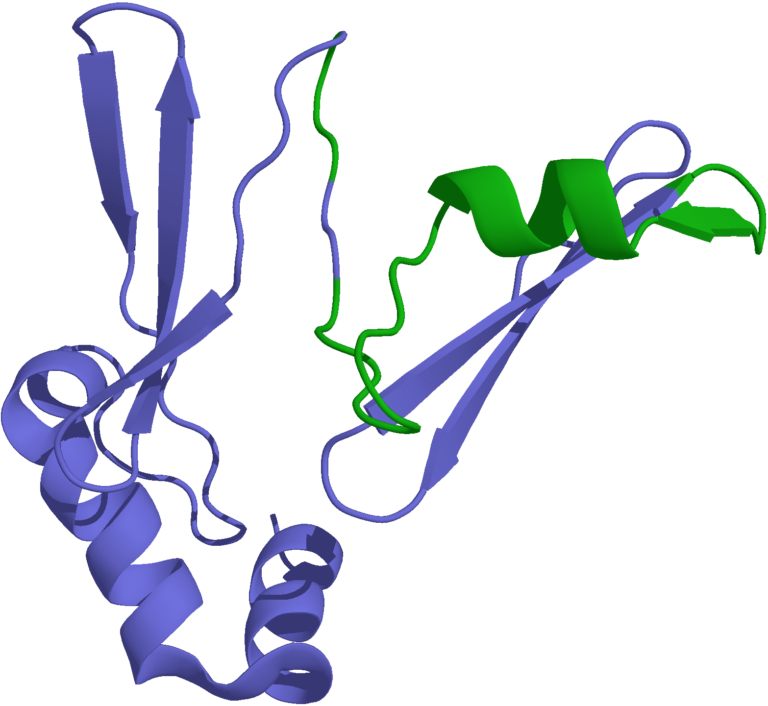
MK-777, also marketed as acetamoren, is presented as a next-generation ghrelin receptor agonist succeeding MK-677. A PubMed search on 2 August 2026 returned zero records for either designation. We could not locate a primary pharmacology publication, patent, registered trial or published structure under this name.
A compound circulating under the names MK-777 and acetamoren is described as a next-generation ghrelin receptor agonist, a successor to MK-677 (ibutamoren). We went looking for the paperwork that would make that description checkable: a primary pharmacology paper, a structure, a patent, a registered trial. We did not find it. What follows is a documented account of what our searches returned, what the real MK-677 literature actually says, and a reusable checklist for evaluating any compound presented as a successor to something known. All material here is for research use only.
What the databases returned
On 2 August 2026 we queried NCBI PubMed. The query "MK-777" OR "MK777" returned zero records. The query acetamoren returned zero records. The same day, on the same database, the query ibutamoren OR "MK-677" returned 137 records.
0 PubMed records for “MK-777”, “MK777” or “acetamoren” on 2 August 2026 — against 137 for ibutamoren/MK-677 on the same database, the same day.
A documented negative search is a finding, not an absence of one. It is reproducible: anyone can run the same query against the same database and get the same count, or a different one, and either outcome is informative. What we can state is narrow and factual. We could not locate a primary pharmacology publication, a published chemical structure, a CAS registry entry, a patent family, an originating laboratory, or a registered clinical trial under either designation. We are not asserting that no such compound exists anywhere in a chemist’s notebook. We are stating that the public record that would let a researcher identify it does not appear to exist.
What “MK-” actually means
The prefix is not a class marker and it is not a category of drug. “MK-” is Merck’s internal compound-numbering convention, and numbers in that series appear in the literature attached to a specific molecule with a specific originator. MK-0677 is the textbook case: it was disclosed as L-163,191 in a 1995 paper from Merck’s own medicinal chemistry group describing its design and biological activity as an orally active growth hormone secretagogue.1 There is a structure, a synthesis rationale, a named research team and a traceable publication.
That is what a compound number is supposed to be attached to. When a designation follows the same format but carries no publication, no patent trail and no registered trial, the format is doing work the evidence is not. We say this factually and without accusing anyone of anything: the numbering scheme itself confers no information about whether a molecule exists, what it is, or what it does.
A compound number is a pointer to a dossier. When there is no dossier, the number points at nothing — and a number that points at nothing is not evidence of a molecule.
MK-677 is real, and its record is more interesting than the marketing
The receptor at issue was identified in 1996, when a Merck-led group cloned the pituitary and hypothalamic receptor through which growth hormone secretagogues act.2 Its endogenous ligand, ghrelin, was isolated from stomach tissue three years later,3 and the receptor was subsequently formalised as the ghrelin receptor GHSR-1a under IUPHAR nomenclature.4 MK-677 is a non-peptide agonist at that receptor, orally active, with a genuine human pharmacology literature behind it.
The early human work established the pharmacodynamic signal cleanly. Seven days of oral administration in young men raised 24-hour growth hormone profiles and IGF-1, with measurable effects on adrenocortical markers.5 In healthy elderly subjects, daily administration restored GH and IGF-1 concentrations toward those of younger adults.6 A catabolic-state study showed reversal of diet-induced nitrogen loss,7 and a two-month study in obese subjects reported increased GH secretion, increased fat-free mass and increased energy expenditure.8
Then the programme tried to convert that signal into a clinical outcome, and this is the part that rarely survives the trip into a product page.
An honest read of the evidence
Merck ran MK-0677 into outcome trials in older adults, and the outcomes did not follow the biomarkers. A trial in patients recovering from hip fracture reported the compound’s effects on functional recovery,9 and a later multicentre randomised placebo-controlled phase IIb study in the same population did not deliver a result that carried the programme forward.10 A randomised trial in Alzheimer’s disease found no clinical effect on disease progression despite the expected endocrine changes.11
The most instructive single study is the twelve-month randomised trial in healthy older adults published in Annals of Internal Medicine.12 It reported a gain in fat-free mass of roughly one kilogram — real, measurable, and not accompanied by the strength or functional improvement that would make it clinically meaningful. It also reported an increase in fasting blood glucose and a reduction in insulin sensitivity. Appetite stimulation and fluid-retention-type effects are consistent findings across the GH-secretagogue literature and follow directly from the mechanism.58
So the honest summary of MK-677 is: a well-characterised molecule that reliably does what it says to the GH/IGF-1 axis, that carries metabolic consequences alongside that effect, and whose clinical development did not produce an approved product. That is a considerably more useful thing to know than “it raises IGF-1.”
A verification checklist you can reuse
The value of this exercise is not the specific answer about one designation. It is the method. Before accepting that a named compound exists as described, a researcher should be able to answer six questions. Applied side by side, they separate a documented molecule from a name.
| Verification question | MK-677 / ibutamoren | “MK-777” / “acetamoren” |
|---|---|---|
| Published chemical structure | Yes — disclosed as L-163,191 with synthesis rationale1 | Not located |
| Identifiable originator | Yes — Merck medicinal chemistry group, named authors1 | Not located |
| Primary pharmacology in the peer-reviewed record | Yes — receptor characterised and agonism described24 | Not located |
| Registered clinical trials | Yes — multiple randomised controlled trials9101112 | Not located |
| Indexed literature (PubMed, 2 Aug 2026) | 137 records | 0 records |
| Analytical reference standard / validated detection method | Yes — published LC-MS methods for GH-secretagogue detection13 | Not located |
Verification checklist applied to a documented compound and to a claimed successor. “Not located” means our searches on 2 August 2026 did not return the item; it is a statement about the public record, not about any particular product or supplier.
The last row deserves emphasis. Without a certified analytical reference standard, no laboratory can confirm that material labelled with a given name is that substance, because there is nothing to compare it against. Identity claims for such material are unfalsifiable by construction. The relevance of this is not theoretical: an analysis published in JAMA of products sold online under research-compound names found that a substantial proportion did not contain what the label stated, and some contained unlisted substances entirely.14
Why “same receptor, new number” tells you nothing
Suppose, for argument, that a genuine new GHSR-1a agonist existed. Knowing its target would still tell a researcher almost nothing that matters. Two agonists at the same receptor can differ by orders of magnitude in binding affinity and functional potency. They can differ in selectivity — whether the molecule also engages related GPCRs, which determines the off-target profile. They can differ in half-life and oral bioavailability, which govern exposure. They can differ in metabolite profile, where toxicity frequently originates. They can differ in biased signalling, engaging different downstream pathways at the same receptor. MK-677’s own characterisation required a dedicated design programme1 and years of human pharmacology56 precisely because receptor identity does not predict any of this.
“Successor” is a marketing relation, not a pharmacological one. It implies improvement on some axis without specifying which, and without the comparative data that would let anyone check. In the absence of a structure and a primary pharmacology paper, the claim is not weakly supported — it is not yet the kind of claim that can be evaluated at all.
All compounds discussed are research chemicals intended strictly for laboratory research use. Nothing here constitutes medical advice, a therapeutic claim, or guidance on administration to humans or animals.
Condor Research · Scientific desk
Atrio Sciences s.r.o., IČO 57 669 651, Nitra (SK) · info@condorresearch.com
- A PubMed query for "MK-777" OR "MK777" run on 2 August 2026 returned zero records, and a query for "acetamoren" returned zero records.
- By contrast, a query for "ibutamoren" OR "MK-677" returned 137 records on the same date, including named randomised controlled trials.
- We could not locate a published chemical structure, CAS number, patent family, originator institution or registered clinical trial under the MK-777 or acetamoren designations.
- The "MK-" prefix is Merck's internal compound-numbering convention, and a designation using it without an accompanying Merck publication record borrows the format of that convention without its substance.
- MK-677 itself is real, well characterised and unapproved: its clinical programme raised growth hormone and IGF-1 but did not produce an approved product.
- The honest reading of the MK-677 literature includes effects marketing omits, notably rising fasting glucose and falling insulin sensitivity in a twelve-month randomised trial.
- Sharing a receptor target with a known compound tells a reader nothing about potency, selectivity, half-life, metabolite profile or safety, and identity claims without an analytical reference standard cannot be verified.
Does MK-777 exist?
We cannot answer that, and neither can anyone relying on the public record. What we can state is what our searches returned: on 2 August 2026, PubMed returned zero records for "MK-777", "MK777" and "acetamoren", and we could not locate a published structure, patent, originator or registered trial under those designations.
Is acetamoren just another name for MK-677?
The "-moren" ending resembles the stem in ibutamoren, but resemblance is not identity. We found no publication, registry entry or analytical reference linking the two designations. Ibutamoren is the established international nonproprietary name for MK-677, and it appears throughout the indexed literature.
Why does the "MK-" prefix appear on so many compounds?
Because it is Merck's internal numbering convention and Merck has published a great deal. MK-0677 is documented under it with a named originating team. The prefix itself carries no verification: any string can be formatted to look like a compound number.
Is MK-677 approved for any use?
No. Its clinical programme produced randomised controlled trials in hip fracture recovery, Alzheimer's disease and healthy ageing but did not result in an approved product. It remains a research compound and is prohibited in sport.
What does the MK-677 literature say about metabolic effects?
The twelve-month randomised trial in healthy older adults reported increased fasting blood glucose and reduced insulin sensitivity alongside the increase in fat-free mass. This follows from GH-axis activation and is part of the compound's characterised profile, not an anomaly.
What should I check before believing any new compound designation?
Use the six rows of the table above: published structure, identifiable originator, primary pharmacology in the peer-reviewed record, registered trials, indexed literature, and an available analytical reference standard. A designation failing all six is a name, and the absence of a reference standard means its identity cannot be independently confirmed by any laboratory.