
Kisspeptin-10: the master switch the body wrote, and pharmacology hasn’t finished
The decapeptide that orders GnRH neurons when to fire is among the best-mapped pieces of human reproductive physiology — and, candidly, still a research tool rather than a finished medicine.
Kisspeptin-10 is a decapeptide encoded by KISS1 that activates the KISS1R/GPR54 receptor on GnRH neurons, sitting upstream of the entire reproductive axis. Controlled human studies have probed it in hypothalamic amenorrhoea, IVF oocyte maturation and sexual-emotional brain processing. It remains research-stage, with no licensed kisspeptin-10 medicine and a plasma half-life of roughly four minutes.
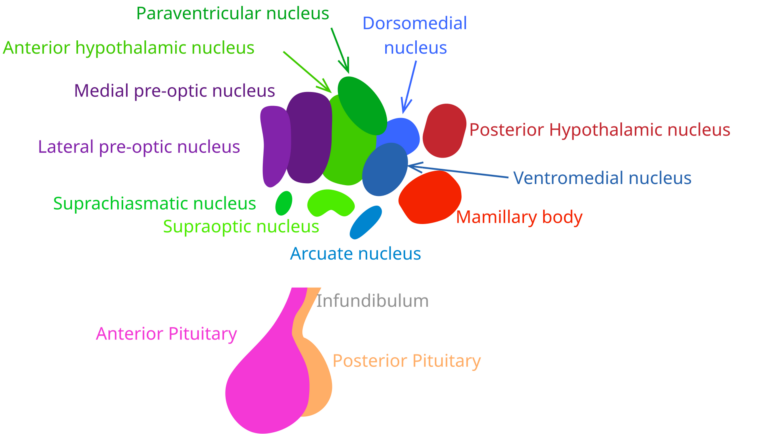
Loss of a single G-protein-coupled receptor is enough to abolish puberty entirely: patients who inherit two defective copies of GPR54 never receive the signal to begin, despite anatomically intact gonads.1 The molecule that speaks to that receptor is kisspeptin, and few compounds expose the architecture of human reproduction so plainly — switch off the upstream message and the whole hypothalamic-pituitary-gonadal cascade falls silent, regardless of how healthy the machinery downstream remains.2
What exactly is kisspeptin-10, and where does it sit?
Kisspeptin-10 is a decapeptide — the ten C-terminal amino acids of the larger product of the KISS1 gene, and the shortest fragment that retains full activity at the receptor.3 It binds and activates GPR54, the G-protein-coupled receptor now more commonly designated KISS1R.3 The decisive feature is location. KISS1R is expressed on gonadotropin-releasing hormone (GnRH) neurons in the hypothalamus, which means kisspeptin acts upstream of GnRH rather than alongside it.4 In effect it is the switch that tells GnRH neurons when to fire, and GnRH in turn governs the pituitary’s release of luteinising hormone (LH) and follicle-stimulating hormone.4 This is why kisspeptin is described as a master regulator: it sits at the very top of the reproductive axis.2
10 amino acids — the minimal C-terminal fragment that retains full agonist activity at KISS1R3
Why did human genetics make this molecule unmissable?
The reason kisspeptin biology is unusually well mapped is that humans, not just animal models, pointed to it first.2 Two independent groups reported in 2003 that patients carrying loss-of-function mutations in GPR54/KISS1R fail to enter puberty — a state of normosmic hypogonadotropic hypogonadism in which the downstream organs are intact but the upstream instruction is missing.12 That natural experiment did more than implicate a single receptor; it established kisspeptin signalling as a non-negotiable gateway to reproductive maturation.2 It is rare for a research compound to have its central importance demonstrated so cleanly by human genetics rather than inferred from rodent knockouts alone.1
Kisspeptin is among the best-characterised pieces of human reproductive physiology we possess — and still one of the least finished as a medicine.
What does the human evidence actually show?
A coherent body of controlled human work, much of it from groups at Imperial College London, moved the molecule out of physiology lectures and into clinical investigation.5 Three strands stand out. First, infusion studies in women with hypothalamic amenorrhoea — a state in which the upstream signal is suppressed — found that kisspeptin-54 increased pulsatile LH secretion several-fold over vehicle.5 Second, and conceptually the most striking, work in IVF and assisted reproduction tested whether a kisspeptin bolus could trigger the final maturation of oocytes.7 Third, randomised challenge studies probed kisspeptin’s central effects, reporting modulation of limbic brain activity in response to sexual and bonding stimuli rather than treating any disease.9
The IVF strand deserves attention because the mechanism under test was elegant. Conventional protocols trigger oocyte maturation with hCG — a long-acting LH mimic and a licensed, regulated medicine used routinely in fertility clinics.7 The hypothesis tested with kisspeptin was different: that prompting the participant’s own pituitary to generate a short, self-limiting LH surge might more closely resemble the body’s native trigger. A proof-of-concept trial reported that a single injection of kisspeptin-54 induced oocyte maturation in women undergoing IVF,7 and a later study examined this specifically in women at high risk of ovarian hyperstimulation syndrome.8 Notably, most of this translational work used the longer-lived kisspeptin-54 isoform rather than the native decapeptide.6
| Research strand | Population studied | What was examined |
|---|---|---|
| Reproductive axis function | Hypothalamic amenorrhoea | Restoration of pulsatile LH secretion5 |
| Assisted reproduction | IVF cycles, including high-OHSS-risk | Oocyte maturation via endogenous LH surge78 |
| Central reproductive behaviour | Healthy male volunteers | Limbic responses to sexual and bonding stimuli9 |
The three principal strands of human kisspeptin investigation, all conducted as defined clinical research rather than licensed treatment.
Why does the short half-life keep undercutting the elegance?
For all its physiological beauty, the native decapeptide carries a stubborn pharmacokinetic liability: it is cleared from the circulation very rapidly.6 A head-to-head comparison in healthy men reported an in vivo plasma half-life for kisspeptin-10 of roughly four minutes, against about 28 minutes for kisspeptin-54 — a difference the authors attributed to faster degradation of the smaller peptide.6 That brevity is, in a sense, exactly what makes it physiological — endogenous signalling is pulsatile and transient — but it is awkward for translational design.6 A molecule that disappears almost as fast as it arrives is difficult to deploy outside a tightly controlled setting, which is one reason much clinical work leaned on the longer isoform.6
How honest do we have to be about the limitations?
Candidly: this is research-stage physiology, not a shelf-ready therapeutic, and the honest framing matters. There is no widely licensed kisspeptin-10 medicine; the human studies, while genuinely illuminating, were proof-of-concept and mechanistic in scale rather than large confirmatory trials with regulatory endpoints.7 The IVF oocyte-maturation results were promising in principle but have not displaced hCG in routine practice.8 The brain-imaging work demonstrated measurable central responses in a small cohort of healthy men, not an approved indication.9 And the pharmacokinetic problem above is not a footnote — it is a central obstacle between elegant biology and a usable native-peptide product.6 Anyone treating kisspeptin-10 as a finished tool rather than an experimental probe is overreading the evidence.
It is worth situating kisspeptin within the wider hormonal landscape rather than in isolation. Compounds such as enclomiphene act lower in the same axis, modulating the oestrogen feedback that governs gonadotropin output, whereas kisspeptin sits further upstream — signalling to the GnRH neurons themselves.4 That altitude is exactly why it is conceptually interesting and practically demanding in equal measure.
This material is supplied strictly for Research Use Only and is not a medicine, a treatment, or a substance for human or animal consumption. Its scientific value depends entirely on knowing precisely what is in the vial: reproducible reproductive-axis research requires a defined, verified reference, which is why identity and purity documentation — a Certificate of Analysis with supporting HPLC and mass-spectrometry data — is not paperwork but the foundation of any credible experiment. A peptide is only as trustworthy as its analytical record.
- Kisspeptin-10 is the C-terminal decapeptide of the KISS1 product and acts through KISS1R/GPR54 on GnRH neurons, placing it upstream of the pituitary-gonadal cascade rather than within it.
- Humans carrying loss-of-function GPR54/KISS1R mutations fail to enter puberty, which is what originally established kisspeptin signalling as a master regulator of reproduction.
- Controlled human studies examined kisspeptin in hypothalamic amenorrhoea, IVF oocyte maturation and sexual-emotional brain processing — unusually human-grounded physiology for a research compound.
- Most translational IVF work used the longer kisspeptin-54 isoform; the native decapeptide's plasma half-life of roughly four minutes is a defining practical constraint.
- The honest caveat: there is no licensed kisspeptin-10 medicine, and the human studies were proof-of-concept, not large confirmatory trials with regulatory endpoints.
- As an analytical reference, value rests on documented identity and purity (COA, HPLC/MS), distinct from any licensed drug.
Is research-grade kisspeptin-10 the same as an approved medicine?
No. There is no widely licensed kisspeptin-10 medicine for routine use. The molecule has been investigated in defined clinical research, including studies at Imperial College London, but it remains research-stage. Material supplied for laboratory work is an analytical reference compound for in-vitro and physiological investigation, distinct from any regulated pharmaceutical product, and is not intended for diagnosis or treatment.
What does the strongest human research actually show?
Controlled studies examined kisspeptin in hypothalamic amenorrhoea, where infusion increased pulsatile LH secretion, and in IVF, where a kisspeptin-54 injection triggered oocyte maturation, including in women at high OHSS risk. A separate imaging study reported modulation of sexual and emotional brain processing in healthy men. These were proof-of-concept investigations, not large confirmatory trials, and have not changed routine clinical practice.
Why is the short half-life such a recurring problem?
A direct comparison in healthy men reported a plasma half-life for kisspeptin-10 of roughly four minutes, against about 28 minutes for the longer kisspeptin-54 isoform, reflecting faster degradation of the smaller peptide. That brevity mirrors the transient, pulsatile nature of endogenous signalling but is practically inconvenient, which is one reason much translational work used kisspeptin-54 rather than the native decapeptide.
How does kisspeptin relate to compounds like enclomiphene?
They act at different levels of the same reproductive axis. Kisspeptin sits at the very top, signalling to GnRH neurons through the KISS1R/GPR54 receptor, whereas enclomiphene modulates oestrogen feedback lower in the cascade that governs gonadotropin output. Kisspeptin's defining feature is how far upstream it operates, which makes it conceptually distinct from most other compounds in the hormonal research literature.