
Nootropic Peptides, Explained: The Quiet, Stranger Cousins of the Racetams
Most nootropics people argue about online are small molecules. A quieter family is built from amino acids. A research-use-only field guide to the peptides studied for the brain — and to how thin the human evidence really is.
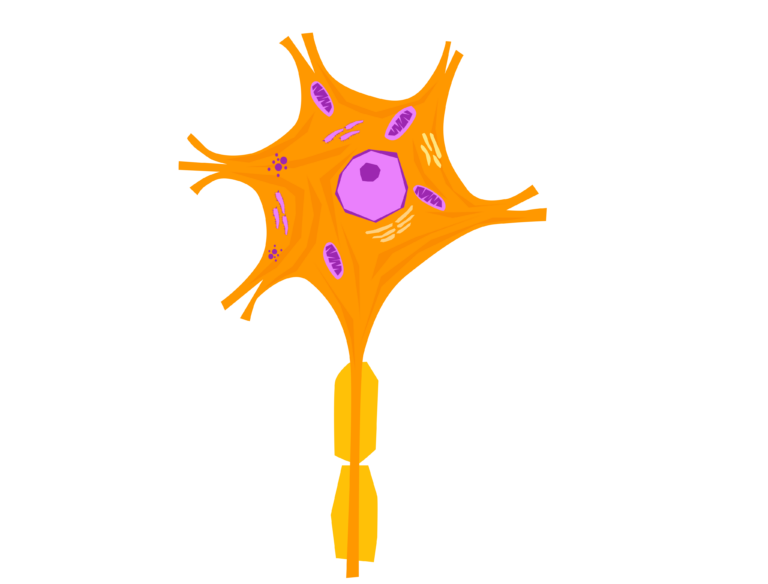
Nootropic peptides are short amino-acid chains studied in preclinical neuropharmacology for effects on neurotransmitter systems, neurotrophic signalling and neuroprotection. The best-characterised are Semax and Selank. They are research-use-only compounds, not medicines, and not for human or veterinary use; the evidence is overwhelmingly preclinical, with only limited early human imaging work and no independent Western clinical validation.
Open any forum thread about “nootropics” and you will be arguing about chemistry that fits on a postcard: piracetam, modafinil, caffeine, the racetams — small, sturdy molecules that have been swallowed and debated for decades. But scroll past the loudest voices and you find a quieter, stranger family hiding in the footnotes. They are not classic small molecules at all. They are peptides — short chains of amino acids, the same alphabet life uses to build everything from insulin to antibodies — and a slice of twentieth-century neuropharmacology spent years studying them for the brain.
This is a field guide to that corner. It is deliberately a map, not a verdict: a sibling to our primers on Semax and Selank, and an attempt to explain what actually makes a peptide “nootropic” before the marketing gets to it. Everything below describes research-use-only compounds. None of it is medical guidance.
What makes a peptide a “nootropic” in the first place?
Start with the difference in mechanism, because it is the whole story. A stimulant is a blunt instrument: it floods or blocks a system and the brain lurches in response. The peptides studied here behave more like messages than hammers. They are signalling molecules — fragments that resemble or mimic the body’s own regulatory peptides, and that appear, in preclinical work, to nudge neurotransmitter systems, modulate neurotrophic factors, and confer a measure of neuroprotection.1
Semax is the cleanest illustration. It is an analogue of a fragment of the hormone ACTH — specifically the ACTH4–10 sequence — engineered so that it lingers rather than being degraded in moments. In animal models it has been described as nootropic, with reported activation of dopaminergic and serotonergic systems rather than the dopamine-spike-and-crash of a stimulant.1 Selank works a different lever: derived from the immunopeptide tuftsin, it has been studied as an anxiolytic, with a proposed mechanism involving inhibition of enkephalin-degrading enzymes — in effect, letting the brain’s own calming peptides hang around longer.34 That is the unifying idea: not push the system, but lean on the regulators it already runs.
Of the peptides routinely filed under “nootropic,” only two — Semax and Selank — carry a substantial, indexed, peer-reviewed preclinical literature; the rest are discussed far more than they are documented.13
Who are the main players actually being studied?
Two names anchor the serious literature, and two more circulate in the conversation with much thinner footing.
Semax is the most studied. Beyond its reported effects on monoamine systems, it has been examined in an animal model of Alzheimer disease, where researchers probed its activity in the context of neurodegeneration.2 A functional connectomic study even attempted to image how Semax and Selank shift brain network activity in healthy human volunteers — a rare gesture toward mechanism at the systems level, and one of the few human datasets in the whole field.6
Selank is the anxiolytic of the pair. Its molecular story has been worked out in some detail,4 it has been discussed among GABA-impacting agents,5 and in one rodent study it was reported to protect against ethanol-induced memory impairment in a way tied to BDNF, a key neurotrophic factor.7 That BDNF thread matters, because it is exactly the “help the brain maintain itself” logic that separates this class from stimulants.
Then there are the compounds people argue about more than they cite. Dihexa is discussed as a small compound acting on the HGF/MET pathway and studied, in that framing, for synaptogenesis — the building of new synaptic connections. Cerebrolysin is not a single peptide at all but a peptide mixture derived from brain tissue, used in some countries and talked about in neurology circles. Both belong in any honest survey of the space, but neither has the indexed, replicated profile of Semax or Selank, and so both deserve to be described qualitatively and held at arm’s length until better evidence arrives. For wider context on therapeutic peptides and the gerontology research they sit within, a 2026 review offers a map of the terrain.8
| Peptide | Origin / analogue | What is studied (mostly preclinical) |
|---|---|---|
| Semax | ACTH4–10 fragment analogue | Cognition, neuroprotection; activation of dopaminergic / serotonergic systems12 |
| Selank | Tuftsin analogue | Anxiolytic activity; enkephalinase inhibition; BDNF-linked memory effects37 |
| Dihexa | HGF / MET-pathway compound | Discussed for synaptogenesis (limited peer-reviewed grounding) |
| Cerebrolysin | Brain-derived peptide mixture | Studied as a neurotrophic mixture; not a single defined molecule |
The nootropic peptides at a glance. Indexed evidence thins sharply moving down the table; Dihexa and Cerebrolysin are included for completeness, not as validated equivalents.
Why does this whole field speak with a Russian accent?
One thread runs through almost every name above: a heavy heritage in Russian and Soviet-era neuropharmacology. Semax and Selank were both developed in that tradition, and a large share of the foundational papers — the mechanism of Selank’s anxiolytic action, its BDNF-linked effects, the human connectomic imaging — come from that lineage.367 This is not a knock; it is essential context. It means the literature is real and often careful, but it is also concentrated, and concentration is the enemy of certainty.
How strong is the evidence, honestly?
Here is the part the marketing skips. The preclinical work is genuinely rich: there are mechanistic studies, animal models of disease, neurotransmitter and neurotrophic data, and even early attempts to image brain-network effects in healthy human volunteers.267 What is thin is everything downstream of that. Independent Western clinical validation is limited, much of the published work clusters within a small number of research groups, and several compounds that get discussed alongside Semax and Selank — Dihexa and Cerebrolysin among them — do not carry the same indexed evidence at all. A handful of human imaging studies is not the same thing as demonstrated clinical efficacy: “studied in animal models” — or even “imaged in healthy volunteers” — is not the same sentence as “shown to work in patients,” and the honest reader keeps those apart. A clean preclinical signal is a reason to keep researching, not a result you can borrow.
It is worth saying plainly what these are not: they are not approved medicines in the EU or US, they are not stimulants in any conventional sense, and they are not a finished story. A future piece in this journal will turn to the non-peptide side of the cognitive-enhancement world — the racetams and the small molecules that started this whole argument — which deserve the same honest treatment. For now, see our primers on Semax and Selank for the detail behind the two best-grounded names.
What does “research use only” actually mean here?
Every compound named in this article is a Research Use Only material. That is not a disclaimer bolted on at the end; it is the frame the entire field lives in. These are not medicines, they are not for human or veterinary use, and nothing above is dosing or protocol guidance. For a researcher, the only properties that matter are the ones you can verify: identity and purity, documented on a certificate of analysis. A peptide whose sequence and purity are not confirmed by COA is not a research input — it is an unknown, and an unknown is worthless in a literature already burdened with uncertainty. The peptides may be quiet and strange; the standards for handling them should be loud and ordinary.
- Nootropic peptides are signalling molecules — they act on neurotransmitter systems, neurotrophic factors and neuroprotection rather than working as blunt stimulants.
- Semax (an ACTH4-10 analogue) and Selank (a tuftsin analogue) are the two most studied; others such as Dihexa and Cerebrolysin are discussed in the space with far less peer-reviewed grounding.
- The field carries a heavy Russian neuropharmacology heritage, and its literature is overwhelmingly preclinical — animal models and in vitro work, with only limited early human imaging.
- Independent Western clinical validation is limited; much published work originates from a small number of research groups.
- All of these are Research Use Only compounds: not medicines, not for human or veterinary use, and meaningful only when identity and purity are documented by a COA.
What are nootropic peptides?
They are short chains of amino acids studied in preclinical neuropharmacology for effects on the brain — acting as signalling molecules on neurotransmitter systems, neurotrophic factors and neuroprotection rather than as stimulants. Semax and Selank are the most studied. They are research-use-only compounds, not medicines.
How are nootropic peptides different from racetams?
Racetams are small synthetic molecules; nootropic peptides are amino-acid chains that mimic the body's own regulatory peptides. In preclinical work the peptides appear to modulate neurotransmitter and neurotrophic systems rather than act as blunt stimulants. A future Condor Research piece will cover the non-peptide nootropics in detail.
Are Semax and Selank approved medicines?
In this research-use-only context, no: they are not approved as medicines in the EU or US and are not for human or veterinary use. Their literature is overwhelmingly preclinical — animal models and in vitro studies — with only limited early human imaging work and no independent Western clinical validation.
Why is so much nootropic-peptide research from Russia?
Semax and Selank emerged from Russian and Soviet-era neuropharmacology, and much of the foundational literature — including mechanism, BDNF-linked studies and human imaging — originates there. That heritage makes the evidence real but concentrated within a small number of research groups, which is why independent replication matters.
What should a researcher check before using these compounds?
Identity and purity, documented on a certificate of analysis (COA). Because these are research-use-only materials, a peptide whose sequence and purity are unverified is scientifically worthless. Confirming both via COA is the baseline standard for any preclinical or in vitro research input.