
Adamax: What the Name Borrows From Semax — and What the Evidence Actually Shows
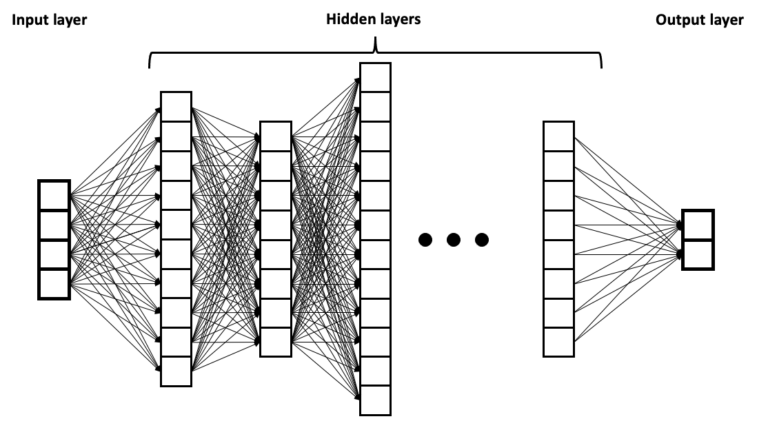
Adamax is described in nootropic circles as a modified, more stable version of Semax, an ACTH(4-10) peptide analogue. But no PubMed record describes a peptide by that name — the only literature under “Adamax” concerns an unrelated machine-learning optimization algorithm. A structural analogue needs its own safety data; it cannot inherit Semax's file.
In nootropic forums and vendor listings, “Adamax” is described as a modified or stabilised version of Semax, the Russian ACTH(4-10) peptide analogue that has accumulated decades of experimental research. The framing implies inheritance: a better Semax, still carrying Semax’s evidence behind it. A literature search does not support that implication. This piece lays out what a name search on “Adamax” actually returns, what Semax’s real record looks like, and why a structural change requires its own evidence file — written for a research-use audience, with no dosing or human-use guidance implied.
What “Adamax” is claimed to be
Across forum threads and product listings, “Adamax” is presented as an upgrade on Semax: a “stabilised” backbone, a longer effective window, sometimes just “the new Semax.” The claim is structural — a tweak to the parent peptide’s sequence or terminal chemistry, said to preserve or improve on what Semax does while fixing some limitation, usually described loosely as short duration or poor stability. What these listings do not supply is a defined amino acid sequence, a stated synthesis route, or any analytical documentation of what molecule is actually in the vial. The case for Adamax rests on the name’s resemblance to Semax, and on the unstated assumption that the literature behind Semax travels with it.
The search that comes back empty
That assumption is testable. A search of PubMed — the standard index of biomedical and life-science literature — for the term “adamax” returns 39 records as of 2 August 2026.1 Not one of them concerns a peptide. Every single result is a machine-learning paper, and the reason is a straightforward naming collision rather than anything more interesting: AdaMax is an established algorithm in computational optimisation, a variant of the Adam method for training neural networks, introduced by Kingma and Ba in their 2014 paper on stochastic optimisation.2 The 39 records that surface under “adamax” in a biomedical database are studies that happened to use the AdaMax optimiser somewhere in their methods section — glucose-level forecasting models, network intrusion detection systems, brain-tumor image classifiers, autism-diagnosis neural networks. None of it is peptide research. None of it is Adamax-the-supplement.
39 PubMed records surface for the search term “adamax” — and every one of them is a machine-learning paper, not a peptide study.
This is not a subtle overlap. It is the entire result set. A literature search performed by anyone curious enough to run it — a customer, a regulator, a journalist — returns computer-science methodology, not pharmacology. That gap is the single most important fact about Adamax as a research subject: there is, at present, no indexed biomedical literature under that name to evaluate.
What Semax actually is
Semax, by contrast, is a real and well-documented synthetic peptide. It is a heptapeptide analogue of adrenocorticotropic hormone fragment 4-10 — sequence Met-Glu-His-Phe-Pro-Gly-Pro — developed in Russia and studied since the late twentieth century, primarily by Russian research groups. A PubMed search for “semax” returns roughly 230 records as of the same date,3 covering gene-expression effects on neurotrophic factors in rodent models,4 effects on basal forebrain cholinergic neurons,5 comparative dynamics of NGF and BDNF expression across brain regions,6 and transcriptome-level responses following cerebral ischaemia-reperfusion in animal models.7 That is a substantial, if geographically and institutionally concentrated, body of preclinical work — the honest caveat being that Semax’s literature is dominated by a small number of Russian laboratories, which limits independent replication even though the compound itself is unambiguously real and its structure is public. For a closer look at what has actually been published on the parent compound, see our separate review of Semax.
Why a structural change is not a software update
The central problem with treating “Adamax” as an improved Semax is chemical, not rhetorical. A peptide’s biological behaviour is inseparable from its exact sequence and its terminal chemistry. Change either one, and the result is a different molecule with its own pharmacokinetics, its own receptor affinity, its own degradation pathway, and its own immunogenic profile — none of which can be assumed from the parent compound’s record.
Semax’s own literature illustrates why terminal chemistry matters. Its C-terminal Pro-Gly-Pro (PGP) sequence is not decorative: intranasal kinetics studies have tracked how the intact peptide and its breakdown products distribute between blood and brain tissue over time,8 and separate work has characterised how simple glyproline sequences, including PGP, are proteolysed by aminopeptidases and by enzymes present in nasal mucus, brain membranes, and blood.9 PGP is degraded on its own schedule, by its own enzymes, and its breakdown products have been studied as distinct entities from Semax itself. Altering that terminus — which is precisely what a “stabilised” analogue would need to do — changes which enzymes act on the molecule and how quickly, which is not a detail that can be waved away as cosmetic.
The same principle holds further back in this peptide family’s history. Structure-activity work on ACTH and MSH fragments going back decades has shown that small sequence changes shift which behavioural and physiological effects a fragment produces — comparisons of alpha-MSH and ACTH analogues have mapped how specific structural requirements determine effects like excessive grooming behaviour versus pigment dispersion in animal models, effects that do not move together as a single package.10 More broadly, the peptide-therapeutics literature treats terminal modification, cyclisation, and residue substitution as deliberate engineering choices made specifically because they change proteolytic stability, serum half-life, and receptor selectivity — not as inert cosmetic variation.11 Empirical work on other short peptide classes bears this out directly: modifying termini and substituting residues in short antimicrobial peptide analogues measurably changed their serum stability profiles,12 and iterative optimisation of a short targeting peptide’s terminal and internal residues shifted both its serum stability and its receptor-binding affinity in the same study.13 These are not peptides related to Semax, but the mechanism is general: for a molecule this small, the terminus and the individual residues are not incidental to its identity — they largely are its identity.
| What is documented | Semax | “Adamax” |
|---|---|---|
| Defined amino acid sequence published | Yes — Met-Glu-His-Phe-Pro-Gly-Pro | Not located in any indexed source |
| PubMed records under the compound name | ~230 | 0 of relevance (39 total, all an unrelated algorithm) |
| Independent pharmacokinetic / brain-penetration data | Yes — intranasal kinetics studied8 | None located |
| Documented degradation / metabolite pathway | Yes — Pro-Gly-Pro breakdown characterised9 | None located |
Table 1. What is actually documented under each name, based on PubMed searches conducted 2 August 2026.
A modified peptide is a new molecule, not an upgraded one. It does not inherit its predecessor’s pharmacokinetics, its degradation profile, or its evidence base — it has to earn its own.
An honest read of the evidence
None of this establishes that any particular product sold as Adamax is mislabelled, adulterated, or anything else — that is not a claim this review can make, and it is not one we are making. What can be documented, and only what can be documented, is this: a systematic search of the standard biomedical literature index returns no peptide research under the name Adamax, no published structure, no pharmacokinetic study, and no clinical trial specific to that name. The absence of a literature is itself a fact, and in research-use terms it is the only fact currently available. A compound can be real, useful, and eventually well studied without yet having a PubMed footprint — new entries appear in scientific databases only after someone submits data for review and publication, and that process takes time regardless of how a compound is marketed in the interim. What a research-use buyer or investigator can reasonably conclude today is narrower: whatever is being sold under this name has not yet been through that process, and its similarity to Semax’s name is not a substitute for it.
The practical implication for anyone evaluating a research compound sold under a name like this is straightforward. A defined structure, an analytical certificate confirming identity and purity, and published data on stability and behaviour are the minimum a distinct compound needs before its evidence base can be assessed at all. Borrowing a well-known name does not supply any of the three.
All compounds named here are discussed as reference materials for laboratory research use only. They are not medicines, are not approved by the EMA, FDA or any other regulator for any indication, and are not intended for human or veterinary use. Nothing above is medical advice, a therapeutic claim or dosing guidance.
Condor Research · Scientific desk
Atrio Sciences s.r.o., IČO 57 669 651, Nitra (SK) · info@condorresearch.com
- A PubMed search for “adamax” returns 39 records as of August 2026, and none of them describe a peptide of that name.
- Every one of those 39 records concerns AdaMax, a stochastic optimization algorithm built on the Adam method from Kingma and Ba's 2014 machine-learning paper.
- Semax is a real, extensively documented compound: a synthetic ACTH(4-10) analogue with a defined sequence and roughly 230 PubMed records, concentrated almost entirely in Russian-institution research.
- No published human clinical trial specific to a compound called Adamax could be located in PubMed at the time of this review.
- Changing a peptide's terminal groups or substituting a single residue can alter its receptor affinity, half-life, tissue distribution, and susceptibility to enzymatic degradation.
- Semax's own stability is tied in part to its C-terminal Pro-Gly-Pro sequence, whose breakdown products have been studied as separate entities from the parent peptide.
- A name borrowed from a studied compound does not transfer that compound's safety data; a modified peptide is a distinct chemical entity requiring its own evidence.
Is Adamax the same molecule as Semax?
Based on available information, that cannot be confirmed either way. No published structure for a compound called Adamax was located in this review, so there is no way to compare its sequence to Semax's Met-Glu-His-Phe-Pro-Gly-Pro directly. What is documented is that Adamax is marketed as a modification of Semax, which by definition would make it a distinct molecule from the parent compound, whatever the specific change turns out to be.
Where does the name "Adamax" actually come from, in the scientific literature?
In the biomedical literature indexed by PubMed, "Adamax" does not refer to a peptide at all. It refers to AdaMax, a stochastic gradient-based optimisation algorithm used to train machine-learning models, first described by Kingma and Ba in 2014 as a variant of their Adam optimiser. The 39 PubMed records returned by that search term are studies in unrelated fields — medical imaging, forecasting, network security — that used this algorithm as a modelling tool.
Does this mean products sold as Adamax are fraudulent?
This review does not make that claim, and it should not be read as making it. What can be documented is an absence: no indexed peptide literature under that name, no published structure, and no located clinical or pharmacokinetic study specific to it. An absence of published evidence is not proof of misconduct; it simply means the compound, as currently marketed, has not yet been through the process that would let anyone verify its identity or behaviour independently.
Why can't a single amino acid change or a modified terminus be assumed harmless?
Short peptides are held together by a small number of residues and bonds, so each one carries disproportionate weight. Structure-activity work on ACTH and MSH fragments has shown that small sequence differences change which biological effects a fragment produces, and studies on other short peptides have shown directly that modifying termini or substituting residues shifts serum stability and receptor affinity. There is no general rule that a given change is neutral; it has to be measured for that specific molecule.
What data would be needed to evaluate Adamax as its own compound?
At minimum: a published, defined amino acid sequence; analytical confirmation of identity and purity (mass spectrometry and HPLC data, ideally through third-party testing); and published data on stability, degradation, and basic pharmacokinetics in a research model. None of these require a large clinical program to start generating — they are the standard starting documentation for any new peptide entering the literature, and none of them currently appear to exist for this name.
Is Semax itself a well-established research compound?
Semax has a substantial preclinical literature — on the order of 230 PubMed records — with a defined structure and decades of study, mostly concentrated in Russian research institutions. That concentration is a genuine limitation on independent replication, and it is worth stating plainly rather than glossing over. But the compound's identity, sequence, and core preclinical pharmacology are documented in ways that "Adamax" currently is not.