
Why Every Injectable Owes Its Safety to Horseshoe Crab Blood
How Limulus amebocyte lysate (LAL) from horseshoe crab blood became the endotoxin test behind every injectable's COA — plus the recombinant Factor C alternative.
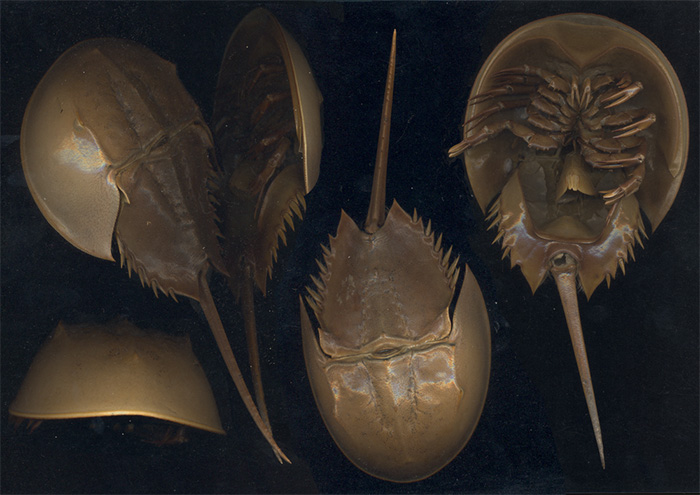
Horseshoe crab blood contains amebocytes whose clotting protein gels in response to bacterial endotoxin. Lysing those cells yields Limulus amebocyte lysate (LAL), the reagent used to screen injectables and research vials for endotoxin — the source of the EU/mL figure on a certificate of analysis.
The number on a certificate of analysis that reads “Endotoxin: <0.5 EU/mg” is the endpoint of a chain that runs back to a marine arthropod older than the dinosaurs. Before an injectable drug or a research-peptide vial is judged safe from fever-inducing bacterial residue, its endotoxin load is measured with a reagent that, for most of the last fifty years, came from the blood of the horseshoe crab. Everything below describes laboratory methods and literature findings, not use in people; nothing here concerns human or veterinary administration.
How a crab disease became a QC test
The story begins with a pathology observation, not a diagnostics ambition. In 1956, Frederik Bang reported that infecting the Atlantic horseshoe crab, Limulus polyphemus, with a marine Vibrio-type bacterium caused fatal, widespread clotting of its blood.1 The blood was gelling in response to something bacterial. That was the seed. A dozen years later, Bang and the hematologist Jack Levin turned the curiosity into a mechanism: they showed the clottable protein sits inside the blood’s amebocytes and that its coagulation is triggered specifically by bacterial endotoxin — lipopolysaccharide, or LPS — with dose-dependent kinetics.2 A protein that clots in proportion to endotoxin is, functionally, an endotoxin meter. That is the Limulus amebocyte lysate test.
The reagent’s name is literal. Amebocytes are the horseshoe crab’s dominant blood cell — effectively its only circulating cell type. Concentrate them, lyse them in water to spill out their clotting proteins, and you have Limulus amebocyte lysate. Add a sample containing endotoxin and the lysate gels; the more endotoxin, the faster and firmer the clot. Read that endpoint against a reference standard and you have a number.
picogram LAL detects endotoxin at picogram, part-per-trillion levels — far below what the old animal test could see.
What actually senses the endotoxin
The molecular detail matters because it is what made the modern, animal-free version possible. The sensor is Factor C, a serine-protease zymogen that behaves as a pattern-recognition receptor for LPS.6 Nakamura, Morita and Iwanaga isolated it from Limulus hemocytes in 1986 as an LPS-sensitive protease zymogen,4 and in 1991 Muta and colleagues cloned it, revealing a mosaic architecture of complement-like, EGF-like and lectin-like domains.5 When LPS binds, Factor C undergoes intermolecular autocatalytic activation through a defined transition state,7 and the activated enzyme drives a cascade — Factor C activates Factor B, which activates a proclotting enzyme, which cleaves coagulogen into coagulin, the gel.3
One point is worth pinning down because popular retellings routinely garble it. The blood is blue, and that blue comes from hemocyanin, a copper-based oxygen carrier — the arthropod counterpart to iron-based hemoglobin. Hemocyanin is the oxygen transporter. It is not the clotting agent. The endotoxin clot is a product of the amebocyte Factor C cascade, an entirely separate system. Blue blood and endotoxin clotting are two independent facts about the same animal, and conflating them misstates the biochemistry.
A protein that gels in proportion to endotoxin is, functionally, an endotoxin meter — and the crab had been carrying one for 450 million years.
Why this test exists at all
Endotoxin is not a contaminant you can sterilize away. It is a structural fragment of the outer membrane of Gram-negative bacteria, and it is heat-stable and pyrogenic even after the bacteria that produced it are dead. A product can pass a sterility test — no viable organisms — and still carry an endotoxin load high enough to cause a febrile reaction if introduced into an organism. That is precisely why endotoxin is measured as its own parameter, separate from sterility, on every injectable and every research vial intended for parenteral laboratory work.
Before LAL, the standard screen was the in vivo Rabbit Pyrogen Test: inject the material into rabbits and watch for a temperature rise over several hours. LAL displaced it because it is faster, more sensitive by orders of magnitude, and replaces a live-animal assay with a reagent reaction. Endotoxin limits are defined pharmacopoeially and quantified in Endotoxin Units (EU) against a reference standard; the same tolerance limits and units apply whether the test uses classical LAL or a recombinant reagent. When a certificate of analysis lists a value in EU/mL or EU/mg, that figure is the direct output of one of these assays. If you want the wider context, see our notes on endotoxins, sterility and the COA and on how to read a certificate of analysis.
| Feature | Rabbit Pyrogen Test | LAL | Recombinant Factor C (rFC) |
|---|---|---|---|
| Basis | Live-animal fever response | Crab amebocyte lysate | Cloned Factor C enzyme |
| Animal source | Rabbits | Horseshoe crabs (bled) | None |
| Sensitivity | Lower | Picogram-level | Comparable to LAL |
| Pharmacopoeial status | Legacy method | Established (e.g. USP <85>) | Recognized (USP <86>, Ph.Eur. 2.6.32) |
Comparison of endotoxin/pyrogen screening approaches described in the literature and pharmacopoeial record. Applies to in-vitro laboratory quality control only, not to any use in an organism.
The recombinant alternative
Because Factor C is a single, well-characterized protein, and because it had been cloned, it could in principle be manufactured without a crab. Recombinant Factor C (rFC) does exactly that: it uses the cloned enzyme as the endotoxin sensor in place of whole-animal lysate. The group behind rFC traced the arc from crab-blood LAL to the animal-free assay,8 and independent work has tested whether it holds up. Bolden and Smith showed rFC performs equivalently to LAL for endotoxin release testing of real pharmaceutical products,9 and a multi-year proficiency-testing program from 2014 to 2019 found rFC and LAL gave comparable, reliable results across laboratories.10 A conservation-framed analysis argued the synthetic reagent can reduce bleeding pressure on horseshoe crab populations.11
That evidence base is why the regulatory picture has moved. USP General Chapter <86>, which formally provides recombinant reagent methods, became official on May 1, 2025,13 and the European Pharmacopoeia recognizes recombinant reagents in chapter 2.6.32. The animal-free method is no longer experimental — it is compendial.
An honest read of the evidence
The biochemistry of the cascade is solid and replicated across decades and, notably, across two species. Much of the foundational Factor C work — the isolation, the cloning, the pattern-recognition mechanism — was done in Tachypleus tridentatus, the Asian horseshoe crab whose lysate is called TAL, not in the American Limulus whose lysate is LAL. The clotting logic is shared, but species-specific claims deserve species-specific attribution, and the popular “horseshoe crab” shorthand blurs that.
The conservation and welfare numbers are genuinely contested, and it would be dishonest to present them as settled. The frequently quoted ~15% post-bleeding mortality is an Atlantic States Marine Fisheries Commission assumption, not a measured constant; individual studies span roughly 8% to 30%, and the “over 500,000 crabs bled per year” figure is best treated as an attributed order of magnitude rather than a precise count that shifts year to year.14 Sublethal harm is documented — Anderson, Watson and Chabot reported reduced activity, altered rhythms and lowered hemocyanin in bled Limulus12 — but sublethal effects are harder to convert into population impact, and population impact itself is disputed. At least one large tagging study unexpectedly found bled crabs did not survive worse than unbled ones, plausibly because healthier animals were selected for bleeding in the first place. The responsible framing is an active debate, not a clean morality tale of decline caused solely by bleeding.
Finally, rFC’s status should not be oversold. It is validated, it is now in USP <86> and Ph.Eur. 2.6.32, and the equivalence data are real — but USP still classifies it as an alternative method, not a compendially mandatory replacement for any specific monograph, and regulators may ask for supplemental verification. “Recognized and growing” is accurate; “has replaced LAL” is not, at least not yet.
All materials supplied by Condor Research are Research Use Only (RUO). Everything above describes in-vitro assay chemistry, historical literature and pharmacopoeial method definitions — it is not a dosing protocol, clinical guidance, or a safety assessment for any organism. The endotoxin figure on a COA is a quality-control measurement for laboratory handling, nothing more.
Condor Research · Scientific desk
Atrio Sciences s.r.o., IČO 57 669 651, Nitra (SK) · info@condorresearch.com
- The LAL test traces to two papers: Bang (1956) saw a marine bacterium clot Limulus blood fatally; Levin and Bang (1968) proved the clottable protein lives inside amebocytes and coagulates specifically to bacterial endotoxin (LPS).
- The reagent, Limulus amebocyte lysate, is made by concentrating amebocytes — the crab's dominant blood cell — and lysing them in water to release their clotting proteins.
- Mechanism: endotoxin is sensed by Factor C, a serine-protease zymogen acting as a pattern-recognition receptor, which fires a cascade ending in a coagulin gel proportional to endotoxin concentration.
- The blood's blue color is hemocyanin, a copper-based oxygen carrier — not the clotting agent. The clot comes from the amebocyte Factor C cascade, a separate system.
- Recombinant Factor C (rFC), an animal-free cloned reagent, is now recognized by USP General Chapter <86> (official May 1, 2025) and the European Pharmacopoeia (2.6.32), with validation showing equivalence to LAL.
- Roughly 500,000+ horseshoe crabs are bled each year for LAL in North America and Europe; post-bleeding mortality is a debated ASMFC assumption (~15%, with studies ranging ~8–30%).
- The endotoxin line on a certificate of analysis, reported in EU/mL or EU/mg, is the direct output of an LAL or rFC test — endotoxins survive filtration and are pyrogenic even in a sterile product.
What is LAL and where does it come from?
Limulus amebocyte lysate is a reagent made from the amebocytes — the clotting blood cells — of the Atlantic horseshoe crab, Limulus polyphemus. The cells are concentrated and lysed to release proteins that gel when they encounter bacterial endotoxin. That gel reaction is what the test reads.
Is horseshoe crab blood really blue?
Yes. It carries oxygen with hemocyanin, a copper-based protein that appears blue when oxygenated, the way iron-based hemoglobin appears red. Hemocyanin is strictly the oxygen carrier; the endotoxin clot is produced by a separate Factor C cascade inside the amebocytes. The two systems are often confused but are not the same.
Does the crab die when it is bled?
Not by design — crabs are collected, partially bled and returned to the water. A fraction die from the process. The commonly cited ~15% is a contested assumption rather than a measured value, with published estimates spanning roughly 8–30%, and sublethal harm has also been documented.
What is recombinant Factor C?
It is the cloned, laboratory-produced form of the crab's endotoxin-sensing enzyme, used as an animal-free alternative to LAL. Validation and proficiency-testing studies show it performs comparably to LAL, and it is now recognized in USP <86> and the European Pharmacopoeia.
What does the endotoxin number on a COA mean?
It is the measured endotoxin content, reported in Endotoxin Units per mL or per mg against a reference standard, and it is the direct output of an LAL or rFC assay. It quantifies how much pyrogenic endotoxin a batch carries, which is a distinct question from whether the batch is sterile.
Why isn't sterility enough?
Endotoxin is a heat-stable fragment of the outer membrane of Gram-negative bacteria. It survives sterilization and filtration and stays pyrogenic even after the organisms are dead, so a sterile product can still carry a meaningful endotoxin load. That is why endotoxin is tested and reported as its own parameter. For related handling context, see whether a peptide needs refrigeration and our note on HPLC-MS purity verification.