
Omegatide: a name for a stack, not a molecule
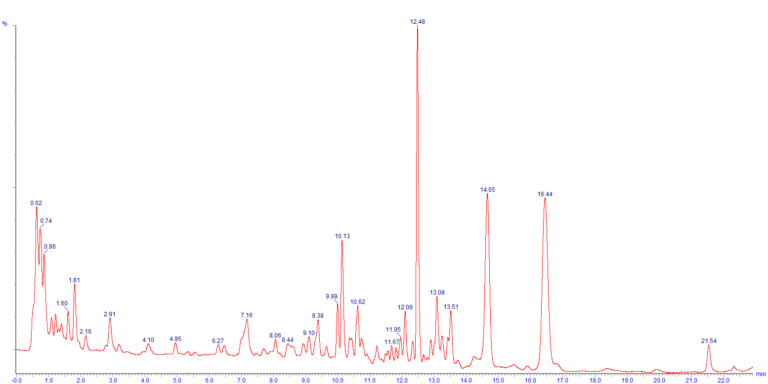
Omegatide is not a compound. A PubMed search on 2 August 2026 returned zero records for the name. In vendor and forum material it denotes a combination of retatrutide and cagrilintide in seller-dependent proportions — a stack described by a label, not a characterised substance. Research use only.
A name arrives before the data does. Omegatide appears in vendor listings and forum threads as though it were a compound with a history, and readers reasonably assume that a name of that shape — the -tide ending, the single word — points to a single characterised molecule. It does not. Searching PubMed on 2 August 2026 returned no records at all. What the name describes is a pairing of two real compounds in proportions the seller chooses. Everything below concerns reference materials for laboratory research only.
What the databases return
On 2 August 2026 we queried PubMed through the NCBI E-utilities interface for the term omegatide across all fields. The query returned zero records.1 The same interface, on the same day, returned 160 records for retatrutide and 93 for cagrilintide.2
A null result is worth stating precisely, because it is easy to overclaim. Zero indexed records does not prove that no substance of that name exists in any laboratory anywhere. It proves that nothing has been published under that name in the indexed biomedical literature. For a compound described as being in circulation, that is still informative, because new peptides acquire a paper trail early and under their own name. Retatrutide had a phase 2 trial in a general medical journal in 20233 and now appears in registrational phase 3 work under its own name in type 2 diabetes4 and in a separate programme covering obesity and related conditions.5 Cagrilintide sits inside a documented class of amylin receptor activators with its own review literature.6 Neither of them was ever anonymous.
The shape of the word does some work here. The -tide ending is the conventional stem for peptide non-proprietary names, which is why both parents carry it. Nothing prevents anyone from applying that shape to a listing. The suffix is a naming convention, not a certification, and it is the part of the name most likely to be read as evidence when it is not.
None of this establishes that any particular seller has misrepresented anything. It establishes what is in the record and what is not.
Five things, one word
The reason the question has no clean answer is that at least five materially different claims are being made with the same word, and the differences between them are exactly the differences that matter in the laboratory.
| What the name could mean | Concrete example | Evidence that must exist | Status for “Omegatide” |
|---|---|---|---|
| (a) A new single molecule | Retatrutide, when it first appeared | Sequence, synthesis route, receptor pharmacology, at least one published characterisation | None found; zero indexed records |
| (b) A studied co-formulation | Cagrilintide with a GLP-1 receptor agonist, studied as a fixed combination7 | Compatibility and stability data, joint pharmacokinetics, trials with monocomponent arms | None found |
| (c) Two compounds in one vial | A seller combining two powders before filling | Per-component identity and content; a stated and measured ratio | What the name usually denotes |
| (d) Two compounds handled separately | Two vials used within one experimental protocol | Each material characterised on its own | Also described this way in forums |
| (e) A marketing name | A label applied to a listing | Nothing; a name carries no data | Always true by definition; conveys nothing about contents |
Five distinct claims collapsed into one trade name. The evidence burden rises sharply between (d) and (c), and again between (c) and (b); the word itself does not distinguish them. Search results as retrieved from PubMed on 2 August 2026.1
Categories (c) and (d) are the ones usually in play, and they are not equivalent to each other either. Two vials used in one protocol keep their separate identities: each can be assayed, each has its own certificate, and an anomaly can be traced back to one of them. One vial containing both loses that. From the moment two peptides share a container, every question about either of them becomes a question about the pair.
What it costs to establish a combination
Category (b) rewards a close look, because it shows the size of the gap between “these two compounds are each real” and “this combination is a characterised object”.
The pairing of cagrilintide with a GLP-1 receptor agonist took the long route. It began with a dedicated phase 1b study of concomitant administration, run specifically to describe the pharmacokinetics and pharmacodynamics of the two given together rather than assuming them from the single-agent data.7 It then went into a phase 3a programme.
3,417 participants were randomised in the phase 3a trial that characterised that single two-component combination, across four arms that included each component on its own.8
The four-arm design is the point. The trial did not test the combination against placebo alone; it also ran each component by itself, because the contribution of each part to the combined effect is a separate empirical question that cannot be inferred from the parts. A parallel trial repeated the same structure in a different population.9
A fixed combination also inherits questions that neither component faced alone. Do both remain stable in the same buffer, at the same pH, across the intended shelf life? Does one component alter the absorption or clearance of the other? Is the fixed ratio appropriate across the whole dose range, or does it lock in a proportion that suits only part of it? Those questions have answers only if someone generates the data. Placing two powders in one vial does not generate it. It only makes the questions unavoidable.
Both parents are, in any case, still moving. Retatrutide remains in registrational testing rather than settled practice.4 A combination built on a component whose own programme is unfinished is not a shortcut past that programme.
Two peptides in one vial is an analytical problem
This is the part that gets the least attention and deserves the most. Characterising a single synthetic peptide is already harder than the tidy numbers on a certificate suggest. Liquid chromatography coupled to mass spectrometry is the standard approach, and the methodological literature is candid about where it fails: response factors differ between the parent peptide and its impurities, some species neither ionise nor elute, and structurally related impurities are the hardest class to resolve precisely because they resemble the target.10 Work at national-metrology level on one well-characterised peptide required high-resolution mass spectrometry simply to identify and accurately quantify those related impurities.11 That is one peptide.
Add a second and three specific things change.
Identity becomes two assays, not one. A method must confirm both species and confirm that neither is absent. A mass spectrum showing two expected masses says both are present. It says nothing about proportion.
Purity stops being a single number. Area-normalised purity divides the main peak by the total integrated area. In a two-component vial there is no main peak; there are two. A single figure either silently describes one component and ignores the other, or sums both and reports the complement — in which case it says nothing at all about the ratio between them. That ratio is the one parameter that defines a combination.
A purity number describes a chromatogram, not a product. For a single substance that distinction rarely matters. For a two-component vial it is the whole question.
Degradation gets harder to see. Deamidation, oxidation, truncation and related products of one component can share retention time with the intact other component, and a method validated for one peptide alone has not demonstrated specificity in the presence of the second. The biologics co-formulation literature documents the further problem directly: mixing two molecules in one container can generate hetero-species that neither forms on its own, detectable only with multi-dimensional separations,12 and routine charge-variant analysis has to be redeveloped from scratch to attribute each variant to the correct parent.13
An honest read of the evidence
Here is the whole of what can be said with confidence.
There is no published characterisation of a molecule called Omegatide, because there is no published anything.1 Both compounds the name is usually taken to describe are real and documented, one of them extensively.2 Combining two peptides is a legitimate thing to do in a research protocol, and nothing about a combination is inherently suspect. What does not follow is that a combination given a single name becomes a single characterised entity, or that data belonging to the parents transfers to the pairing. It does not, and the trial programme described above is what transferring it properly actually looks like.
The weak link is documentation rather than chemistry. A market-surveillance study of unregulated online sellers of a related peptide product found substantial variation in what was supplied and how it was documented,14 which is a reason to treat per-vial evidence as the thing that matters and brand-level assurance as the thing that does not. For a two-component vial, that evidence would need to name both components, state the intended ratio, report identity and content for each separately against reference standards, and describe the method used to resolve them. A certificate reporting a single purity figure for a two-component material has not answered the question it appears to answer.
Condor Research does not list a material under this name, for the reason above: we cannot write a datasheet for a composition defined by whoever filled the vial. If a defined, characterised co-formulation with per-component data appears, that is a different object and can be assessed on its own terms.
Condor Research · Scientific desk
Atrio Sciences s.r.o., IČO 57 669 651, Nitra (SK) · info@condorresearch.com
- A PubMed search for "omegatide" on 2 August 2026 returned zero records, meaning no molecule of that name appears anywhere in the indexed biomedical literature.
- The name is used in grey-market catalogues for a combination of retatrutide and cagrilintide, with the stated ratio varying between sellers.
- Both parent compounds are real and documented: retatrutide returned 160 PubMed records and cagrilintide 93 on the same search date.
- At least five materially different claims get flattened into this single word, from a new molecule to a pure marketing label, and each carries a different evidence burden.
- A genuinely studied co-formulation required its own dedicated trial programme, including arms testing each component on its own.
- Putting two peptides in one vial creates analytical problems that neither component presents alone.
- A single "99% purity" figure is close to meaningless for a two-component mixture because it says nothing about the ratio between the components.
Is Omegatide a real peptide?
There is no peptide of that name in the indexed literature; a PubMed query on 2 August 2026 returned zero records. The name is applied to a combination of two peptides that are themselves real and well documented. Treat it as a label describing a mixture rather than an identifier for a substance.
Why does the name end in -tide if it is not a single peptide?
The ending is the conventional stem used in non-proprietary names for peptides, which is why retatrutide and cagrilintide both carry it. It is a naming convention, and anyone can imitate it. The suffix indicates nothing about whether a substance has been characterised or whether it exists as a single molecule.
Is a blend in one vial the same as a studied co-formulation?
No. A studied co-formulation has compatibility, stability and joint pharmacokinetic data, and has usually been tested against arms containing each component alone. Two powders in one container have none of that. The physical arrangement is the same; the evidence behind it is not remotely comparable.
What would a certificate of analysis need to show for a two-component vial?
Identity and content for each component reported separately against reference standards, the intended ratio alongside the measured ratio, and a description of the chromatographic method demonstrating that it resolves both species and their degradation products. A single combined purity figure does not meet that standard.
Does a zero-result database search prove a compound does not exist?
No, and it should not be presented that way. It proves that nothing has been published under that name in the indexed biomedical literature as of the search date. For a name in active circulation, that absence is meaningful evidence about the documentation, not proof about the chemistry.
Does Condor Research supply Omegatide?
No. We do not stock materials whose composition is set by the filler rather than by a specification we can verify per lot. All materials we do supply are reference chemicals for laboratory research use only, and are not for human or veterinary use.