
What Is GLP-4? A Search of the Literature for a Peptide That Does Not Appear in It
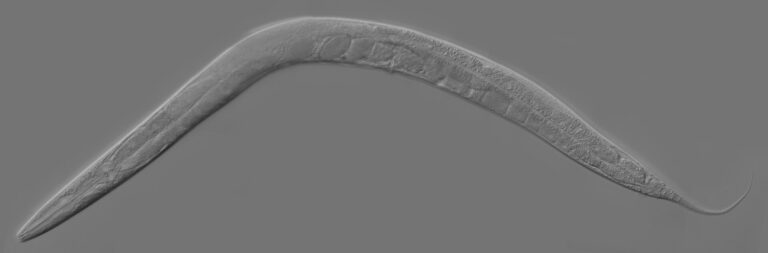
There is no hormone, receptor or drug class called GLP-4. Proglucagon is processed into GLP-1 and GLP-2 only. A PubMed search performed on 2 August 2026 returned no record describing GLP-4 as a peptide, and no registered clinical trial uses the designation. The string survives in the literature only as an unrelated nematode gene name.
A term has been circulating in grey-market listings: GLP-4, presented as the successor to the incretin peptides that came before it. Before assessing any such claim, a laboratory needs a prior question answered — does the molecule exist in the published record at all? We searched PubMed and the clinical trial registries on 2 August 2026. What came back is worth reporting precisely, because the absence is more informative than any rebuttal would be. Everything below concerns published literature only. Condor Research supplies materials strictly for research use, not for human or veterinary use.
What a search for “GLP-4” actually returns
We queried the NCBI PubMed database on 2 August 2026 using the title/abstract field restriction "GLP-4"[tiab]. That query alone returns 28 records. Adding the terms one would expect an incretin-like peptide to attract — peptide, agonist, obesity, incretin — narrows the set to three.1 Three is a small enough number that each can be read in full, so we did.
The first is a mass-spectrometry proteomics study of the insulin/IGF-1-deficient Caenorhabditis elegans daf-2 mutant, which profiles metabolic restructuring in a germline-less worm strain.2 The second is a review in a cardiology journal on the pleiotropic effects of dipeptidyl peptidase-4 inhibitors.3 The third is a study of lifespan extension in C. elegans following inactivation of a eukaryotic initiation factor subunit.4 Two nematode papers and a cardiology review. None of the three describes a hormone, a receptor, or a drug candidate called GLP-4.
3 records in PubMed contain the string “GLP-4” alongside peptide or incretin terminology as of 2 August 2026. None of them describes a peptide by that name.
The cardiology review is the only one of the three that uses the string in an endocrine context, and it does so exactly once. The abstract introduces incretins with the phrase glucagon-like peptide-4 (GLP-4)
and then, in the very next sentence, discusses GLP-1 and GIP without further reference to any fourth peptide.3 The internal inconsistency is visible within a single paragraph. We draw no conclusion beyond the obvious one: the designation is not carried forward because there is nothing for it to designate.
We also queried the ClinicalTrials.gov registry on the same date for the term GLP-4. It returned zero studies.5 No investigational agent has been registered under that designation.
Why the string exists at all: a worm gene, not a hormone
The two nematode hits are not noise, and explaining them is the most useful thing this article can do. glp-4 is a real gene name in C. elegans. It was characterised in 1992 as a locus required for normal proliferation of the germ line; worms carrying the temperature-sensitive bn2 allele and raised at the restrictive temperature reach adulthood with roughly twelve germ nuclei instead of the seven hundred to one thousand found in wild type.6 In 2015 the gene was shown to encode a valyl aminoacyl transfer RNA synthetase.7 A tRNA synthetase is an enzyme of protein translation. It has no relationship of any kind to incretin biology.
This is a namespace collision, and it is entirely benign. C. elegans genes are named under a uniform convention formalised in 1979: a three-letter lowercase italicised descriptor followed by a number, assigned in the order loci are identified within that descriptor class.8 Here glp stands for germline proliferation. The number 4 records that this was the fourth such locus named, nothing more. The convention predates the cloning of the mammalian incretin receptors and operates in a completely separate literature.
The string “GLP-4” does appear in the scientific record. It appears as a worm gene for a tRNA synthetase — not as anything a supplier could be selling.
So a search that appears to confirm the term is in fact retrieving nematode genetics. This is a common failure mode when a designation is checked by counting search results rather than by reading them.
How proglucagon nomenclature actually works
The numbering in GLP-1 and GLP-2 is positional, not hierarchical. Both peptides are cleaved from a single precursor, proglucagon, by tissue-specific post-translational processing: prohormone convertase activity in intestinal L cells liberates a different set of products than the processing that occurs in pancreatic alpha cells.9 Within that precursor sequence there are two regions with recognisable homology to glucagon. The one closer to the amino terminus was designated glucagon-like peptide-1; the one further along, glucagon-like peptide-2.10
That is the whole basis of the numbering. It is a map reference, not a potency ranking and not a generational label. The precursor sequence ends; there is no third glucagon-homologous region waiting to be assigned a 3, and consequently no fourth. A peptide numbered GLP-4 would have to be cleaved from somewhere, and the standard reading of the proglucagon sequence offers no such position.
The intuition that a higher number means a later and better generation is imported from consumer product naming, where version numbers are marketing decisions. In peptide endocrinology, a name of this form is a claim about where a sequence sits inside a precursor protein — a claim that can be checked and, in this case, cannot be substantiated.
The proglucagon family, and what a real entry looks like
It is important to be precise about the scope of this article. We are not arguing that nothing beyond GLP-1 is real. GLP-2 is a 33-amino-acid proglucagon-derived peptide secreted from enteroendocrine L cells; it increases mesenteric blood flow, enhances gut barrier function and drives proliferative pathways in the small bowel.10 Its receptor was cloned and characterised in 1999 as a class B G-protein-coupled receptor.11 A GLP-2 analogue, teduglutide, was assessed in a randomised placebo-controlled trial in short bowel syndrome with intestinal failure and reduced the requirement for parenteral support.12 It holds marketing authorisation in the EU and the US.
| Peptide | What it is | Receptor characterised? | Approved analogue? |
|---|---|---|---|
| Glucagon | Proglucagon 33–61; released from pancreatic alpha cells | Yes — glucagon receptor13 | Yes |
| GLP-1 | Proglucagon-derived L-cell peptide; first glucagon-homologous region | Yes — GLP-1 receptor9 | Yes |
| GLP-2 | 33-aa L-cell peptide; second glucagon-homologous region10 | Yes — GLP-2 receptor, cloned 199911 | Yes — teduglutide12 |
| Oxyntomodulin | Proglucagon 33–69; glucagon plus a C-terminal octapeptide13 | No dedicated receptor; acts at glucagon and GLP-1 receptors13 | No |
| Glicentin | Proglucagon 1–69; an L-cell processing product9 | No dedicated receptor characterised9 | No |
| “GLP-4” | No position assigned in the proglucagon precursor | No receptor described in the indexed literature1 | No registered trial5 |
Proglucagon-derived peptides and their evidentiary status as of 2 August 2026. Every row above the last is supported by a primary characterisation of the receptor, a defined position in the precursor sequence, or both. The last row is populated entirely by absences.
How genuine next-generation candidates are actually described
If the field were in the habit of incrementing numbers to signal advancement, the multi-receptor agonists of the last decade would have provided the occasion. They did not. When a peptide was engineered to act simultaneously at the GLP-1, GIP and glucagon receptors, it was described in the literature as a monomeric peptide triagonist — named for the number of receptors it engages, with each constituent activity reported separately.14 The same convention governs dual agonists and co-agonists throughout this literature.
This matters because it shows what the naming convention is actually tracking. Advancement in this field is described in terms of receptor coverage, binding affinity at each target, and selectivity against related receptors — properties that can be measured and reported. “The next number” describes none of those things. A designation like GLP-4 conveys no pharmacological information whatsoever: it does not say which receptor is engaged, at what affinity, or with what selectivity. That is precisely why the literature does not use it.
An honest read of the evidence
We should state clearly what this article does and does not establish. A negative database search is a bounded finding. It shows that as of 2 August 2026, the indexed biomedical literature contains no characterisation of a peptide called GLP-4, no description of a GLP-4 receptor, and no clinical trial registered under that designation.15 It does not and cannot establish what is inside any particular vial bearing that label. We make no claim about any specific vendor, product or listing, and we have no basis to.
What the search does establish is that the designation carries no reference standard. For any real research peptide, a laboratory can obtain a published sequence, a characterised receptor, and prior analytical data against which to compare its own. For this one, there is nothing to compare against — no sequence in the databases, no reference spectrum, no positive control. A certificate of analysis for a material with no published identity has nothing external to validate it. That is a practical problem before it is a rhetorical one, and it is the reason we do not list the designation.
The honest summary is narrow and, we think, sufficient: two of the three literature hits are worm genetics, the third contains what reads as a slip that the same abstract corrects one sentence later, and the proglucagon precursor yields two glucagon-like peptides rather than four. Researchers encountering the term should treat it as unidentified material until identity is established analytically.
Condor Research · Scientific desk
Atrio Sciences s.r.o., IČO 57 669 651, Nitra (SK) · info@condorresearch.com
- A PubMed title/abstract search for "GLP-4" combined with peptide, agonist, obesity or incretin terms returned three records on 2 August 2026, none of which describes a hormone or drug by that name.
- Two of those three records are Caenorhabditis elegans papers, and the third is a cardiology review of DPP-4 inhibitors in which the string appears once before the same abstract reverts to GLP-1.
- The reason worms keep appearing is that glp-4 is a genuine C. elegans gene name governing germline proliferation, assigned under a nematode nomenclature system entirely separate from mammalian endocrinology.
- The human proglucagon precursor is cleaved into glucagon, GLP-1, GLP-2, oxyntomodulin and glicentin, and only two of these carry the "glucagon-like peptide" designation.
- GLP-1 and GLP-2 are numbered by their position within the proglucagon sequence, not by potency, generation or year of discovery.
- GLP-2 is entirely real and has a licensed analogue, teduglutide, which demonstrates that the objection here is to one specific designation rather than to anything beyond GLP-1.
- Genuine next-generation candidates are described in the literature by receptor coverage, as dual or triple agonists, and never by incrementing the number after GLP.
Is GLP-4 a real hormone?
No hormone by that name appears in the indexed literature. A PubMed title/abstract search on 2 August 2026 combining "GLP-4" with peptide, agonist, obesity and incretin terms returned three records, none of which describes a peptide hormone by that designation. The human proglucagon precursor yields glucagon, GLP-1, GLP-2, oxyntomodulin and glicentin.
Could it simply be a new compound that has not been published yet?
Novel candidates in this class normally leave a documentary trail well before publication: a patent application, a registered trial, a conference abstract, or a preprint with sequence data. We found no registered study under this designation. More to the point, a genuinely novel molecule would be named for the receptors it engages, as the triagonist literature demonstrates.
Why does "GLP-4" appear in a cardiology paper about DPP-4 inhibitors?
The 2012 review introduces incretins using the string once and then discusses GLP-1 and GIP for the remainder of the abstract, with no further reference to a fourth peptide. The document is internally inconsistent on this point. We report the observation without inferring intent.
Is there a GLP-3, then?
The numbering of GLP-1 and GLP-2 reflects the position of two glucagon-homologous regions within the proglucagon sequence, not a series that continues indefinitely. The precursor contains two such regions. There is no third position in that sequence for a peptide numbered 3 to occupy, and therefore none for a 4.
Why does this article defend GLP-2 while questioning GLP-4?
Because the evidence differs, and the distinction is the point. GLP-2 has a defined sequence position, a receptor cloned and characterised in 1999, and a licensed analogue supported by a randomised controlled trial. The objection here is not that anything past GLP-1 is doubtful. It is specific to one designation that has none of these things.
What should a laboratory do with material labelled GLP-4?
Treat it as unidentified until characterised. Because no published sequence or reference spectrum exists under this designation, there is no positive control against which an analytical result can be validated, and a certificate of analysis has no external identity to confirm. Independent mass spectrometry and sequence determination are the only route to knowing what the material is. All such work is research use only.