
Endotoxins and Sterility: The COA Section Almost Nobody Reads
A 99% purity figure tells you nothing about endotoxin load — and that blind spot is one of the quietest causes of irreproducible cell-culture and in-vitro research. Here is why the bacterial endotoxin test deserves a place on every certificate of analysis.
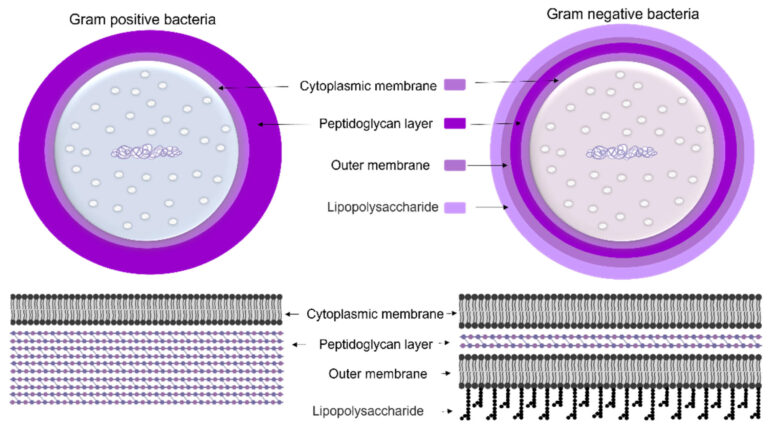
Endotoxins are lipopolysaccharide fragments from Gram-negative bacteria that potently activate immune pathways and confound experiments even when a peptide is chemically pure. Purity and endotoxin load are separate measurements, so a certified bacterial endotoxin test result — not an HPLC number — is what tells you a research reference material is endotoxin-controlled.
A peptide can be chemically immaculate and still ruin a month of work. Imagine a vial whose certificate of analysis reports a single, confident chromatographic peak — better than 99% pure, the area-percent figure that buyers fixate on. The investigator reconstitutes a research sample, adds it to a primary macrophage culture, and watches the cytokine readout blow up before the test compound has had any chance to do anything at all. Nothing was wrong with the molecule. The problem was riding alongside it, invisible to the assay everyone trusts: endotoxin. Purity and endotoxin load are not two views of the same thing. They are two completely different measurements, and the gap between them is where a great deal of irreproducible science quietly goes to die.4
What exactly are endotoxins, and why does a pure peptide still carry them?
Endotoxins are lipopolysaccharides (LPS) — large molecules shed from the outer membrane of Gram-negative bacteria, and fragments of that cell wall persist long after the bacteria themselves are dead.6 That persistence is the crux of the problem. Endotoxins are heat-stable and remarkably robust; they sail through the kind of sterile filtration or autoclaving that kills living organisms, which is precisely why “sterile” and “endotoxin-free” are not synonyms.36 A solution can be biologically sterile — no viable microbes — while still carrying a pyrogenic load of LPS debris.
Crucially, endotoxin contamination has nothing to do with the chemical fidelity of the peptide itself. It is a process and handling story: LPS can enter from water systems, from glassware, from raw materials, or simply from careless handling in a non-controlled environment.6 An HPLC or mass-spectrometry workflow is exquisitely good at telling you whether the molecule you ordered is the molecule in the vial, and at what relative purity. It is essentially blind to a few nanograms of bacterial wall fragment hitchhiking in the same solution.6 The instruments answer different questions. One asks “is this the right molecule?” The other asks “what else came along for the ride?”
Chemical purity and endotoxin load are measured by two entirely separate methods. A chromatographic purity figure, however high, carries no information whatsoever about endotoxin content — only a bacterial endotoxin test does.16
Why do endotoxins matter so much in cell and in-vitro research?
Because the mammalian immune system was built to detect them. Endotoxin is one of the most potent natural triggers of innate immunity: vanishingly small quantities activate pattern-recognition pathways and drive an inflammatory cascade.46 In a cell-culture model this means LPS can switch on the very signalling pathways — cytokine release, NF-κB activation, proliferation changes — that an experiment is trying to attribute to the test compound. The result is a confound that masquerades as a finding. In preclinical research, endotoxin is the classic pyrogen, which is exactly why pharmacopoeial endotoxin control exists in the first place.13
This is what makes endotoxin such an insidious source of irreproducibility. It does not announce itself. Two laboratories using the “same” nominally pure reagent — one endotoxin-controlled, one not — can generate contradictory results and never suspect the reason, because both vials passed the purity check everyone looks at.6 The honest QC framing here connects directly to how to read a certificate of analysis: the endotoxin line is the one most people skim past, and it is often the one that decides whether the data mean anything.
How is endotoxin actually measured — and what is the rFC alternative?
The workhorse is the bacterial endotoxin test (BET), historically built on a striking piece of biology: the blood of the horseshoe crab clots in the presence of endotoxin. That clotting reaction, the Limulus Amebocyte Lysate (LAL) assay, comes in several formats codified in the pharmacopoeias.14 The gel-clot method is the original pass/fail readout — does the lysate gel or not. The turbidimetric and chromogenic methods are quantitative refinements, reading either the cloudiness or a colour change produced by the same enzymatic cascade, allowing an actual endotoxin concentration to be reported.14
The newer entrant is recombinant Factor C (rFC), which reproduces the first enzyme in that cascade synthetically.45 Its appeal is twofold: it removes the assay’s dependence on horseshoe-crab blood — an animal-welfare and supply-sustainability concern — and, being a defined recombinant reagent, it sidesteps lot-to-lot variability of natural lysate.5 Where the contaminant must be eliminated rather than merely measured, dedicated separation chemistries are used to strip endotoxin from a reagent stream.6
| BET method | Basis | Note |
|---|---|---|
| Gel-clot LAL | Lysate gels in the presence of endotoxin | Original, qualitative pass/fail; the reference method.1 |
| Turbidimetric LAL | Measures turbidity from the clotting cascade | Quantitative; kinetic readout.4 |
| Chromogenic LAL | Enzymatic release of a coloured marker | Quantitative; widely used on COAs.4 |
| Recombinant Factor C (rFC) | Synthetic recombinant first enzyme of the cascade | Removes horseshoe-crab dependence; defined reagent.5 |
The principal bacterial endotoxin test formats. Gel-clot, turbidimetric and chromogenic assays all derive from horseshoe-crab lysate; recombinant Factor C reproduces the key enzyme synthetically.
What do the pharmacopoeias say about acceptable limits?
The standards are mature and harmonised in spirit. The bacterial endotoxin test is codified in the United States Pharmacopeia as USP <85>1 and in the European Pharmacopoeia as chapter 2.6.14,2 with FDA guidance on pyrogen and endotoxins testing framing the regulatory expectation.3 These texts define how the assay is validated, how interference is controlled, and how an acceptance limit is derived — crucially, the permissible endotoxin level is not a single universal number but is tied to the intended use of a product, and so is calculated against that context rather than fixed in the abstract.13
For research reference materials the practical takeaway is qualitative but decisive: a credible supplier reports an actual endotoxin value, measured by a named BET method and expressed in endotoxin units, against the relevant pharmacopoeial procedure.12 Because we deal in research-use-only materials rather than finished medicines, we describe these limits by reference to the governing chapters rather than asserting a single threshold — the threshold depends entirely on the intended research context.3
Certified endotoxin result versus “research grade”: what is the honest difference?
This is where the COA earns its keep. A certified endotoxin result states a measured value and the method used to obtain it.1 An unspecified “research grade” designation with no endotoxin data states nothing at all — it is an absence dressed as a reassurance. The difference is not pedantry. For a downstream immunology or in-vitro model, an uncharacterised endotoxin load can silently invalidate an entire dataset, and no purity figure on the same certificate will warn you.46
Honest limits: what a BET result does and does not promise
Rigour cuts both ways, so the limits of the method deserve the same candour as its strengths. First, a low endotoxin reading is a snapshot of a specific lot under a specific test — it is not a permanent property of the molecule, and downstream handling, water and glassware can reintroduce LPS at any time.6 Second, LAL-based assays are vulnerable to interference: certain matrices can enhance or inhibit the clotting reaction, which is exactly why the pharmacopoeial procedures mandate validation and spike-recovery controls.12 Third, endotoxin is not the only pyrogen; non-endotoxin pyrogens exist and fall outside what a BET detects, a limitation the regulatory pyrogen-testing frame acknowledges.34 And finally, like any manufacturer’s specification, a reported value is a measurement with an associated method and range — not an absolute guarantee that travels with the vial forever. A COA is honest data, not a talisman.
Why this quiet COA section is the COA-first point
The endotoxin line is the section almost nobody reads, and that is precisely why it is so revealing. A high HPLC number is necessary but not sufficient; it answers identity and relative purity while saying nothing about the biological contaminant most likely to corrupt a sensitive experiment.46 A reagent that arrives with a named bacterial endotoxin test, a measured value, and traceability to USP <85> or Ph. Eur. 2.6.14 gives a researcher something an unqualified “research grade” label never can: the ability to rule out an entire class of confound before the first pipette is touched.12
This is the heart of Condor Research’s COA-first, research-use-only framing. The compounds we discuss are research reference materials, supplied strictly for in-vitro and preclinical laboratory work — not medicines, and not for human or veterinary use. Treating the endotoxin section as load-bearing rather than decorative is not a marketing flourish; it is what separates data you can stand behind from data that merely looks clean. The molecule being right is the beginning of the quality story. Knowing what else is in the vial is how it ends.
- Chemical purity (HPLC/MS) and endotoxin load are two entirely different measurements; a chromatographically pure peptide can still carry an endotoxin burden that wrecks sensitive assays.
- Endotoxins are lipopolysaccharide fragments of Gram-negative bacterial cell walls; they survive routine sterilisation, activate innate-immune pathways, and silently confound in-vitro and preclinical data.
- The bacterial endotoxin test (BET) is codified in USP <85> and European Pharmacopoeia 2.6.14, with FDA guidance on pyrogen and endotoxins testing setting the regulatory frame.
- BET methods range from classic gel-clot, turbidimetric and chromogenic LAL assays to recombinant Factor C (rFC), which removes reliance on horseshoe-crab blood.
- A certified endotoxin result on a COA is categorically more informative than an unspecified 'research grade' label with no endotoxin data at all.
Does a high HPLC purity figure mean a peptide is endotoxin-free?
No. Chemical purity (measured by HPLC or mass spectrometry) and endotoxin load are entirely separate measurements. A peptide can be highly pure chromatographically and still carry a meaningful endotoxin burden, because lipopolysaccharide fragments are invisible to a chromatographic purity assay. Only a bacterial endotoxin test reports endotoxin content.
Are 'sterile' and 'endotoxin-free' the same thing?
No. Sterility means no viable microorganisms are present. Endotoxins are heat-stable fragments of Gram-negative bacterial cell walls that persist after the bacteria are dead and survive routine sterilisation. A solution can therefore be sterile yet still contain a pyrogenic endotoxin load, which is why the two are certified separately.
What is the difference between LAL and recombinant Factor C (rFC) testing?
LAL (Limulus Amebocyte Lysate) assays use horseshoe-crab blood and come in gel-clot, turbidimetric and chromogenic formats. Recombinant Factor C reproduces the first enzyme of that detection cascade synthetically, removing reliance on horseshoe-crab blood and providing a defined, more consistent reagent. Both are used to detect bacterial endotoxin.
Which standards govern endotoxin testing?
The bacterial endotoxin test is codified in USP and in European Pharmacopoeia chapter 2.6.14, with FDA guidance on pyrogen and endotoxins testing setting the regulatory frame. These texts define assay validation, interference controls and how acceptance limits are derived. Limits depend on intended use rather than a single universal number.
Why does 'research grade' with no endotoxin data matter?
An unspecified 'research grade' label with no endotoxin result states nothing about endotoxin content. For cell-culture and in-vitro work, an uncharacterised endotoxin load can silently activate immune pathways and invalidate an entire dataset. A certified endotoxin value, with a named method and traceability to the pharmacopoeias, lets you rule out that confound in advance.