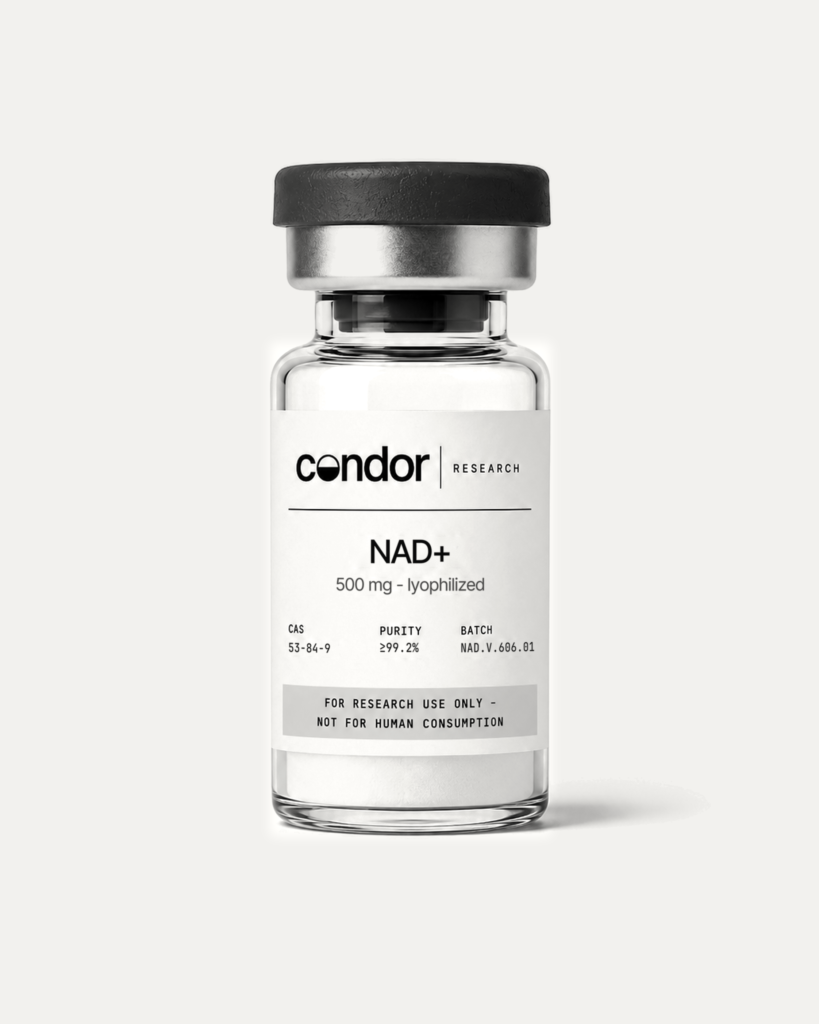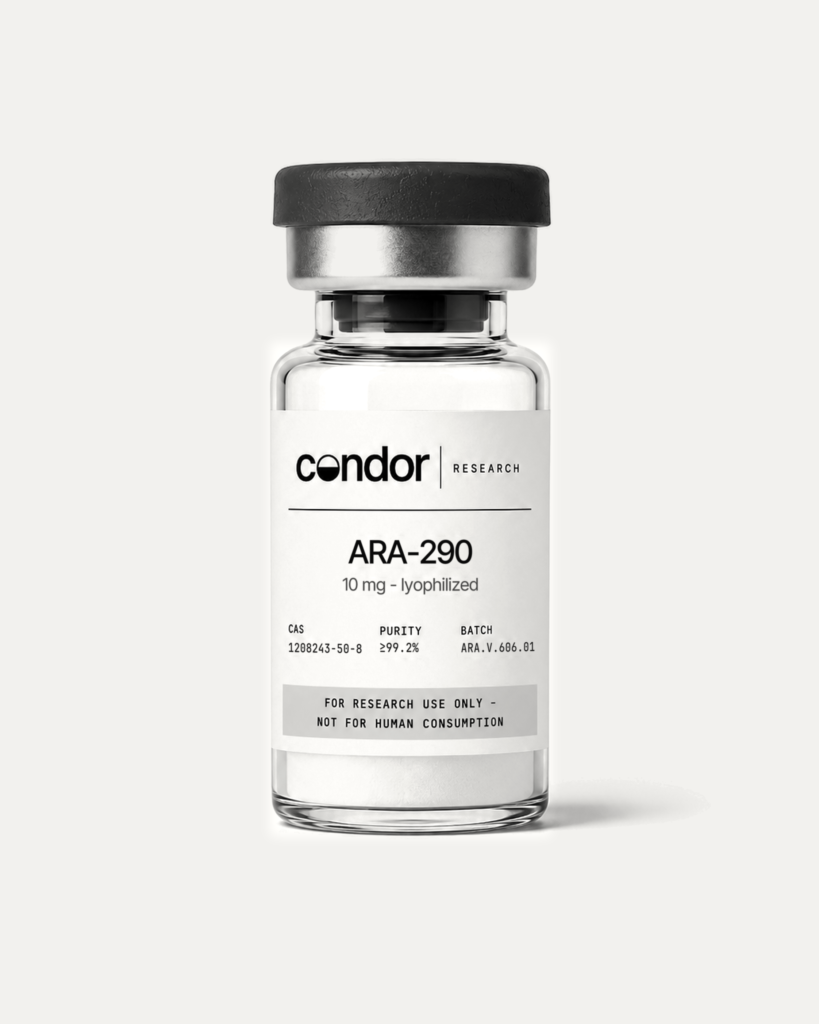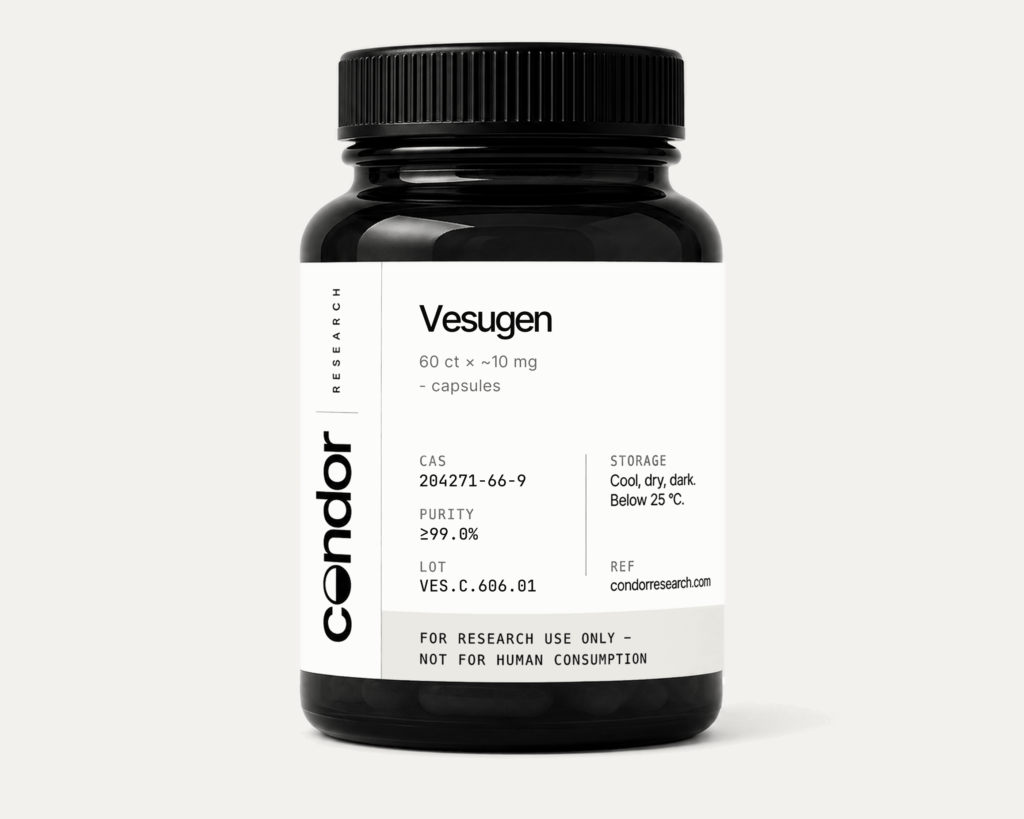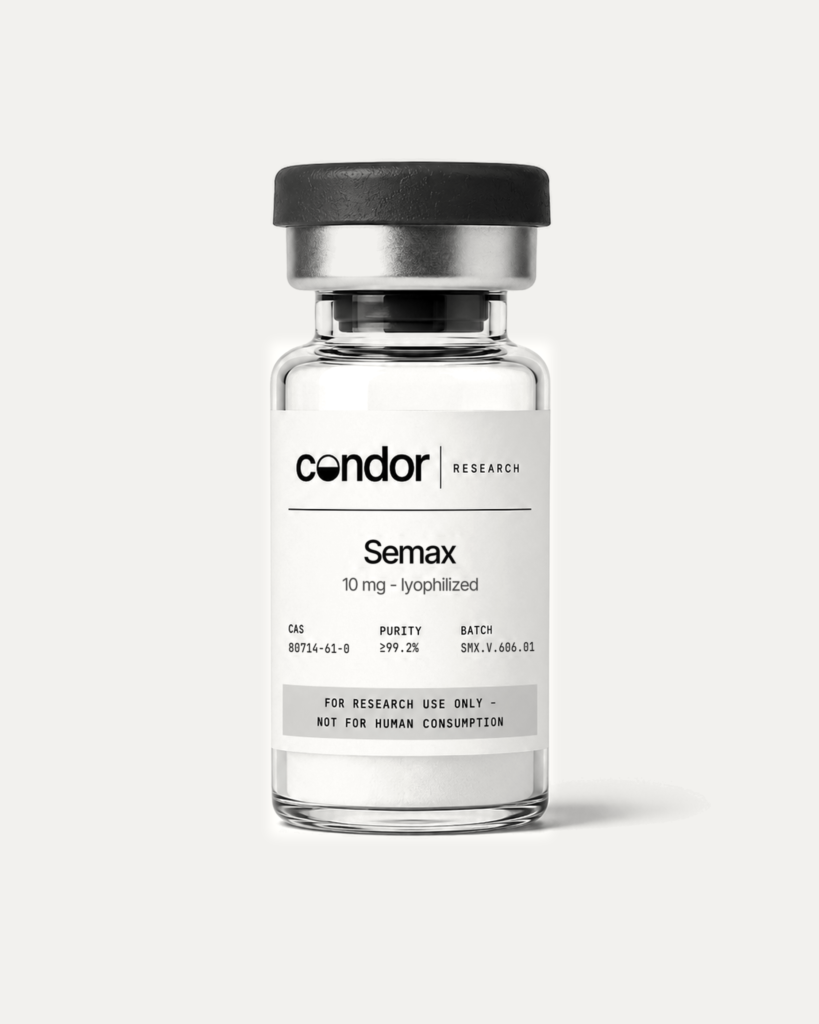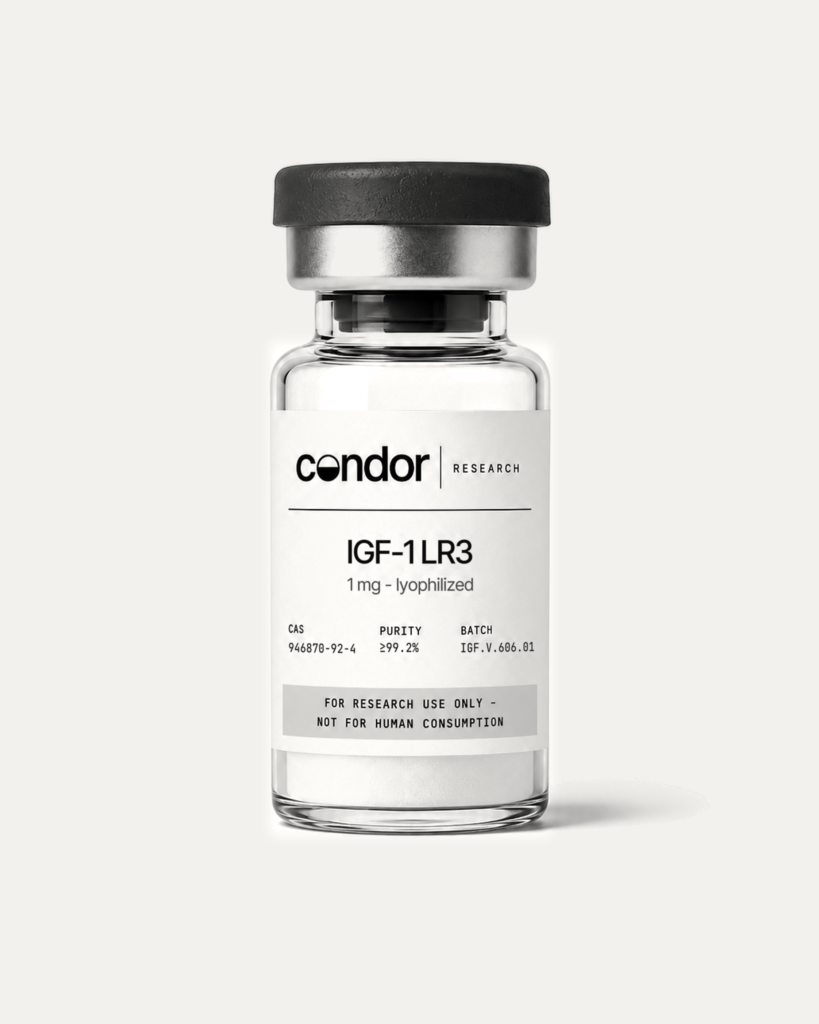
Lyophilised · ≥99% (HPLC) ·
Supplied lyophilised. Reconstitution typically uses bacteriostatic water.
IGF-1 LR3 (Insulin-like Growth Factor-1 Long R3) is a synthetic 83-amino-acid analogue of human IGF-1, engineered with an N-terminal 13-amino-acid extension and an Arg3 substitution to reduce IGF-binding-protein affinity and extend biological half-life in vitro; molecular weight approximately 9.1 kDa; supplied lyophilised at ≥99% purity by HPLC. For laboratory research use only; not for human or veterinary use.
A bioengineered variant of one of the body's central growth signals, IGF-1 LR3 (Long R3 Insulin-like Growth Factor-1) is an 83-amino-acid recombinant analogue of human IGF-1. It carries two deliberate modifications: an arginine substituted for glutamate at position 3, and a 13-residue N-terminal extension. Together these changes dramatically reduce its binding to IGF-binding proteins, leaving more of the molecule free to engage its receptor and giving researchers a long-acting, high-potency tool for studying the IGF axis.
A growth factor redesigned to evade its own carrier proteins. In native physiology, circulating IGF-1 is largely sequestered by a family of binding proteins that tightly regulate its availability. To create a reagent that resists this sequestration, protein engineers designed the Long-R3 muteins specifically to show reduced binding-protein affinity while retaining receptor activity (Bryant et al., 1996). The outcome is an analogue whose biological signal is both stronger and more persistent than the parent molecule in experimental systems.
What the research explores. The literature on Long R3 IGF-1 spans developmental biology, tissue growth and neuroscience, exclusively in cellular and animal models:
These results are confined to in‑vitro and animal research and do not support conclusions about human use. Full citations are listed under the Scientific References tab.
Physicochemical profile. CAS 946870-92-4 · Molecular formula C400H625N111O115S9 · Molecular weight 9117.50 g/mol · 83-residue polypeptide · Appearance white lyophilized powder · Soluble in 0.1 M acetic acid at 0.1 mg/mL.
Specification & quality. Each individually sealed vial contains 1 mg of IGF-1 LR3 at ≥99% purity by HPLC. Every batch is third-party tested, with a Certificate of Analysis (COA) available. Store at −20 °C, protected from light and moisture.
This product is intended for laboratory research use only (RUO). It is not a drug, food, cosmetic, or dietary supplement, and is not for human or veterinary use, ingestion, or diagnostic application. Handling is restricted to qualified research professionals operating in an appropriately equipped laboratory.
Supplied for in-vitro laboratory research use only (RUO). Not a drug, food or supplement; not for human or veterinary use.
Certificate of Analysis — lot-specific COA ships with every order and is available on request.
Each lot is tested by an independent third-party laboratory for identity (mass spectrometry) and purity (HPLC). The Certificate of Analysis for your specific batch ships with the order and is available on request — no house data, no exceptions.
References are illustrative of the research literature surrounding this compound. All claims relate to in-vitro and animal models only.
IGF-1 LR3 (Long R3 Insulin-like Growth Factor-1) is an 83-amino-acid recombinant analogue of human IGF-1, bioengineered for greater stability than the native growth signal. Condor Research supplies it as a 1 mg lyophilized vial at ≥99% HPLC purity, strictly as a research-use-only reference protein for in-vitro laboratory study.
They act at opposite ends of the GH/IGF axis. IGF-1 LR3 is a recombinant IGF-1 analogue — a direct growth-factor reference protein. CJC-1295 is a GHRH-analogue secretagogue, studied for its upstream signalling rather than being an IGF molecule itself. Researchers choose IGF-1 LR3 to study the IGF endpoint directly and secretagogues to study the upstream pathway.
They sit at different points of the GH/IGF system. IGF-1 LR3 is a recombinant 83-residue IGF-1 analogue acting as a direct growth-factor reference. AOD-9604 is a short synthetic fragment of growth hormone's C-terminal region (residues 177-191), studied for distinct metabolic research properties. Both are ≥99% HPLC research-use-only materials but are not interchangeable reference compounds.
IGF-1 LR3 is a large 83-amino-acid recombinant protein (MW ≈ 9117 Da), supplied at 1 mg per vial as an analytical reference quantity appropriate to this molecule. Vial mass reflects the product specification, not a dose. To compare value across formats, contact info@condorresearch.com. All quantities are research-use-only reference amounts.
For analytical laboratory preparation only, plain water is not the listed solvent. IGF-1 LR3 is specified as soluble in 0.1 M acetic acid at 0.1 mg/mL, not freely water-soluble like smaller peptides. Use the acidified diluent indicated on the datasheet for laboratory work. This is handling information for in-vitro use, not guidance for any human or animal use.
As a larger, less water-soluble recombinant protein, IGF-1 LR3 dissolves reliably in a mildly acidic medium, which is why its datasheet specifies 0.1 M acetic acid at 0.1 mg/mL rather than plain water. This solubility behaviour is a property of the molecule. It is laboratory analytical-preparation information, not instruction for any non-research use.
Each IGF-1 LR3 lot is tested by an independent third-party laboratory by HPLC for identity and purity at ≥99%, with mass spectrometry confirmation, and ships against a batch-specific Certificate of Analysis (COA). Because it is a fragile recombinant protein, lot-matched documentation matters; request the current COA before ordering at info@condorresearch.com.
IGF-1 LR3's sealed lyophilized format is comparatively transit-tolerant, and the vial is stored long-term at -20°C, protected from light, with a 24-month shelf life. For specifics on cold-pack handling to your destination and customs-delay considerations, contact info@condorresearch.com; delivery times within Europe are normally a few business days but are not guaranteed.
For laboratory use only, a primary acetic-acid stock can typically be diluted further into a compatible buffer for assays, with the exact approach depending on your experimental system. Store the sealed lyophilized vial at -20°C, protected from light. Treat any prepared solution as a sensitive recombinant protein. This is in-vitro handling information, not human-use guidance.
Yes. IGF-1 LR3 is supplied strictly for laboratory research use only (in vitro). It is not a medicine, food, supplement, cosmetic, or medical device, and is not for human or veterinary use, administration, or consumption. Condor Research provides no dosing or protocols. Purchase is limited to qualified professionals and institutions aged 18 or over.
Condor Research supplies IGF-1 LR3 directly, dispatched from our EU facility in Slovakia to the EU, EEA, UK and Switzerland. Deliveries to EU destinations clear no third-country customs, and shipping is calculated at checkout. Supplied strictly as a research-use-only reference material — not for human or veterinary use.
No verified reviews yet.
Leave a reviewCookies
We use strictly necessary cookies to run the store. With your consent we also use analytics (order attribution) and marketing (Omnisend) cookies. Read our Cookie Policy.