
What Is Cerluten? The Brain-Cortex Peptide Extract, Examined
Cerluten is a natural cerebral-cortex peptide extract in the Cytomax line. A PubMed search returns zero studies under its name. Here is the honest evidence.
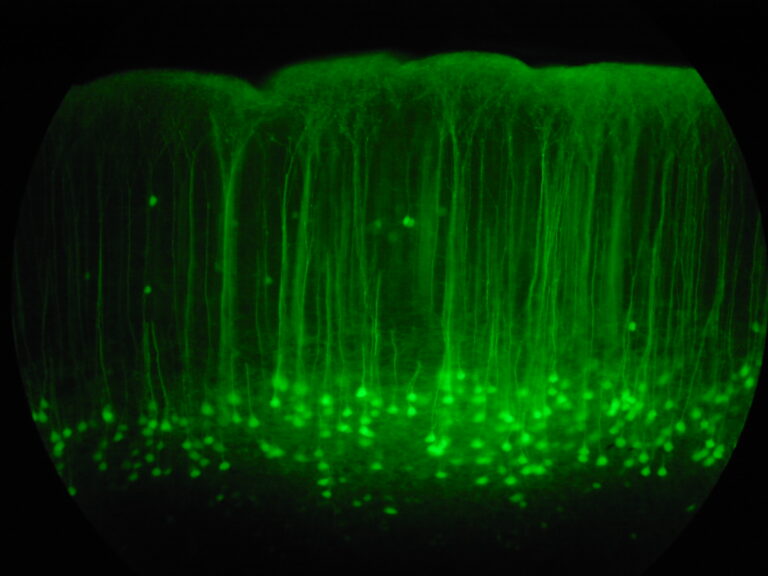
Cerluten is a commercial natural polypeptide complex marketed as a cerebral-cortex extract, part of the St. Petersburg Cytomax line. It has no defined active molecule, no CAS number, and zero dedicated peer-reviewed literature. A PubMed search for the exact term returns no records.
Cerluten sits in an awkward place: it is a product with a trade name, a category, and a marketing story, but almost nothing in the way of published science attached to that name. It is sold as a natural cerebral-cortex peptide extract, one member of the St. Petersburg “Cytomax” line of tissue preparations. The most honest way to describe it is to start with what the literature does not contain. A direct PubMed search for the exact term Cerluten, run on 6 July 2026, returned zero indexed records.7 Everything below describes laboratory and literature findings for a chemical class, not use in people, and not Cerluten itself.
What is Cerluten, as a category?
Cerluten is marketed as a natural polypeptide complex extracted from the cerebral cortex of young animals, typically cattle. It belongs to the “Cytomax” family of natural tissue extracts associated with the St. Petersburg Institute of Bioregulation and Gerontology — the same institutional lineage behind a long list of organ-specific peptide preparations. It is positioned commercially as a supplement or nutraceutical, not as a registered pharmaceutical, and it is not a single defined substance. It is a heterogeneous protein and peptide fraction with no isolated active molecule and no CAS registry number.
That last point matters more than it first appears. When a preparation has no defined active molecule and no standardized characterization, there is no fixed chemical object for a study to measure. This is precisely what separates Cerluten from the defined synthetic peptides it is often mentioned alongside — Cortagen (Ala-Glu-Asp-Pro, AEDP) or Epithalon (Ala-Glu-Asp-Gly, AEDG) — each of which is a specific, sequenceable tetrapeptide that a laboratory can synthesize, weigh, and assay.
0 indexed PubMed records exist for the exact trade name Cerluten as of July 2026.
The cytomedin idea behind the label
The scientific concept underneath the whole Cytomax line is the “cytomedin” hypothesis, developed by the Khavinson group. The claim is that short peptides isolated from a given tissue act preferentially on that same tissue — a proposed tissue-specificity of peptide action.45 A rare primary study directly compared natural cytomedin cortex extracts against their synthetic analogues in nerve tissue culture, which is the experimental root of the “natural extract” framing that products like Cerluten inherit.1 It is important to be exact here: these papers establish and probe a class-level hypothesis. None of them studies a product called Cerluten. They are cited as context for the idea, not as evidence for the product.
The tissue-specificity doctrine remains exactly that — a doctrine. It is a programmatic position from one group,5 repeatedly restated but not independently confirmed as an established mechanism outside that ecosystem. Treating it as settled pharmacology would overstate what the assays actually show.
Cerluten has a trade name and a category, but no molecule, no CAS number, and no study of its own.
The products that do have data — and are not Cerluten
The confusion around Cerluten comes from proximity. Two named products in the same “cortex” family do have published literature, and they are routinely conflated with Cerluten even though they are chemically distinct entities.
The first is Cortexin, a registered Russian polypeptide preparation. It has an actual clinical record — for example, a 2026 multicenter randomized trial reported outcomes in a defined patient population.3 The second is Cortagen, the synthetic tetrapeptide Ala-Glu-Asp-Pro. Cortagen was not discovered as an extract; it was produced by directed synthesis from amino-acid analysis of the natural preparation Cortexin — a detail stated explicitly in the microarray study of its effect on gene expression in mouse heart.2 Animal work has examined Cortexin and Cortagen together in models of chronic brain ischemia,6 and in-vitro molecular studies have looked at short cortex-related peptides’ effects on gene expression in cultured cells.8
| Product | Type | Defined molecule? | Own primary literature? |
|---|---|---|---|
| Cortexin | Registered natural polypeptide drug (RU) | No (complex mixture, but registered) | Yes — incl. clinical trials3 |
| Cortagen | Synthetic tetrapeptide (AEDP) | Yes — Ala-Glu-Asp-Pro | Yes — animal + in-vitro268 |
| Cerluten | Commercial natural extract (Cytomax) | No — heterogeneous, no CAS | None — 0 PubMed records7 |
All entries describe published in-vitro, animal, or clinical literature for the respective preparations. The Cortexin and Cortagen data are not evidence for Cerluten and must not be read as such.
The hard line is this: the trials and animal data belong to Cortexin and Cortagen. They cannot be borrowed for Cerluten. A clinical result for a registered drug does not transfer to a separate, undefined extract simply because both are described as coming from cortex. If you see Cerluten marketing that leans on “cortex peptide” studies, check the actual product named in the citation. It will not be Cerluten.
An honest read of the evidence
Start with the plainest fact. There is zero dedicated primary literature for Cerluten. The exact term returns no PubMed or MEDLINE records,7 which means there is no published pharmacology, no clinical trial, no animal study, and no chemical characterization under this trade name. Any claim made specifically for Cerluten is, at present, an unsupported extrapolation from products that are not Cerluten.
The weakness runs deeper than the missing product-level data, and it is worth being candid about the whole class. The evidence for cortex peptides in general is single-lineage: nearly all of it comes from one research group and its associated institutions in St. Petersburg and the Kirov Military Medical Academy,1256 with essentially no independent Western replication. When a body of work originates almost entirely from one lineage, external validity is a real problem, not a pedantic one. Much of it appears in Russian-language journals with limited peer scrutiny outside that ecosystem, and abstracts often lack full methodological detail.
The animal studies that do exist are small-n and single-species, mostly rats and mice, and the tissue-specificity hypothesis they are built on has not been independently confirmed as a mechanism. There is no human safety, pharmacokinetic, or efficacy data for Cerluten specifically — none. Any framing that implies human relevance for this particular product would be extrapolation stacked on extrapolation: from a different product, from a single research lineage, from a hypothesis rather than a confirmed mechanism. We would rather say that clearly than dress a gap up as a finding.
All materials supplied by Condor Research are Research Use Only (RUO). The discussion above concerns published in-vitro and literature findings for a chemical class, not use in any organism. Nothing here is a dosing protocol, clinical guidance, or a safety assessment for any organism, and none of the class-level data cited should be read as characterizing Cerluten itself.
Condor Research · Scientific desk
Atrio Sciences s.r.o., IČO 57 669 651, Nitra (SK) · info@condorresearch.com
- Cerluten is a heterogeneous natural polypeptide fraction marketed as an extract of cerebral cortex, part of the St. Petersburg Cytomax natural-extract line — not a registered pharmaceutical and not a defined single molecule.
- A direct PubMed/MEDLINE search for the exact term Cerluten returns zero indexed records: no pharmacology, no clinical trial, no animal study, no chemical characterization under its trade name.
- Cerluten has no CAS number and no standardized characterization, which distinguishes it from defined synthetic cortex peptides such as Cortagen (Ala-Glu-Asp-Pro / AEDP).
- The named cortex products that DO have literature are different, chemically distinct entities: the natural preparation Cortexin (with clinical trials) and the synthetic tetrapeptide Cortagen. Cerluten is neither.
- The underlying cytomedin / tissue-specificity framework is a hypothesis from a single research lineage, not independently established pharmacology.
- Regulatory status: not approved by FDA or EMA for any indication; no marketing authorization exists in the EU or US.
- Nearly all cortex-peptide primary research originates from one institutional lineage in St. Petersburg, published largely in Russian-language journals.
Is Cerluten the same as Cortexin or Cortagen?
No. Cortexin is a registered Russian polypeptide preparation with its own published clinical trials, and Cortagen is a defined synthetic tetrapeptide, Ala-Glu-Asp-Pro, derived by directed synthesis from Cortexin. Cerluten is a separate commercial extract with no literature under its own name. Sharing a "cortex" description does not make them the same product.
Does Cerluten have a CAS number or a defined active molecule?
No. Cerluten is described as a heterogeneous natural polypeptide fraction rather than a single sequenceable molecule, so it has no CAS registry number and no standardized chemical characterization in the peer-reviewed record. This is a key contrast with defined synthetic peptides such as Cortagen (AEDP) or Epithalon (AEDG).
Is Cerluten approved by the FDA or EMA?
No. There is no marketing authorization for Cerluten in the United States or the European Union for any indication. It is sold internationally as a dietary supplement and labelled Research Use Only outside Russia.
What does "cytomedin" or "Cytomax" mean?
They are terms from the Khavinson group for short tissue peptides hypothesized to act on the organ from which they were extracted. This tissue-specificity idea is a research hypothesis, foundational to the marketing of the whole line, but not an independently established pharmacological mechanism.
Is there any published human data on Cerluten specifically?
None. The human trials in this area concern the distinct registered product Cortexin, not Cerluten, and cannot be attributed to it. A PubMed search for Cerluten itself returns no records at all.
How does Cerluten compare to Cortagen?
Cortagen is a defined synthetic tetrapeptide with animal and in-vitro studies of its own, where Cerluten is an undefined natural extract with none. For a fuller side-by-side, see Cortagen vs Cerluten vs Cortexin and What is Cortagen?. Broader class context is in Khavinson peptide bioregulators and which Khavinson bioregulator for what.