
What Is Cortexin? The Registered Cortex Peptide Medicine, Examined
Cortexin is a registered Russian/CIS prescription drug — a cattle-brain polypeptide complex. What it is, its evidence, and why it is not Cortagen or Cerluten.
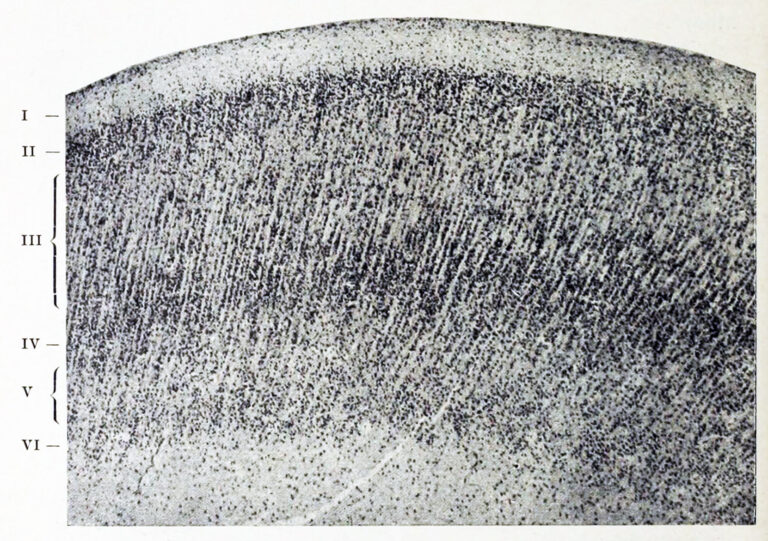
Cortexin is a registered prescription medicine in Russia and other CIS states: a lyophilised complex of low-molecular-weight polypeptides extracted from cattle cerebral cortex. It is not approved by EMA or FDA, is not sold by Condor Research, and is distinct from the synthetic tetrapeptide Cortagen.
Cortexin is not an obscure “peptide bioregulator” from a supplement catalogue. It is a registered prescription drug — a cattle-brain polypeptide extract that has held Russian marketing authorisation since 2006 and is prescribed across the CIS for stroke, brain injury and cognitive disorders. That regulatory pedigree makes it more scrutinisable than most bioregulators, and also more easily confused with the synthetic peptides that borrow its name. Everything below describes registered-drug status and published literature findings, not use in people; Cortexin is a medicine unapproved in the EU and US, it is not offered by Condor Research, and nothing here is medical advice.
What is Cortexin, and what regulatory status does it hold?
Cortexin is a prescription (Rx) medicine registered in the Russian Federation and marketed by Geropharm of St. Petersburg. Its international nonproprietary grouping name is “polypeptides of the cerebral cortex of cattle”, and it carries Russian registration number P N003862/02 for a lyophilisate reconstituted for intramuscular or intravenous injection.13 The independent Patsnap Synapse drug record corroborates this, listing the product as “Approved” in Russia since 1 January 2006, with indications spanning cerebrovascular disorders, craniocerebral trauma, cognition disorders, epilepsy, encephalitis, cerebral palsy and learning disabilities.12 Two independent sources — a manufacturer prescribing document and a third-party regulatory database — agree on the same registration facts, which is the reason this article treats “registered medicine” as an established claim rather than a marketing assertion.
That status has a hard boundary. Cortexin has no EMA or FDA authorisation. Its approval is confined to Russia and neighbouring CIS jurisdictions, and its entire clinical dossier is built inside that regulatory ecosystem. The distinction matters because “registered somewhere” is often read as “validated everywhere”, and those are not the same thing.
2006 The year Cortexin’s Russian marketing authorisation was granted — and the year from which every clinical claim about it has accumulated in a single regulatory system.
What is it, chemically?
Cortexin is not a molecule. It is a mixture. Review-level descriptions characterise it as a lyophilised extract of neuropeptides, free amino acids and trace elements drawn from animal cerebral cortex — a complex biological preparation rather than a single defined compound.9 The active fraction consists of water-soluble low-molecular-weight polypeptides, and the finished vial is stabilised with glycine. Because the product is a heterogeneous polypeptide complex, no single CAS number describes it, and batch composition is defined by extraction and specification rather than by a structural formula.
This is the single most important technical fact about Cortexin, and it drives most of the honest caveats later in this piece. An undefined mixture cannot be characterised, dosed or reasoned about with the precision of a synthetic peptide. It also means every mechanistic claim is a claim about an ensemble of fractions, not about one identified ligand.
Cortexin is defined by where it comes from and how it is made, not by a structure you can draw — and that is both its clinical history and its analytical weakness.
What does the drug label claim, and what has the literature reported?
As a registered drug in its home jurisdictions, Cortexin’s approved indications cover the complex therapy of cerebrovascular disorders and ischaemic stroke, traumatic brain injury and its consequences, encephalopathies of varied origin, cognitive impairment, encephalitis and encephalomyelitis, epilepsy, asthenic states, and paediatric neurology including psychomotor and speech developmental delay and cerebral palsy.1312 The registered adult regimen described in prescribing material is 10 mg once daily by intramuscular injection over a short course. These figures are reproduced here strictly as published prescribing information; they are not use guidance, and Condor Research does not supply the product.
The clinical literature is larger than most bioregulators can claim. Published trials include the DIACORT multicentre randomised study of 110 patients with type 2 diabetes and neurological complications, which reported greater regression of cognitive symptoms in the Cortexin arm than in the comparator over 90 days.1 The largest trial located is a multicentre, randomised, double-blind study of 490 acute ischaemic-stroke patients comparing intravenous and intramuscular forms of the drug, in which 93.6% versus 86.5% of patients reached a modified Rankin score of 0–2 at day 90.2 Smaller work fills out the picture: an open observational study of 30 young stroke patients reported MoCA improvement after a Cortexin course,4 and a controlled trial in 74 children with moderate traumatic brain contusion reported greater symptom regression in the Cortexin-added group.5 Every one of these is reported as a published finding in a specific trial, not as an outcome a reader should expect.
| Study | Design | n | Reported finding |
|---|---|---|---|
| DIACORT1 | Multicentre RCT | 110 | Greater regression of cognitive symptoms vs comparator (90 d) |
| IV vs IM2 | RCT, double-blind | 490 | 93.6% vs 86.5% reached mRS 0–2 at day 90 (two Cortexin forms) |
| Cellex vs Cortexin3 | RCT, head-to-head | 40 | Comparator peptide gave more pronounced NIHSS regression |
| Young stroke4 | Open observational | 30 | MoCA improved after course |
| Paediatric TBI5 | Controlled trial | 74 | Greater symptom regression in Cortexin-added group |
All entries are published clinical-literature findings from single-country trials, reported for reference only. They are not efficacy endorsements, use guidance, or outcomes to be expected. Cortexin is not sold by Condor Research.
What is the proposed mechanism?
Mechanistic accounts describe Cortexin as pleiotropic rather than single-target. A mechanism review attributes its reported neuroprotection to combined actions on neuroplasticity — signal transduction, energy metabolism, anti-inflammatory activity and caspase-8 inhibition — and names beta5-tubulin, creatine kinase B and 14-3-3 alpha/beta as molecular partners.8 The anti-apoptotic claim traces to an in vitro study reporting that Cortexin selectively inhibits brain caspase-8, the initiator of extrinsic apoptosis, with little effect on caspase-1, -3 or -9, cathepsin B or calpain, and from which an active peptide fraction was isolated.9 A broader review frames the same picture: a lyophilised animal-cortex extract acting on multiple molecular and cellular targets rather than one receptor.10
Preclinical models sit underneath these claims. A Wistar rat middle-cerebral-artery occlusion–reperfusion study compared a single 1 mg/kg intraperitoneal dose against Mexidol and Cerebrolysin, assessing lesion volume and BDNF/TNF-alpha.6 A rarer, independent English-language rat study — non-Russian, in 35 Wistar animals — reported that Cortexin altered OPG/RANK/RANKL and TRPC1 expression and oxidant/antioxidant status after cerebral ischaemia-reperfusion.7 These are the kind of single-lab animal and in vitro results that mechanism narratives lean on, and they should be read as such.
Cortexin, Cortagen and Cerluten are not the same thing
The naming is a trap. Cortagen is a defined synthetic tetrapeptide, Ala-Glu-Asp-Pro (AEDP), obtained by directed synthesis based on the amino-acid analysis of the natural Cortexin preparation.11 In other words, Cortagen was reverse-engineered from Cortexin as a single characterised molecule — which makes it the opposite of Cortexin in analytical terms: one sequence versus an undefined mixture. Cerluten is a separate, poorly characterised commercial peptide extract that should not be conflated with the registered Cortexin medicine at all. For a side-by-side treatment, see Cortagen vs Cerluten vs Cortexin, and for the wider category the Khavinson peptide bioregulators overview.
If a comparison drug is wanted, the honest one is Cerebrolysin (EVER Neuro Pharma), a related low-molecular-weight porcine-brain peptide and amino-acid mixture — the same structural genre as Cortexin — which, unlike Cortexin, has been examined in a Cochrane systematic review for acute ischaemic stroke.12 That review concerns Cerebrolysin, not Cortexin. It is cited here only to mark the evidence-quality standard that the Cortexin literature has not yet met.
An honest read of the evidence
The volume is real; the rigour is uneven. Cortexin’s clinical literature is substantial in count but methodologically limited and geographically isolated. It is overwhelmingly Russian-language, single-country, and frequently authored close to the manufacturer’s research ecosystem. There is no independent Western multicentre RCT of Cortexin, and no Cochrane review of the drug itself — the Cochrane review that exists is for the sibling drug Cerebrolysin, not for Cortexin.12 That single-lineage, single-country replication gap is the defining weakness of the whole dossier.
The trial designs compound the problem. Many studies are small (n of 30 to 110), open-label or observational rather than double-blind and placebo-controlled.45 Even the flagship 490-patient RCT is built to compare two Cortexin formulations to each other — intravenous versus intramuscular — rather than to establish efficacy against placebo, so it demonstrates therapeutic equivalence between forms, not a placebo-beating effect.2 And the evidence is not uniformly favourable: a small head-to-head RCT of 40 patients reported that a comparator peptide, Cellex, produced more pronounced NIHSS regression than Cortexin.3 An honest summary has to include the results that do not flatter the drug.
The mechanistic story is similarly thin under load. Because Cortexin is an undefined mixture rather than a single characterised molecule, its receptor and caspase-8 claims rest largely on single-lab in vitro and animal work that has not been widely replicated outside the originating groups.9 As a biological product derived from bovine and porcine brain tissue, it also carries the theoretical concerns of that class — prion transmission, immunogenicity, batch-to-batch variability — and there is no ICH-compliant international safety, drug-interaction, pregnancy or long-term data in peer-reviewed Western literature. Manufacturer statements of “no adverse effects reported” reflect the absence of rigorous independent pharmacovigilance, not proof of safety, and should not be read as an efficacy or safety endorsement.
Cortexin is a registered medicine in Russia and other CIS states, unapproved in the EU and US, and it is not offered by Condor Research. Every clinical figure in this article is reported strictly as a published literature finding, not as an outcome to expect, a dosing protocol, or clinical guidance. Nothing here is medical advice.
Condor Research · Scientific desk
Atrio Sciences s.r.o., IČO 57 669 651, Nitra (SK) · info@condorresearch.com
- Cortexin is a registered prescription medicine (Geropharm, St. Petersburg; RF registration No. P N003862/02), approved since 2006 across CIS states — but not authorised by the EMA or FDA and not offered by Condor Research.
- Chemically it is not one molecule but a lyophilised complex of water-soluble polypeptide fractions (approx. 1,000–10,000 Da) extracted from cattle cerebral cortex, stabilised with glycine; no single CAS number applies.
- Its registered indications as a drug include ischaemic stroke, traumatic brain injury and its sequelae, encephalopathies, cognitive impairment, epilepsy, and paediatric developmental delay and cerebral palsy.
- The proposed mechanism is pleiotropic — modulation of glutamatergic and GABAergic transmission, antioxidant and anti-inflammatory action, and selective inhibition of brain caspase-8 — but rests largely on single-lab work.
- The clinical literature is substantial in volume yet geographically isolated: overwhelmingly Russian-language, single-country, with no independent Western multicentre RCT and no Cochrane review of Cortexin itself.
- Cortexin is a different substance from the synthetic tetrapeptide Cortagen (Ala-Glu-Asp-Pro) and from the poorly characterised commercial extract Cerluten; the drug-class comparator with a Cochrane review is Cerebrolysin, not Cortexin.
Is Cortexin approved in the EU or the US?
No. Cortexin holds marketing authorisation in Russia and other CIS states, but it has no EMA or FDA approval. Its clinical dossier exists almost entirely within the Russian regulatory system, and Condor Research does not sell it.
Is Cortexin the same as Cortagen?
No. Cortexin is an undefined biological extract of cattle-cortex polypeptides. Cortagen is a single defined synthetic tetrapeptide, Ala-Glu-Asp-Pro, that was designed by directed synthesis from the amino-acid analysis of Cortexin. They share an origin story but are chemically distinct substances.
How strong is the clinical evidence?
Substantial in volume but methodologically limited and geographically isolated. The literature is largely Russian-language, single-country, and often small, open-label or observational. There is no independent Western multicentre RCT and no Cochrane review of Cortexin itself; the Cochrane review that exists is for the related drug Cerebrolysin.
What is the proposed mechanism of action?
Reviews describe a pleiotropic profile: effects on glutamatergic and GABAergic transmission, antioxidant and anti-inflammatory activity, and selective inhibition of brain caspase-8, with named molecular partners including beta5-tubulin, creatine kinase B and 14-3-3 proteins. Because the product is a mixture, these claims describe an ensemble of fractions rather than one identified ligand.
Is Cortexin safe?
There is no basis to make that claim from Western peer-reviewed evidence. It is a bovine- and porcine-brain-derived biological, so theoretical concerns about prion transmission, immunogenicity and batch variability apply, and no ICH-compliant international safety, interaction or long-term data exist. Manufacturer statements of no reported adverse effects reflect limited independent pharmacovigilance, not demonstrated safety.
Does Condor Research sell Cortexin?
No. Cortexin is a registered prescription drug in certain jurisdictions and is not part of the Condor Research catalogue. This article is a literature and regulatory examination only, not an offer, use guidance, or medical advice.