
Ecnoglutide: A cAMP-Biased GLP-1 Agonist Approved in China, Not Yet in Europe or the US
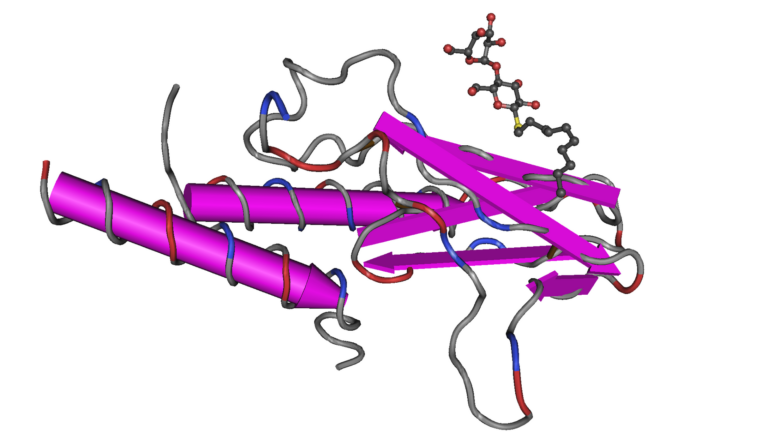
Ecnoglutide (XW003) is a long-acting, cAMP-biased GLP-1 receptor agonist approved in China for type 2 diabetes and weight management. Its design favours cAMP signalling over β-arrestin recruitment, the pathway linked to receptor desensitisation. It is not approved by the FDA or EMA. This article is a laboratory reference only, with no dosing guidance.
Most GLP-1 receptor agonists activate the receptor’s two main signalling arms — cAMP production and β-arrestin recruitment — more or less together. Ecnoglutide (XW003) was engineered to separate them, favouring cAMP while limiting β-arrestin recruitment, the pathway most associated with receptor desensitisation. That design choice, and a 2026 regulatory approval in China, have made ecnoglutide one of the more closely watched molecules in obesity and metabolic pharmacology. Everything below is a laboratory reference for research use only — no dosing, no administration guidance, no therapeutic claim.
What Is Ecnoglutide?
Ecnoglutide, also known by its development code XW003, belongs to the same broad pharmacological class as the GLP-1 receptor agonists semaglutide and tirzepatide, discussed here strictly as scientific comparators: a synthetic peptide that binds and activates the GLP-1 receptor (GLP-1R), a G-protein-coupled receptor expressed in the pancreas, gut, and central nervous system. Like other long-acting GLP-1 analogues, it is structurally modified for an extended half-life, which allows infrequent dosing schedules in the trials run to date. What sets it apart is not the target — GLP-1R agonism is a crowded field — but the intracellular signalling profile engineered into the molecule: a deliberate bias toward one downstream pathway over another.1
That distinction only makes sense with some receptor biology, which is the more scientifically interesting half of this story.
Biased Agonism: Why cAMP Over β-Arrestin Might Matter
GLP-1R, like most G-protein-coupled receptors, does not have a single “on” switch. Ligand binding can trigger at least two distinct downstream programmes. The first is coupling to Gαs and adenylate cyclase, raising intracellular cyclic AMP (cAMP) — the signal most directly tied to glucose-dependent insulin secretion from pancreatic β-cells. The second is recruitment of β-arrestin proteins, which uncouple the receptor from further G-protein signalling and mark it for internalisation, a process that underlies receptor desensitisation and, with repeated dosing, a blunting of a drug’s own effect over time.23
A receptor that signals strongly through cAMP but recycles back to the cell surface rather than being internalised and degraded is, on paper, an appealing design target: sustained signalling without the negative-feedback loop that β-arrestin recruitment sets in motion. This is not an idea unique to ecnoglutide. Tirzepatide itself has been characterised in receptor pharmacology studies as an “imbalanced and biased” agonist at GLP-1R relative to native GLP-1, showing reduced β-arrestin recruitment relative to its cAMP output — a signalling imbalance that has been proposed as one contributor to its overall pharmacological profile.4 Ecnoglutide’s discovery paper describes a comparable rationale: the molecule was selected from a peptide series specifically for a cAMP-over-β-arrestin bias profile, measured against native GLP-1 and other comparator analogues in the same in vitro assays.1
The honest caveat, made explicitly in the receptor pharmacology literature and worth restating here, is this: demonstrating a signalling bias in a cell-based assay is not the same as demonstrating that the bias changes a clinical outcome. Reviews of GLP-1R biased agonism are careful to note that the link between measured signalling bias and any resulting difference in efficacy, tolerability, or durability in humans remains an open, actively studied question rather than an established fact.23 Ecnoglutide’s own trial programme, discussed below, was not designed to isolate the contribution of signalling bias from every other feature of the molecule — half-life, receptor affinity, tissue distribution — so any claim that its clinical results follow “because of” the bias is an inference from mechanism, not a measured finding.
The Clinical Trial Data So Far
Ecnoglutide has been studied across phase 2 and phase 3 programmes conducted in China, in both type 2 diabetes and overweight/obesity populations. A randomised, double-blind, placebo-controlled phase 2 trial in adults with type 2 diabetes reported dose-dependent glycaemic effects over the treatment period.5 A subsequent phase 3, multicentre, randomised, double-blind, placebo-controlled trial in adults with overweight or obesity reported weight-related outcomes with ecnoglutide relative to placebo over roughly a year of treatment.6 A separate phase 3 trial, registered under the name EECOH-2, compared ecnoglutide against dulaglutide — an already-marketed GLP-1 agonist used here only as a trial comparator, not as a product recommendation — in patients with type 2 diabetes on background metformin, using an open-label, non-inferiority design.7
52 weeks was the treatment duration of the phase 3 non-inferiority trial comparing ecnoglutide against dulaglutide in adults with type 2 diabetes.7
| Trial | Phase | Population | Comparator | Design |
|---|---|---|---|---|
| Zhu et al., 2024 | 2 | Type 2 diabetes | Placebo | Randomised, double-blind, dose-ranging |
| Ji et al., 2025 | 3 | Overweight / obesity | Placebo | Randomised, double-blind, multicentre |
| He et al., 2025 (EECOH-2) | 3 | Type 2 diabetes on metformin | Dulaglutide | Open-label, non-inferiority, 52 weeks |
Published randomised controlled trials of ecnoglutide identified in the peer-reviewed literature as of August 2026. Outcome magnitudes are reported in the primary sources and are not reproduced here as clinical or dosing guidance.567
An accompanying editorial framed ecnoglutide as a plausible addition to the GLP-1 receptor agonist class in type 2 diabetes management, while noting that its differentiation from existing agents rests substantially on the biased-signalling hypothesis discussed above rather than on a clearly demonstrated clinical advantage.8 A 2026 systematic review and network meta-analysis of drugs for adults with overweight or obesity included ecnoglutide alongside other agents in its comparative synthesis, situating it within the broader competitive field rather than presenting it as an isolated result.9
Approved in China — What That Means, and What It Doesn’t
Ecnoglutide’s regulatory profile is the second reason it is worth a dedicated write-up. A “first approvals” summary published in the journal Drugs in 2026 documents ecnoglutide’s regulatory authorisation in China, covering use in type 2 diabetes and chronic weight management.10 That approval is a real regulatory event: it means China’s National Medical Products Administration reviewed a dossier of preclinical and clinical data — including the phase 2 and phase 3 trials described above — and judged it sufficient to permit marketing of a defined pharmaceutical product, manufactured to a defined specification, for defined indications, within that jurisdiction.
It is not, however, an approval anywhere else. Ecnoglutide is not approved by the FDA and is not approved by the EMA. Nothing about the Chinese decision obliges, or even predicts, a similar outcome from either western regulator: population differences in the trial dossier, differing efficacy and safety standards, differing manufacturing-inspection regimes, and differing indication scopes all mean a future FDA or EMA submission would not be reviewing an identical package.
A European researcher reading about ecnoglutide’s Chinese approval should take from it exactly this: a defined pharmaceutical product, made at a defined manufacturing site, met one national regulator’s evidentiary bar for a specific formulation and specific indications. It says nothing about how the FDA or EMA would rule on a future submission, and nothing at all about the identity, purity, or quality of any research-grade material sold internationally under the same compound name. A marketed drug product manufactured under an NMPA authorisation and a research-grade compound sold under the name “ecnoglutide” are connected only by nomenclature — not by manufacturing site, quality control system, or regulatory oversight. This article discusses ecnoglutide strictly as a molecule characterised in the peer-reviewed literature; it is not a description of, or endorsement of, any commercially available material, and makes no statement about human dosing or route of administration.
Drug-Drug Interactions: A Narrow but Useful Picture
Two published pharmacokinetic studies examined whether ecnoglutide alters drug exposure when co-administered with commonly prescribed medicines — a standard question for any new agent likely to be used alongside established chronic-disease treatments. One open-label study in healthy participants examined ecnoglutide’s effect on the pharmacokinetics of rosuvastatin, a statin, and digoxin, a narrow-therapeutic-index cardiac glycoside, chosen because a meaningful interaction with either would be a significant safety signal.11 A second open-label, fixed-sequence, crossover study examined coadministration with warfarin and metformin, reporting that no dose adjustment was required for either drug alongside ecnoglutide.12
Reporting that “no dose adjustment is required” is a specific, narrow pharmacokinetic finding in the population studied — not a general statement that ecnoglutide carries no interaction risk across every comedication, comorbidity, or population.
These are useful, specific data points, but they answer a narrow question about a defined set of comedications in healthy or study-selected participants. They say nothing about interactions with drug classes not tested, and, as with the efficacy trials, the study populations were enrolled in China — worth bearing in mind when reasoning about generalisability without independent confirmation in other populations.
An Honest Read of the Evidence
Stripped of the framing that tends to accumulate around a “differentiated” GLP-1 receptor agonist, what does the ecnoglutide literature actually support? A cAMP-biased signalling profile is real and has been demonstrated in vitro relative to comparator peptides.1 Phase 2 and phase 3 trials conducted in China reported glycaemic and weight-related effects broadly consistent with the wider GLP-1 receptor agonist class.567 A regulator in one country — China — reviewed that data package and approved the product for use there.10 Two dedicated interaction studies found no signal requiring dose adjustment with four commonly co-prescribed drugs.1112
What the literature does not yet establish is whether the cAMP bias is the reason for any observed clinical effect, as opposed to a contributing factor or an incidental feature of a molecule that might have performed comparably without it. The trials run to date compared ecnoglutide against placebo or against dulaglutide — useful comparisons, but not designed to isolate signalling bias as an independent variable. A 2026 network meta-analysis situating ecnoglutide among other anti-obesity drugs is a step toward broader comparative context, but such analyses inherit the limitations of the trials that feed them, including differences in population, duration, and background therapy.9 None of this is a criticism specific to ecnoglutide — it is the normal state of evidence for a molecule roughly three years past its first published discovery data and newly approved in a single jurisdiction. The honest position: ecnoglutide is a genuinely interesting piece of GLP-1 receptor pharmacology, backed by one real regulatory approval, with a clinical picture still being filled in rather than a settled case for or against biased agonism as a design strategy.
Condor Research · Scientific desk
Atrio Sciences s.r.o., IČO 57 669 651, Nitra (SK) · info@condorresearch.com
- Ecnoglutide (XW003) is a long-acting GLP-1 receptor agonist engineered for cAMP-biased signalling rather than balanced activation of both major downstream pathways.
- GLP-1 receptor activation normally signals through both cAMP production and β-arrestin recruitment, and β-arrestin recruitment drives receptor internalisation and desensitisation.
- Reduced β-arrestin recruitment is a rational design goal, but whether biased signalling translates into a meaningfully different clinical profile remains unproven in humans.
- China's National Medical Products Administration approved ecnoglutide for type 2 diabetes and for chronic weight management, based on phase 2 and phase 3 trials run in Chinese populations.
- Ecnoglutide is not approved by the FDA or the EMA, and a Chinese regulatory approval does not transfer to European or American markets.
- Published drug-drug interaction studies report no dose-adjustment signal for rosuvastatin, digoxin, warfarin, or metformin when coadministered with ecnoglutide.
- A pharmaceutical product manufactured under a Chinese marketing authorisation and a research-grade compound sold internationally under the same name share no quality or supply chain, and this article addresses ecnoglutide strictly as a laboratory reference material.
What is ecnoglutide's mechanism of action?
Ecnoglutide is a GLP-1 receptor agonist engineered for cAMP-biased signalling: it favours activation of the Gαs/adenylate cyclase/cAMP pathway relative to recruitment of β-arrestin proteins, the pathway associated with receptor internalisation and desensitisation.
Is ecnoglutide approved by the FDA or the EMA?
No. Ecnoglutide holds a regulatory approval in China, but it has no FDA or EMA marketing authorisation, and its regulatory status in Europe and the United States remains unresolved.
What is XW003?
XW003 is ecnoglutide's development code, used in earlier discovery and early clinical-trial publications before the compound was assigned its International Nonproprietary Name.
How is ecnoglutide different from other GLP-1 receptor agonists?
As a scientific comparator: agents in this class differ in receptor targets, structure, and reported signalling bias. Tirzepatide, for instance, is a dual GIP/GLP-1 receptor agonist with documented bias away from β-arrestin recruitment — a conceptual parallel to ecnoglutide's design rationale, though the two molecules are structurally distinct.
Does biased signalling mean ecnoglutide has fewer side effects?
This is not established. A cAMP bias measured in cell-based assays is a signalling property, not a clinical outcome. Whether it produces a meaningfully different tolerability or efficacy profile in humans, compared with non-biased GLP-1 receptor agonists, remains an open question in the pharmacology literature.
Does ecnoglutide interact with common medications?
Two published pharmacokinetic studies found no dose-adjustment signal when ecnoglutide was co-administered with rosuvastatin, digoxin, warfarin, or metformin in the populations studied — findings specific to those drugs and study conditions, not a general clearance across every possible comedication.