
Which Khavinson Bioregulator for Which Tissue? A Research Map of the Cytogen and Cytomax Peptides
A literature map of the Khavinson ultra-short peptides — Epitalon, Pinealon, Vesugen, Vilon, Thymogen, Pancragen, Livagen — by the tissue each has been studied against, with an honest look at the single-lineage evidence.
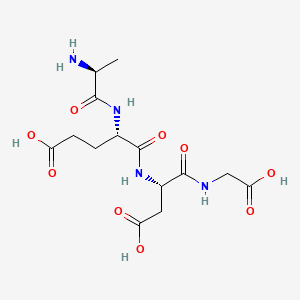
In the primary literature, each Khavinson peptide is associated with the source tissue it was derived from: Epitalon with the pineal gland, Pinealon with brain, Vesugen with vasculature, Vilon and Thymogen with thymus/immune tissue, Pancragen with pancreas, Livagen with liver. This is a map of what has been studied, not guidance to use any of them.
Ask a vendor catalogue for a Khavinson bioregulator and you are handed a tidy organ-by-organ menu: one peptide for the pineal gland, one for the brain, one for blood vessels, one for the thymus, and so on down the anatomy. That neatness is the selling point, and it is also the thing worth scrutinising. Underneath the trade names sit real, short, synthetic peptides with sequences you can verify — but the map that pairs each one to a tissue comes almost entirely from a single research lineage. What follows describes laboratory and literature findings, not use in people. Nothing here concerns human or veterinary administration.
What are the Khavinson bioregulators, structurally?
The peptides grouped under the name “bioregulators” (marketed as the Cytogen synthetic series and the Cytomax tissue-extract series) are ultra-short chains — dipeptides, tripeptides and tetrapeptides — developed over several decades at the St. Petersburg Institute of Bioregulation and Gerontology under Vladimir Khavinson. The proposed mechanism for the whole class is unusual and specific: rather than acting as receptor ligands, the peptides are reported to enter the cell nucleus and bind particular DNA sequences directly, modulating gene expression. That claim rests on work in which fluorescently labelled short peptides were tracked into the nucleus of HeLa cells and shown to interact with deoxyribooligonucleotides in vitro.1 It is the intellectual foundation for calling them “epigenetic regulators,” and it is plausible chemistry — though the groups reporting it overlap heavily.
The sequences themselves are the least controversial part. Each is short enough to state in full, and each has appeared in PubMed-indexed abstracts. Epitalon (also spelled Epithalon) is the tetrapeptide Ala-Glu-Asp-Gly, AEDG, tied to the pineal gland.2 Pinealon is the tripeptide Glu-Asp-Arg, EDR, associated with brain and CNS activity.5 Vesugen is Lys-Glu-Asp, KED, framed around the vasculature.6 The thymus is covered by two dipeptides: Vilon (Lys-Glu, KE) and Thymogen (Glu-Trp, EW).7 Pancragen, for the pancreas, is Lys-Glu-Asp-Trp, KEDW.8 Livagen, for the liver, is Lys-Glu-Asp-Ala, KEDA.9 Our companion pages on Epitalon, Pinealon, Vesugen, Cortagen and Thymalin go through the individual sequences and their reported assays in more detail.
Where does “tissue-specificity” actually come from?
The organising thesis — this peptide for that tissue — is not just marketing scaffolding grafted onto the chemistry. It traces to a specific experimental format. In organotypic tissue culture, explants of different rat organs were exposed to the synthetic peptides, and the reported result was that each peptide preferentially stimulated growth in the tissue it had been derived from, in both young and old animals.10 That is the primary source behind the whole “which peptide for which tissue” framing, and it is an in-vitro observation about explant behaviour, not a demonstration that an injected peptide finds and acts on the corresponding organ in a living body.
Two peptides have chemistry-to-tissue links that go beyond culture explants. The strongest is Epitalon: mass spectrometry and HPLC confirmed that the AEDG tetrapeptide is genuinely present inside the native pineal polypeptide complex, and the isolated synthetic peptide was reported to reproduce effects of that complex on melatonin, the retina and several regulatory systems.1 That is a real bridge from a sequence to a source tissue. For the thymus, a docking-and-expression study identified KE and EW as the active dipeptides within the thymus drug Thymalin, tying the two immune-associated peptides to their sequences at the molecular level.7
50 µg the per-animal daily dose used in the old-monkey Pancragen study — a microgram-scale quantity, not the milligram vial amounts some vendors imply.
A tissue-by-tissue map of the primary literature
The table below organises the class by tissue, sequence, and — importantly — by how much dedicated primary literature actually exists under each trade name. The distinction matters more than the anatomy. Some rows are anchored by real papers with animal or cell data; others are trade names asserted by vendors for which no dedicated primary PubMed paper was located in this search, and they should not be read as carrying the same evidential weight.
| Tissue / system | Trade name | Sequence | Evidential status |
|---|---|---|---|
| Pineal gland | Epitalon / Epithalon | AEDG | Sequence confirmed in pineal complex by MS/HPLC1; in-vitro telomerase claim from single lab2 |
| Brain / CNS | Pinealon | EDR | Sequence confirmed; reported neuroprotective activity (review-level)5 |
| Vasculature / endothelium | Vesugen | KED | Sequence confirmed; framed as vasoprotective in atherosclerosis models6 |
| Thymus / immune | Vilon; Thymogen | KE; EW | Identified as active dipeptides of the thymus drug Thymalin7 |
| Pancreas | Pancragen | KEDW | Non-human primate data (old rhesus monkeys)8 |
| Liver | Livagen | KEDA | Studied alongside a liver polypeptide complex9 |
| Heart | Cardiogen | AEDR (asserted) | Vendor-named; no dedicated primary PubMed paper located under this name |
| Lung / bronchi | Chonluten / Bronchogen | EDG / AEDL (asserted) | Vendor-named; no dedicated primary PubMed paper located under this name |
| Gonads | Ovagen; Testagen | asserted | Vendor-named; no dedicated primary PubMed paper located under these names |
All rows describe laboratory or literature findings only, most in cell culture or rodents. “Evidential status” reflects what was locatable in PubMed under the trade name; it is not a statement about safety, efficacy, or suitability for any use. RUO throughout.
The class-wide molecular work is worth noting alongside the per-tissue papers. A study in human mesenchymal stem cell cultures reported that several of these short peptides modulate age-related gene expression, which is among the more rigorous, multi-peptide primary sources in the corpus.11 And a broad review from the originating group lays out the whole family against their claimed target systems — a convenient map, but one written by the single lineage that generated most of the underlying data.13 For the closely related cortex-derived peptides, our page on Cortagen vs Cerluten vs Cortexin works through a similar comparison.
The sequences are real and verifiable. The organ-by-organ map is a hypothesis built almost entirely by the people who sell the story.
An honest read of the evidence
This is where the class needs plain speaking. The evidence base is overwhelmingly single-lineage. Look at the author lists across the primary papers and reviews and the same names recur — Khavinson, Linkova, and colleagues at the St. Petersburg Institute of Bioregulation and Gerontology appear on the great majority of them.25678913 A long reference list can look like corroboration when it is really one research programme citing itself. Independent, adversarial replication by unaffiliated Western labs is scarce.
The venues compound the problem. Much of the corpus appears in Russian-language or low-impact journals — Advances in Gerontology (Uspekhi Gerontologii), the Bulletin of Experimental Biology and Medicine — and a meaningful share are reviews or opinion pieces rather than new primary data. For several papers, the English abstract is the only content most readers can access. That does not make the findings false, but it does make them hard to interrogate.
The headline claim deserves a specific caveat. Epitalon’s reputation rests on a 2003 report that, in telomerase-negative human fetal fibroblasts, the peptide induced hTERT expression, telomerase activity and telomere elongation in vitro,2 reinforced by a 2004 follow-up in which treated fibroblasts reportedly surpassed the Hayflick division limit.3 Both are small in-vitro experiments from one group. This is a single-lab in-vitro finding awaiting independent confirmation, not an established effect in any organism — and certainly not in humans. A more recent independent narrative review of Epitalon, from a Polish group, both summarises the claimed effects and flags exactly this: the evidence is thin and largely traces to one lineage.12
Where in-vivo data do exist, they are limited in scope. Pineal peptide preparations were tested for biological age and lifespan in mice.4 Pancragen was given to old rhesus monkeys at 50 µg per animal per day, with reported normalisation of insulin and C-peptide dynamics.8 These are genuine animal studies, but small, and again from within the lineage. Human clinical data are limited, frequently decades old, and reported in the same journals; there are no large, randomised, independently run trials for any of these peptides in the tissues discussed. Finally, several of the vendor-named peptides simply could not be confirmed. A search for a primary “Cardiogen heart” paper returned unrelated transthyretin-amyloidosis literature; Chonluten/Bronchogen, Ovagen and Testagen likewise did not yield dedicated primary papers under those trade names. Those entries are literature-thin by any honest accounting, and we mark them as such rather than filling the row to complete the anatomy.
All materials supplied by Condor Research are Research Use Only (RUO). The content above summarises in-vitro and published-literature findings only. It is not a dosing protocol, clinical guidance, a safety assessment, or a recommendation to administer any of these peptides to any organism. None of these compounds is an approved medicine in the EU or the US. For broader context on the class, see our Khavinson bioregulators catalog and the overview of Khavinson peptide bioregulators.
Condor Research · Scientific desk
Atrio Sciences s.r.o., IČO 57 669 651, Nitra (SK) · info@condorresearch.com
- The class is a set of ultra-short synthetic peptides (di-, tri-, tetrapeptides) developed at the St. Petersburg Institute of Bioregulation and Gerontology; the proposed mechanism is nuclear entry and sequence-specific DNA binding to modulate gene expression.
- Verified sequences: Epitalon = AEDG (pineal), Pinealon = EDR (brain), Vesugen = KED (vascular), Vilon = KE and Thymogen = EW (thymus/immune), Pancragen = KEDW (pancreas), Livagen = KEDA (liver).
- Tissue-specificity is an explicit organizing finding: organotypic-culture work reports each peptide preferentially stimulates its own source tissue in young and old rats.
- The signature telomerase/telomere-elongation result for Epitalon is a single-lab in-vitro finding from 2003, not independently replicated in the West.
- Actual animal data exist for a subset — Pancragen was tested in old rhesus monkeys and pineal peptide preparations in mice — but human data are limited and old.
- Several vendor-named peptides (Cardiogen, Chonluten/Bronchogen, Ovagen, Testagen) returned no dedicated primary PubMed paper under their trade names and are flagged as literature-thin.
- None of these peptides is an approved medicine in the EU or US; they are sold strictly as research chemicals, and reported effective quantities in animal work are in the microgram range.
Are the peptide sequences real, or invented by sellers?
The sequences are real and appear in PubMed-indexed abstracts: Epitalon is AEDG, Pinealon is EDR, Vesugen is KED, Vilon is KE and Thymogen is EW, Pancragen is KEDW, and Livagen is KEDA. The chemistry is the well-documented part; the interpretation layered on top is where caution belongs.
What is the proposed mechanism for the whole class?
The reported mechanism is that these short peptides enter the cell nucleus and bind specific DNA sequences, modulating gene expression rather than acting through surface receptors. This was shown for fluorescently labelled peptides in HeLa cells and against DNA in vitro. It is a plausible and interesting mechanism, but the confirming work comes largely from collaborating groups.
Does "tissue-specific" mean the peptide targets that organ in the body?
No. The tissue-specificity claim comes from organotypic culture, where each peptide preferentially stimulated its own source tissue in explants from young and old rats. That is an observation about isolated tissue in a dish, not evidence of organ targeting after administration to a living animal.
Is the Epitalon telomerase claim established?
It should not be treated as established. It rests on a 2003 in-vitro study in human fibroblasts from the Khavinson lab and a 2004 follow-up, both small and from the same lineage. An independent 2025 review reiterates that the evidence base is thin. It is a single-lab in-vitro finding, not a demonstrated human effect.
Why can't I find papers for Cardiogen, Chonluten, Ovagen or Testagen?
Because, in this literature search, no dedicated primary PubMed paper turned up under those trade names. A "Cardiogen heart" search returned unrelated transthyretin-amyloidosis papers. These belong in the "vendor-named, primary literature not located" category and carry far less evidential weight than Epitalon, Vesugen or Pancragen.
Are these approved medicines?
No. None of the Khavinson peptides is an approved medicine in the EU or the US; they are sold strictly as research chemicals. It is also worth noting that reported effective quantities in animal work are in the microgram range — the monkey Pancragen study used 50 µg per animal per day — rather than the milligram amounts some vendors imply.