
Ipamorelin vs CJC-1295: Two Routes Into the Growth-Hormone Axis
Two reference secretagogues, two receptors. A research-use comparison of their chemistry, mechanisms, and the honest state of the published evidence.
Ipamorelin is a selective pentapeptide ghrelin-receptor (GHS-R1a) agonist; CJC-1295 is a GHRH-receptor analogue based on modified GRF(1-29). In preclinical models they activate the growth-hormone axis through two different receptors, which is why they are studied side by side. For research use only.
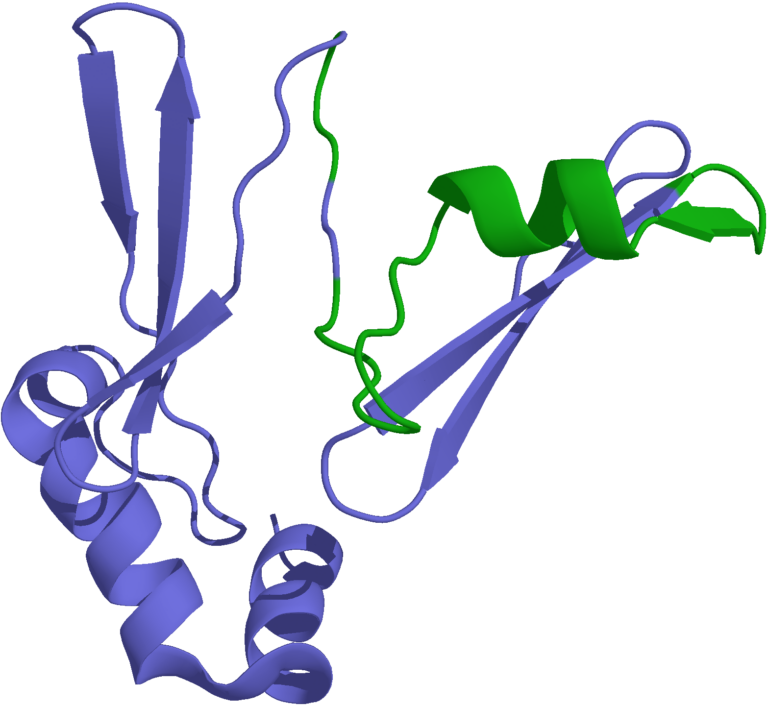
Ipamorelin and CJC-1295 are routinely shelved side by side, and the reason is more interesting than the resemblance suggests: they reach the same endocrine axis from opposite ends. One impersonates ghrelin; the other impersonates growth-hormone-releasing hormone (GHRH). That single fact — two molecules, two receptors, one pathway — explains why they are among the most-studied reference compounds in growth-hormone-axis research, and why a serious comparison is worth more than a feature list. What follows treats their chemistry, receptor mechanisms, and the published preclinical literature strictly within a research-use-only (RUO) framework. Nothing here describes human use, dosing, or therapeutic outcomes.
What is the core difference between Ipamorelin and CJC-1295?
They are not two flavours of the same thing; they belong to different chemical and mechanistic classes. Ipamorelin is a small synthetic pentapeptide (Aib-His-D-2-Nal-D-Phe-Lys-NH2), characterised in its founding study as the first selective growth-hormone secretagogue acting at the ghrelin receptor, GHS-R1a.1 CJC-1295 (no DAC) — also called Modified GRF(1-29) — is a 29-amino-acid analogue of the bioactive N-terminal fragment of GHRH, engineered with substitutions (notably D-Ala at position 2) that blunt enzymatic degradation while preserving GHRH-receptor recognition.
Reduced to its essentials: in experimental systems, Ipamorelin is studied as a ghrelin mimetic and CJC-1295 as a GHRH mimetic. Because they engage distinct receptors, researchers have asked how the two stimuli interact at the pituitary — the rationale behind the co-formulated CJC-1295 (no DAC) + Ipamorelin research blend.
711.85 vs 3367.9 g/mol separates the two by an order of magnitude in molecular mass — a five-residue pentapeptide against a 29-residue GHRH analogue — a useful reminder that “same axis” does not mean “same molecule.”
How do their mechanisms compare in the literature?
Ipamorelin made its name on selectivity. In the founding study it raised growth hormone in animal models with minimal accompanying release of ACTH or cortisol, a clean profile that set it apart from older growth-hormone-releasing peptides such as GHRP-6.1 Its pharmacokinetics were later characterised alongside other peptidyl secretagogues, where it showed markedly lower systemic clearance than GHRP-6.2 The story does not end at the GH axis: as a ghrelin mimetic, Ipamorelin has also been examined in rodent gastrointestinal-motility paradigms, including a postoperative-ileus model.3
CJC-1295 works upstream, on the GHRH receptor. Animal and analytical work documents activation of the GH/IGF-1 axis and accompanying changes in serum protein profiles,7 and a knockout-mouse study reported normalised growth with infrequent dosing.8 But the defining theme of the CJC-1295 record is duration. An early human proof-of-concept study reported prolonged elevation of GH and IGF-1,5 while a separate study found that GH secretion remained pulsatile even under continuous stimulation6 — a subtle but important point, since sustained receptor drive does not necessarily flatten the axis’s native rhythm.
Two molecules, two receptors, one pathway: Ipamorelin pushes from the ghrelin side, CJC-1295 from the GHRH side, which is precisely why researchers study them together.
DAC vs no-DAC: why does CJC-1295 come in two forms?
This is the distinction most often muddled, and it is purely one of duration. The no-DAC form is the lighter, shorter-acting Modified GRF(1-29) peptide. The DAC form adds a Drug Affinity Complex — a maleimidopropionyl group that binds covalently to circulating serum albumin, dramatically extending circulating residence. The foundational demonstration showed that hGRF(1-29)-albumin bioconjugates activate the GRF receptor and identified CJC-1295 itself as a long-lasting GRF analogue.4 For head-to-head work with Ipamorelin, the no-DAC form is the more natural counterpart, because its kinetics sit on a comparable timescale.
How do the specifications compare at a glance?
| Attribute | Ipamorelin | CJC-1295 (no DAC) |
|---|---|---|
| Chemical class | Selective ghrelin-receptor (GHS-R1a) agonist; synthetic pentapeptide | GHRH-receptor analogue; modified GRF(1-29) |
| Sequence / formula | Aib-His-D-2-Nal-D-Phe-Lys-NH2 · C38H49N9O5 | Modified 29-aa GRF(1-29) backbone (D-Ala²) · C152H252N44O42 |
| CAS · MW | 170851-70-4 · 711.85 g/mol | 863288-34-0 · 3367.9 g/mol |
| Investigated mechanism (preclinical) | Selective GH release via ghrelin receptor; GI motility (ghrelin mimetic) | GH/IGF-1 axis activation via GHRH receptor; pulsatility under stimulation |
| Format | 10 mg/vial, white lyophilized powder, water-soluble | 10 mg/vial, white lyophilized powder, water-soluble |
| Characterisation / COA | ≥99% purity by HPLC; third-party tested; COA available | ≥99% purity by HPLC; third-party tested; COA available |
| Product page | Ipamorelin | CJC-1295 (no DAC) |
Side-by-side reference specifications for Ipamorelin and CJC-1295 (no DAC), as supplied for research use only.
What does the evidence actually support — preclinical or clinical?
Honesty about the evidence base is the point at which most comparisons quietly fail, so it is worth being blunt. The bulk of the literature for both compounds is preclinical — in vitro and animal studies. Ipamorelin’s core characterisations are animal and pharmacokinetic in nature,123 and it has not progressed to any established clinical indication. CJC-1295 sits slightly further along, with a small number of early human reports describing GH/IGF-1 responses and secretory dynamics,56 set against its animal and analytical work.784 These early studies describe biological activity in experimental settings; they do not establish efficacy or safety for any human or veterinary application. Neither compound is an approved drug. Both are growth-hormone secretagogues and are, as a matter of regulatory fact, prohibited in sport under the World Anti-Doping Agency framework — a status worth noting precisely because it is so often elided.
Which is “better” for a given research question?
The honest answer is that there is no general “better” — the choice follows the experimental question, not any consumer outcome. A study probing the ghrelin receptor, GI motility, or selective secretagogue behaviour points toward Ipamorelin. A study probing GHRH-receptor signalling, IGF-1 dynamics, or duration-of-action chemistry points toward CJC-1295 — no DAC for shorter kinetics, DAC for extended albumin-bound residence. Researchers investigating how the two stimuli converge at the pituitary often reach for both together via the co-formulated blend. In every case the work is restricted to qualified professionals in an appropriately equipped laboratory and is for research use only.
Both products are supplied strictly for laboratory research use only (RUO). They are characterised at ≥99% purity by HPLC, third-party tested, and ship with a Certificate of Analysis (COA). They are not drugs, foods, cosmetics, or dietary supplements, and are not for human or veterinary use, ingestion, or diagnostic application.
- Ipamorelin (Aib-His-D-2-Nal-D-Phe-Lys-NH2) mimics ghrelin at GHS-R1a; CJC-1295 (Modified GRF(1-29), D-Ala²) mimics GHRH at the GHRH receptor.
- The CAS, formula, and mass differ sharply: Ipamorelin is a 711.85 g/mol pentapeptide; CJC-1295 (no DAC) is a 3367.9 g/mol 29-residue analogue.
- DAC vs no-DAC is a half-life distinction: the DAC variant anchors covalently to serum albumin for extended residence; no-DAC is the shorter-acting Modified GRF(1-29).
- Honest caveat: Ipamorelin's record is animal and pharmacokinetic; CJC-1295 has only a small early-human dataset. Neither is an approved drug.
- Both are growth-hormone secretagogues and are prohibited in sport under the WADA framework — a regulatory fact, not guidance.
- Both are supplied at ≥99% purity by HPLC, 10 mg/vial, third-party tested with a COA, strictly for research use only.
Are Ipamorelin and CJC-1295 the same type of compound?
No. Both are growth-hormone secretagogues studied on the same axis, but through different receptors. Ipamorelin is a selective ghrelin-receptor (GHS-R1a) pentapeptide agonist, while CJC-1295 is a GHRH-receptor analogue based on modified GRF(1-29). This receptor-level distinction is the main reason they are compared and sometimes studied together in preclinical work.
What is the difference between CJC-1295 DAC and CJC-1295 no DAC?
The DAC (Drug Affinity Complex) version carries a maleimidopropionyl group that binds covalently to serum albumin, greatly extending its circulating residence in research models. The no-DAC version, Modified GRF(1-29), lacks this albumin anchor and is comparatively shorter-acting. Both are characterised at greater than or equal to 99% purity by HPLC with a COA.
Why are Ipamorelin and CJC-1295 often combined in a single research vial?
Because they stimulate the same axis through complementary receptors, researchers study how GHRH-style and ghrelin-mimetic signals interact at the pituitary. Condor Research offers a co-formulated CJC-1295 (no DAC) plus Ipamorelin blend for this purpose. This is a research-model question only and implies no human application.
Is there human clinical evidence for either compound?
The evidence base is predominantly preclinical. CJC-1295 has a small number of early human reports describing GH and IGF-1 responses and preserved pulsatility. Ipamorelin's published record is largely animal and pharmacokinetic. Neither is an approved drug, and these studies do not establish human safety or efficacy.
Are Ipamorelin and CJC-1295 prohibited in sport?
Yes. As growth-hormone secretagogues, both fall under the World Anti-Doping Agency framework and are prohibited in sport. This is stated here purely as a regulatory fact for context; it is not guidance, and both compounds are supplied strictly for laboratory research use only.
How are these compounds characterised for quality?
Both Ipamorelin and CJC-1295 (no DAC) are supplied as white lyophilized powder at greater than or equal to 99% purity by HPLC, in 10 mg vials, water-soluble, third-party tested, with a Certificate of Analysis (COA) available. They are stored at minus 20 degrees Celsius, protected from light and moisture.