
Ipamorelin: A Research Guide to the Selective GH Secretagogue
A research-use guide to ipamorelin: how it engages the ghrelin receptor (GHS-R1a), why it is described as the first selective GH secretagogue, and an honest read of the animal and limited human data. RUO reference only.
Ipamorelin is a synthetic pentapeptide that acts as a selective agonist of the ghrelin/growth-hormone-secretagogue receptor (GHS-R1a), the same receptor activated by the natural hormone ghrelin. In published preclinical work it stimulated growth-hormone (GH) release with little effect on cortisol, prolactin or ACTH — the property that earned it the description 'the first selective GH secretagogue.' The bulk of the evidence is animal data; direct human characterisation is limited and ipamorelin is not an approved medicine. It belongs to the same prohibited class as other GH secretagogues under the WADA Prohibited List. Condor Research supplies it strictly as a Research Use Only reference material.
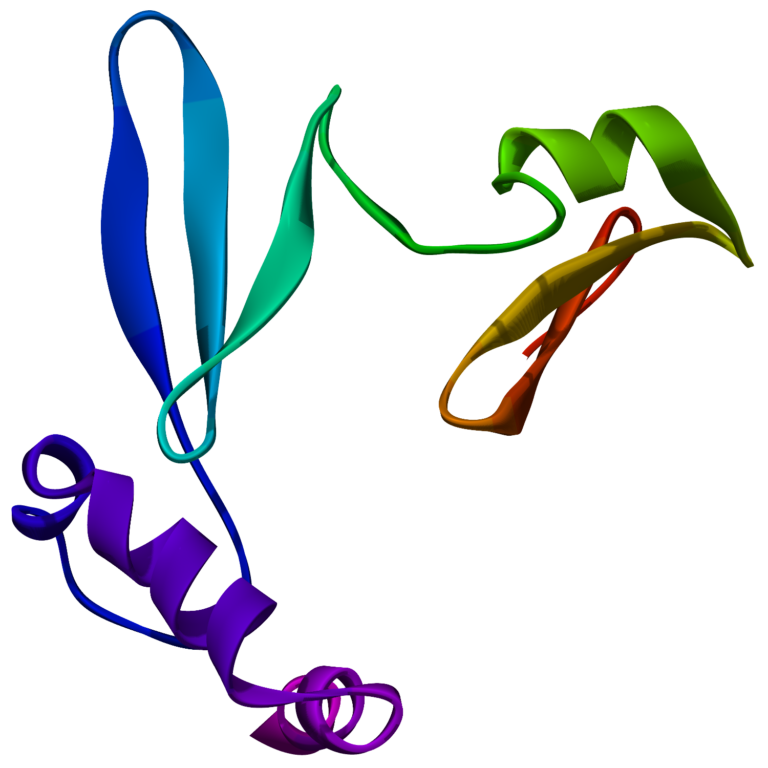
Ipamorelin occupies an unusual place in the growth-hormone literature: it is one of the few research peptides whose entire reputation rests on a single word — selective. Where earlier compounds stirred up a whole orchestra of pituitary hormones, ipamorelin was characterised, in its founding study, as releasing growth hormone while leaving cortisol, prolactin and ACTH largely undisturbed.1 That clean preclinical signature is what made it interesting to endocrinologists in the late 1990s — and it is also the property most often overstated in the years since.
What exactly is ipamorelin, at the level of the molecule?
Ipamorelin is a small synthetic pentapeptide — five amino acids, capped as an amide (Aib-His-D-2-Nal-D-Phe-Lys-NH2). It was developed as part of a programme to design growth-hormone secretagogues: molecules that prompt the pituitary to release its own stored growth hormone rather than supplying growth hormone from outside.1 Crucially, it belongs to the ghrelin-mimetic branch of that programme, not the releasing-hormone branch.
This distinction is the single most useful thing to understand about ipamorelin. The GH axis can be engaged through (at least) two different receptors. Growth-hormone-releasing hormone (GHRH) acts on the GHRH receptor; the natural hormone ghrelin acts on a separate receptor, the growth-hormone-secretagogue receptor, GHS-R1a.23 Ipamorelin works on the latter. It is, functionally, a synthetic stand-in for ghrelin — which is why its closest catalogue relatives are other ghrelin-receptor agonists, while CJC-1295 and sermorelin sit on the GHRH side of the family.2
How does the ghrelin receptor fit into the picture?
The receptor ipamorelin targets has a tidy history. A pituitary-and-hypothalamus receptor “that functions in growth hormone release” was cloned in 1996, before anyone knew what its natural ligand was — it was, in effect, an orphan receptor discovered through the synthetic secretagogues that activated it.2 The endogenous ligand was identified three years later as ghrelin, an acylated peptide secreted largely by the stomach.3 The discovery chain therefore runs backwards from the way biology usually reveals itself: the drug-like activators came first, then the receptor, then the natural hormone.4
That lineage matters for reading ipamorelin honestly. Because the ghrelin receptor sits at a crossroads of growth-hormone release, appetite and gastrointestinal motility, ghrelin-receptor agonists as a class have been studied for several distinct purposes — from cancer-related cachexia to disordered gut motility — not solely for GH output.67 Ipamorelin’s own industrial development, for instance, pursued post-operative ileus rather than any growth indication.
What did the founding study actually show?
Ipamorelin was introduced in 1998 in European Journal of Endocrinology under a title that doubles as its entire marketing legacy: “Ipamorelin, the first selective growth hormone secretagogue.”1 The work compared ipamorelin with established secretagogues and reported that it stimulated GH release with a potency comparable to GHRP-6 but — and this is the headline — without the parallel rise in ACTH and cortisol that characterised the older compounds.1
5 the number of amino acids in ipamorelin — a true pentapeptide secretagogue1
That is a genuinely meaningful pharmacological observation, and it is the legitimate root of every “selective” claim made about the molecule since. But two cautions belong next to it. First, the finding is a preclinical, comparative-pharmacology result, not a clinical outcome in people. Second, “selective for GH over cortisol/prolactin” is a narrow, technical kind of selectivity — it describes which hormones the molecule does and does not provoke, not whether it produces any meaningful effect in a living research subject beyond the pituitary readout.8
What does the animal evidence add?
Beyond the founding characterisation, the most cited downstream work is again preclinical. In adult female rats, ipamorelin and GHRP-6 were reported to increase bone mineral content, a finding consistent with chronic stimulation of the GH/IGF-1 axis.5 This is a useful, real result — and it is also a useful illustration of the evidentiary gap, because a bone-density signal in rats is exactly the kind of observation that is routinely (and incorrectly) translated into human “benefits” by sellers.
A clean receptor profile in a rat is a strong starting hypothesis, not a human result.
The honest summary of the preclinical picture is that ipamorelin behaves, across models, like what it was designed to be: a potent, comparatively selective stimulus of pituitary GH release acting through the ghrelin receptor.15 That is consistent, repeatable and mechanistically coherent. What it is not is a body of human efficacy data.
How much human evidence is there, really?
Here is where candour earns its keep. Compared with its tidy preclinical story, the published, peer-reviewed human pharmacology specific to ipamorelin is limited. The molecule entered industrial clinical development — most notably for post-operative ileus, a gastrointestinal-motility indication that fits the ghrelin receptor’s biology — but that programme did not yield an approved product, and the corresponding public human dataset is correspondingly thin.67
Reviews of the GH-secretagogue class as a whole reinforce the same point: while the mechanism is well understood and several agents have been studied in humans, the evidence supporting GH secretagogues for the “anti-aging,” body-composition and recovery claims attached to them in the grey market is weak, and their long-term safety in healthy adults is not established.8 Ipamorelin is not exempt from that verdict simply because its preclinical receptor profile is clean.
| Dimension | Ipamorelin | What the evidence supports |
|---|---|---|
| Molecular class | Ghrelin-receptor (GHS-R1a) agonist; pentapeptide | Well established in vitro / in animal pharmacology12 |
| Mechanism | Stimulates pituitary GH release via GHS-R1a | Mechanistically robust, ghrelin-pathway based34 |
| Selectivity claim | GH release with little cortisol / prolactin / ACTH rise | Preclinical, comparative — the original 1998 finding1 |
| Downstream animal data | Increased bone mineral content in rats | Real preclinical signal; not human evidence5 |
| Human data | Limited; clinical development (e.g. ileus) did not produce an approved drug | Thin public dataset; not an approved medicine68 |
| Regulatory / sport status | Not an approved drug; GH secretagogue | Prohibited at all times under WADA class S29 |
The strength of the evidence falls steadily as you move down the table — strongest at the molecule, weakest at human outcomes.
Where does ipamorelin sit relative to its catalogue neighbours?
The most common research pairing is ipamorelin with CJC-1295, and the logic is mechanistic rather than commercial: the two engage the GH/IGF-1 axis from opposite receptors, so studying them side by side probes the pathway from both directions. We treat that comparison in detail in Ipamorelin vs CJC-1295: Two Routes Into the Growth-Hormone Axis, and the combined reference material is covered in What Are Ipamorelin and CJC-1295? The Two Doors to the Growth-Hormone Axis. For the wider family — GHRH analogues, ghrelin mimetics and how their evidence ranks — see Growth Hormone Secretagogues, Explained.
The clean way to hold all of this in mind: ipamorelin is the selective ghrelin-mimetic of the set, with the most quotable preclinical headline and one of the thinnest human records. Both halves of that sentence are true, and the marketing usually quotes only the first.
Condor Research supplies ipamorelin strictly as a Research Use Only reference material — not a medicine, not a supplement, and not a therapy for any person. Nothing on this page is dosing, administration or usage guidance, and nothing here should be read as a health claim. Our reference material is available on the ipamorelin product page. What a serious laboratory should demand of any ghrelin-mimetic peptide is documented identity and purity: a current Certificate of Analysis reporting ≥99% purity by HPLC with mass-spectrometry confirmation of the sequence, released per batch by an independent EU laboratory in the Czech Republic. For a pentapeptide whose scientific value rests entirely on being precisely the right five residues, that analytical paperwork is not a formality — it is the experiment’s foundation.
Condor Research · Scientific desk
- Ipamorelin is a synthetic pentapeptide (Aib-His-D-2-Nal-D-Phe-Lys-NH2) and a selective agonist of the ghrelin receptor GHS-R1a, not a GHRH analogue like CJC-1295 or sermorelin.
- Its defining preclinical feature is selectivity: in the original characterisation it released GH with minimal stimulation of cortisol, prolactin and ACTH, unlike earlier secretagogues such as GHRP-6.
- The evidence base is dominated by animal studies (GH release, bone mineral content in rats); robust, peer-reviewed human pharmacology specific to ipamorelin is limited.
- Ipamorelin is not an approved drug; its industrial clinical development (for post-operative ileus) did not yield an approved product.
- GH secretagogues, including ipamorelin, fall under class S2 of the WADA Prohibited List, so the molecule is banned in sport at all times.
- It is frequently studied alongside the GHRH analogue CJC-1295 because the two reach the GH/IGF-1 axis from different receptors.
Is ipamorelin a GHRH analogue like CJC-1295 or sermorelin?
No. Ipamorelin is a ghrelin-receptor (GHS-R1a) agonist — a ghrelin mimetic — whereas CJC-1295 and sermorelin are analogues of growth-hormone-releasing hormone (GHRH) that act on a different receptor. They converge on the same GH/IGF-1 axis from two separate doors, which is why they are so often compared.
Why is ipamorelin called "selective"?
In its original preclinical characterisation, ipamorelin stimulated GH release while having little effect on the release of cortisol, prolactin and ACTH — hormones that earlier secretagogues such as GHRP-6 tended to raise. That comparatively clean preclinical profile is the basis for the "selective" label.
Is there human evidence for ipamorelin?
Direct, peer-reviewed human pharmacology specific to ipamorelin is limited. Most of the published evidence is animal data. The compound was investigated industrially (for example for post-operative ileus) but did not become an approved medicine, and the public human dataset is correspondingly thin.
Is ipamorelin banned in sport?
Yes. Growth-hormone secretagogues are listed under class S2 of the World Anti-Doping Agency (WADA) Prohibited List, which is prohibited at all times, in and out of competition. Ipamorelin falls within that class.
How does ipamorelin differ from CJC-1295 in research models?
Mechanistically they act on different receptors (GHS-R1a versus the GHRH receptor) and are often examined together to probe the GH/IGF-1 axis from both directions. See our dedicated comparison and the GH-secretagogues hub for a structured, evidence-ranked treatment.