
Is Selank Legal in Europe? ‘Legal for What?’ (2026)
Selank is registered as a drug in Russia but has never been approved as a medicine in the EU. The honest legal answer depends entirely on what you intend to do with it.
Selank has never been reviewed or approved as a medicine by the European Medicines Agency or any EU member state, so no EU physician can lawfully prescribe it, and it is not authorised as a food or food supplement either. Its Russian registration carries no weight in the Union. It is supplied legitimately in much of Europe only as a research-use-only reference material. The honest question is not "is Selank legal" but "legal for what": handling it as a characterised research reagent is lawful in much of the bloc; supplying or using it in or on a human being is not, and national medicines law varies country to country.
Type “is Selank legal in Europe” into a search bar and you will get a confident yes, a confident no, and a Russian registration certificate waved around as if it settled the matter. None of them answer the question, because the question is malformed. Legality is never a property of a molecule in the abstract; it is a property of what you intend to do with it. Selank — a Russian neuropeptide registered as a drug in Moscow but unknown to every Western regulator — is a clean case study in how that distinction gets lost.
Has any regulator actually approved Selank in Europe?
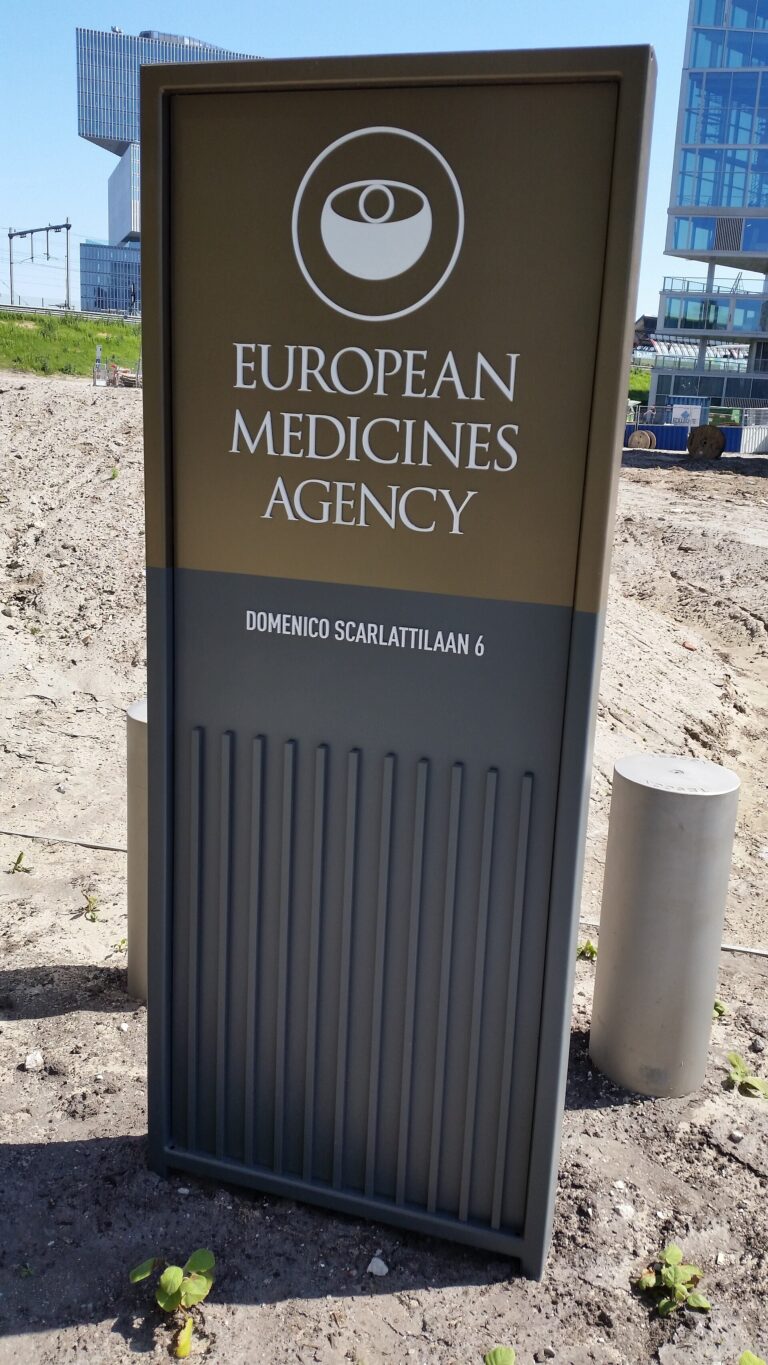
No. Selank has not been reviewed or approved as a medicine by the European Medicines Agency (EMA) or by any individual EU member state.1 That single fact does most of the work here. The EMA’s own medicine finder returns no centrally authorised product, and the agency is explicit that medicines not found centrally may exist only via national registers — a check that, for Selank, also comes up empty.1 Because it carries no marketing authorisation anywhere in the Union, there is no lawful route by which an EU physician can prescribe it as a medicine. It is not a licensed drug that happens to be hard to obtain; it is a compound that has never cleared the regulatory gate at all.
This is the gap the marketing language papers over. Selank can be extensively characterised, synthesised to high purity, and sold by reputable suppliers, and still be nowhere near being a medicine in any legal sense. Under Directive 2001/83/EC — the Community code on medicinal products for human use — no medicinal product may be placed on the EU market unless a marketing authorisation has been issued by the competent authorities.2 Approval is a status a regulator confers after review, not a quality a peptide earns in a lab.
But it’s registered in Russia — doesn’t that count?
Not in Europe. Selank was developed at the Institute of Molecular Genetics of the Russian Academy of Sciences and is registered as a drug inside Russia, where it has years of clinical use behind it.34 That registration is real. It is also jurisdictionally local. A marketing authorisation granted by one country’s regulator does not transfer to another; the EU recognises medicines authorised centrally by the EMA or nationally by a member state, and a Russian registration is neither.12 Selank sits in exactly the same regulatory position as its better-known sibling Semax: registered in Russia, unapproved anywhere in the EU or United States. Our Selank vs Semax comparison walks through how alike the two are pharmacologically; their legal status in Europe is identical too.
So why is Selank sold all over Europe?
Because there are two different markets, and only one of them is legitimate. Selank is widely supplied in much of the EU strictly as a research chemical, on a “for research use only” basis, as a reference material.1 That is lawful in much of the bloc. What is not permitted is selling or supplying Selank for human use. Legitimate supply is RUO only; the moment a product is offered, labelled, or described for human consumption, it crosses out of research-reagent territory and into the regulated medicines regime it has never qualified for.2
| Question | Status under the verified facts |
|---|---|
| Approved as a medicine (EMA or member state) | No — never reviewed or approved |
| Registered as a drug in Russia | Yes — but carries no legal weight in the EU |
| Prescribable by an EU physician | No — no lawful route exists |
| Authorised as a food or food supplement (Novel Food) | No — not on the Union list of authorised novel foods |
| Sold as a research chemical (RUO reference material) | Yes — widely, in much of the EU |
| Supply for human use | Not permitted |
| Scheduled narcotic | No |
| Named on the 2026 WADA Prohibited List | Not explicitly — but see the S0 caveat |
Selank at a glance: the answer changes entirely depending on which question you are actually asking.
Could it be sold as a supplement instead?
No, and this is the gate most people forget exists. There is a separate route by which a substance can enter the consumer market — as a food or food supplement — and Selank has not passed it either. Synthetic peptides without a meaningful history of food consumption in the EU before May 1997 fall under the Novel Food Regulation, which requires authorisation before such an ingredient can be placed on the market as food.5 Selank is not on the Union list of authorised novel foods, and there is no published authorisation for it as a food ingredient.5 So both consumer doors — medicine and food — are closed. The only door that is open is the research-reagent one, and only on RUO terms.
Does the law say the same thing in every country?
No, and this is where confident blanket statements fail. Member states apply their own national medicines law, operating under the common EU framework of Directive 2001/83/EC.2 The reason the picture is not uniform is structural: a directive is not a single rulebook applied identically across the bloc but a shared architecture that each member state transposes into its own national medicines law,2 so an unapproved compound’s handling, classification, and enforcement can differ from one country to the next even though the underlying European framework is the same. Selank is not a scheduled narcotic in this picture. But that is not a clean bill of legal health: possession, use, or importation for human use can be treated differently from one jurisdiction to the next, even though the same compound circulates freely as a research reagent elsewhere.2
Selank is legal to handle as a characterised research reference material across much of the EU, and there is no lawful route to use it as a medicine anywhere in the Union. Both statements are true at once.
Zero EU member states have approved Selank as a medicine, and zero physicians can lawfully prescribe it — a Russian registration notwithstanding.
What about doping — is Selank banned in sport?
Here the honest answer is an ambiguity, not a verdict. Selank is not explicitly named on the 2026 World Anti-Doping Agency Prohibited List.6 That is not the same as being permitted. WADA’s catch-all S0 clause covers non-approved substances — those not approved by any governmental regulatory health authority for human therapeutic use, including drugs under pre-clinical or clinical development and discontinued or designer drugs — and the 2026 list applies that clause by example to peptides such as BPC-157.6 A compound that has never been approved as a medicine anywhere in the West is precisely the kind of thing S0 is written to capture. An athlete looking for a tidy “banned” or “allowed” will not find one; the realistic reading is that Selank sits in the grey zone S0 was designed to police, and should be treated as a doping risk rather than as cleared.6
What should an honest answer concede?
Plenty. The country-by-country variation is real, not a rhetorical hedge: an arrangement that is unremarkable in one member state may attract scrutiny in another once human use enters the frame.2 The doping position is genuinely unresolved rather than settled. The Russian registration is authentic but jurisdictionally inert in Europe. And the central caveat bears repeating: none of the above should be read as a route to using Selank in or on a human being. The legality that exists is the legality of a research reagent, and it evaporates the instant the use case changes. Anyone citing a single confident legal status for Selank has skipped the only question that matters: legal for what.
This is not legal advice. It is a summary of verifiable regulatory facts from official sources, current as of writing, and medicines law differs between member states and changes over time. It remains the buyer’s responsibility to understand the rules that apply in their own jurisdiction.
Everything Condor Research supplies in this category is a characterised research reference material, sold strictly for research use only. Our Selank listing — like everything in the Selank primer — is documented by a certificate of analysis confirming identity and purity, and it is not an approved or prescribable medicine, not a food or supplement, not intended for human or veterinary use, and nothing here is a recommendation to use any compound. The distinction between a regulated, approved medicine and an RUO reference material is not a formality — it is the entire legal and scientific basis on which legitimate supply rests.
Condor Research · Scientific desk. Research use only (RUO). The compounds discussed are supplied strictly as characterised reference materials for in-vitro and laboratory research; they are not approved medicines, foods, or supplements, are not intended for human or veterinary use, and nothing in this article is medical or legal advice or a recommendation to use any compound.
- Selank is registered as a drug in Russia but has never been approved as a medicine by the EMA or any EU member state.
- Because it has no EU marketing authorisation, there is no lawful route for an EU physician to prescribe it as a medicine.
- It is not authorised as a food or food supplement under the EU Novel Food framework either — a separate regulatory gate it has not passed.
- It is sold legitimately in much of Europe strictly as a research-use-only reference material; supply for human use is not permitted.
- National medicines law differs between member states under Directive 2001/83/EC, so the picture is not uniform across the EU.
- Selank is not explicitly named on the 2026 WADA Prohibited List, but the catch-all S0 clause for non-approved substances plausibly captures it.
- This is not legal advice; it is the buyer's responsibility to know the rules in their own jurisdiction.
Is Selank approved as a medicine anywhere in the EU?
No. Selank has never been reviewed or approved as a medicine by the European Medicines Agency or by any individual EU member state, so no EU physician can lawfully prescribe it. Its registration as a drug in Russia carries no legal weight in the Union, where approval is a status conferred by an EU or national regulator after review.
If Selank is registered in Russia, doesn't that make it legal in Europe?
No. A marketing authorisation granted in one jurisdiction does not transfer to another. The EU recognises medicines authorised centrally by the EMA or nationally by a member state; a Russian registration is neither, so for EU purposes Selank remains an unapproved compound.
Can Selank be sold as a food supplement in Europe?
No. Selank is a synthetic peptide that has not been authorised under the EU Novel Food framework and is not on the Union list of authorised novel foods. Selling it as a food or supplement is a separate regulatory gate it has not passed; legitimate supply is strictly as a research-use-only reference material.
So why is Selank sold openly across Europe?
Because there are two different markets and only one is legitimate. Selank is widely supplied as a research chemical on a "for research use only" basis, which is lawful in much of the EU. What is not permitted is offering, labelling, or describing it for human use, which would push it into the regulated medicines regime it has never qualified for.
Is Selank banned in sport under WADA rules?
It is not explicitly named on the 2026 WADA Prohibited List, but that is not the same as being permitted. The catch-all S0 clause covers substances not approved by any governmental health authority for human therapeutic use, and Selank has never been approved as a medicine, so it plausibly falls within S0. Athletes should treat it as a doping risk, not as cleared.
Is any of this legal advice?
No. This article summarises verifiable regulatory facts from official sources and explains the research-use-only framework. It is not legal advice. Medicines law differs between member states and changes over time, and it is the buyer's responsibility to understand the rules that apply where they are.