
Thymosin Alpha-1: The Approved Drug That Isn’t (in America)
A 28-residue thymic peptide is licensed for hepatitis across dozens of countries and drew attention during COVID-19, yet remains unapproved by the FDA. The evidence is real, large, and frustratingly uneven.
Thymosin Alpha-1 is a 28-amino-acid thymic peptide immunomodulator licensed in dozens of countries (as Zadaxin/thymalfasin) for chronic hepatitis B and C and as an immune adjuvant, but it is not FDA-approved. Its proposed mechanism involves Toll-like receptor signalling and dendritic- and T-cell maturation. The clinical literature is large but methodologically heterogeneous.
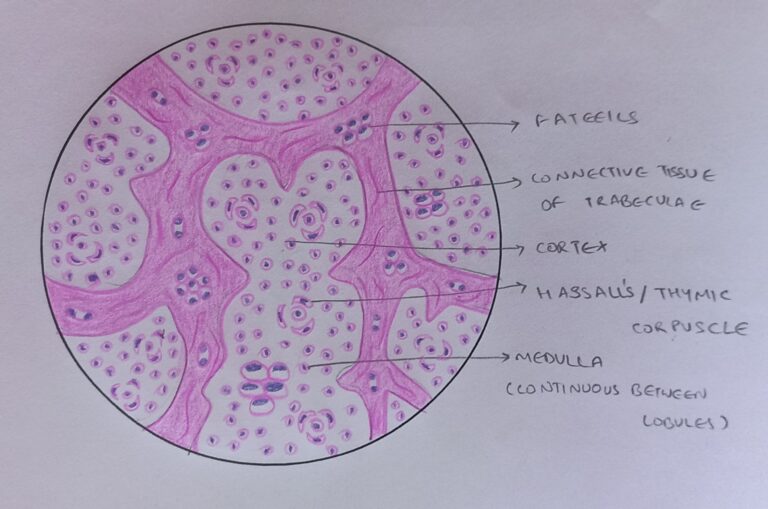
Here is a peptide that breaks the usual pattern of this catalogue. Most research compounds are interesting precisely because regulators have not blessed them. Thymosin Alpha-1 is the opposite: a 28-amino-acid thymic peptide that has spent years as a licensed prescription medicine, sold as Zadaxin (generic name thymalfasin)813, in dozens of countries for chronic hepatitis B and C and as an immune adjuvant89 — while the United States Food and Drug Administration has never approved it6. That gap, between broad international licensure and American refusal, is the most honest place to begin.
What exactly is Thymosin Alpha-1?
Thymosin Alpha-1 (rendered Tα1) is a small, highly conserved peptide of 28 amino acids, originally isolated from thymic tissue, where it participates in the maturation of the immune system1311. It is generally classed as an immunomodulator rather than a straightforward immunostimulant13 — a distinction that recurs throughout the literature, because the peptide appears to nudge immune responses toward equilibrium rather than simply amplifying them. The synthetic version used clinically and in research, thymalfasin, is described as identical in sequence to the endogenous fragment511, which is part of why it has been tractable enough to develop as a defined pharmaceutical.
One point worth fixing early, for clarity rather than salesmanship: the licensed medicine and a research-grade reference material are not the same object. A pharmaceutical product carries a regulatory dossier, manufacturing controls, and an approved indication in the jurisdictions that licensed it. The reference material discussed here is for laboratory work — an analytical standard handled by a researcher, not a therapy administered to a patient.
30+ countries reported to license Thymosin Alpha-1 (Zadaxin) as a medicine8 — yet not the United States.
How is it proposed to work?
The mechanistic story is more coherent than the clinical one. Thymosin Alpha-1 is thought to act in part through Toll-like receptor (TLR) signalling — TLR2 and TLR9 are the receptors most often implicated135 — engaging pattern-recognition pathways that sit at the interface of innate and adaptive immunity. Downstream, the peptide has been reported to promote the maturation of dendritic cells and the differentiation and function of T cells138, including effects on the regulatory and effector T-cell subsets that govern how aggressively or how tolerantly the immune system responds5. The recurring framing in the mechanistic literature is one of recalibrating immune balance — enhancing responses where they are deficient while dampening damaging over-activation, rather than pushing in a single direction52.
This is biologically attractive, and it helps explain why the peptide has been studied across such disparate settings: chronic viral infection812, where immune exhaustion is the problem, and sepsis, where dysregulated inflammation is1012. A molecule that modulates rather than merely stimulates is, in principle, suited to both. The caveat is that mechanistic plausibility has never been a reliable predictor of clinical benefit, and Thymosin Alpha-1 is a case study in that gap.
A large literature is not the same as a consistent one — and Thymosin Alpha-1 has the former without quite earning the latter.
What does the hepatitis and sepsis evidence show?
The strongest human signal sits in chronic viral hepatitis, which is also where the peptide secured its approvals. Studies in chronic hepatitis B and C examined the peptide as an immune adjuvant, sometimes alongside antiviral or interferon-based regimens98, on the rationale that boosting antiviral immunity could improve virological response. The reported results were encouraging enough to underpin licensure in numerous markets, though the trials varied considerably in size, design, and the endpoints they reported.
Sepsis is the other domain with meaningful human data. Here the peptide has been investigated as an adjunct, on the hypothesis that correcting the immune dysregulation of severe sepsis10 — the swing between hyperinflammation and immunoparalysis — might improve outcomes. Some trials reported favourable signals on immune markers and mortality, but the sepsis literature is heterogeneous102 and the question remains unsettled. The pattern across both indications is consistent: a plausible mechanism, a positive overall tilt, and persistent uncertainty about magnitude.
| Setting | Proposed role | Evidence weight |
|---|---|---|
| Chronic hepatitis B/C | Immune adjuvant to antiviral therapy | Strongest; basis for approvals |
| Sepsis | Adjunct to correct immune dysregulation | Moderate; heterogeneous trials |
| Vaccine / immune adjuvant | Enhancing response to immunisation | Supportive but variable |
| COVID-19 | Immunomodulation in severe disease | Weakest; mostly observational |
An evidence-tier sketch across the four main investigational settings; weights reflect trial quality and consistency, not the existence of any single positive study.
And the COVID-19 studies — what really happened?
During the pandemic, Thymosin Alpha-1 attracted attention as a candidate immunomodulator for severe COVID-19, on the reasonable premise that a peptide which recalibrates immune balance might help in a disease defined by immune dysregulation. Several studies, predominantly from China, reported associations between its use and improved outcomes in hospitalised patients7. The temptation is to read those reports as confirmation; the discipline is to read them as hypotheses.
Most of the COVID-19 work was observational or small in scale, vulnerable to confounding and selection effects7, and conducted under the extraordinary conditions of a pandemic that made rigorous randomisation difficult. These are real limitations, not pedantic ones: an association between a treatment and survival in a retrospective cohort can reflect which patients received it as much as what it did. The COVID-19 chapter is best understood as a signal worth following, not an answer already found.
Where is the evidence thin, and why no FDA approval?
Honesty is the brand, so the appraisal must be plain. Thymosin Alpha-1 has a large clinical literature, but large and uniform are different properties. Many trials are of mixed methodological quality — variable in size, blinding, endpoints, and reporting68 — which makes pooled conclusions harder to draw than the raw volume of publications suggests. Approvals across dozens of countries are a genuine fact, but regulatory standards differ across jurisdictions, and licensure elsewhere does not erase the FDA’s continued non-approval.
That non-approval is the most instructive data point in the entire file. It indicates that, by the FDA’s evidentiary bar, the existing trials have not yet demonstrated what is required for an American indication6. A scrupulous researcher holds both truths at once: real approvals and a serious clinical record on one side, genuine methodological gaps and one major regulator’s refusal on the other. Overselling either half misrepresents the compound.
This article opens our Immune cluster, and Thymosin Alpha-1 sits alongside other immunomodulatory peptides in the catalogue, including KPV5, as part of a broader programme of immune-signalling reference materials. For laboratory work, what matters is not the headline indication but the integrity of the molecule in the vial. Thymosin Alpha-1 here is offered strictly as a Research Use Only reference material — not a medicine, not for human or veterinary use — and its value to reproducible research depends on rigorous identity and purity documentation1. A certificate of analysis with HPLC and mass-spectrometry confirmation3 is what allows one laboratory’s result to mean the same thing as another’s, and it is the only foundation on which the heterogeneous literature above can eventually be made less heterogeneous615.
- Thymosin Alpha-1 occupies an unusual position: a licensed medicine (Zadaxin/thymalfasin) across dozens of countries for hepatitis B and C and as an immune adjuvant, yet never FDA-approved in the United States.
- The proposed mechanism centres on Toll-like receptor signalling, dendritic-cell and T-cell maturation, and a recalibration of immune balance rather than blunt immune stimulation.
- Hepatitis and sepsis trials provide the most substantial human signal, but effect sizes, endpoints, and trial quality vary widely.
- COVID-19 studies were mostly observational or small, generating hypotheses rather than confirmation; their limitations matter as much as their headline findings.
- Honest caveat: a large literature is not the same as a consistent one, and the FDA's continued non-approval reflects genuine evidentiary gaps.
- As a research reference material, identity and purity documentation (COA, HPLC/MS) is what separates reproducible work from noise.
Is research-grade Thymosin Alpha-1 the same as the approved drug Zadaxin?
Chemically the synthetic peptide (thymalfasin) is described as the same 28-amino-acid sequence, but the products are not interchangeable. Zadaxin is a licensed medicine in dozens of countries, carrying a regulatory dossier, manufacturing controls, and approved indications. A research-grade reference material is supplied strictly for laboratory use, not as a therapy, and is handled by a researcher rather than administered to a patient.
Why is Thymosin Alpha-1 approved abroad but not by the FDA?
Regulatory standards differ between jurisdictions. The peptide reportedly secured approvals in numerous countries largely on its hepatitis B and C data, but the FDA has never approved it, indicating that by its evidentiary bar the existing trials have not yet met the threshold for a US indication. Approval elsewhere is real, but does not substitute for FDA review.
What is the strongest human evidence for Thymosin Alpha-1?
Chronic viral hepatitis carries the most substantial signal and underpinned its approvals, with studies in hepatitis B and C examining it as an immune adjuvant. Sepsis provides moderate, heterogeneous data. COVID-19 studies are the weakest tier, being mostly observational and hypothesis-generating. Across all settings, mechanistic plausibility tends to be stronger than the consistency of clinical outcomes.
Why do the COVID-19 findings need to be read cautiously?
Most COVID-19 studies of Thymosin Alpha-1 were observational or small, conducted under pandemic conditions that made rigorous randomisation difficult. They reported associations between use and improved outcomes, but such associations can reflect which patients received the peptide as much as any effect of the peptide itself. They are best treated as signals worth following, not confirmed results.