
Semax: A Research Guide to the ACTH(4-10) Analogue
A mechanism-level research guide to Semax, the ACTH(4-10)-Pro-Gly-Pro heptapeptide: BDNF/NGF transcription, the dopaminergic system, and an honest read of animal-heavy and limited clinical evidence. Research use only.
Semax is a synthetic heptapeptide (Met-Glu-His-Phe-Pro-Gly-Pro): the ACTH(4-10) fragment of adrenocorticotropic hormone with a stabilising C-terminal Pro-Gly-Pro tail, studied as a nootropic and neuroprotective compound that keeps the brain-facing signalling of the hormone while discarding its adrenal action. In preclinical models it is reported to raise transcription of neurotrophins (BDNF, NGF) and their receptors and to engage the brain's dopaminergic system; a body of Russian ischemia and stroke work, plus limited Russian clinical use, underpins its registration in Russia. The evidence is overwhelmingly animal-model and in-vitro, with limited independent Western clinical validation, so outside Russia Semax is a research-use-only reference material, not a medicine.
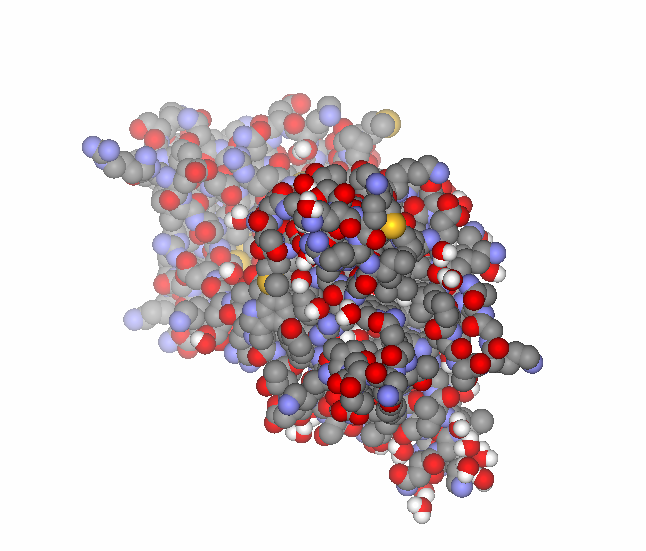
The companion question — what is this peptide — we answer elsewhere; our explainer on Semax walks through how Russian researchers took a fragment of a stress hormone and re-tuned it for the brain. This guide goes a level deeper, for the researcher who already knows Semax is an ACTH(4-10) analogue and now wants the mechanism mapped: how a seven-residue peptide is reported to move the brain’s own growth-factor transcription, which neurotransmitter systems it touches, and exactly how far — and no further — the published evidence will carry the story.
What is Semax, chemically — and why does the structure matter?
Semax is a synthetic heptapeptide, sequence Met-Glu-His-Phe-Pro-Gly-Pro. The first four residues correspond to the ACTH(4-10) fragment of adrenocorticotropic hormone; the trailing Pro-Gly-Pro tail is an engineered addition meant to make the short peptide more robust than the bare fragment, which is otherwise cleaved quickly. In the literature it is described as an ACTH(4-10) analogue with cognitive effects, and that lineage is the entire design logic: ACTH-derived fragments have long been studied for influences on learning and attention that run independently of the adrenal cascade that makes ACTH a stress hormone.1
The smallness, and the specific tail, are the point. ACTH is in effect a single instruction shouted down two corridors at once — one to the adrenal glands, one to the brain. Semax keeps only the brain-facing message; the Pro-Gly-Pro extension is what lets that message survive long enough to be read. That the C-terminal fragment Pro-Gly-Pro is itself biologically active in some of the same assays is part of why this scaffold, rather than the raw fragment, became the research workhorse.3
7 amino acids — Met-Glu-His-Phe-Pro-Gly-Pro — four inherited from the ACTH(4-10) fragment of a stress hormone, plus a Pro-Gly-Pro tail engineered to slow degradation1
How is Semax reported to reach the brain’s growth-factor machinery?
The most-cited molecular feature of Semax pharmacology is its reported effect on neurotrophins — the brain’s own survival-and-plasticity signals. In rats, the heptapeptide was reported to stimulate expression of brain-derived neurotrophic factor (BDNF) in different areas of the brain in vivo,2 and a study in the rat hippocampus reported that Semax regulates both BDNF and its receptor trkB — not just the ligand, but the receptor that reads it.1 Because BDNF–TrkB signalling supports neuronal survival, synaptic plasticity and learning, an agent that nudges that axis upward is, mechanistically, exactly what a “nootropic” label is reaching for.
The effect is not limited to a single growth factor. After experimental cerebral ischemia in rats, Semax and its C-terminal peptide Pro-Gly-Pro were reported to activate the transcription of neurotrophins and their receptor genes — a coordinated transcriptional response rather than a single switch.3 This is the bridge between the cognition story and the neuroprotection story: the same growth-factor programme that underlies plasticity in a healthy brain is the one the injured brain needs to mount a defence.
Semax is not reported to mimic one growth factor; the literature describes it reaching the transcription of several — BDNF, NGF and their receptors — at once.
What is the dopaminergic thread?
A second, distinct line of Semax research runs through the dopaminergic system, the circuitry most associated with motivation, drive and attention. In rat work, Semax was reported to potentiate the effect of D-amphetamine on extracellular dopamine in the striatum and on locomotor activity,4 implying an interaction with dopamine release or turnover rather than a purely structural effect. A separate study described neuroprotective effects of Semax against MPTP-induced disturbances of the brain dopamine system — MPTP being the classic toxin used to model dopaminergic neuron loss.5 Together these place Semax in conversation with the monoamine systems that any cognition-facing compound has to reckon with, while remaining squarely in animal models.
Where is the evidence strongest? Cerebral ischemia and stroke
If neurotrophins are the mechanism, cerebral ischemia is where that mechanism has been most thoroughly profiled. In rat models of ischemic brain injury, Semax was reported to regulate the expression of immune-response genes, shifting the post-stroke transcriptional programme,6 and a later proteomic study reported a brain protein-expression profile confirming a protective effect of the ACTH(4-7)PGP peptide in a model of ischemia–reperfusion.7 More recent work found that synthetic adrenocorticotropic peptides, Semax among them, modulate the expression pattern of immune genes in the early post-stroke period — tilting the inflammatory response.8 The picture that emerges across these papers is consistent: after ischemic injury, Semax is reported to push gene expression away from damage and toward a protective, growth-factor- and immune-modulated state.
| Studied pathway | Model | What the study observed (preclinical / clinical) |
|---|---|---|
| Neurotrophins (BDNF) | Rat brain, in vivo | Stimulated BDNF expression across several brain regions2 |
| BDNF + receptor | Rat hippocampus | Regulated BDNF and trkB expression1 |
| Neurotrophin transcription | Rat cerebral ischemia | Semax and Pro-Gly-Pro activated transcription of neurotrophins and their receptor genes3 |
| Dopaminergic system | Rat striatum; mouse locomotion | Potentiated D-amphetamine effect on extracellular dopamine4 |
| Dopaminergic system | MPTP model | Neuroprotective effects against MPTP-induced dopamine-system damage5 |
| Immune / inflammation | Rat ischemic brain injury | Regulated immune-response gene expression after ischemia6 |
| Neuroprotection (proteome) | Rat ischemia–reperfusion | Protein-expression profile consistent with a protective effect7 |
| Immune gene pattern | Rat, early post-stroke | ACTH-analogue peptides modulated immune-gene expression8 |
| Stroke (human) | Acute hemispheric ischemic stroke | Clinical and electrophysiological study of effectiveness9 |
| Cerebrovascular (human) | Cerebrovascular insufficiency patients | Studied in prevention of disease progression / exacerbations10 |
Most entries above are cell-culture or rodent findings; the two human entries come from Russian-language clinical literature. None of these is an EU- or US-registered outcome.
How good is the evidence, honestly?
This is where enthusiasm has to yield to the record. The preclinical case for Semax is extensive and mechanistically coherent — the neurotrophin work, the dopamine work, the layered ischemia studies, and an emerging picture in which the same peptide repeatedly nudges growth-factor and immune transcription toward repair.138 A 2025 review of bioactive peptides in neurodegeneration situates Semax within the broader effort to modulate oxidative-stress and neuroprotective pathways.11 That is more than can be said for many fashionable compounds.
But two caveats are decisive. First, the evidence is overwhelmingly animal-model and in-vitro; the cognitive, dopaminergic and neuroprotective findings describe rats, mice and cell systems, not humans. Second, the human experience that underpins Russian registration is concentrated in Russian-language clinical literature — acute ischemic stroke,9 cerebrovascular insufficiency10 — with comparatively limited independent Western clinical validation. None of this makes the work unserious. It does mean Semax should be treated as investigational: a compound whose human profile is far less settled than its preclinical CV suggests.
- Scale: mechanistic and animal studies dominate; human trials are limited and largely single-region.
- Breadth: evidence clusters in ischemia/neuroprotection and neurotrophin signalling, not a broad validated cognitive claim.
- Status: registered in Russia; no EU/US marketing authorisation — a research material, not a medicine.
For how Semax sits beside its closest relative — sequence, sister mechanism and the “calm versus drive” framing — see our Selank vs Semax comparison.
What does this mean for sourcing Semax as a research material?
For a seven-residue peptide, the only properties a serious laboratory should take on trust are identity and purity — and only once they are documented. A short chain leaves little room for ambiguity: either the material is the Met-Glu-His-Phe-Pro-Gly-Pro heptapeptide at the stated purity, free of truncated sequences and process impurities, or it is not, and no amount of interesting downstream biology survives an impure starting material. That is the entire case for buying Semax with a current Certificate of Analysis: independent, per-lot HPLC purity and mass-spectrometric confirmation of the sequence is what separates a reproducible experiment from an uninterpretable one. Our guide on how to read a COA covers what to look for. Condor Research supplies Semax strictly as a research-use-only reference material — published to that COA-first standard, because the science is only ever as good as the molecule behind it.
This article is reference material for Research Use Only (RUO). It describes findings observed in defined in-vitro and preclinical models, plus limited clinical literature; it is not a medicine, not a treatment, and nothing here is dosing, clinical, or human-use guidance. Supplied by Atrio Sciences s.r.o. (Nitra, SK), with independent EU laboratory analysis in the Czech Republic. — Condor Research · Scientific desk
- Semax is the ACTH(4-10) fragment Met-Glu-His-Phe-Pro-Gly-Pro: the first four residues come from adrenocorticotropic hormone, and the trailing Pro-Gly-Pro tail is engineered to slow degradation of the bare fragment.
- Across rodent models, Semax has been reported to increase transcription of BDNF and NGF and their receptor genes, including trkB in the hippocampus, which is the most-cited molecular basis for its nootropic and neuroprotective description.
- Semax is studied as engaging the brain's dopaminergic system, potentiating dopamine-related signalling in the striatum and showing neuroprotective effects in models of dopamine-system damage.
- Its most developed evidence base is neuroprotection in cerebral-ischemia and stroke models, where Semax modulates ischemia-disrupted gene expression and immune-response transcripts toward a protective pattern.
- Human evidence is limited and concentrated in Russian-language clinical literature, which underpins Russian registration; there is comparatively little independent Western clinical validation.
- Outside Russia Semax has no marketing authorisation and exists purely as a research-use-only material; it is not a medicine and nothing here is human-use guidance.
- For a seven-residue peptide, the variables that decide an experiment are identity and purity: each batch should arrive with a per-lot Certificate of Analysis carrying HPLC purity and mass-spectrometric confirmation of the Met-Glu-His-Phe-Pro-Gly-Pro sequence.
What is the chemical structure of Semax?
Semax is a synthetic heptapeptide with the sequence Met-Glu-His-Phe-Pro-Gly-Pro. Its first four residues correspond to the ACTH(4-10) fragment of adrenocorticotropic hormone, and the C-terminal Pro-Gly-Pro tail is a design feature intended to make the short peptide more resistant to enzymatic breakdown than the bare fragment alone. In the literature it is described as an ACTH(4-10) analogue with nootropic properties, and that lineage is the point: ACTH-derived fragments have long been studied for effects on learning and attention that are separate from the hormone’s adrenal-stimulating action.
How is Semax reported to act on neurotrophins like BDNF?
In rodent studies Semax has been reported to raise the expression of brain-derived neurotrophic factor (BDNF) in several brain regions in vivo, and a study in the rat hippocampus reported that it regulates both BDNF and its receptor trkB. After experimental cerebral ischemia, Semax and its C-terminal fragment Pro-Gly-Pro were reported to activate the transcription of neurotrophins and their receptor genes. Because BDNF and nerve growth factor (NGF) signalling support neuronal survival and plasticity, this transcriptional effect is the most-cited mechanistic basis for the compound’s nootropic and neuroprotective description. All of this is preclinical.
Does Semax affect the dopamine system?
The dopaminergic thread is a distinct line of Semax research. In rat work the peptide was reported to potentiate the effect of D-amphetamine on extracellular dopamine in the striatum, and a separate study described neuroprotective effects of Semax against MPTP-induced disturbances of the brain dopamine system. The dopaminergic and related monoaminergic circuits are those most associated with motivation and attention, which is why this activity is folded into the nootropic framing. These are animal-model findings, not human outcomes.
How strong is the human evidence for Semax?
It is limited. The bulk of the Semax literature is animal-model and in-vitro, and the human clinical experience that underpins its registration in Russia is concentrated in Russian-language journals — for example reports in acute hemispheric ischemic stroke and in cerebrovascular insufficiency. There is comparatively little independent Western clinical validation, and no EU or US marketing authorisation. Semax should be read as investigational: a mechanistically coherent compound whose human profile is far less settled than its preclinical record suggests.
How does this guide differ from your explainer on what Semax is?
Our introductory explainer, What Is Semax?, answers the upstream question — where the molecule came from and why a stress-hormone fragment was re-tuned for the brain. This guide goes a level deeper for a reader who already knows Semax is an ACTH(4-10) analogue and now wants the mechanism mapped: how the heptapeptide is reported to move neurotrophin transcription, how it engages the dopamine system, and exactly how far the published evidence carries each claim.
What should a laboratory check before using Semax as a research material?
For a seven-residue peptide the decisive variables are identity and purity, not marketing claims. A short chain leaves little room for ambiguity — either the Met-Glu-His-Phe-Pro-Gly-Pro sequence is correct and free of truncated or process-related impurities, or it is not — and that is what determines whether an experiment is reproducible. Every batch should arrive with a current Certificate of Analysis documenting HPLC purity and mass-spectrometric confirmation of identity. Semax is supplied strictly for research use only: not a medicine, not for human or veterinary use.