No compounds match this filter.
Immune & inflammation research compounds are reference peptides studied in preclinical and early clinical models of immune modulation, inflammatory signalling and mucosal / epithelial barrier function. This category groups the compounds most investigated across those pathways so researchers can compare mechanism, format and documentation in one place. Every item is supplied strictly as Research Use Only (RUO) material with a batch Certificate of Analysis; nothing here is intended for human or veterinary use.
Mechanisms investigated
Immune and inflammation research spans several distinct signalling nodes, and these compounds map onto different ones — they are not interchangeable:
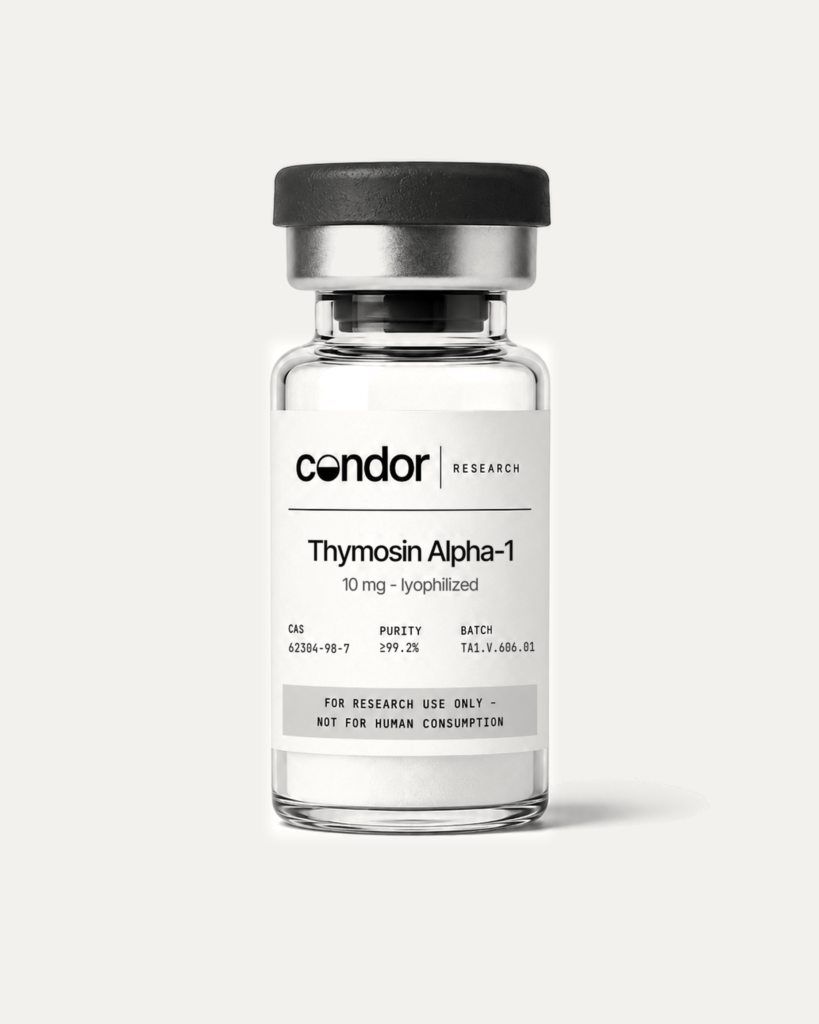
Thymic peptides (Thymosin Alpha-1): studied for T-cell maturation and modulation of innate/adaptive immune signalling.
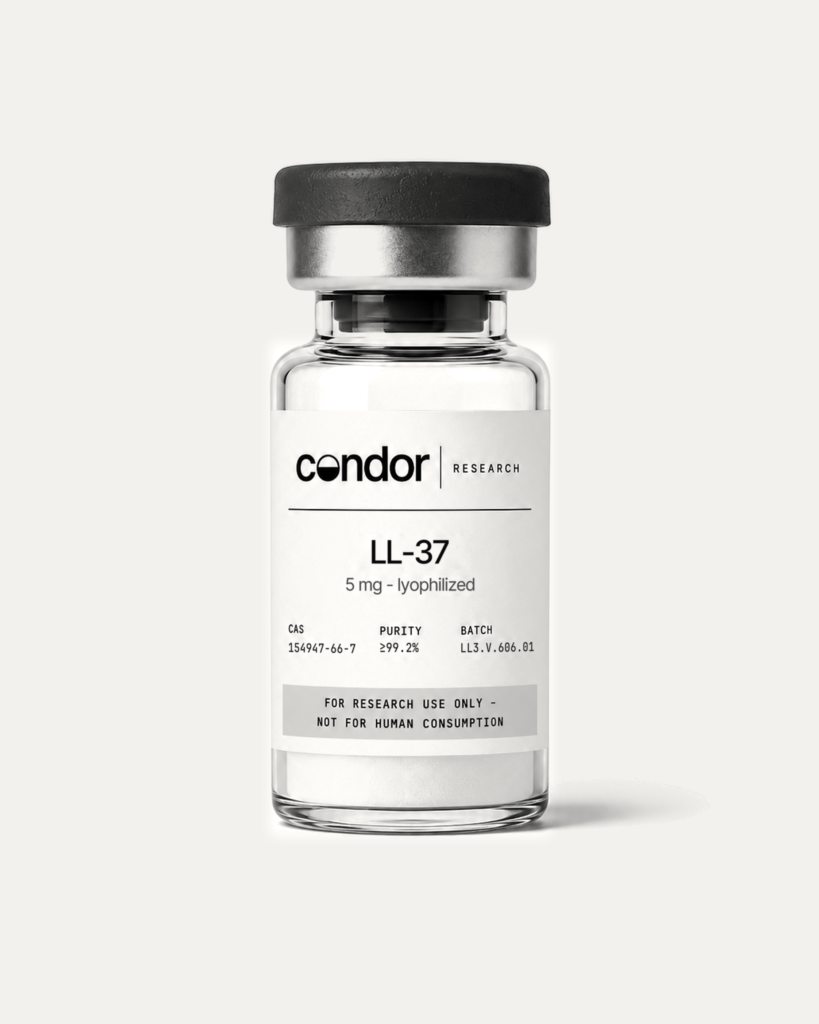
Host-defence peptides (LL-37): investigated for antimicrobial-peptide biology and its crosstalk with innate immune activation.
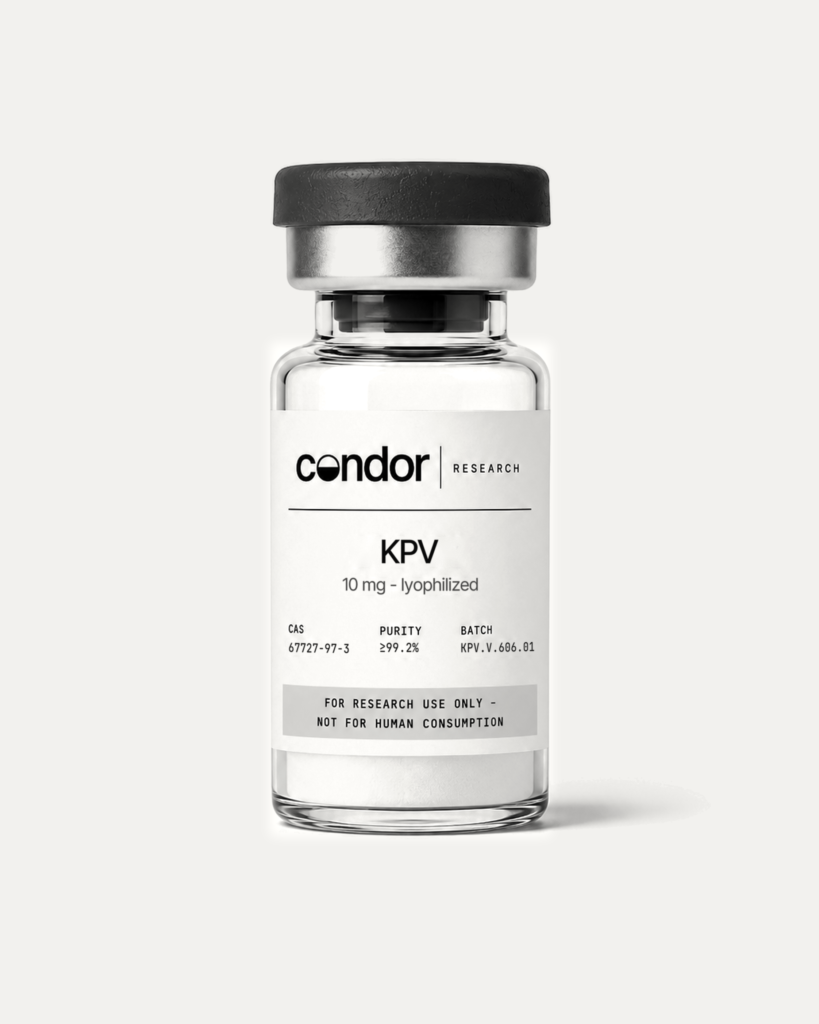
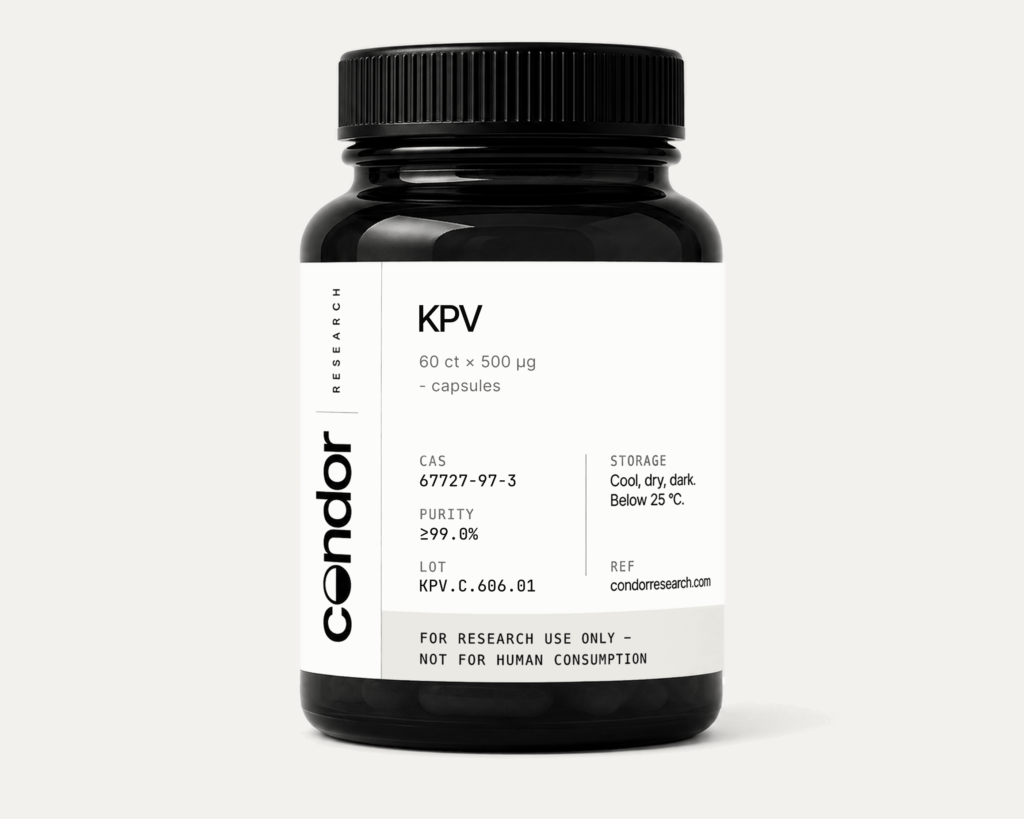
Alpha-MSH fragment peptides (KPV, vial and capsule): studied for melanocortin-pathway signalling in models of localized inflammation and gut mucosal biology.
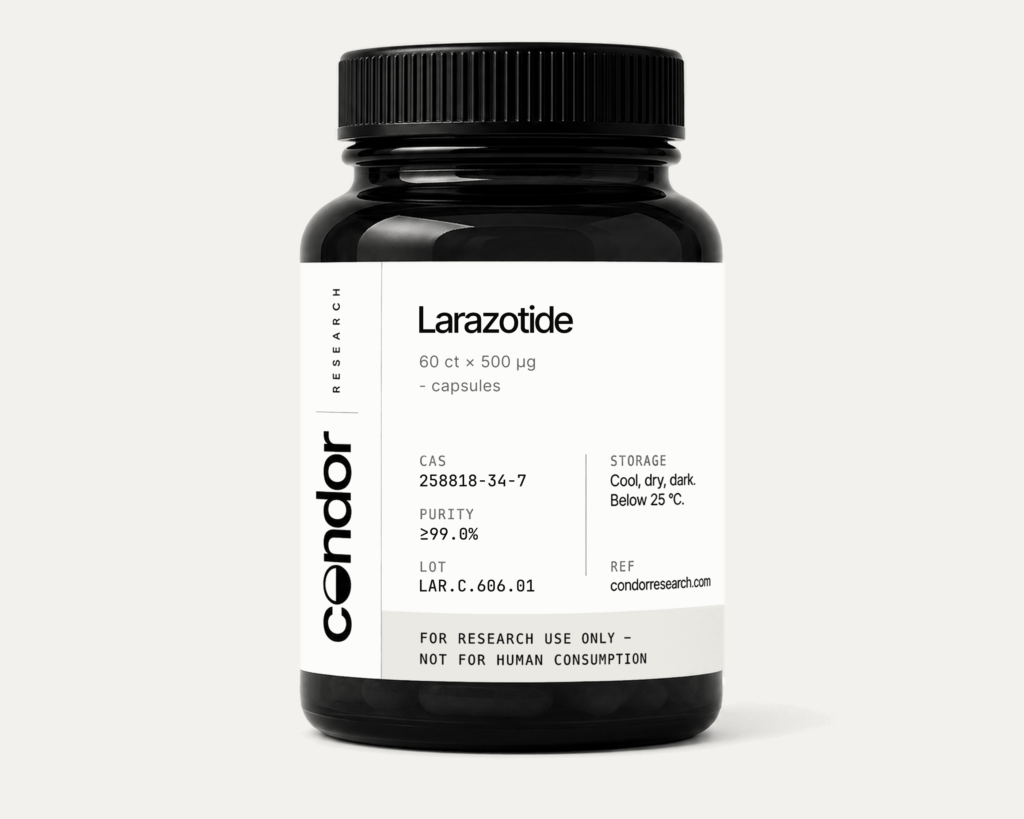
Zonulin-pathway peptides (Larazotide capsules): investigated for tight-junction regulation and intestinal barrier permeability.
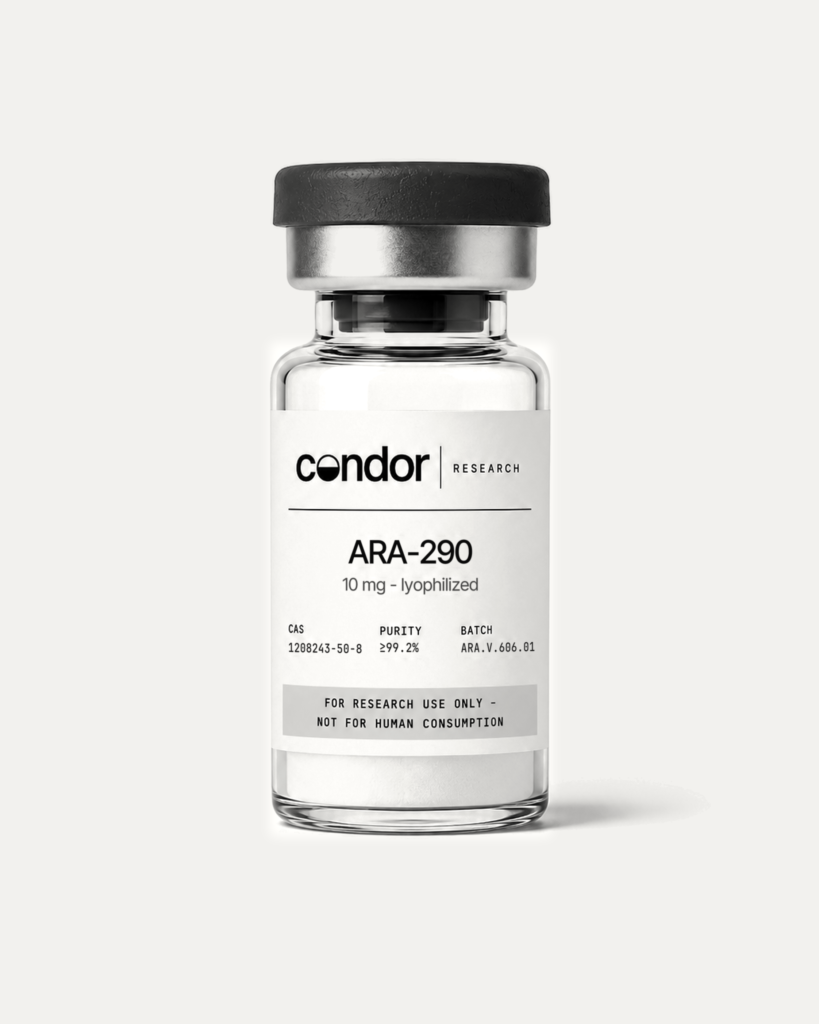
Erythropoietin-derived peptides (ARA-290 / Cibinetide): studied for tissue-protective signalling via the innate repair receptor, independent of erythropoietic activity.
Comparison
CompoundClassPathway / targetResearch focusFormat
Thymosin Alpha-1Thymic peptideT-cell signalling / TLR pathwaysImmune modulationVial
LL-37Cathelicidin host-defence peptideInnate immune receptors / membrane interactionAntimicrobial-peptide & innate-immunity researchVial
KPVAlpha-MSH C-terminal tripeptideMelanocortin receptors (MC1R)Localized inflammation signallingVial
KPV CapsulesAlpha-MSH C-terminal tripeptideMelanocortin receptors (MC1R)Gut mucosal / inflammation researchCapsules
Larazotide CapsulesZonulin-antagonist octapeptideTight-junction / zonulin pathwayIntestinal barrier-function researchCapsules
ARA-290 (Cibinetide)EPO-derived innate repair peptideInnate repair receptor (EPOR/CD131)Tissue-protective signallingVial
| Compound | Class | Pathway / target | Research focus | Format |
|---|---|---|---|---|
| Thymosin Alpha-1 | Thymic peptide | T-cell signalling / TLR pathways | Immune modulation | Vial |
| LL-37 | Cathelicidin host-defence peptide | Innate immune receptors / membrane interaction | Antimicrobial-peptide & innate-immunity research | Vial |
| KPV | Alpha-MSH C-terminal tripeptide | Melanocortin receptors (MC1R) | Localized inflammation signalling | Vial |
| KPV-capsules | Alpha-MSH C-terminal tripeptide | Melanocortin receptors (MC1R) | Gut mucosal / inflammation research | Capsules |
| Larazotide-capsules | Zonulin-antagonist octapeptide | Tight-junction / zonulin pathway | Intestinal barrier-function research | Capsules |
| ARA-290 (Cibinetide) | EPO-derived innate repair peptide | Innate repair receptor (EPOR/CD131) | Tissue-protective signalling | Vial |
Every compound in this category is supplied as Research Use Only material with:
Peer-reviewed literature underpinning this category. Full per-compound evidence lists are maintained in the linked research articles below.
Cookies
Wij gebruiken strikt noodzakelijke cookies om de winkel te laten werken. Met uw toestemming gebruiken wij ook analytische (orderattributie) en marketingcookies (Omnisend). Lees onze Cookiebeleid.