
SS-31 (Elamipretide): The Mitochondrial Peptide That Reached the Clinic — and Got Complicated
Elamipretide is the most clinically advanced cardiolipin-targeting tetrapeptide ever tested — now an approved Barth-syndrome drug, yet with a trial record that is the field's sharpest cautionary tale.
SS-31 (elamipretide, MTP-131) is a cell-permeable tetrapeptide that concentrates in the inner mitochondrial membrane and binds cardiolipin, aiming to stabilise electron-transport-chain organisation. Its trial record is mixed: a Phase 3 mitochondrial-myopathy trial missed its primary endpoints, while Barth-syndrome data earned FDA accelerated approval in 2025. Research-grade SS-31 is an analytical reference material, not that medicine.
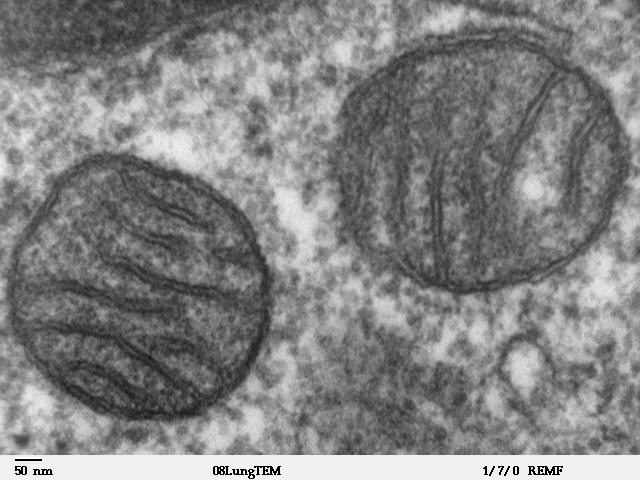
Most peptides marketed as “mitochondrial-targeted” have never seen the inside of a registered clinical trial. SS-31 — elamipretide, formerly MTP-131 — is the conspicuous exception: it advanced to Phase 3 across multiple indications, earned its first regulatory approval in 2025,8 and along the way delivered results that ought to be required reading for anyone who treats mechanism as destiny. Its lead efficacy trial in primary mitochondrial myopathy missed both co-primary endpoints.1 That single fact is more useful to a discerning researcher than a dozen glowing preclinical abstracts.
What is SS-31, mechanically?
SS-31 is a small aromatic-cationic tetrapeptide with the sequence D-Arg-2′,6′-dimethyl-Tyr-Lys-Phe-NH₂, a member of the Szeto–Schiller family of cell-permeable peptides.2 Its defining feature is targeting without a transporter: the alternating cationic (D-Arg, Lys) and aromatic (dimethyl-Tyr, Phe) residues let it cross the plasma membrane, with charge shielding by the aromatic rings preserving permeability.2 It then partitions into the inner mitochondrial membrane, where it is reported to concentrate over a thousand-fold relative to the cytoplasm.4
The partitioning is driven principally by electrostatic affinity for cardiolipin, the signature anionic phospholipid of the inner membrane, rather than by a dedicated import pathway.3 Cardiolipin is not structural wallpaper: it scaffolds the assembly of respiratory super-complexes and stabilises the electron-transport-chain enzymes embedded around it.2 The working model is that SS-31 binds cardiolipin, helps preserve cristae architecture, and promotes the assembly and stability of respiratory complexes I, III and IV — thereby supporting more efficient electron transfer with reduced electron leak.2 Biophysical work indicates SS-31 interacts directly with lipid bilayers and modulates membrane surface electrostatics, which is consistent with a structural-stabilisation mode of action rather than classic receptor agonism.3 That distinction shapes how its effects should be interpreted.
>1,000× reported enrichment of SS-31 in the inner mitochondrial membrane relative to the cytoplasm — the basis of the “mitochondrial-targeted” label.4
What does “mitochondrial-targeted” actually buy you?
The phrase is marketed heavily and understood poorly. For SS-31 it means something concrete: a high local concentration at the cardiolipin interface, achieved without dedicated import machinery.4 The targeting is attributed to electrostatic and aromatic interactions with cardiolipin rather than to the mitochondrial membrane potential itself — a useful property, since that potential collapses in damaged mitochondria.3 Whether accumulation is wholly potential-independent remains debated in the primary literature, and honest accounts treat that as an open question rather than a settled selling point.3
But coherence is not efficacy. Targeting a real and important molecule — cardiolipin — guarantees engagement, not clinical benefit.2 The history of mitochondrial therapeutics is littered with elegant mechanisms that failed to move a patient-relevant endpoint, and SS-31 has tested that gap more rigorously than any peer compound.1
SS-31 is the rare mitochondrial peptide rich enough in human data to be judged honestly — and the honest judgement is “mixed, but real.”
What does the human trial record actually show?
Elamipretide is the most clinically advanced compound in its class, with a programme spanning several indications — and the results do not line up neatly.8 In primary mitochondrial myopathy, the Phase 3 MMPOWER-3 trial randomised 218 participants and did not meet its co-primary endpoints on the six-minute walk test or the total fatigue score of the Primary Mitochondrial Myopathy Symptom Assessment.1 A prespecified subgroup carrying nuclear-DNA pathogenic variants did show a walk-test signal, but this was a subgroup result, not the trial’s verdict.1 In heart failure with reduced ejection fraction, the Phase 2 PROGRESS-HF trial likewise failed its primary endpoint: short-term treatment did not improve left-ventricular end-systolic volume versus placebo.7
The picture is more encouraging in Barth syndrome — an ultra-rare cardiolipin-remodelling disorder where the mechanistic rationale is at its strongest.5 The TAZPOWER programme reported improvements in muscle strength, fatigue and cardiac measures over its 168-week open-label extension, data substantial enough to support a regulatory filing.5 In geographic atrophy secondary to dry age-related macular degeneration, the Phase 2 ReCLAIM-2 trial missed its primary functional and anatomical endpoints, but reported meaningful reductions in the progression of ellipsoid-zone attenuation as a secondary signal.6
| Indication / programme | Phase | Headline result |
|---|---|---|
| Primary mitochondrial myopathy (MMPOWER-3) | 3 | Missed co-primary endpoints (6MWT, fatigue)1 |
| Barth syndrome (TAZPOWER) | 2/3 | OLE strength/fatigue/cardiac gains; supported approval5 |
| Dry AMD / geographic atrophy (ReCLAIM-2) | 2 | Primary missed; ellipsoid-zone secondary signal6 |
| Heart failure, reduced EF (PROGRESS-HF) | 2 | Primary missed (no LVESV improvement)7 |
A scorecard, not a victory lap: elamipretide’s controlled human data are genuinely mixed across indications.8
How should the evidence be appraised honestly?
Several caveats deserve emphasis. First, the two most rigorous controlled tests outside Barth syndrome — Phase 3 in myopathy and Phase 2 in heart failure — were both negative on their primary endpoints, which is the result that should anchor expectations.1 Second, the favourable signals cluster in an ultra-rare, small-population setting where the cardiolipin mechanism is most directly implicated but where sample sizes limit statistical confidence; TAZPOWER’s pivotal evidence came largely from an open-label extension rather than a sustained randomised comparison.5 Reported tolerability across these programmes was generally acceptable, with injection-site reactions the most commonly noted adverse events in the Barth-syndrome trial — though adverse-event profiles are properly read off the individual trial reports rather than extrapolated.5
On regulatory status the language must be precise. After an earlier Complete Response Letter, the US FDA granted elamipretide hydrochloride (marketed as FORZINITY) accelerated approval in September 2025 to improve muscle strength in eligible patients with Barth syndrome — the first approved mitochondria-targeted therapeutic.8 That approval is narrow and indication-specific; it does not validate the compound across the other settings where it missed endpoints, and research-grade SS-31 is in no sense that licensed medicine.8 SS-31 sits within a wider mitochondrial research theme alongside MOTS-c, a 16-residue mitochondrial-derived peptide implicated in AMPK-mediated metabolic signalling, and NAD⁺ precursors that target cofactor supply.9 Of that group, only SS-31 has produced controlled Phase 3 human data — which makes its mixed record a useful reality check for the entire field.8
This article concerns a Research Use Only reference material and is not medical or usage guidance; it describes only what named studies observed in defined models and populations, and the licensed Barth-syndrome medicine is distinct from research-grade SS-31. For reproducible work, the identity and purity of SS-31 are not optional details: a current Certificate of Analysis with HPLC purity and mass-spectrometric confirmation of identity is the minimum documentation that separates interpretable results from noise. A mechanism this specific deserves a reference standard characterised with equal specificity.
- SS-31 concentrates over 1,000-fold in the inner mitochondrial membrane and binds cardiolipin, a phospholipid essential to respiratory super-complex assembly — its mechanism is structural stabilisation, not classic receptor agonism.
- It is the most clinically advanced mitochondrial-targeted peptide, reaching Phase 3 across several indications — a milestone almost no other candidate in the class has achieved.
- The record is genuinely mixed: the Phase 3 MMPOWER-3 myopathy trial missed its co-primary endpoints, and the PROGRESS-HF heart-failure trial missed its primary endpoint.
- Barth-syndrome data (TAZPOWER) were strong enough to earn FDA accelerated approval in September 2025, making elamipretide the first approved mitochondria-targeted therapeutic.
- The licensed medicine (FORZINITY, for Barth syndrome) is not the same thing as research-grade SS-31, which is an analytical reference material for laboratory use only.
- It anchors a wider mitochondrial research theme alongside MOTS-c and NAD+ precursors, but is the only member of that group with controlled Phase 3 human data.
Is research-grade SS-31 the same thing as the approved drug elamipretide?
No. In September 2025 the US FDA granted accelerated approval to elamipretide hydrochloride (marketed as FORZINITY) to improve muscle strength in eligible patients with the ultra-rare Barth syndrome — a narrow, indication-specific licence. Research-grade SS-31 is an analytical reference material for laboratory use, not that clinical product, and the two should never be conflated. Identity and purity documentation, not a brand name, define what you are actually handling.
What does the strongest controlled human trial show?
Outside Barth syndrome, the most rigorous test was the Phase 3 MMPOWER-3 trial in primary mitochondrial myopathy, which missed both co-primary endpoints — the six-minute walk test and a fatigue score — across 218 participants. A nuclear-DNA subgroup showed a walk-test signal, but that was exploratory. The Phase 2 PROGRESS-HF heart-failure trial also missed its primary endpoint. Read honestly, the controlled record is mixed rather than clearly positive.
What adverse effects were documented in the trials?
In the TAZPOWER Barth-syndrome programme, elamipretide was generally well tolerated, with injection-site reactions the most commonly reported adverse events over long-term follow-up. Adverse-event profiles should be read directly from each trial's safety report rather than extrapolated across indications, since populations, durations and routes differ. This is a Research Use Only reference material, so no safety claim here implies any expected outcome for a person.
How does SS-31 relate to MOTS-c and NAD+ in mitochondrial research?
All three feature in the mitochondrial-function research theme but act differently: MOTS-c is a 16-residue mitochondrial-derived peptide implicated in AMPK-mediated metabolic signalling, NAD+ precursors target cofactor supply, and SS-31 targets cardiolipin and inner-membrane architecture. SS-31 is distinguished by being the only one of the three to have generated controlled Phase 3 human data and, in one indication, a regulatory approval — making its mixed results a useful benchmark for the field.