
Spermidine: The Cleanest Case of a Great Mechanism Meeting Mediocre Trials
A naturally occurring polyamine that induces autophagy from yeast to mice, backed by striking mortality epidemiology — and undercut by randomised human trials that keep underdelivering. An honest scorecard.
Spermidine is a dietary polyamine that induces autophagy across species and is linked, in population cohorts, to lower mortality. Its mechanism is well-mapped and its epidemiology is intriguing. But randomised human trials, including cognition studies in at-risk older adults, have been small and mixed, often showing modest or null effects.
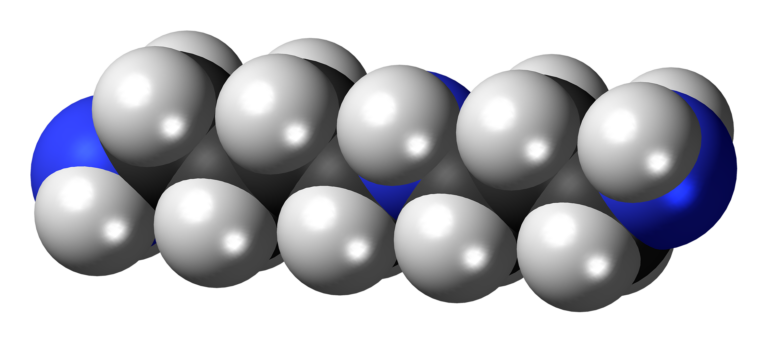
A molecule found in wheat germ, aged cheese and natto is not the obvious candidate for the title of “most credible anti-ageing compound.” Yet spermidine arrives with something almost no rival in the longevity catalogue possesses: a mechanism mapped cleanly from yeast to mammals, and an epidemiological signal suggesting that people who eat more of it tend to live longer.212 The awkward part — the part the supplement marketing omits — is that when researchers finally ran the randomised trials, the molecule largely failed to deliver.615
What is spermidine, and why does the autophagy story matter?
Spermidine is a naturally occurring polyamine, a small aliphatic molecule synthesised endogenously and also obtained from diet. Polyamines decline with age in many tissues, a fact that first drew gerontologists to them.4 Its headline property is the induction of autophagy — the cell’s regulated recycling of damaged proteins and organelles — which it appears to trigger in part by inhibiting histone acetyltransferases and shifting cells toward a cytoprotective, catabolic state.24 Autophagy is one of the most conserved housekeeping processes in biology, and its decline is a recognised hallmark of ageing.4
What makes the case unusually clean is conservation. In the foundational work from Eisenberg, Madeo and colleagues, spermidine extended lifespan in yeast, flies, worms and human immune cells, and — critically — the effect was reported to be abolished when core autophagy genes were knocked out.2 A mechanism that survives that test is rare; it is the difference between a molecule that merely correlates with longer life and one with a demonstrated causal lever. Researchers tracking the wider longevity cluster — NAD precursors, AMPK activators such as AICAR — will recognise the appeal of a compound whose causal chain is this legible, since most candidates in that cluster reach human study with a far murkier mechanistic mandate.13
What did the Eisenberg cardioprotection and longevity work show?
Beyond lifespan, the same research lineage produced one of the field’s more striking animal results. In aged mice, dietary spermidine supplementation was reported to improve cardiac function and reduce cardiac hypertrophy, with the cardioprotection again depending on intact autophagy and mitophagy machinery.4 The effect was described as extending to a salt-sensitive hypertensive rat model, where spermidine reduced blood pressure and delayed progression to heart failure.4 These are robust, mechanistically coherent preclinical findings — and they are, it must be stressed, findings in rodents, on a molecule whose dietary and endogenous background in humans is far harder to control.
A mechanism that holds from yeast to mouse heart is the exception, not the rule, in longevity research.
The animal data, taken alone, would justify cautious optimism. The question that should govern any sober reading is whether the signal survives the jump to controlled human study — and that is precisely where the narrative turns.
How strong is the human mortality epidemiology?
Here the story regains momentum. In prospective community cohorts, participants with the highest dietary spermidine intake have shown lower all-cause mortality than those with the lowest, with the association persisting after adjustment for common confounders.12 Investigators have framed the gap, somewhat memorably, as roughly equivalent to several years of chronological age12 — a comparison that travels well in headlines and badly in causal inference. Subsequent cohort analyses reported broadly concordant inverse associations between polyamine-rich dietary patterns and cardiovascular and all-cause mortality.12
4 evidence tiers — from yeast lifespan to human RCTs — and the signal weakens at every step toward controlled human study
The caveat every researcher already anticipates: this is observational. People who eat more spermidine-rich foods — whole grains, legumes, fermented products — differ systematically from those who do not, in income, activity, smoking and a hundred unmeasured habits, and no statistical adjustment fully launders that confounding. Epidemiology generates hypotheses; it does not settle them.
Why do the randomised trials underdeliver?
This is where honesty earns its keep. The SmartAge programme tested spermidine supplementation in older adults at risk of cognitive decline, and the results were modest-to-null69: the trials did not demonstrate the clear cognitive improvement the preclinical and epidemiological work had promised.67 A separate three-month supplementation study, including higher-dose study arms, likewise reported no significant benefit on memory performance or relevant biomarkers versus placebo.13 One disappointing trial is noise; a consistent pattern across independent designs is signal, and the signal here points away from a large, easily measured human effect.711
| Evidence tier | Strength of signal | Honest verdict |
|---|---|---|
| Yeast / fly / worm lifespan | Strong, autophagy-dependent | Mechanistically convincing |
| Mouse cardioprotection | Robust preclinical | Rodent-only, not yet translated |
| Human cohort mortality | Consistent inverse association | Intriguing but confounded |
| Randomised cognition trials | Modest-to-null | Underdelivers vs epidemiology |
The spermidine evidence ladder: each rung weakens as it approaches controlled human study.
So how should the evidence honestly be appraised?
Several explanations coexist, and intellectual honesty demands keeping all of them on the table. The trials may have been underpowered, too short, or run in populations too heterogeneous to detect a real but small effect.67 The endogenous synthesis and dietary background of spermidine may swamp any supplemental increment, blunting the contrast against placebo15 — a problem peculiar to nutrients the body already makes and eats.1315 Or the cohort associations may simply reflect the broader healthfulness of polyamine-rich diets rather than the molecule itself.12 Spermidine is not an approved longevity therapeutic in any jurisdiction; it is marketed in some regions as a food supplement, a regulatory category that requires no proof of the benefits its marketing implies.15 The verdict is not “spermidine fails,” but the more uncomfortable “promising mechanism, promising epidemiology, underwhelming RCTs” — the cleanest such case in the entire longevity cluster, and a useful template for reading the rest of it.134
For laboratories investigating polyamine biology, autophagy induction or the mechanistic questions these trials left open13, spermidine is supplied strictly as a Research Use Only reference material — not for human or veterinary use, and carrying no therapeutic claim. Reproducible work on a molecule this sensitive to background levels depends on rigorous characterisation: confirmed identity and purity, with a batch-specific Certificate of Analysis and orthogonal HPLC and mass-spectrometry data. The reference material itself is normally supplied as spermidine trihydrochloride: the free base is hygroscopic and awkward to weigh, so the stable hydrochloride salt is the practical bench standard — the same molecule, with counter-ions that make it reliable to dissolve and dose in vitro. Where the science is genuinely unsettled, the least one can control for is the integrity of the compound on the bench.
- Spermidine is an endogenous polyamine that induces autophagy from yeast to mammals, one of the best-characterised mechanisms in the longevity field.
- Eisenberg and Madeo's work demonstrated autophagy-dependent lifespan extension and cardioprotection in animal models.
- Higher dietary spermidine intake is associated with lower all-cause mortality in human observational cohorts, though confounding cannot be excluded.
- The honest caveat: randomised controlled trials, including the SmartAge cognition studies, have been small and produced modest-to-null results that do not match the epidemiology.
- No therapeutic claims are warranted; spermidine is sold strictly as a Research Use Only reference material.
- Identity and purity documentation (COA, HPLC/MS) matters for any reproducible polyamine research.
Is spermidine's autophagy mechanism actually proven, or is it inferred?
It is unusually well-established for the longevity field. In yeast, flies, worms and human immune cells, spermidine's lifespan and protective effects were reported to be abolished when core autophagy genes were knocked out, indicating dependence rather than mere correlation. The mechanism is conserved and reproducible. The open question is not whether autophagy induction occurs, but whether it translates into measurable human benefit at achievable exposures.
Why do the cohort data and the randomised trials disagree?
Cohort studies link higher dietary spermidine to lower mortality, but observational data cannot separate the molecule from the generally healthy whole-grain, legume and fermented-food diets that supply it. Randomised trials such as SmartAge isolate the variable and found modest-to-null cognitive effects. The discrepancy may reflect confounding in the cohorts, underpowered or short trials, or a real but small effect. The honest answer remains unresolved.
Does spermidine have approved medical use?
No. Spermidine is not an approved drug or licensed longevity therapeutic in any jurisdiction. In some regions it is sold as a food supplement, a category that does not require demonstrated efficacy for the benefits its marketing implies. Material supplied for laboratory work is a Research Use Only reference compound, distinct from any consumer product, and carries no therapeutic claim directed at any individual.
How does spermidine relate to NAD+ and AICAR research?
All three sit in the longevity cluster but act through distinct, complementary pathways: spermidine induces autophagy, NAD+ precursors support sirtuin and mitochondrial metabolism, and AICAR activates AMPK energy sensing. Researchers often study them comparatively because each addresses a different hallmark of ageing. Spermidine is notable mainly for having the cleanest mechanistic story and the most provocative epidemiology of the group, despite its weaker trial record.