
Semaglutide vs Tirzepatide vs Retatrutide: The Incretin Lineage, Explained
How metabolic research moved from a single receptor to two to three — and what each added hormone receptor changed in the preclinical and trial evidence. A mechanism comparison, with the research-use-only distinctions kept strict.
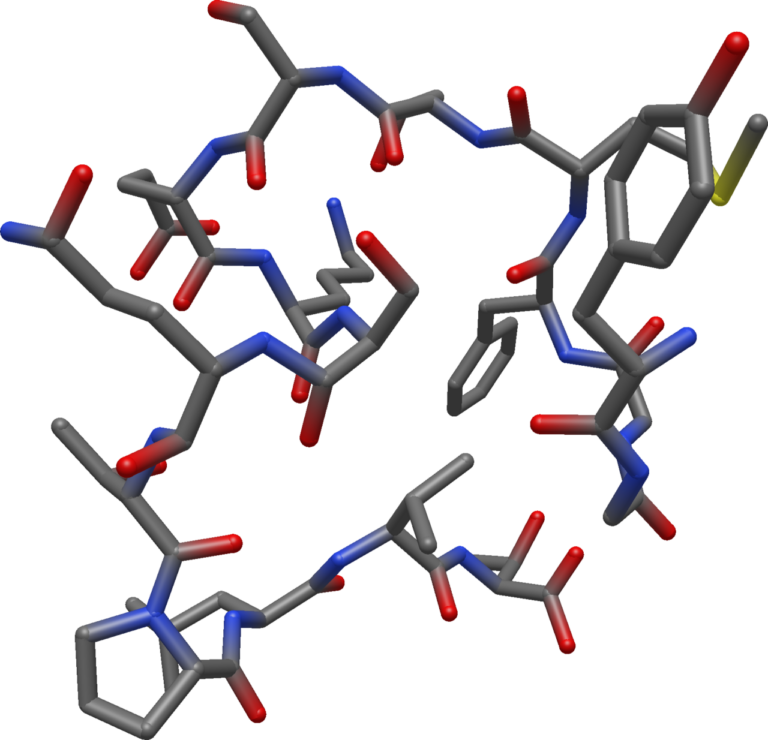
Semaglutide is a single-receptor (GLP-1) agonist, tirzepatide a dual GIP/GLP-1 agonist, and retatrutide a triple GIP/GLP-1/glucagon agonist. Adding receptors broadened metabolic effects in trials. Semaglutide and tirzepatide are approved medicines; retatrutide is investigational. Condor's retatrutide is research-use-only, not a medicine.
For most of pharmacology’s history, the dream was a magic bullet: one molecule, one target, one clean effect. Metabolic research has spent the last decade quietly doing the opposite. It started with a drug that hit a single gut-hormone receptor, then built one that hit two, then one that hit three — and at each step, the numbers in the trials moved. The story of semaglutide, tirzepatide and retatrutide is not really three separate stories. It is one lineage, told in receptors: single, then dual, then triple.2
That lineage is worth understanding on its own terms, because it is one of the clearest illustrations in modern biochemistry of a simple idea — that the body’s metabolic control is not run by one switch but by a committee of hormones, and that pressing more of them at once does something different from pressing one harder. Here is how the committee works, and what the evidence actually shows.
What is an incretin, and why does it matter?
An incretin is a hormone released by the gut after eating that tells the pancreas to prepare for incoming glucose. The two principal incretins are GLP-1 (glucagon-like peptide-1) and GIP (glucose-dependent insulinotropic polypeptide). Add a third hormone, glucagon — which raises blood sugar and, counterintuitively, increases energy expenditure and influences how the liver handles fat — and you have the three receptors at the centre of this whole field.25
The insight that reshaped the field was that these hormones do not work in isolation. GLP-1 blunts appetite and sharpens the insulin response to a meal. GIP modulates insulin secretion and fat metabolism. Glucagon, when carefully balanced against the others, can push energy use upward. Engineer a single peptide that engages more than one of these receptors at once, and the metabolic effects do not merely add — they appear to compound.256
How does semaglutide differ from tirzepatide and retatrutide mechanistically?
The cleanest way to see the difference is by generation. Semaglutide is a GLP-1 mono-agonist: it pulls a single lever, the GLP-1 receptor. Tirzepatide is a dual agonist, engaging both GIP and GLP-1 receptors — the first widely studied molecule to treat the incretin system as a pair rather than a solo.4 Retatrutide goes one further: it is a triple agonist, acting at the GIP, GLP-1 and glucagon receptors simultaneously.25 Researchers have nicknamed it “the power of three” for exactly this reason.5
Why does adding receptors change outcomes? Because each receptor contributes a different metabolic effect, and the glucagon arm in particular brings something the others cannot: a thermogenic, energy-expenditure component layered on top of appetite suppression and improved glucose handling.213 In preclinical work, this multi-hormonal approach has shown effects beyond glucose and weight — including, in mouse and hamster models of metabolic liver disease, measurable improvements in hepatic fat and fibrosis-related markers.1015
The incretin lineage in a single line: one receptor (semaglutide, GLP-1), two (tirzepatide, GIP/GLP-1), three (retatrutide, GIP/GLP-1/glucagon). Each step added a hormone receptor — and, in the respective programmes, raised the measured effect.
How much weight loss did each show in phase-3 trials?
This is where the lineage becomes legible in numbers. Across their respective phase-3 programmes, the average weight loss climbed roughly in step with the receptor count. In a 2025 head-to-head analysis comparing the three for weight loss, semaglutide sat near the bottom of the range and retatrutide at the top, with tirzepatide between them.4 Retatrutide’s TRIUMPH-1 programme reported up to 30.3% average weight loss, a figure the trial’s sponsor described as among the most powerful yet recorded for an investigational metabolic agent.1617 In type 2 diabetes, the TRANSCEND-T2D-1 phase-3 trial published in The Lancet reported reductions in blood glucose alongside the weight effects.79
| Compound | Receptors targeted | Generation |
|---|---|---|
| Semaglutide | GLP-1 | Single (mono-agonist) |
| Tirzepatide | GIP + GLP-1 | Dual agonist |
| Retatrutide | GIP + GLP-1 + glucagon | Triple agonist |
The incretin lineage by receptors and generation. In a 2025 head-to-head analysis of the three for weight loss, average reduction rose with receptor count — semaglutide lowest, tirzepatide in the middle, retatrutide highest, the last reaching up to 30.3% in the TRIUMPH-1 phase-3 trial.41617 Status: semaglutide and tirzepatide are approved medicines; retatrutide is investigational.
It is tempting to read that progression as a straight line of “more is better,” but the honest version is more interesting. The trials were run in different populations, at different times, under different protocols. The figures are not interchangeable, and a head-to-head within a single comparison is the only truly clean way to rank them — which is part of why direct studies like the 2025 head-to-head analysis matter so much.4
What does the honest evidence actually say?
Three things deserve emphasis. First, the dramatic figures come from a relatively young triple-agonist literature; retatrutide’s full long-term safety and durability profile is still being established across ongoing programmes, including dedicated trials in chronic kidney disease and cardiovascular-kidney-metabolic syndrome.31113 Second, much of the mechanistic detail — the adipose-tissue and liver effects, the lipid and metabolite shifts, the curious findings around alcohol-related behaviour in rats — comes from animal models and in vitro systems, not from settled human outcomes.10121415 Those results are genuinely promising and genuinely preliminary; both can be true at once.
Third, and most important for anyone handling these materials: the legal and regulatory status of the three is not the same. Semaglutide and tirzepatide are approved medicines. Retatrutide is a late-stage investigational drug — it has not completed the regulatory journey, and the synthesis and characterisation literature around it is still actively developing.178 Conflating “impressive trial data” with “available, approved treatment” is the single most common error in how this field is discussed publicly.
Why does the research-use-only distinction matter here?
Because the gap between an approved medicine, a trial drug and a research material is not a technicality — it is the whole point. The retatrutide that Condor supplies is a research-use-only (RUO) material. It is not the approved medicine, it is not the formulated drug used in the TRIUMPH or TRANSCEND trials, and it is not intended for human or veterinary use. It exists for laboratory investigation — receptor pharmacology, in vitro assays, animal-model work of the kind the references above describe — and nothing else.
In that context, the only things that matter about the physical material are the things a researcher can actually verify: identity, purity and a certificate of analysis (COA). A triple agonist is a precisely engineered peptide; whether a given vial contains what its label claims, at the stated purity, is a question for analytical chemistry, not marketing. If you are studying this lineage, the science deserves materials whose identity and purity are documented — and the rest, including any human application, sits firmly outside what RUO material is for. For the compound-specific background, see our overview of what retatrutide is.
- The three best-known incretin peptides form a clear lineage: one receptor (semaglutide), two (tirzepatide), three (retatrutide).
- Each receptor contributes a distinct metabolic lever — GLP-1 satiety and insulin response, GIP modulation, and glucagon's effect on energy expenditure and lipid handling.
- In a 2025 head-to-head analysis, average weight loss rose with receptor count: semaglutide lowest, retatrutide highest, with retatrutide reaching up to ~30.3% in the TRIUMPH-1 phase-3 trial.
- Semaglutide and tirzepatide are approved medicines and retatrutide is a late-stage investigational drug — none of this is health advice.
- The retatrutide material Condor supplies is strictly research-use-only: not the approved or trial medicine, not for human or veterinary use.
What is the difference between semaglutide, tirzepatide and retatrutide?
They differ by how many gut-hormone receptors they engage. Semaglutide is a single-receptor GLP-1 agonist; tirzepatide is a dual GIP/GLP-1 agonist; retatrutide is a triple GIP/GLP-1/glucagon agonist. Each added receptor contributes a distinct metabolic effect, which is why researchers describe them as a single→dual→triple lineage.
Why does adding more receptors change the results?
Each receptor governs a different metabolic lever. GLP-1 affects appetite and the insulin response; GIP modulates insulin and fat metabolism; glucagon adds an energy-expenditure and lipid-handling component. Engaging several at once appears to compound rather than simply add the effects, at least in trial and preclinical data.
How much weight loss did each show in clinical trials?
In a 2025 head-to-head analysis of the three for weight loss, average reduction rose with receptor count: semaglutide was lowest, tirzepatide sat in the middle, and retatrutide was highest, reaching up to about 30.3% in the TRIUMPH-1 phase-3 trial. Because these compounds were studied in different trials and populations, the ordering is the robust point, not a precise side-by-side percentage for each.
Is retatrutide an approved medicine?
No. As of this writing, semaglutide and tirzepatide are approved medicines, while retatrutide is a late-stage investigational drug that has not completed the regulatory approval process. This is an important distinction often blurred in public discussion of the three compounds.
Is the retatrutide Condor supplies the same as the trial drug?
No. Condor's retatrutide is a research-use-only (RUO) material for laboratory investigation. It is not the approved or trial medicine and is not intended for human or veterinary use. What matters about RUO material is its documented identity, purity and certificate of analysis.