
P21: The Neurogenesis Peptide That Has Never Met a Human
A CNTF-derived fragment rebuilt to cross the blood-brain barrier and switch on BDNF. The rodent data are genuinely striking. The translational record of everything that came before it is not.
P21 (P021) is a CNTF-derived peptide mimetic engineered to cross the blood-brain barrier and induce BDNF. In Alzheimer's and ageing rodent models it enhanced neurogenesis, reduced abnormal tau and improved memory. It remains entirely preclinical, with no human trials, and neurotrophic candidates that worked in mice have a poor record of translating.
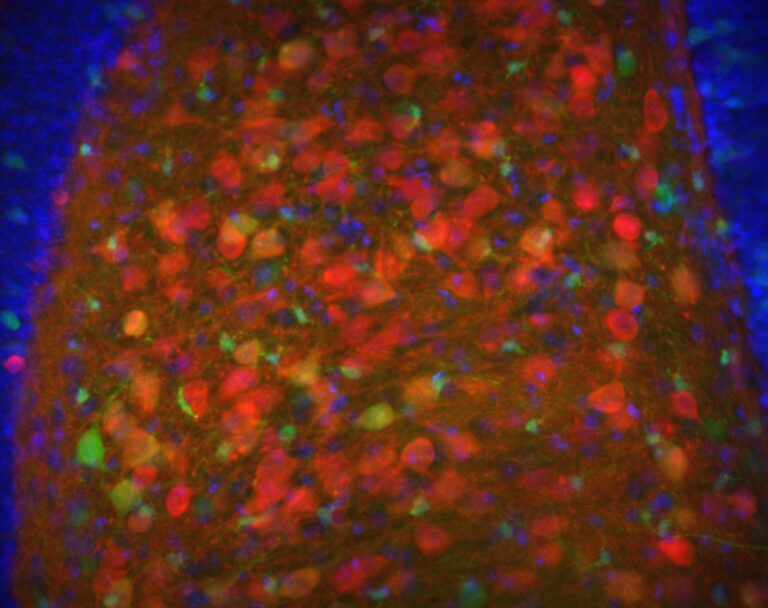
Drop a healthy mouse and a senescent one into the same water maze and the gap between them is, in a sense, the entire business plan of modern neuroscience. P21, a peptide built from a fragment of ciliary neurotrophic factor, has repeatedly narrowed that gap in rodents, restoring lost neurogenesis and trimming abnormal tau.101214 The inconvenient fact that frames everything below: it has done so without ever once being given to a person.
What is P21, and why CNTF?
Ciliary neurotrophic factor (CNTF) is one of the brain’s native survival signals, a cytokine that keeps neurons alive and, intriguingly, stimulates the birth of new ones in the adult hippocampus.11 As a therapeutic the full protein is hopeless: it is large, it does not readily cross the blood-brain barrier, and systemic exposure has been associated with unwanted effects. P21 (sometimes written P021) is the medicinal-chemistry answer to that problem, a short peptide derived from CNTF’s active region and chemically modified to make it small, stable and brain-penetrant.11 Structurally it is a six-residue peptide, Ac-Asp-Gly-Gly-Leu-Ala-Gly-NH2 (Ac-DGGLAG-NH2), acetylated and amidated at its ends to resist peptidases and carrying an adamantane group to aid stability and passage across the blood-brain barrier. Change any of those modifications and it is a different compound, which is why identity confirmation matters as much as purity.
The design logic is to keep the signal and discard the molecule. P21 was selected to recapitulate CNTF’s neurogenic activity while crossing into the central nervous system after peripheral administration in animals.11 Mechanistically the peptide is reported to act downstream on the brain-derived neurotrophic factor (BDNF) system, the better-studied growth factor most associated with synaptic plasticity and adult neurogenesis.811 In that respect P21 belongs to the same intellectual lineage as other neurotrophic-mimetic ventures, where a small molecule or peptide is asked to do the work of a temperamental protein.11
What did the rodent studies actually observe?
The bulk of the P21 literature comes from a small cluster of laboratories working in mouse models of Alzheimer’s disease and in aged animals.47 The reported findings are consistent and, taken at face value, attractive. In transgenic models, P21 was reported to enhance dentate-gyrus neurogenesis, increase markers of synaptic plasticity, and improve performance on memory tasks.814 Critically for the tau side of the story, the peptide was associated with reduced abnormal hyperphosphorylation of tau, the protein whose misfolding tracks cognitive decline.1013
Subsequent work extended the claims into prevention and rescue framings. Administered to young adult animals, P21 was reported to blunt later development of Alzheimer-type pathology in a model carrying disease-linked mutations.56 In ageing, non-transgenic rodents, the peptide was linked to raised BDNF expression and to improvements in age-related cognitive measures.15 The narrative arc is coherent: restore the neurotrophic signal, and downstream you see more new neurons, healthier synapses, less pathological tau, and better memory.1014
0 human beings have received P21 in any published clinical trial.
| Reported outcome | Model system | Status |
|---|---|---|
| Increased hippocampal neurogenesis | Transgenic and aged rodents | Preclinical |
| Elevated BDNF signalling | Rodent brain | Preclinical |
| Reduced abnormal tau phosphorylation | Mouse Alzheimer models | Preclinical |
| Improved memory-task performance | Rodent behavioural assays | Preclinical |
| Safety, tolerability, efficacy in people | Humans | No data |
Every positive signal attributed to P21 sits in the top rows. The bottom row is empty, and that asymmetry is the headline.
Why should the mouse data make you more sceptical, not less?
Here the brand’s honesty requirement and the scientific record happen to coincide. The category of “compound that reverses Alzheimer-type pathology in transgenic mice” is not rare; it is one of the most crowded and most disappointing in pharmacology. Drug candidates that rescued memory in mouse models have failed in human trials with grim regularity, a translational gap so reliable it has become a running embarrassment of the field. Transgenic mice overexpress a single human gene on a short timeline; they do not develop sporadic, decades-long human Alzheimer’s, and effects that look curative in that artificial system have repeatedly evaporated in people.4
The neurotrophic factors themselves carry an especially cautionary history. CNTF reached human trials in amyotrophic lateral sclerosis, where it did not deliver the hoped-for benefit and was associated with dose-limiting adverse effects.11 BDNF and related factors followed similar arcs, undone by delivery, half-life and tolerability problems that mouse studies rarely surface.11 P21 is explicitly designed to solve the delivery half of that problem. Whether solving delivery is sufficient when the biology of human neurodegeneration may differ fundamentally from the mouse is precisely the question no one has answered.
A near-perfect record of curing mice and failing humans is not a track record P21 has yet escaped; it is the one it has yet to enter.
How does P21 sit among other neurotrophic research peptides?
P21 is best read alongside its conceptual neighbours rather than in isolation. Cerebrolysin is a porcine-derived peptide mixture marketed in some jurisdictions and studied for neurotrophic-like effects, but with its own contested and heterogeneous clinical literature. Semax, an ACTH-derived peptide used clinically in Russia, has been reported to modulate BDNF expression, placing it in the same signalling neighbourhood as P21 though by a different route.11 Dihexa is a small angiotensin-IV-derived peptide investigated for hepatocyte-growth-factor-dependent synaptogenesis, another “small molecule doing a growth factor’s job” wager.
What unites them, and what the broader nootropics literature tends to underplay, is that mechanistic elegance is not evidence of human benefit. P21’s distinguishing feature within this group is the cleanliness of its preclinical story set against the completeness of its clinical silence. Among research peptides it is unusually well-characterised in animals and unusually untested in people, a combination that should be stated plainly rather than smoothed over.
What is the honest appraisal of the evidence?
Strip away the framing and the position is simple. P21 has a coherent rationale rooted in real CNTF and BDNF biology.411 It has reproducible, multi-paper rodent data reported to show enhanced neurogenesis, reduced abnormal tau and improved memory across Alzheimer and ageing models.101415 It has been engineered, credibly, to cross the blood-brain barrier where its parent protein could not.11
It also has no human trials, no published clinical safety data, and no regulatory standing of any kind anywhere; it is not an approved medicine and should not be confused with one. Its entire promise rests on a model system with a documented history of misleading the field, and on a neurotrophic strategy whose previous champions reached patients and disappointed.4 Honest scientists can hold both halves at once: the preclinical biology is interesting enough to study, and the translational prior is bad enough that confidence would be unjustified.
P21 is supplied strictly as a research-use-only reference material for in-vitro and laboratory investigation, not for human or veterinary use, and nothing above constitutes guidance for use in people. For any such work the only quality signals that matter are documentary: a current certificate of analysis, identity confirmation by mass spectrometry, and purity by HPLC, since a peptide whose sequence and purity are unverified cannot support reproducible science whatever the literature promises.
- P21 is a small, blood-brain-barrier-penetrant fragment derived from ciliary neurotrophic factor (CNTF), designed to recover its neurogenic activity while shedding the parent molecule's drug-like liabilities.
- In rodent Alzheimer's and ageing models it increased hippocampal neurogenesis, raised BDNF, reduced abnormal tau phosphorylation and improved memory measures.
- All published evidence is preclinical: no human trials, no regulatory submissions, no clinical safety data exist.
- The history of neurotrophic and CNTF-related programmes in people is a graveyard of mouse successes that failed to translate, which should heavily discount enthusiasm.
- It is a research-use-only reference material, not a medicine, and is unrelated to any approved CNTF-pathway product.
- For any laboratory use, identity and purity documentation (COA, HPLC, mass spectrometry) is the only meaningful quality signal.
Has P21 ever been tested in humans?
No. The published P21 literature is entirely preclinical, conducted in transgenic and aged rodents and in vitro. There are no registered or reported human clinical trials, no published clinical safety or pharmacokinetic data, and no regulatory submissions. Any claim about effects, tolerability or dosing in people is unsupported by evidence and should be treated as speculation rather than fact.
How is P21 different from CNTF or BDNF themselves?
CNTF and BDNF are full neurotrophic proteins that are large, unstable and do not readily cross the blood-brain barrier, which limited them as therapeutics. P21 is a short CNTF-derived peptide, chemically modified to be small, stable and brain-penetrant in animals, and reported to act on the BDNF system downstream. It is a designed mimetic, not the natural factor.
Why does the rodent Alzheimer's data warrant caution rather than excitement?
Mouse models of Alzheimer's have a long record of producing positive drug effects that then fail in human trials. The mice overexpress single human genes on compressed timelines and do not replicate sporadic human disease. Many neurotrophic candidates, including CNTF itself, reached human studies and disappointed. P21's encouraging mouse data should therefore be discounted heavily, not extrapolated.
What documentation matters for P21 as a research material?
Because P21 is a synthetic peptide sold for laboratory use only, identity and purity are the only meaningful quality signals. A current certificate of analysis, sequence and mass confirmation by mass spectrometry, and purity quantified by HPLC are essential. Without verified identity and purity, experimental results are uninterpretable, regardless of what the published preclinical literature reports.