
NMN vs NAD+: A Research-Use Comparison of NAD Metabolism Precursors
Two compounds, one pathway, one enzymatic step apart. A precise, evidence-honest look at when researchers reach for the precursor versus the coenzyme.
NMN (β-nicotinamide mononucleotide) is a single-step biosynthetic precursor that cells convert to NAD+ via NMNAT enzymes, whereas NAD+ is the mature redox coenzyme itself. In research models, NMN is studied as an upstream lever on NAD+ supply; NAD+ is the downstream cofactor it generates. Both are research-use-only.
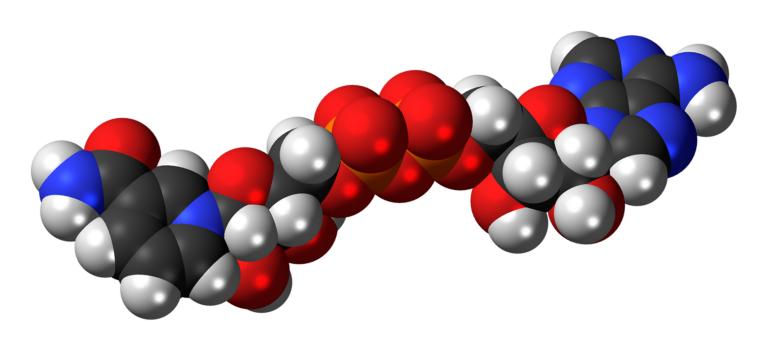
NMN and NAD+ are not rivals so much as neighbours. They sit one enzymatic step apart on the same biosynthetic pathway, which is precisely why a researcher studying NAD+ metabolism has to decide which one to reach for. NMN is the precursor; NAD+ is the finished coenzyme. This comparison treats both reference compounds offered by Condor Research strictly as research-use-only (RUO) materials — nothing here is a dose, a protocol, or a therapeutic claim, and every mechanism described is drawn from in vitro and animal literature.
What is the actual chemical difference between NMN and NAD+?
NMN (β-nicotinamide mononucleotide, CAS 1094-61-7) is a nucleotide assembled from nicotinamide, ribose, and a single phosphate group. NAD+ (nicotinamide adenine dinucleotide, CAS 53-84-9, molecular formula C21H27N7O14P2) is a dinucleotide — essentially NMN joined to an adenosine monophosphate moiety. In the salvage pathway most studied in cell and animal models, NMN is adenylylated to NAD+ by the NMNAT family of enzymes.1 The relationship is therefore direct and one-directional: NMN is the substrate, NAD+ is the product one reaction downstream. The two molecules also differ in size and charge, and that distinction matters experimentally — a mononucleotide and a bulky dinucleotide are not interchangeable inputs, even though they belong to the same metabolic family.
How are NMN and NAD+ studied differently?
The two compounds answer different experimental questions. NMN is typically deployed as an upstream tool — a way to probe whether increasing precursor availability changes NAD+ pools and the activity of NAD+-dependent enzymes such as the sirtuins and PARPs.4 A landmark mouse study reported that long-term NMN administration was associated with changes in energy metabolism, insulin sensitivity, and other physiological endpoints in aging animals,3 and the discovery of a candidate intestinal NMN transporter (Slc12a8) reframed how researchers think about NMN uptake — though that transporter assignment has been actively debated in the field.5
NAD+ itself is studied as the central coenzyme: an electron carrier in redox reactions and a consumed substrate for signalling enzymes including the sirtuins and CD38. Reviews frame NAD+ as a metabolic hub whose age-related decline intersects with multiple cellular hallmarks of ageing.21 In practice, supplying NAD+ directly versus supplying a precursor like NMN are mechanistically distinct strategies, because intact NAD+ is a large, charged dinucleotide with different cell-entry considerations than a mononucleotide.
1 enzymatic step — the single NMNAT-catalysed adenylylation — is all that separates the precursor from the coenzyme it builds.1
How do the Condor Research products compare on specs?
| Attribute | NMN Capsules | NAD+ |
|---|---|---|
| Chemical class | Mononucleotide (NAD+ precursor) | Dinucleotide (redox coenzyme) |
| Full name / CAS | β-Nicotinamide mononucleotide · 1094-61-7 | Nicotinamide adenine dinucleotide · 53-84-9 |
| Molecular formula | C11H16N2O8P | C21H27N7O14P2 |
| Pathway position | Substrate (one step upstream) | Product (downstream coenzyme) |
| Mechanism investigated (preclinical) | NMNAT salvage conversion to NAD+; sirtuin/PARP fuelling; mitochondrial & metabolic endpoints | Redox electron transfer; substrate for sirtuins/CD38; mitochondrial & cardioprotective signalling |
| Format | 60 HPMC (vegan) capsules, 500 mg each | 1000 mg/vial, white lyophilized powder |
| Handling | Capsule (no reconstitution) | Reconstitute with sterile water |
| Purity / characterization | ≥99% (HPLC), COA available | ≥99% (HPLC), third-party tested, COA |
Side-by-side specifications for the two reference compounds. Consult the COA on each product page for lot-specific data.
Which one fits a given research design?
The choice is a function of the question, not of one compound being “better.” A study probing whether boosting precursor supply alters downstream NAD+-dependent enzyme activity in a cell or animal model maps naturally onto NMN, where the capsule format suits oral-availability and pharmacokinetic studies in animal systems. A study that needs the intact coenzyme as a reagent — characterizing redox-dependent reactions, enzyme assays, or direct NAD+ delivery models — maps onto the lyophilized NAD+ vial, reconstituted for solution-based work. Format follows function: capsules for ingestion-route animal models, vialed powder for bench reconstitution. The decision rarely hinges on which compound is intrinsically more potent or more interesting; it hinges on where in the pathway the experiment needs to intervene, and on whether the readout depends on cellular conversion or on the coenzyme being present from the outset.
Neither compound is universally superior. The right reagent is dictated by the experimental question — precursor leverage versus intact coenzyme — not by a hierarchy of merit.
Is the evidence preclinical or clinical?
It is worth being precise about evidence quality, because the NMN/NAD+ field is routinely overstated. The preclinical base is substantial: rodent and cell-culture work links NMN and NAD+ availability to mitochondrial, metabolic, and ageing-related endpoints.324 The human clinical base is far thinner and more cautious. Early human work reported that single oral NMN doses were tolerated and altered nicotinamide-metabolite levels,7 and a randomized trial reported increased muscle insulin sensitivity in prediabetic women.6 However, a systematic review of randomized trials found that improvements in physical-performance parameters were not statistically significant, while tolerability was generally good,8 and a recent overview emphasizes that clinical evidence for NAD+ precursors in human ageing remains limited and unsettled.9 In short: rich animal mechanism, promising but inconsistent and early human data. The honest reading is that the preclinical signal has not yet been matched by a settled clinical picture, and that the gap between the two is the single most important caveat for anyone surveying this literature. Condor Research materials are supplied for in vitro and research use only and are not characterized for human use.
For full specifications, certificates of analysis, and physicochemical data, see the NMN Capsules and NAD+ product pages. Both compounds are characterized at ≥99% purity by HPLC with a certificate of analysis, supplied strictly as Research Use Only reference materials — not for human or veterinary use, diagnostic, or therapeutic application. The mechanisms summarized above are derived from in vitro and animal literature and do not establish efficacy or safety in humans.
- NMN and NAD+ occupy adjacent points on the same salvage pathway: NMN is adenylylated to NAD+ by NMNAT-family enzymes, so NMN is the substrate and NAD+ the product one reaction downstream.
- Chemically distinct: NMN (CAS 1094-61-7, C11H16N2O8P) is a mononucleotide; NAD+ (CAS 53-84-9, C21H27N7O14P2) is a dinucleotide, roughly NMN joined to an adenosine monophosphate moiety.
- Researchers choose by question, not quality: NMN to probe whether raising precursor supply shifts NAD+ pools and sirtuin/PARP activity; NAD+ when the intact coenzyme is needed as a redox or enzyme-assay reagent.
- Honest evidence gradient: the preclinical base in cells and rodents is substantial, but human RCT data are early and mixed, with some performance endpoints null and overall clinical evidence still unsettled.
- Format follows function: NMN as 60 HPMC vegan capsules (500 mg each) for ingestion-route animal work; NAD+ as a 1000 mg/vial lyophilized powder reconstituted for bench work. Both ≥99% by HPLC with a COA.
- Supplied strictly research-use-only; the mechanisms summarized are drawn from in vitro and animal literature and do not establish human efficacy or safety.
Is NMN the same as NAD+?
No. NMN (β-nicotinamide mononucleotide) is a precursor that cells convert to NAD+ via NMNAT enzymes in the salvage pathway. NAD+ (nicotinamide adenine dinucleotide) is the mature redox coenzyme. Chemically, NAD+ is roughly NMN joined to an adenosine monophosphate unit, making NMN the upstream substrate and NAD+ the downstream product.
NMN vs NAD+: which is better for research?
Neither is universally better; the right choice depends on the experimental question. NMN is used to study whether increasing precursor supply changes NAD+ pools and NAD+-dependent enzyme activity, often in oral-route animal models. NAD+ is used when the intact coenzyme is needed as a reagent for redox or enzyme-assay work. Both are research-use-only reference compounds.
Why supply NMN as capsules but NAD+ as a vialed powder?
Format follows research function. NMN is offered as 60 HPMC vegan capsules (500 mg each), which suits ingestion-route studies in animal models without reconstitution. NAD+ is supplied as a 1000 mg/vial lyophilized powder to be reconstituted with sterile water for solution-based bench work. This reflects how each compound is typically handled in the literature, not any human-use guidance.
Is the evidence for NMN and NAD+ clinical or preclinical?
Mostly preclinical. The strongest, most consistent data come from cell-culture and rodent studies on NAD+ metabolism, mitochondrial function, and ageing. Human clinical data are early and mixed: some trials report tolerability and metabolic signals, but systematic reviews find performance benefits are not statistically significant and overall clinical evidence remains limited.
What are the purity and characterization specs?
Both compounds are characterized at ≥99% purity by HPLC with a certificate of analysis (COA). NMN Capsules carry CAS 1094-61-7; NAD+ carries CAS 53-84-9 with molecular formula C21H27N7O14P2 and is third-party tested. Always consult the COA on each product page for the specific lot.
How is NMN converted to NAD+ in research models?
In the salvage pathway studied in cell and animal systems, NMN is adenylylated to NAD+ by NMNAT-family enzymes. Uptake of NMN into cells has been linked to a candidate transporter, Slc12a8, though that assignment has been actively debated in the literature. This describes biology in experimental models only.