
Cerebrolysin: The Most-Used Nootropic the West Won’t Register
A porcine brain-derived peptide mixture prescribed across Eastern Europe and Asia for stroke and dementia — yet independent reviews are tepid, and you cannot fully say what is in the vial.
Cerebrolysin is a porcine brain-derived mixture of low-molecular-weight peptides and free amino acids, registered and prescribed across Eastern Europe and Asia for stroke and dementia. Many trials exist, but independent reviews report no convincing benefit in acute ischaemic stroke and weak signals elsewhere. It remains unapproved in the US and EU partly because the mixture cannot be fully characterised.
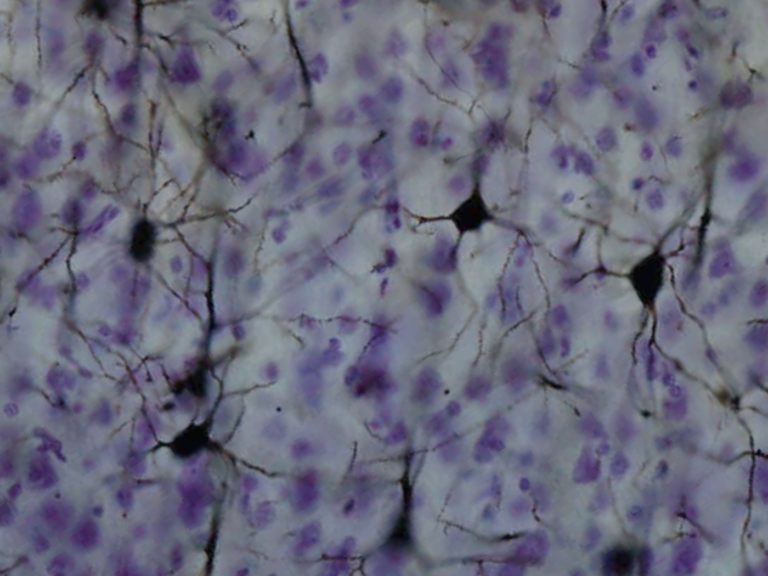
No other compound in this catalogue arrives with a national marketing authorisation, a hospital formulary entry across a dozen countries, and an independent meta-analytic literature that keeps deflating the very indications it is most prescribed to treat. Cerebrolysin is that contradiction in a vial: among the most clinically-used nootropic-class materials we stock, and the one whose independent evidence base is the least flattering.
What is actually in the vial?
Cerebrolysin is not a molecule. It is a biological mixture produced by standardised enzymatic proteolysis of lipid-free porcine brain proteins10, yielding a fraction of low-molecular-weight peptides — conventionally described as falling below a roughly 10 kDa ceiling10 — alongside a large complement of free amino acids. Published characterisations describe the active material as a minority peptide fraction set against a much larger free-amino-acid background, and analytical work using modern liquid-chromatography mass spectrometry has resolved many distinct peptide species within a single preparation10. The claimed mechanism is neurotrophic: the peptide fraction is proposed to mimic the action of endogenous neurotrophic factors1014, an idea explored largely in preclinical and animal models rather than settled in humans1415.
This matters because the thing being studied is defined by its process, not its structure10. Two vials are “the same” only insofar as the manufacturing is reproducible — a far weaker guarantee than a synthetic peptide of fixed, verifiable sequence. Everything difficult about Cerebrolysin, scientifically and regulatorily, follows from that single fact.
<10 kDa the molecular-weight ceiling conventionally used to define Cerebrolysin’s active peptide fraction — the remainder is free amino acids
What does the human evidence actually show?
Here the gap between usage and proof opens widest. The compound is registered and routinely administered for ischaemic stroke, vascular dementia, traumatic brain injury and Alzheimer’s510 across Eastern Europe, Russia, China and parts of Asia. Manufacturer-associated trial programmes are substantial, and proponents point to reported motor-recovery signals when the agent is paired with stroke rehabilitation23, reported neurorecovery signals after moderate-to-severe traumatic brain injury1213, and reported global-function effects in Alzheimer’s cohorts15.
But the independent reads are markedly cooler. Pooled analyses of acute ischaemic stroke have generally failed to demonstrate a convincing benefit on survival9, and reviewers have flagged a possible increase in non-fatal serious adverse events94 — a combination that should temper any enthusiasm. In vascular dementia, independent synthesis has reported cognitive and global-function improvement, but graded the underlying evidence as low certainty5, citing heterogeneity and high risk of bias. The Alzheimer’s literature pools to a measurable cognitive-scale effect in some analyses15, yet leans heavily on manufacturer-associated trials of modest size1510. The pattern is consistent: the further a reviewer stands from the sponsor, the smaller the effect tends to look.
| Indication | Independent reading | Reported certainty |
|---|---|---|
| Acute ischaemic stroke | No convincing survival benefit; possible harm signal9 | Tepid to negative |
| Vascular dementia | Cognitive/functional signal, not definitive5 | Low certainty |
| Alzheimer’s disease | Cognitive-scale effect in some pooled analyses15 | Low / manufacturer-linked |
| Traumatic brain injury | Neurorecovery signal in sponsor-associated trials1213 | Low / sponsor-associated |
A scorecard of the four headline indications: registration and routine use do not track the strength of the independent evidence.
Why won’t the FDA or EMA register it?
The honest answer is not principally safety. It is definability. Western biologics frameworks demand exhaustive characterisation of a product’s active components and consistent batch-to-batch molecular identity10. A mixture of many low-molecular-weight peptides, defined by a proteolysis process and tolerant of some manufacturing variation, cannot easily be reduced to a single, fully specified active pharmaceutical ingredient under those rules. So while Cerebrolysin holds marketing authorisations across many countries — including national licences in parts of Europe — it has not cleared the United States regulatory pathway, and it is not an approved medicine in the EU’s centralised sense9.
Cerebrolysin’s problem is not that it is dangerous, but that no Western regulator can fully say what is in it.
How honest should we be about the limitations?
Very. The bull case for Cerebrolysin is decades of clinical familiarity and a thick file of positive trials; the bear case is that the most rigorous independent syntheses available repeatedly downgrade or reverse those positive readings96. The stroke verdict is the clearest: no demonstrated mortality benefit, plus an adverse-event signal worth taking seriously94. A recurring methodological weakness across the dementia and traumatic-brain-injury literature is sponsor proximity, small single-centre cohorts, and inconsistent blinding124 — exactly the conditions under which effect sizes tend to inflate. What is genuinely missing is large, fully independent, adequately powered replication, and the patient-relevant outcome data that many existing trials did not capture.
This is the kind of compound that rewards a contrarian discipline: treat the registration footprint as a fact about regulatory geography, not as a proxy for proven efficacy. Routine use in one jurisdiction is evidence of habit and approval pathways, not of settled biology.
Where does it sit among nootropics?
Cerebrolysin is an outlier in any nootropics collection. The synthetic non-peptide nootropics in this catalogue are single, fully characterisable molecules; Cerebrolysin is a porcine-derived biological with the analytical ambiguity that implies10. Among peptide nootropics it is unusual too — most of those are defined sequences, whereas Cerebrolysin is a population of peptides10. That distinction is the whole story: it explains why the clinical record is so large, why the independent verdict is so mixed, and why characterisation, rather than chemistry, governs whether any two studies of it are even comparable.
Cerebrolysin is supplied here strictly as a Research Use Only analytical reference material, not as a medicine — distinct from any licensed product authorised in other jurisdictions, and not intended for human or veterinary use. Because the compound is a process-defined biological mixture rather than a single molecule, identity and batch documentation are not a formality but the central scientific control: peptide-profile characterisation by HPLC/MS, free-amino-acid analysis, and a per-lot certificate of analysis10 are what make a result in one laboratory meaningfully comparable to another. For a reference material this poorly characterised by nature, the documentation is the foundation of the experiment.
- Cerebrolysin is not a defined molecule but a biological mixture of low-molecular-weight peptides and free amino acids from enzymatically digested porcine brain — composition, not chemistry, is the central problem.
- It is among the most clinically-used compounds associated with the nootropic category: registered in many countries and routinely prescribed for ischaemic stroke, vascular dementia, TBI and Alzheimer's across Eastern Europe, Russia, China and parts of Asia.
- The independent verdict is sobering: pooled analyses of acute ischaemic stroke have not shown a convincing survival benefit, and a possible adverse-event signal has been flagged.
- Signals reported in vascular dementia and Alzheimer's rest heavily on heterogeneous, manufacturer-associated trials that independent reviewers grade as low certainty.
- US and EU non-approval is driven less by a specific safety finding than by the difficulty of defining a consistent active ingredient with batch-to-batch molecular identity.
- For research use only: a poorly-defined biological mixture makes identity and batch documentation (HPLC/MS peptide profiling, COA) the decisive variable for reproducibility.
Is research-grade Cerebrolysin the same as the prescribed medicine used in Eastern Europe?
No. The licensed product authorised in various countries is a regulated medicine intended for clinical use under medical supervision. The material supplied here is a Research Use Only analytical reference for laboratory work, not for human or veterinary use. Even where the underlying mixture is nominally similar, the regulatory status, intended use and quality framework differ entirely, and they should be treated as separate things.
What does the strongest independent human evidence actually show?
Independent syntheses of acute ischaemic stroke have generally not shown a convincing benefit on survival, and reviewers have flagged a possible increase in non-fatal serious adverse events. Reviews in vascular dementia and Alzheimer's have reported some cognitive signals, but graded that evidence as low certainty, citing heterogeneity, high risk of bias and substantial manufacturer involvement in the underlying trials.
Why can't Cerebrolysin be approved in the US or EU if it is used so widely elsewhere?
Largely because it cannot be fully characterised. It is a process-defined mixture of many low-molecular-weight peptides plus free amino acids, not a single active ingredient. Western biologics regulation requires consistent, fully specified batch-to-batch molecular identity, which a proteolysis-derived mixture with manufacturing tolerances struggles to satisfy. The barrier is definability rather than a single safety finding, though the stroke adverse-event signal is also relevant.
Why does batch documentation matter so much for this compound specifically?
Because Cerebrolysin is defined by its manufacturing process rather than a fixed structure, two lots are only comparable insofar as production is reproducible. Without per-batch peptide-profile characterisation by HPLC/MS, free-amino-acid analysis and a certificate of analysis, you cannot know whether a result reflects the compound or lot-to-lot variation. For a mixture this heterogeneous, identity and purity documentation is the primary control on reproducible research.