
BPC-157 Arginate vs BPC-157 (Standard/Acetate): What the Salt Form Actually Changes
BPC-157 arginate vs standard BPC-157, compared for research: the salt-form (arginine vs acetate) chemistry, what it changes for solubility and handling stability, and what it does not change about the peptide itself. Research use only.
BPC-157 arginate and standard BPC-157 share the same 15-amino-acid peptide and primary sequence; what differs is the counterion — an arginine-based salt versus the conventional acetate. That salt choice is a formulation and handling variable affecting solubility and dissolution, not the peptide's identity or its preclinical mechanism. Direct head-to-head data between the two salt forms are limited. Research use only.
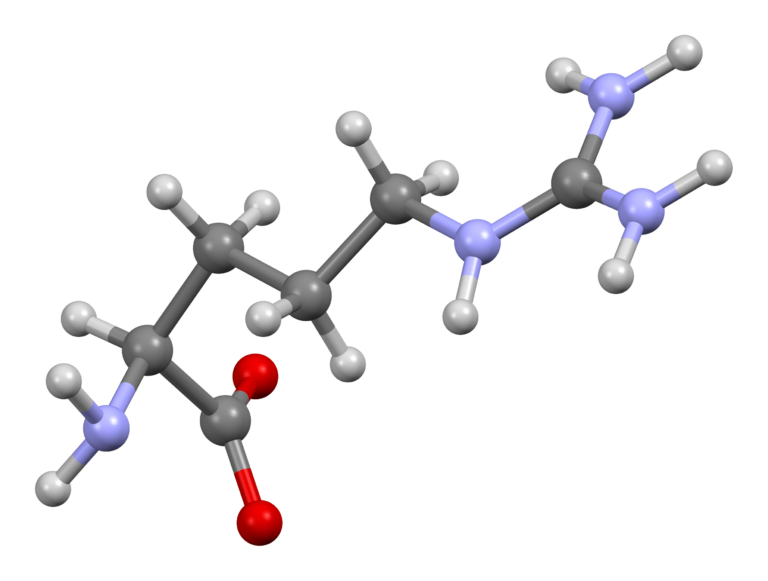
When a peptide is sold as an “arginate”, the change is not to the molecule that does the work — it is to the salt it is packaged as. BPC-157 arginate and standard BPC-157 carry the same 15-amino-acid sequence; what differs is the counterion paired with the peptide, an arginine-based salt instead of the conventional acetate. In formulation terms that can matter for how the powder dissolves and behaves in the vial. It does not make a new peptide, and it does not move the evidence base. Everything below is framed strictly for laboratory research use only — not for human use, dosing, or treatment.
Are BPC-157 arginate and standard BPC-157 the same molecule?
Yes, at the level that matters chemically: the peptide is identical. BPC-157 is a synthetic, stable pentadecapeptide of 15 amino acids corresponding to a partial sequence found in human gastric juice, and it is one of the most extensively investigated compounds in regenerative research.4 Both the “arginate” and the “standard” descriptors refer to the same peptide chain (sequence Gly-Glu-Pro-Pro-Pro-Gly-Lys-Pro-Ala-Asp-Asp-Ala-Gly-Leu-Val, molecular formula C62H98N16O22, ~1419.5 g/mol). What changes between them is the salt form — the small ionic counterpart the peptide is isolated and dried with.
Synthetic peptides are not normally isolated as neutral free bases. They come off purification as salts, paired with a counterion. The most common default for research peptides is an acetate salt (and historically trifluoroacetate from the purification step, often exchanged to acetate). An arginate form instead pairs the peptide with arginine as the salt-forming partner. So the practical question is not “which BPC-157 is real” — both are — but “what does swapping the counterion change?”
Same 15 aa sequence in both forms — the arginate vs acetate distinction is the salt the peptide is packaged as, not a different molecule.
What is a counterion, and why does the salt form exist at all?
A peptide like BPC-157 carries ionisable groups, so in the solid state it is balanced by counterions to form a neutral salt. Choosing that counterion is a standard tool in pharmaceutical and formulation science: salt selection is used deliberately to tune properties such as aqueous solubility, dissolution rate, hygroscopicity and crystallinity, without altering the active molecule itself. The same principle that drives small-molecule salt selection extends to peptides, where ion-pairing with different counterions has long been used to modulate the physicochemical behaviour of hydrophilic peptide substances.5 The chemistry and geometry of the counterion can measurably shape how a formulation dissolves and releases.6
An arginate is simply that lever applied with arginine as the counter-species. Arginine is one of the best-studied additives in protein and peptide formulation: it is widely used to improve apparent solubility and to suppress aggregation, and it is known to solubilise aromatic and hydrophobic moieties in aqueous solution through specific molecular interactions rather than by changing the solute’s covalent structure.78 That body of work is the rational basis for an arginine-paired peptide salt being positioned as a handling and solubility variant — and it is also why the claim should stay there, in physicochemistry, and not drift into anything about biological effect.
The salt form is a packaging-and-handling decision made around the molecule, not a change to the molecule. That is the entire distinction between an arginate and a standard form.
How do BPC-157 arginate and standard BPC-157 compare?
| Attribute | BPC-157 (standard / acetate form) | BPC-157 arginate |
|---|---|---|
| Active peptide | BPC-157 pentadecapeptide (15 aa) | Same BPC-157 pentadecapeptide (15 aa) |
| Primary sequence | Gly-Glu-Pro-Pro-Pro-Gly-Lys-Pro-Ala-Asp-Asp-Ala-Gly-Leu-Val | Identical sequence |
| Counterion / salt form | Acetate (conventional research default) | Arginine-based salt (arginate) |
| What the salt changes | Baseline solubility/dissolution behaviour for the peptide | Counterion chosen to modulate solubility/dissolution behaviour |
| What the salt does not change | The peptide identity, its sequence, or its preclinical mechanism of action | |
| Format (Condor Research) | Lyophilised vial | Capsule format |
| Purity / characterisation | ≥99% by HPLC; third-party tested with COA | ≥99% by HPLC; third-party tested with COA |
| Comparative head-to-head data | Limited — little published work directly contrasts the two salt forms of BPC-157 | |
| Evidence base for the peptide | Overwhelmingly preclinical (in vitro / rodent); no robust human efficacy data; not an approved drug | |
Identical at the level of the molecule; separated only by the counterion and the resulting handling profile, plus the format each is offered in.
Does the salt form change what BPC-157 does in research models?
The honest position is that the salt form is a physicochemical variable, and the preclinical literature on BPC-157’s activity was generated almost entirely without specifying — let alone comparing — salt form. The mechanistic record describes the peptide itself: reported in vitro effects on tendon fibroblast outgrowth, survival and migration,1 improved ligament healing in rat models,2 and a broad cytoprotective and vascular profile across animal injury paradigms summarised in recent reviews.34 Those findings attach to the BPC-157 molecule, which both forms contain.
What a different counterion can plausibly influence is upstream of biology: how readily the lyophilised material goes into solution, how it behaves during reconstitution, and the practicalities of handling — exactly the properties salt selection is designed to tune.56 Translating that into a claim of greater or lesser effect would be unsupported. There is no robust, published head-to-head dataset establishing that one salt form of BPC-157 outperforms the other on any research endpoint, and any such comparison would need to be designed, controlled and powered as its own experiment.
How honest is the comparative evidence?
This is the part that deserves candour. Two separate evidence gaps stack here. First, BPC-157 as a molecule is supported overwhelmingly by preclinical work — in vitro cell studies and rodent models — with no robust human clinical efficacy data and no approved-drug status; that is true regardless of salt form.34 Second, the specific question of arginate vs acetate is under-studied: the general principles of counterion and arginine behaviour are well established in formulation science,5678 but published data directly comparing the two salt forms of BPC-157 are limited. So the defensible statement is narrow: the arginate is a salt-form variant with a physicochemical rationale for handling and solubility, on the same peptide whose biological evidence remains preclinical.
How should a researcher choose between the two?
The choice is a formulation and workflow decision, not a question of potency. If a protocol calls for the conventional lyophilised vial — for reconstitution flexibility and a familiar acetate baseline — the standard form is the direct fit. If a study design favours a fixed pre-portioned capsule format and an arginine-paired salt, the arginate form addresses that. Both are supplied at matched ≥99% HPLC purity with a third-party COA, so material quality is not the differentiator; the differentiator is the format and salt-form characteristics your workflow needs. Whatever the form, the peptide and its strictly preclinical, research-use-only status are the same.
At Condor Research the standard form is supplied as the lyophilised BPC-157 vial, and the arginine-salt form as BPC-157 Arginate Capsules. For background on the peptide itself, see What Is BPC-157?.
Research use only. The information above is provided for in vitro and laboratory research purposes only. BPC-157 (in any salt form) is not an approved medicine in the EU or elsewhere, and nothing here is medical advice, a therapeutic claim, a dosing recommendation, or guidance for human or veterinary use. Materials supplied by Condor Research (Atrio Sciences s.r.o., Hornocermanska 1556/76, 949 01 Nitra, Slovakia) are sold for research use only and are not for diagnostic or therapeutic use.
Condor Research · Scientific desk
- The active molecule is the same in both — the BPC-157 pentadecapeptide (15 amino acids, sequence Gly-Glu-Pro-Pro-Pro-Gly-Lys-Pro-Ala-Asp-Asp-Ala-Gly-Leu-Val).
- The difference is the counterion / salt form, an arginine-based salt versus the standard acetate salt; this is a formulation property, not a different peptide.
- Salt form is a recognised lever for solubility and dissolution in peptide and small-molecule formulation science, which is why arginate forms are positioned for handling, not for any change in mechanism.
- Arginine is a well-characterised solubility- and aggregation-modulating agent in protein and peptide formulation literature.
- Direct comparative (head-to-head) data specifically contrasting BPC-157 arginate vs BPC-157 acetate are limited; most BPC-157 literature does not specify or compare salt form.
- All BPC-157 evidence remains overwhelmingly preclinical (in vitro and rodent); neither salt form is an approved drug and no human efficacy claims apply.
- Condor Research supplies the standard BPC-157 as a lyophilised vial and arginate-form BPC-157 in capsule format, both at >=99% HPLC purity with a third-party COA.
Is BPC-157 arginate a different peptide from standard BPC-157?
No. Both contain the identical BPC-157 pentadecapeptide (the same 15-amino-acid sequence). "Arginate" refers to the salt form — the arginine-based counterion the peptide is paired with — versus the conventional acetate salt of the standard form. The molecule that the research literature describes is the same in both.
What is the actual difference between the arginate and acetate forms?
The counterion. In the standard form the peptide is typically isolated as an acetate salt; in the arginate it is paired with arginine. Counterion selection is a recognised way to tune physicochemical properties such as aqueous solubility and dissolution behaviour, without altering the active molecule. It is a formulation and handling distinction.
Does the arginate form make BPC-157 more effective?
There is no robust published evidence that one salt form outperforms the other on any research endpoint. Salt form can influence solubility and handling, but extrapolating that to greater biological effect is unsupported. Any such comparison would need to be run as its own controlled experiment. These materials are for research use only and carry no efficacy claims.
Why use an arginine-based salt at all?
Arginine is one of the most studied additives in protein and peptide formulation, used to improve apparent solubility and to suppress aggregation, and it can solubilise hydrophobic moieties in aqueous solution through specific interactions. That makes an arginine-paired salt a rational choice when the goal is a solubility/handling-oriented variant — strictly a physicochemical rationale, not a biological one.
Is the comparative evidence between the two forms strong?
No. The general formulation science behind counterions and arginine is well established, but data directly comparing BPC-157 arginate against BPC-157 acetate specifically are limited. And the BPC-157 evidence base as a whole is overwhelmingly preclinical — in vitro and rodent models — with no approved-drug status and no robust human efficacy data.
What does Condor Research supply, and how is it characterised?
The standard form is supplied as a lyophilised BPC-157 vial; the arginine-salt form is supplied in capsule format. Both are stated at ≥99% purity by HPLC and third-party tested with a Certificate of Analysis (COA). Both are supplied strictly for laboratory research use only.