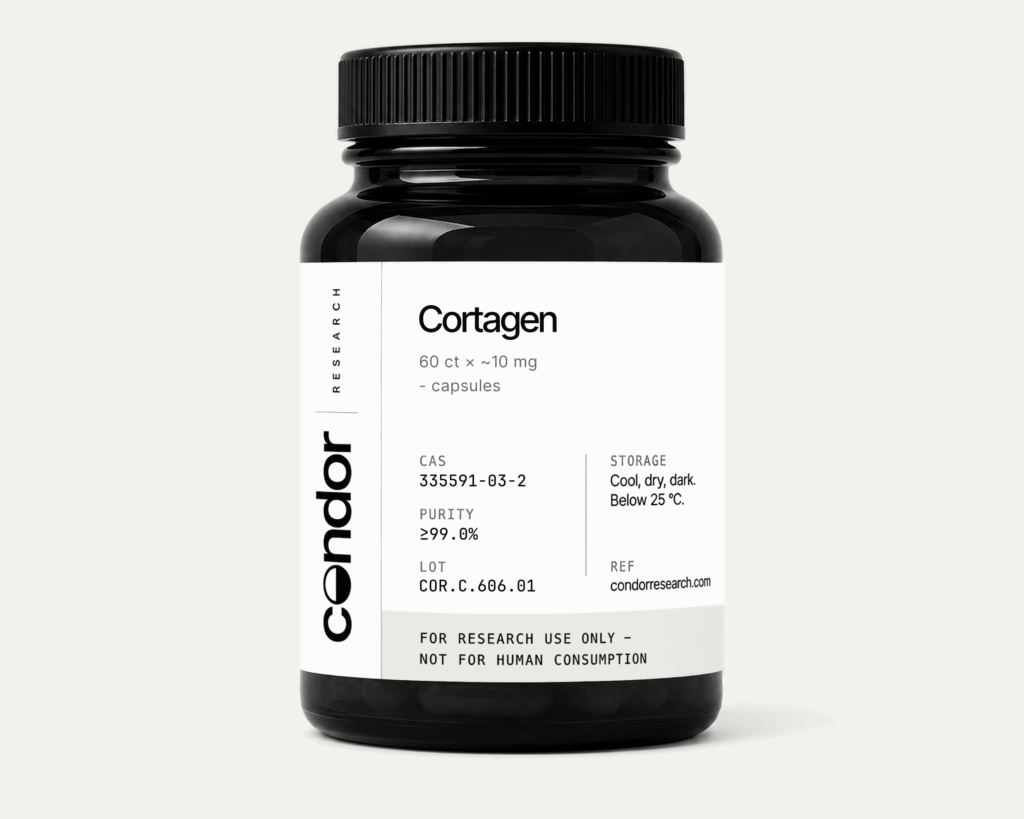
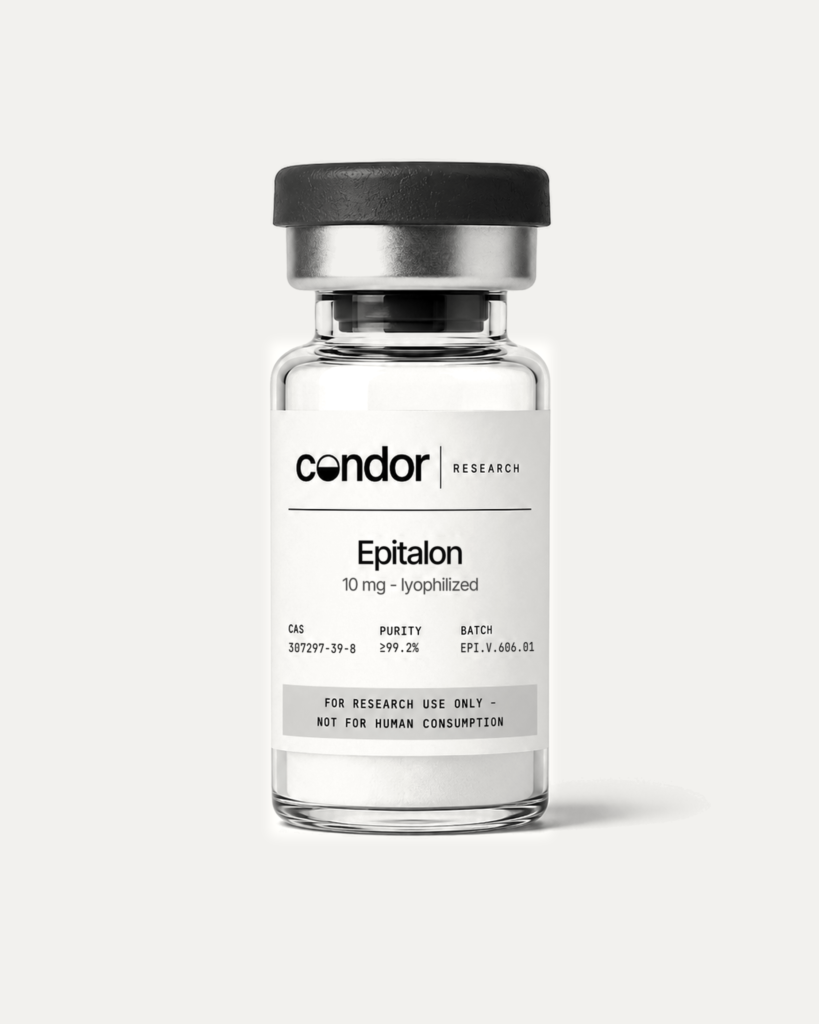
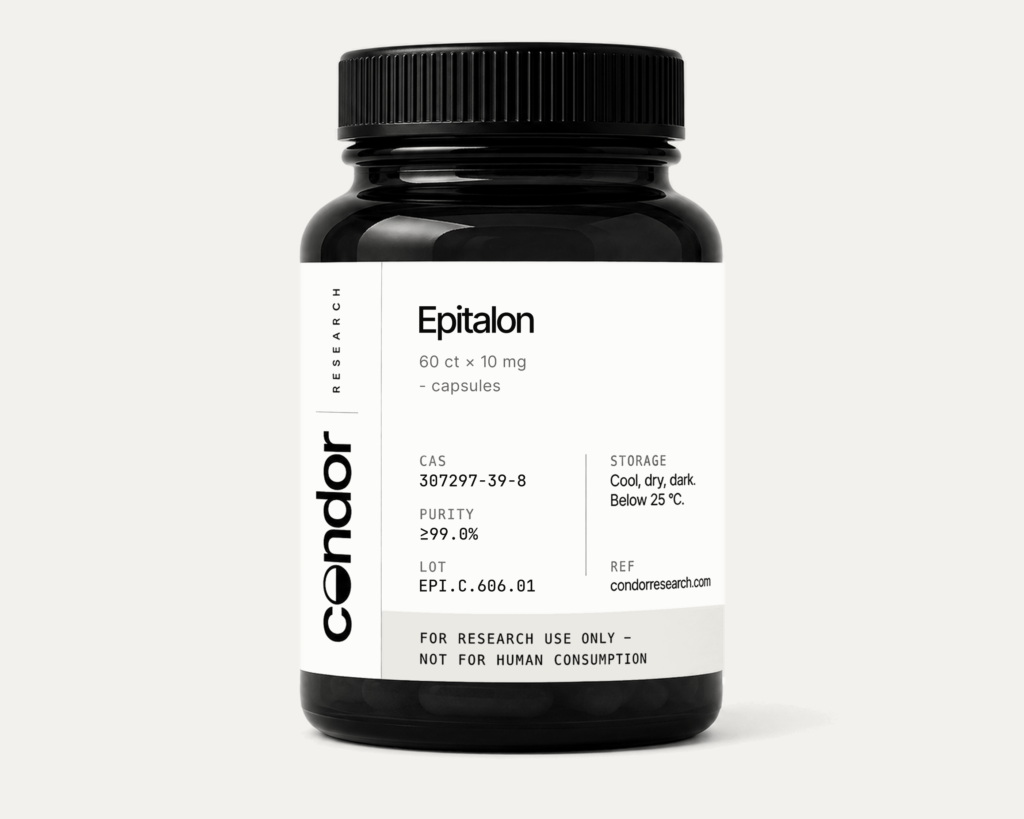
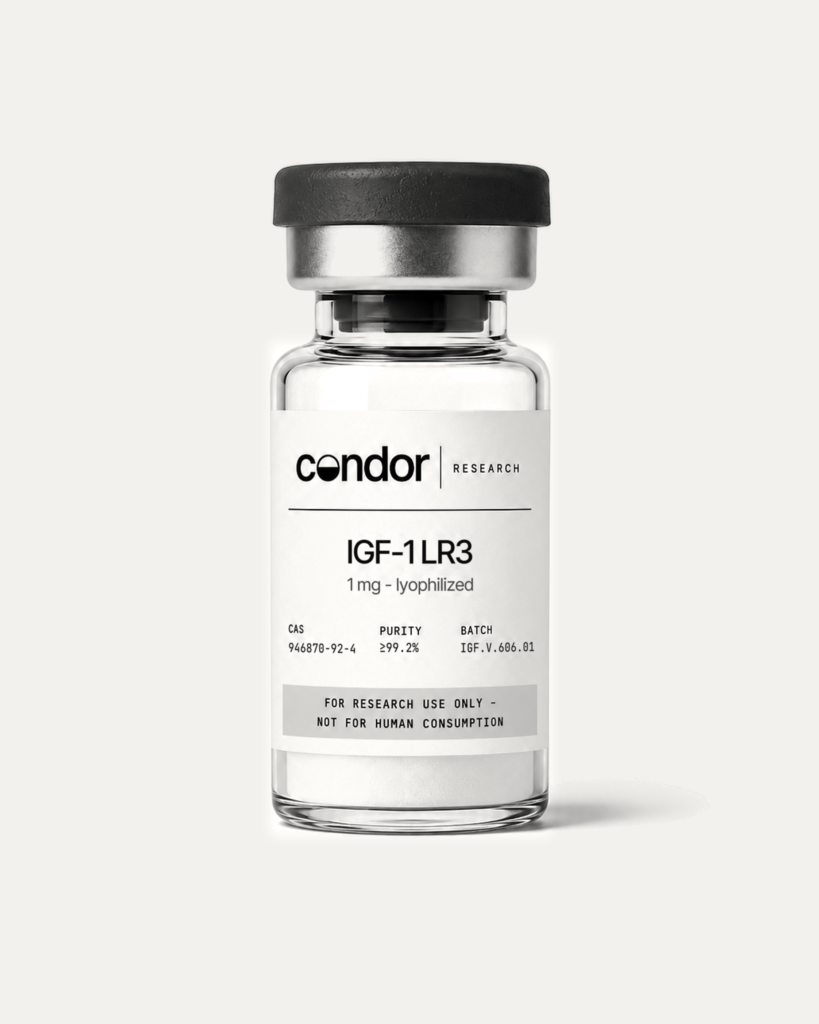
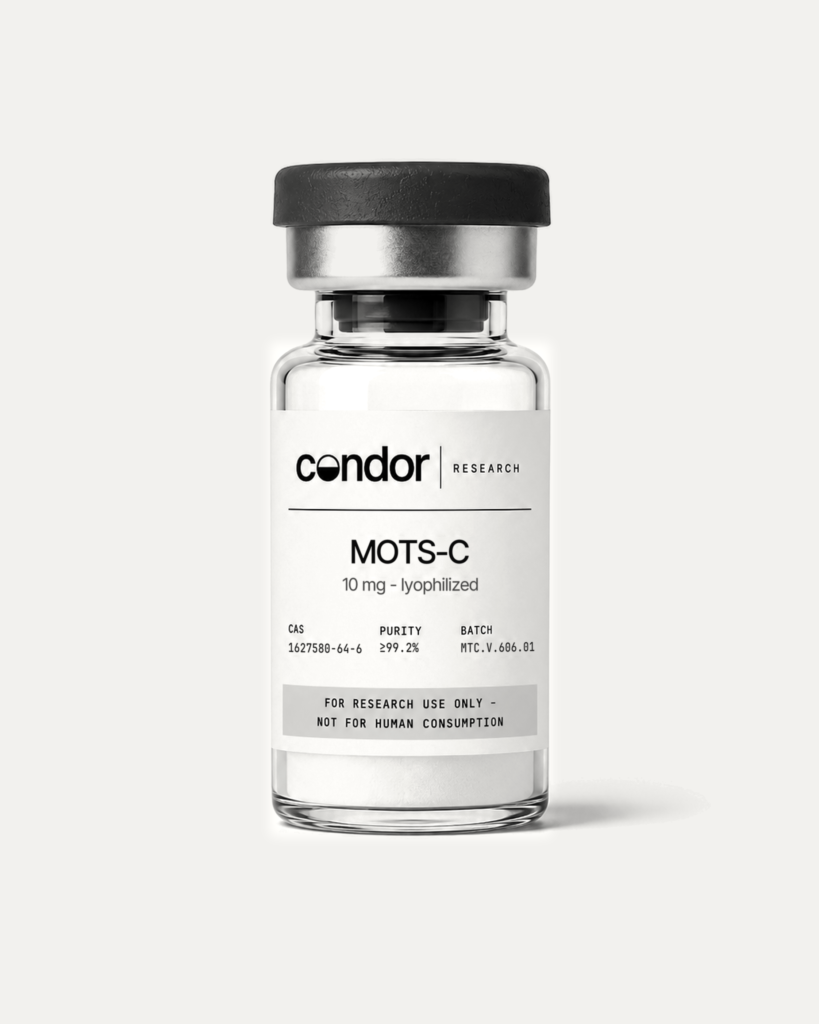
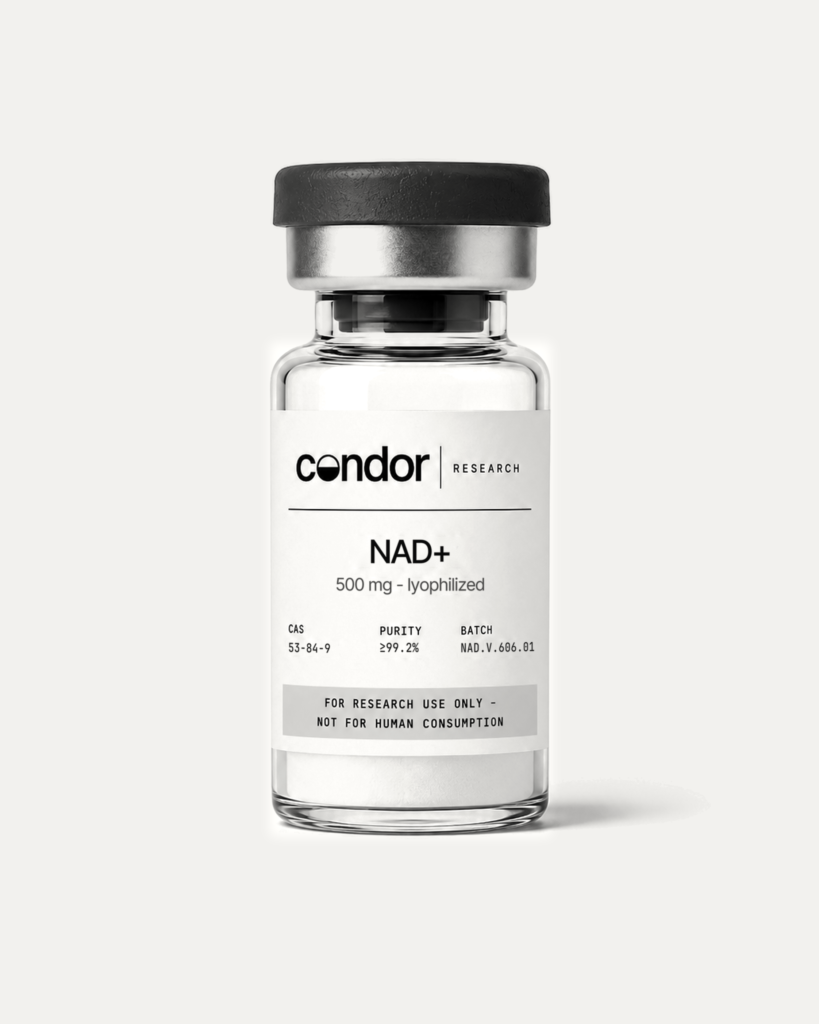
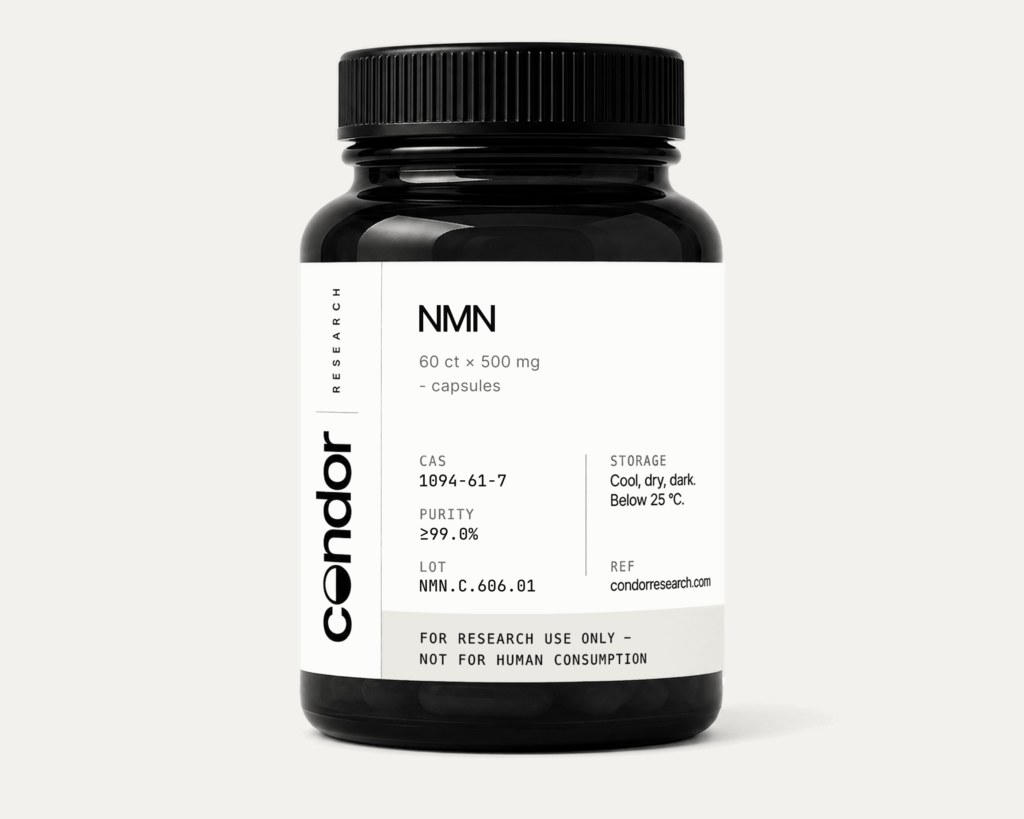
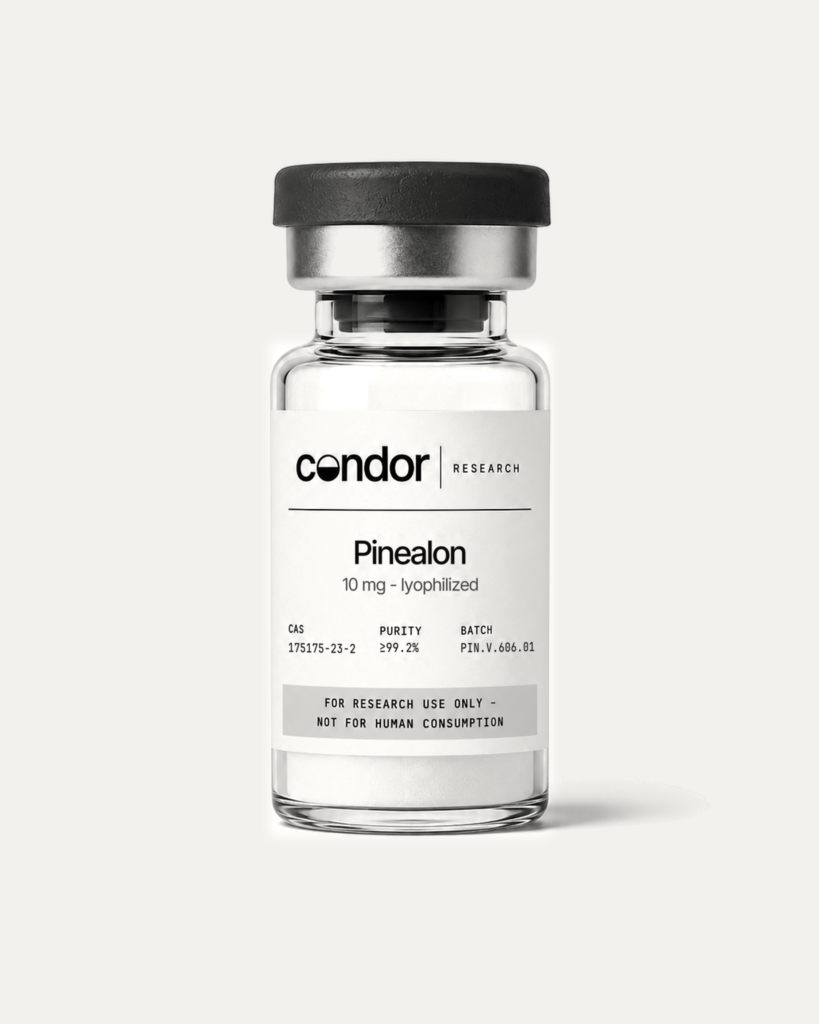

Longevity research compounds are reference materials studied in preclinical and early clinical models of cellular ageing — NAD⁺ metabolism, mitochondrial function, autophagy and telomere biology. This category groups the compounds most investigated across those pathways so researchers can compare mechanism, format and documentation in one place. Every item is supplied strictly as Research Use Only (RUO) material with a batch Certificate of Analysis; nothing here is intended for human or veterinary use.
Mechanisms investigated
Ageing research converges on a small set of molecular nodes, and these compounds map onto different ones — they are not interchangeable:
NAD⁺ precursors (NAD⁺, NMN): studied for restoring the age-declining NAD⁺ pool that supplies sirtuin and PARP activity.
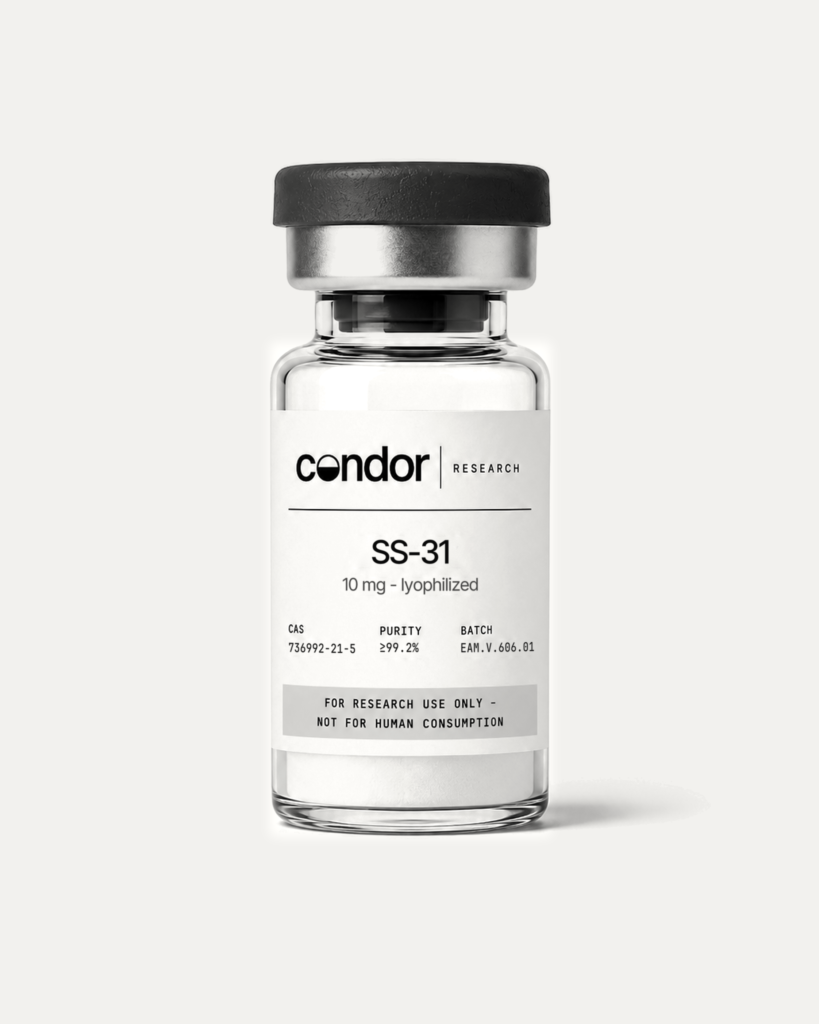
Mitochondrial peptides (MOTS-c; SS-31 / elamipretide): investigated for bioenergetic signalling and mitochondrial stress response.
Autophagy inducers (spermidine): studied for proteostasis and cellular self-renewal.
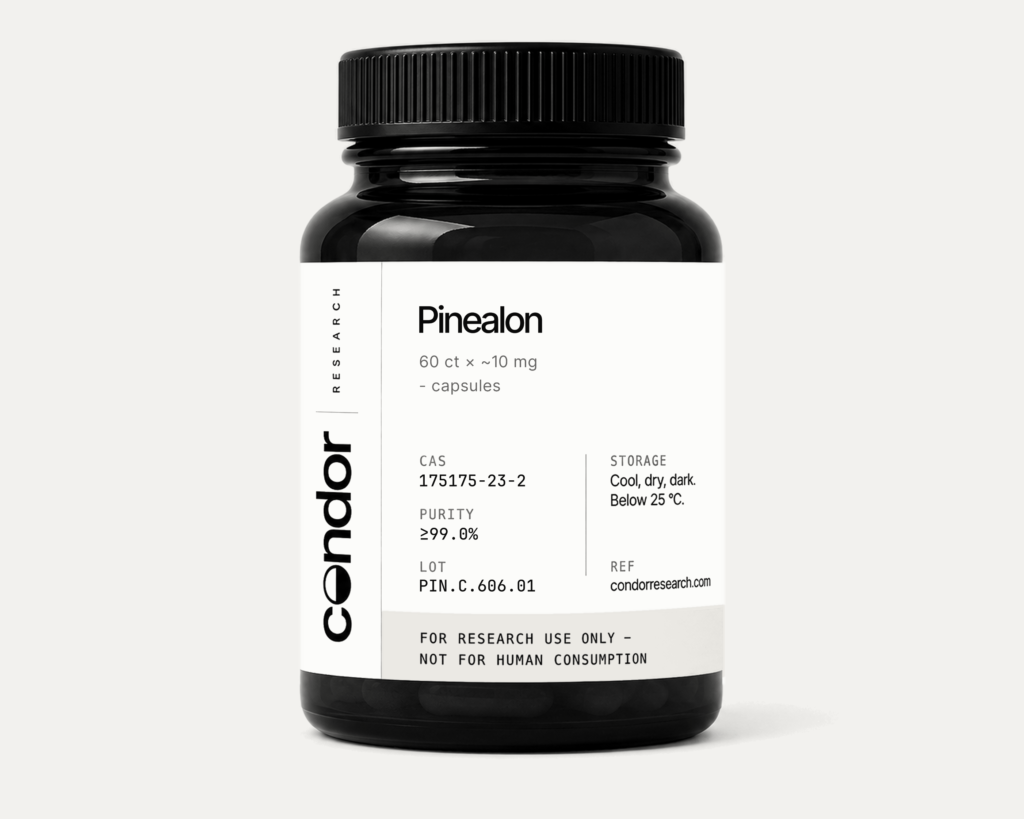
Pineal / telomere-axis peptides (Epitalon, Pinealon): investigated for telomerase and circadian signalling.
Growth-axis compounds (IGF-1 LR3): studied at the muscle / mTOR interface.
Comparison
CompoundClassPathway / targetResearch focusFormat
NAD⁺CoenzymeNAD⁺ redox poolCellular-energy metabolismVial
NMNNAD⁺ precursorNAMPT / NAD⁺ salvageNAD⁺ restorationCapsules
MOTS-cMitochondrial-derived peptideAMPK / metabolic stressMitochondrial metabolismVial
SS-31 (Elamipretide)Mito-targeted peptideCardiolipin / inner membraneMitochondrial functionVial
SpermidinePolyamineAutophagy inductionProteostasis / autophagyVial
EpitalonPineal tetrapeptideTelomerase / pineal axisTelomere & circadian biologyVial / Caps
IGF-1 LR3GH-axis peptideIGF-1R / mTORMuscle & growth signallingVial
| Compound | Class | Pathway / target | Research focus | Format |
|---|---|---|---|---|
| NAD⁺ | Coenzyme | NAD⁺ redox pool | Cellular-energy metabolism | Vial |
| NMN | NAD⁺ precursor | NAMPT / NAD⁺ salvage | NAD⁺ restoration | Capsule |
| MOTS-c | Mitochondrial-derived peptide | AMPK / metabolic stress | Mitochondrial metabolism | Vial |
| SS-31 (Elamipretide) | Mito-targeted peptide | Cardiolipin / inner membrane | Mitochondrial function | Vial |
| Spermidine | Polyamine | Autophagy induction | Proteostasis / autophagy | Vial |
| Epitalon | Pineal tetrapeptide | Telomerase / pineal axis | Telomere & circadian biology | Vial / Caps |
| IGF-1 LR3 | GH-axis peptide | IGF-1R / mTOR | Muscle & growth signalling | Vial |
Every compound in this category is supplied as Research Use Only material with:
Peer-reviewed literature underpinning this category. Full per-compound evidence lists are maintained in the linked research articles below.
Cookie
Utilizziamo cookie strettamente necessari per il funzionamento del negozio. Con il vostro consenso utilizziamo anche cookie analitici (attribuzione degli ordini) e di marketing (Omnisend). Leggete la nostra Politica sui cookie.