
Capsule vs Vial Research Compounds: Which Format Fits Your Study Design?
A lyophilised vial and a pre-portioned capsule are not two flavours of the same product. They are two answers to two different experimental questions — and choosing wrongly costs you data.
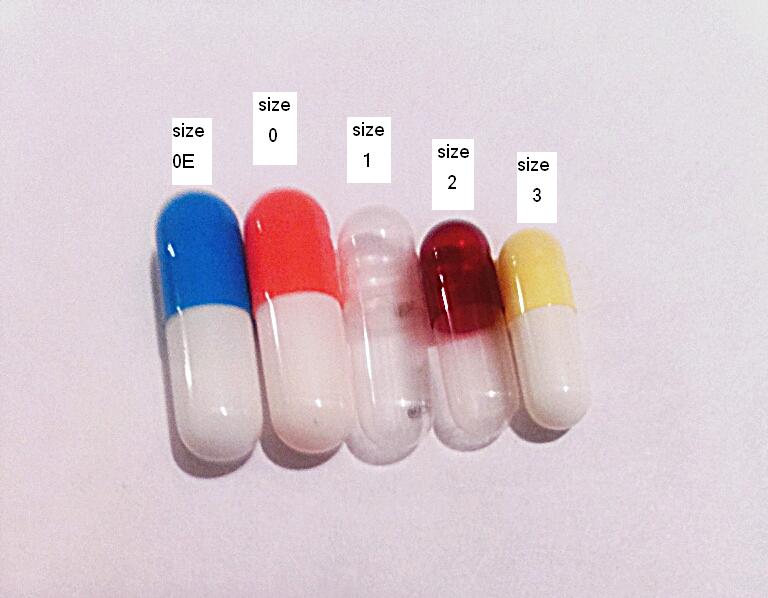
Format should follow the experimental question. A lyophilised vial supplies a defined mass of reference material the investigator reconstitutes to any working concentration in any solvent — ideal for in-vitro and analytical work. A capsule offers a fixed, pre-portioned quantity with simpler room-temperature handling, suited to validated oral-route bioavailability models in animals.
Two vials sit on a bench. One holds a white, weightless cake of lyophilised peptide; the other, an identical compound, has been pressed into a row of opaque HPMC capsules. They cost roughly the same. They contain the same molecule. And yet the choice between them will quietly determine whether your assay produces clean dose-response data or an afternoon of troubleshooting.
The format debate is usually framed as convenience versus flexibility. That framing is too lazy. The honest version is this: a vial and a capsule encode two different experimental intentions, and the right one is dictated entirely by the question you are asking of the material.
What exactly is a lyophilised vial?
Lyophilisation — freeze-drying — removes water from a frozen compound by sublimation under vacuum, leaving a dry, porous cake. For peptides and other labile molecules, the dry state is the point: water is the principal vehicle for hydrolysis, aggregation and other degradation pathways, so removing it slows the chemistry of decay.711 The result is a defined mass of reference material in a sealed, inert environment.
What the investigator gains is total control over concentration. You reconstitute that known mass into any solvent — water, buffer, DMSO, saline analogue — at any volume you choose, and you arrive at precisely the working stock your protocol demands. Need a ten-point serial dilution? A single vial becomes whatever concentration ladder your assay requires. For solution-based assays, receptor-binding work and analytical method development, this flexibility is not a luxury; it is the whole basis of quantitative work.
The cost is handling. A lyophilisate must be reconstituted with care — solvent choice and gentle dissolution matter, because the same labile bonds that freeze-drying protects can be reactivated in solution.811 And the resulting stock is far less stable than the dry cake: once dissolved, most peptides require cold storage and have a short usable window before degradation becomes measurable.711
How stable is the dry cake, really?
Solid-state stability is the vial’s quiet advantage, but it is finite, not infinite. The lyophilisate’s longevity is governed by residual moisture content, storage temperature, the presence of stabilising excipients such as bulking agents, and the physical state of the cake itself.710 Even small increases in residual water can mobilise degradation, which is why well-prepared lyophilisates are sealed against humidity and held cold.118 The amorphous glassy state that freeze-drying produces is kinetically stabilised rather than chemically inert — molecular mobility, not absence of reactivity, is what keeps it intact.912
3 variables — residual moisture, storage temperature and the cake’s physical state — do most of the work in deciding how long a lyophilised reference material holds its purity.107
And the capsule — what is it for?
An HPMC (hydroxypropyl methylcellulose) capsule is a hard, plant-derived shell that encloses a fixed, pre-portioned quantity of compound per unit. Its appeal is operational simplicity: no reconstitution, no solvent decisions, no cold stock to track, and stable room-temperature handling for an already-dry powder. In a research workflow, that makes the capsule the natural format for studies of the oral route itself — bioavailability and pharmacokinetic experiments conducted in validated animal models, where a consistent pre-measured unit is the experimental variable.64
This is where honesty matters most. Oral delivery of peptides is not a convenience — it is one of the hardest unsolved problems in the field.46 Two barriers dominate: intestinal proteolysis, in which digestive enzymes cleave the peptide before it is absorbed,21 and poor permeability across the intestinal epithelium for molecules that are large and hydrophilic.13 The consequence is that the oral bioavailability of most peptides is characteristically very low.62 Far from being a finished feature, this poor bioavailability is precisely why the oral format is an active research subject in the first place.35
A capsule does not make a peptide orally available; it makes the failure of oral availability something you can measure.54
Vial or capsule — how do they compare?
| Attribute | Lyophilised vial | HPMC capsule |
|---|---|---|
| What you receive | Defined mass of dry reference material | Fixed pre-portioned quantity per unit |
| Concentration control | Any working concentration, set by reconstitution | Fixed; cannot be readily varied |
| Reconstitution | Required before use | None |
| Storage of working material | Cold storage of stock; short solution window | Simpler room-temperature handling |
| Dry-state stability | High but moisture- and temperature-sensitive | Dry powder, generally robust |
| Best-fit research use | In-vitro, analytical, solution-based assays | Oral-route bioavailability / PK in animal models |
A practical comparison of the two formats for research handling. The deciding column is not cost or convenience but the experimental question being asked.
Where does the evidence actually stand?
The temptation is to read the table as a ranking, with the flexible vial on top. Resist it. The vial wins only when concentration control is the dependent variable — which is to say, in most in-vitro and analytical work. The capsule wins when the oral route itself is the object of study, and there it is the only sensible choice. Neither is superior in the abstract.
The harder caveat concerns the compounds themselves. The overwhelming majority of research peptides sold as reference material are preclinical: their effects are characterised in cell culture and animal models, not in licensed human use. Where a sequence does correspond to an approved medicine, the licensed pharmaceutical product and a research-grade reference standard are distinct things — different specifications, different intended uses, and not interchangeable. A capsule format changes the handling, not that reality. It is emphatically not an endorsement of human ingestion, and no format should be read as one.
All material discussed here is supplied strictly for research use only, not for human or veterinary use, diagnosis or therapy. Whichever format your study design calls for, the non-negotiable is provenance: each batch should arrive with a Certificate of Analysis and HPLC-MS data confirming identity and purity, so that the molecule in your vial or capsule is verifiably the molecule on the label.912 Format is a choice; characterisation is not.
- A lyophilised vial gives maximal concentration flexibility because the investigator reconstitutes a known mass into any chosen solvent and volume.
- A capsule fixes the quantity per unit, removing reconstitution and cold-chain steps but eliminating the ability to vary concentration.
- Solid-state stability of lyophilisates is real but finite — residual moisture, temperature and formulation all govern how long the dry cake holds.
- Oral peptide bioavailability is notoriously poor; intestinal proteolysis and low permeability are central, well-documented research problems, not solved features.
- Honest caveat: most research peptides remain preclinical, and a capsule format is a handling choice, never an endorsement of human ingestion.
- Both formats are supplied strictly for research use only, with COA and HPLC-MS identity and purity data.
Does a capsule format make a research peptide suitable for oral use?
No. A capsule is a laboratory handling format that pre-portions a fixed quantity per unit. It is used to study the oral route in validated animal models, where poor oral peptide bioavailability is itself the research problem. It is research-use-only material and not an endorsement of human ingestion.
Why choose a lyophilised vial over a ready-made solution?
A vial supplies a defined mass of dry reference material that you reconstitute to any concentration in any chosen solvent, giving precise control for in-vitro and analytical assays. The dry cake is also more stable than a solution, where most peptides degrade faster and require cold storage with a short usable window.
How should lyophilised reference material be stored before reconstitution?
Solid-state stability depends mainly on residual moisture and temperature, so lyophilisates are kept sealed against humidity and held cold per the Certificate of Analysis. Storage guidance is for preserving sample integrity in the laboratory and is not a use instruction. Consult the COA supplied with each batch.
Can I convert a capsule's contents into a solution for in-vitro work?
Format follows the experimental question, so the cleaner choice for solution-based assays is a lyophilised vial, which is a defined mass intended for reconstitution. A capsule is optimised for fixed-quantity, oral-route study designs and does not offer the concentration control that analytical work requires.
What documentation should accompany either format?
Both vials and capsules should ship with a Certificate of Analysis and HPLC-MS data confirming identity and purity, so the material matches its label. This characterisation is independent of format and is essential for reproducible research-use-only work, regardless of whether you select the vial or the capsule.