
Bacteriostatic Water, Acetic Acid or Sterile Water? Choosing a Diluent to Reconstitute a Lyophilised Peptide
A methods comparison for laboratory sample preparation: how solubility, pH, preservatives and stock longevity dictate which diluent reconstitutes a lyophilised research peptide cleanly.
Sterile water suits a single, immediately-used stock. Bacteriostatic water adds about 0.9% benzyl alcohol so a stock can be sampled repeatedly over days without microbial growth. Dilute acetic acid helps dissolve hydrophobic or aggregation-prone sequences. The right choice depends on the peptide's solubility, pH behaviour, chemical compatibility and how long the sample must stay usable.
A lyophilised peptide is a deceptively simple object: a faint white cake at the bottom of a vial that looks identical whether the sequence inside dissolves obligingly in water or sulks at neutral pH and quietly aggregates into something your assay can no longer read. The diluent you choose is the first experimental decision in that vial’s life, and it is too often treated as an afterthought rather than what it is — a chemistry problem with three reasonable answers.
Why does the choice of diluent matter at all?
Reconstitution is the step where a freeze-dried solid re-enters solution, and the quality of that transition sets the ceiling for everything downstream — concentration accuracy, identity, and whether the molecule in your cuvette is still the molecule on the certificate. Lyophilisation removes water to stabilise peptides for storage,2 and a freeze-dried peptide is generally more stable than the same sequence in solution;23 the dried cake must then be returned to a defined liquid state before any analytical measurement, and the choice of liquid is not neutral. Peptides are not uniformly water-loving. Sequences rich in hydrophobic or aromatic residues, or those prone to forming β-sheet aggregates, can dissolve incompletely or not at all in plain water, producing a cloudy suspension rather than a true solution.56 Because solubility and aggregation behaviour are frequently governed by a peptide’s net charge and the pH of its solvent,6 the diluent is effectively a lever on the molecule’s physical chemistry.
Three diluents dominate bench practice for reconstituting research peptides as laboratory samples: sterile water, bacteriostatic water, and a dilute acid such as acetic acid. Each answers a different question.
When is plain sterile water the right call?
Sterile water — water-for-injection grade, filtered and free of preservatives — is the simplest and most honest diluent. It introduces nothing into the sample but the peptide and water, which is precisely what you want when the stock will be prepared and consumed in a single analytical session, or aliquoted and frozen immediately. For a freely water-soluble sequence destined for same-day use, anything more elaborate is a needless variable. Its limitation is the mirror of its virtue: containing no preservative, a sterile-water stock left at working temperature offers no defence against microbial contamination once the septum is pierced and the vial is sampled repeatedly.
What does bacteriostatic water actually add?
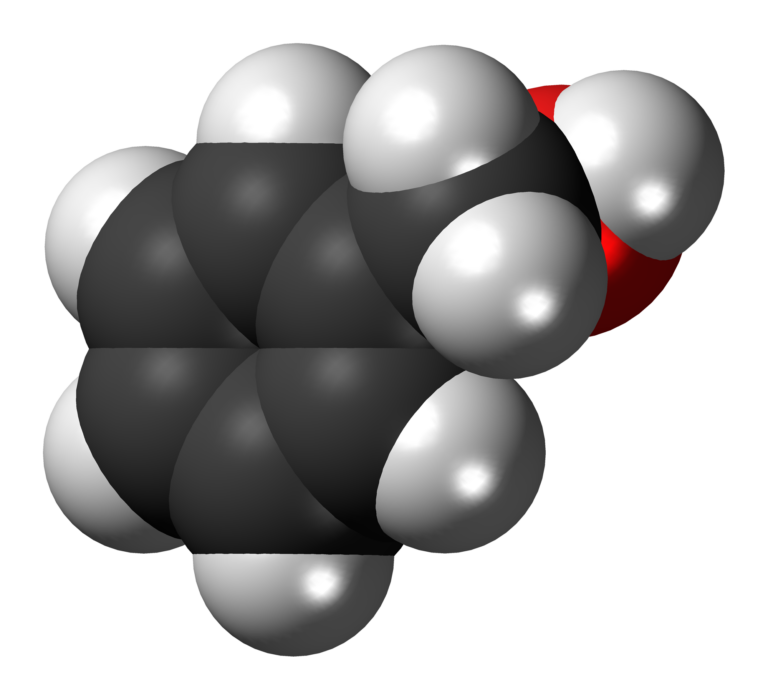
Bacteriostatic water is sterile water carrying approximately 0.9% (9 mg/mL) benzyl alcohol as an antimicrobial preservative,1 supplied in multiple-dose form precisely so that repeated withdrawals can be made from one container. Benzyl alcohol is bacteriostatic — it inhibits the growth of micro-organisms rather than necessarily killing them outright — which is exactly the property that lets a reconstituted stock be re-entered and sampled over several days without becoming a culture medium. For a multi-day series of analytical reads drawn from one prepared vial, that preservative is the difference between a stable reference stock and a slowly spoiling one.
0.9% the benzyl alcohol content specified for bacteriostatic water for injection (USP) — enough to inhibit microbial growth, and enough to be a chemical variable worth controlling.
The trade-off is that benzyl alcohol is not inert. It is an organic small molecule with its own reactivity, and the same product is buffered to a mildly acidic pH of around 5.7 — so a bacteriostatic diluent quietly imposes both a preservative and a pH on the sample. For certain compounds it can be chemically incompatible, interacting with the peptide or interfering with sensitive downstream analyses.1 Treating bacteriostatic water as a universal default ignores that its preservative is a reagent you have deliberately added to every read.
Where does dilute acetic acid earn its place?
For the awkward sequences — basic or aggregation-prone peptides that refuse to dissolve cleanly at neutral pH — a low-pH diluent is a standard remedy. Dilute acetic acid (or another mild acid) lowers the pH of the solution, which can improve dissolution and disrupt the intermolecular associations that drive aggregation.56 The logic is that protonation alters the molecule’s net charge and intermolecular electrostatics, shifting it away from the conditions under which it precipitates or self-assembles.5 A useful heuristic from peptide chemistry is to match the diluent to charge: predominantly basic peptides often dissolve in a small volume of dilute acetic acid, while predominantly acidic peptides are better started in a mildly basic solvent such as dilute ammonium bicarbonate. The heuristic has real limits — it can break down for strongly hydrophobic sequences, which may need an organic co-solvent such as DMSO rather than acid alone,4 and for cysteine- or methionine-rich sequences where oxidation, not charge, is the governing variable. Acetic acid is frequently the first acid reached for because it is volatile and can later be removed, but the cost is that you are now holding the sample at a non-physiological pH, which is itself a condition to document and, where necessary, control.
The diluent is not a matter of habit but of chemistry: solubility, aggregation tendency, chemical compatibility, and how long the stock must stay usable each pull the decision in a definite direction.
How do the three compare at a glance?
| Diluent | Preservative | Best for | Caveat |
|---|---|---|---|
| Sterile / water-for-injection grade | None | A single-prep stock used immediately or aliquoted and frozen | No defence against microbial growth once sampled repeatedly |
| Bacteriostatic water | ~0.9% benzyl alcohol | One stock sampled repeatedly over several days at working temperature | Adds benzyl alcohol and a mildly acidic pH; can be incompatible with certain compounds |
| Dilute acetic acid | None (acidic pH itself) | Basic or aggregation-prone sequences poorly soluble at neutral pH | Holds the sample at low pH; a condition to document and control |
A working comparison of the three common diluents for reconstituting a lyophilised research peptide as a laboratory sample. The right-hand column is the one most often ignored.
What about storage and stability once it’s in solution?
Reconstitution does not freeze the chemistry; it starts a clock. A peptide in solution is generally less stable than its lyophilised form, susceptible to hydrolysis, oxidation and aggregation over time,27 which is why working stocks are typically kept cold and, for longer holds, frozen in single-use aliquots to avoid repeated freeze-thaw cycles that can themselves drive aggregation.35 The diluent feeds directly into this calculus. A preservative-free sterile-water stock that must survive days of sampling is a contamination risk; a bacteriostatic stock buys that time but introduces benzyl alcohol into every read; an acidic stock improves solubility but may accelerate certain pH-sensitive degradation pathways. The decision tree, then, is not three independent choices but — to make the shift explicit — three diluents weighed against four questions: what does this specific sequence need to dissolve, to stay in solution, to remain chemically untouched, and to last as long as the experiment demands?
An honest appraisal: there is no universal diluent
The uncomfortable truth is that no single diluent is correct for all peptides, and any vendor or protocol claiming otherwise is selling convenience as chemistry. Bacteriostatic water’s popularity owes as much to convention as to merit; its preservative is genuinely useful for repeated sampling but is a confound for compatibility-sensitive analyses.1 Acetic acid solves solubility problems it can also worsen if the peptide is acid-labile. Sterile water is cleanest but most perishable. The evidence base for peptide solubility is also more empirical than predictive — solubility is notoriously sequence-specific and often determined by trial rather than calculated in advance,46 so the prudent approach is a small solubility test on a sacrificial portion before committing the whole sample. The honesty here is the point: most research peptides are characterised by their physicochemical behaviour rather than by clinical use, and their handling should be treated as analytical chemistry, not ritual.
One framing must remain fixed throughout. In this context reconstitution means preparing an analytical sample for in-vitro and research applications — a defined-concentration stock for laboratory measurement — and not a route of administration to any person or animal. Condor Research supplies these compounds strictly as research-use-only reference materials, each accompanied by a certificate of analysis with HPLC-MS identity and purity data,7 so that the peptide you weigh into your chosen diluent is the one named on the label. For the practical mechanics of preparing and storing a stock, see our storage and reconstitution guide and our note on bacteriostatic water.
- Sterile water-for-injection grade is the preservative-free default for a single-use analytical stock prepared and consumed in one session.
- Bacteriostatic water contains roughly 0.9% benzyl alcohol, a preservative that suppresses microbial growth and permits repeated sampling of one stock over days.
- Dilute acetic acid lowers pH to improve dissolution of poorly-soluble or aggregation-prone sequences that resist neutral diluents, though strongly hydrophobic peptides may still need an organic co-solvent.
- The honest caveat: benzyl alcohol is itself a chemical variable that can be incompatible with certain compounds, so a preservative is never free of consequences.
- Solubility and aggregation in peptides are strongly pH- and sequence-dependent, making diluent choice a chemistry decision, not a convenience one.
- Reconstitution here means preparing an analytical sample for in-vitro and research work, never a route of administration.
Is bacteriostatic water always better than sterile water for a research peptide stock?
No. Bacteriostatic water's benzyl alcohol preservative is useful when one stock will be sampled repeatedly over several days, but it adds a chemical variable, and a mildly acidic pH, that can be incompatible with certain compounds or sensitive analyses. For a single-session or immediately-frozen stock, preservative-free sterile water is often the cleaner choice.
Why would a lyophilised peptide need acetic acid instead of water to reconstitute?
Some sequences are basic or aggregation-prone and dissolve poorly at neutral pH. Dilute acetic acid lowers the pH, which can improve dissolution and disrupt the associations that cause aggregation. It is a chemistry remedy for difficult sequences, not a default for every peptide, and strongly hydrophobic sequences may need an organic co-solvent instead.
Does the diluent affect how long a reconstituted sample stays usable?
Yes. Peptides are generally less stable in solution than when lyophilised. A preservative-free sterile-water stock is vulnerable to microbial growth once sampled; bacteriostatic water extends usable time; acidic diluents aid solubility but may affect pH-sensitive degradation. Cold storage and single-use aliquots help preserve stability.
How do I know which diluent a specific peptide needs?
Solubility is highly sequence-specific and often empirical rather than predictable. The pragmatic approach is to consider the peptide's net charge and hydrophobicity, consult any supplier guidance, and run a small solubility test on a sacrificial portion before committing the full sample to a chosen diluent.
Are these reconstitution methods instructions for using the peptide on a subject?
No. Throughout, reconstitution refers solely to preparing a defined-concentration analytical sample for in-vitro and research work. These compounds are research-use-only reference materials and are not characterised or supplied for administration to any person or animal.